Faith Morrow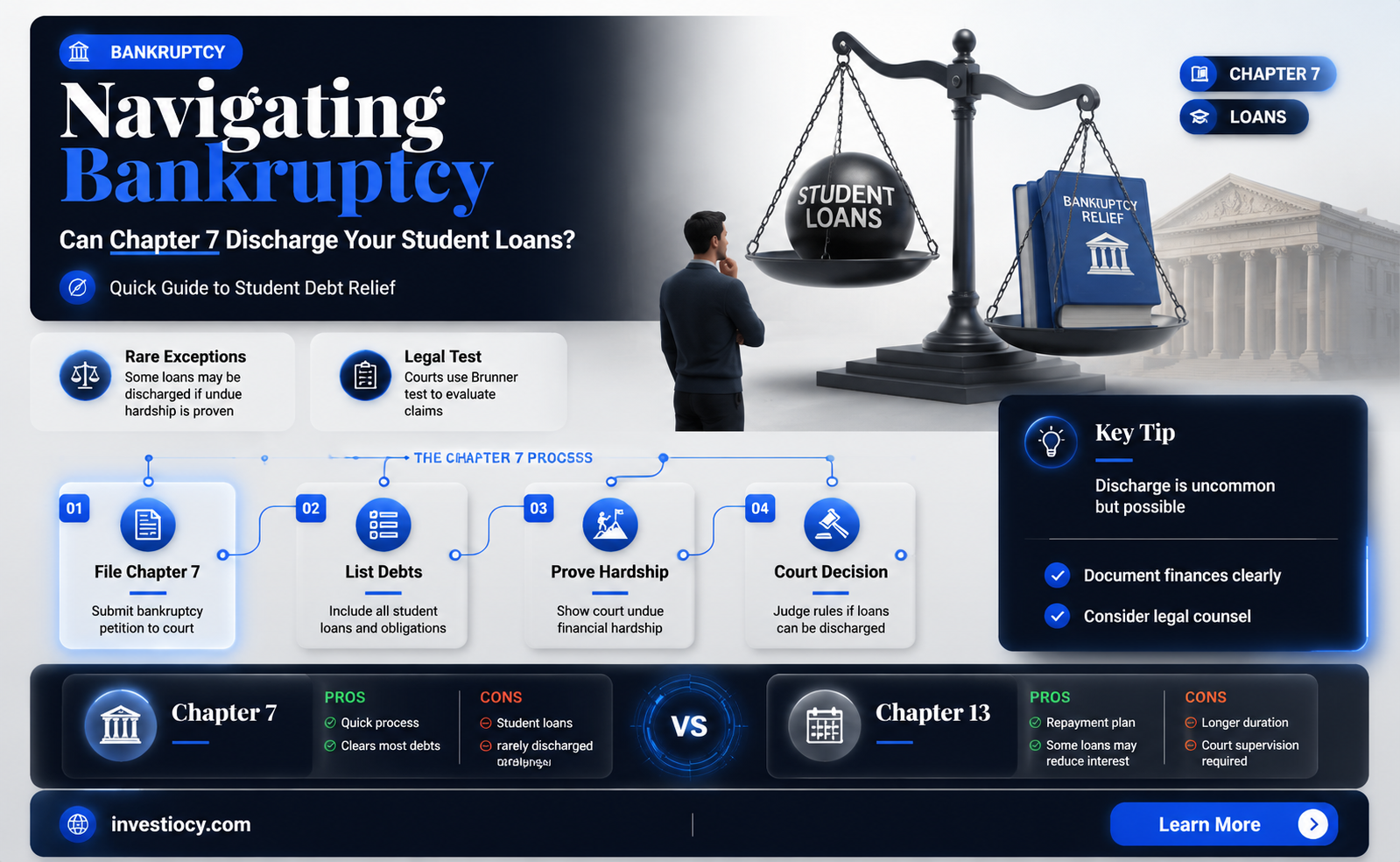
Chapter 7 bankruptcy, also known as liquidation bankruptcy, is a legal process that allows individuals to discharge certain types of debts, providing them with a fresh financial start. One common question that arises in the context of Chapter 7 bankruptcy is whether educational loans can be discharged. Generally, student loans are considered nondischargeable debts in Chapter 7 bankruptcy, meaning they cannot be eliminated through the bankruptcy process. However, there are specific circumstances under which a debtor may be able to discharge a portion of their educational loans if they can demonstrate undue hardship. This typically involves proving that repaying the loans would cause significant financial strain and that they have made good faith efforts to repay the debt. It's important to note that the rules surrounding the discharge of educational loans in bankruptcy are complex and subject to change, so consulting with a qualified bankruptcy attorney is essential for personalized advice.
Explore related products


What You'll Learn
- Eligibility Criteria: Understand the specific conditions you must meet to qualify for Chapter 7 bankruptcy
- Types of Loans Covered: Not all educational loans are dischargeable; learn which ones may be eligible
- Filing Process: Step-by-step guidance on how to file for Chapter 7 bankruptcy to potentially discharge your loans
- Potential Consequences: Explore the long-term effects of discharging educational loans through bankruptcy
- Alternatives to Bankruptcy: Discover other options available for managing or reducing educational loan debt

Eligibility Criteria: Understand the specific conditions you must meet to qualify for Chapter 7 bankruptcy
To qualify for Chapter 7 bankruptcy, you must meet several specific eligibility criteria. One of the primary requirements is passing the means test, which compares your income to the median income for a household of your size in your state. If your income is below the median, you are generally eligible to file for Chapter 7. However, if your income is above the median, you may still qualify if you can demonstrate that your expenses are high enough to leave you with little or no disposable income.
Another important criterion is the debt-to-income ratio. While there is no strict cutoff, a high debt-to-income ratio can indicate financial distress and may make you more likely to qualify for Chapter 7. Additionally, you must not have filed for Chapter 7 bankruptcy within the past eight years or Chapter 13 bankruptcy within the past six years.
It's also crucial to note that certain types of debts, such as tax debts and student loans, may not be dischargeable in Chapter 7 bankruptcy. Student loans, in particular, are often a significant concern for individuals considering bankruptcy. To discharge student loans in Chapter 7, you must demonstrate undue hardship, which can be a challenging standard to meet.
Before filing for Chapter 7, it's essential to consult with a qualified bankruptcy attorney who can help you understand the eligibility criteria and guide you through the filing process. They can also advise you on the potential implications of bankruptcy on your financial future and help you explore alternative options if bankruptcy is not the right choice for you.
In summary, qualifying for Chapter 7 bankruptcy involves meeting specific income and debt criteria, as well as demonstrating that you have not filed for bankruptcy within the past several years. While student loans can be a complicating factor, consulting with an attorney can help you navigate the complexities of the bankruptcy process and determine the best course of action for your individual situation.
Exploring Centrelink's Loan Options: A Comprehensive Guide
You may want to see also
Explore related products



Types of Loans Covered: Not all educational loans are dischargeable; learn which ones may be eligible
Not all educational loans are created equal when it comes to bankruptcy. While some may be dischargeable under Chapter 7, others are not. It's crucial to understand which types of loans may be eligible for discharge to make informed decisions about your financial future.
Federal student loans, such as Direct Loans, Perkins Loans, and PLUS Loans, are generally not dischargeable in bankruptcy. However, there are some exceptions. For instance, if you can demonstrate undue hardship, you may be able to discharge these loans. Private student loans, on the other hand, may be dischargeable, but it depends on the specific terms of the loan and the lender's policies.
It's important to note that the Bankruptcy Code does not provide a specific definition of "undue hardship," so it's up to the court to determine whether your situation meets this standard. Factors that may be considered include your income, expenses, number of dependents, and the likelihood of your financial situation improving in the future.
If you're considering filing for bankruptcy and have educational loans, it's essential to consult with a qualified bankruptcy attorney who can help you understand your options and guide you through the process. They can review your specific situation and determine whether your loans may be eligible for discharge.
Remember, bankruptcy should be a last resort, and it's important to explore all available options before making a decision. However, if you're struggling with overwhelming debt, including educational loans, bankruptcy may provide a fresh start and help you regain control of your finances.
Exploring CashNetUSA: Installment Loans and Financial Flexibility
You may want to see also
Explore related products


Filing Process: Step-by-step guidance on how to file for Chapter 7 bankruptcy to potentially discharge your loans
To file for Chapter 7 bankruptcy and potentially discharge your educational loans, you must follow a specific process. First, you need to determine if you are eligible for Chapter 7 bankruptcy. This involves passing the means test, which compares your income to the median income in your state. If your income is below the median, you may be eligible for Chapter 7. Next, you need to gather all necessary documents, including your loan agreements, income statements, and expense reports.
Once you have determined your eligibility and gathered your documents, you need to complete the bankruptcy petition. This involves filling out several forms, including the Voluntary Petition for Individuals Filing for Bankruptcy (Form 101), the Statement of Financial Affairs (Form 107), and the Statement of Income and Expenditures (Form 106I). You will also need to list your creditors, including your educational loan lenders, on the Creditor Matrix.
After completing the petition, you need to file it with the bankruptcy court in your district. You will need to pay a filing fee, which is currently $335 for Chapter 7 bankruptcy. If you cannot afford the fee, you may be able to waive it or pay it in installments. Once your petition is filed, an automatic stay will go into effect, which will stop your creditors from contacting you or taking any action against you.
The next step in the process is the meeting of creditors, also known as the 341 meeting. This is a hearing where you will be asked questions about your financial situation and your bankruptcy petition. Your creditors may also attend the meeting and ask you questions. After the meeting of creditors, the bankruptcy trustee will review your petition and determine if there are any issues or if you are eligible for a discharge.
If you are eligible for a discharge, the trustee will issue a report recommending that your debts be discharged. The court will then issue an order of discharge, which will officially discharge your debts, including your educational loans. However, it is important to note that not all educational loans are dischargeable in bankruptcy. Loans that are not dischargeable include those that are insured or guaranteed by the government, such as federal student loans.
In conclusion, filing for Chapter 7 bankruptcy can be a complex process, but it may be an option for discharging your educational loans if you are eligible. It is important to carefully review the eligibility requirements and gather all necessary documents before filing. If you are unsure about the process or your eligibility, it may be helpful to consult with a bankruptcy attorney.
Exploring Cashland's Loan Options: Installment Loans and More
You may want to see also
Explore related products


$12.6 $19.99

$7.99 $14.99


Potential Consequences: Explore the long-term effects of discharging educational loans through bankruptcy
Discharging educational loans through bankruptcy, specifically under Chapter 7, can have several long-term consequences that borrowers should carefully consider. While it may provide immediate relief from overwhelming debt, it can also impact the borrower's financial future in various ways.
One significant consequence is the potential damage to the borrower's credit score. Bankruptcy filings, including Chapter 7, are reported on credit reports and can remain there for up to 10 years. This can make it difficult for the borrower to obtain new credit, such as credit cards, mortgages, or car loans, during this period. Additionally, the credit score may be negatively affected, resulting in higher interest rates and less favorable loan terms when the borrower does qualify for new credit.
Another long-term effect is the potential loss of assets. In a Chapter 7 bankruptcy, the court may liquidate some of the borrower's assets to pay off creditors. This can include non-exempt property such as a second home, a boat, or valuable collections. The loss of these assets can have a lasting impact on the borrower's financial stability and future planning.
Furthermore, discharging educational loans through bankruptcy may also affect the borrower's eligibility for certain types of financial aid in the future. For example, some federal student loan programs may not be available to borrowers who have had their loans discharged through bankruptcy. This can limit the borrower's options for funding future education or training.
It is also important to consider the emotional and psychological impact of bankruptcy. The process can be stressful and may lead to feelings of guilt, shame, or anxiety. These emotional consequences can have a lasting effect on the borrower's well-being and may require professional counseling or support to address.
In conclusion, while discharging educational loans through Chapter 7 bankruptcy may provide immediate relief, it is essential to carefully weigh the potential long-term consequences. Borrowers should consider the impact on their credit score, assets, eligibility for future financial aid, and emotional well-being before making a decision. It may be beneficial to consult with a financial advisor or bankruptcy attorney to fully understand the implications and explore alternative options for managing educational debt.
Exploring Loan Modification Options with Cenlar: A Comprehensive Guide
You may want to see also
Explore related products



Alternatives to Bankruptcy: Discover other options available for managing or reducing educational loan debt
While Chapter 7 bankruptcy can offer a fresh start for many types of debt, it's not always the best option, especially when it comes to educational loans. The process can be lengthy, costly, and may not discharge all types of student debt. Fortunately, there are several alternatives to bankruptcy that can help manage or reduce educational loan debt.
One option is to explore income-driven repayment plans, which can lower monthly payments based on income and family size. These plans can also offer loan forgiveness after a certain number of years, typically 20 or 25. Another alternative is to consolidate multiple student loans into a single loan with a lower interest rate, which can simplify repayment and potentially save money on interest over time.
For those struggling with high-interest private student loans, refinancing may be a viable option. Refinancing involves taking out a new loan with a lower interest rate to pay off the existing loan, which can lead to significant savings on interest and potentially lower monthly payments. Additionally, some employers offer student loan repayment assistance as a benefit, which can help borrowers pay off their loans more quickly.
It's also important to consider the impact of bankruptcy on credit scores and future borrowing ability. Bankruptcy can significantly lower credit scores and make it difficult to obtain credit in the future. In contrast, many of the alternatives to bankruptcy, such as income-driven repayment plans and loan consolidation, can help borrowers maintain or improve their credit scores while managing their debt.
Ultimately, the best approach to managing educational loan debt will depend on individual circumstances and financial goals. Borrowers should carefully consider their options and consult with a financial advisor or student loan expert to determine the most effective strategy for their situation. By exploring alternatives to bankruptcy, borrowers can find a path to financial stability and achieve their long-term goals.
Exploring Centrelink's Role in Bond Loans: A Comprehensive Guide
You may want to see also
Frequently asked questions
In a Chapter 7 bankruptcy, both federal and private student loans can potentially be discharged. However, the process and eligibility criteria differ significantly between the two types. Federal student loans may be discharged if the debtor can demonstrate undue hardship, while private student loans are generally considered non-dischargeable unless the debtor can prove that repayment would impose an undue hardship or that the loan was not used for educational purposes.
To discharge educational loans in a Chapter 7 bankruptcy, the debtor must first file a petition with the bankruptcy court. If the court grants the petition, the debtor must then file a separate adversary proceeding to determine the dischargeability of the student loans. In this proceeding, the debtor must present evidence to demonstrate that repayment of the loans would impose an undue hardship. If the court finds in favor of the debtor, the loans will be discharged.
To be eligible for a discharge of educational loans in a Chapter 7 bankruptcy, the debtor must meet certain criteria. For federal student loans, the debtor must demonstrate undue hardship, which typically involves showing that repayment of the loans would prevent them from maintaining a minimal standard of living. For private student loans, the debtor must prove that repayment would impose an undue hardship or that the loan was not used for educational purposes. Additionally, the debtor must have filed for bankruptcy in good faith and not have previously discharged student loans in a bankruptcy proceeding.