 Laila Keith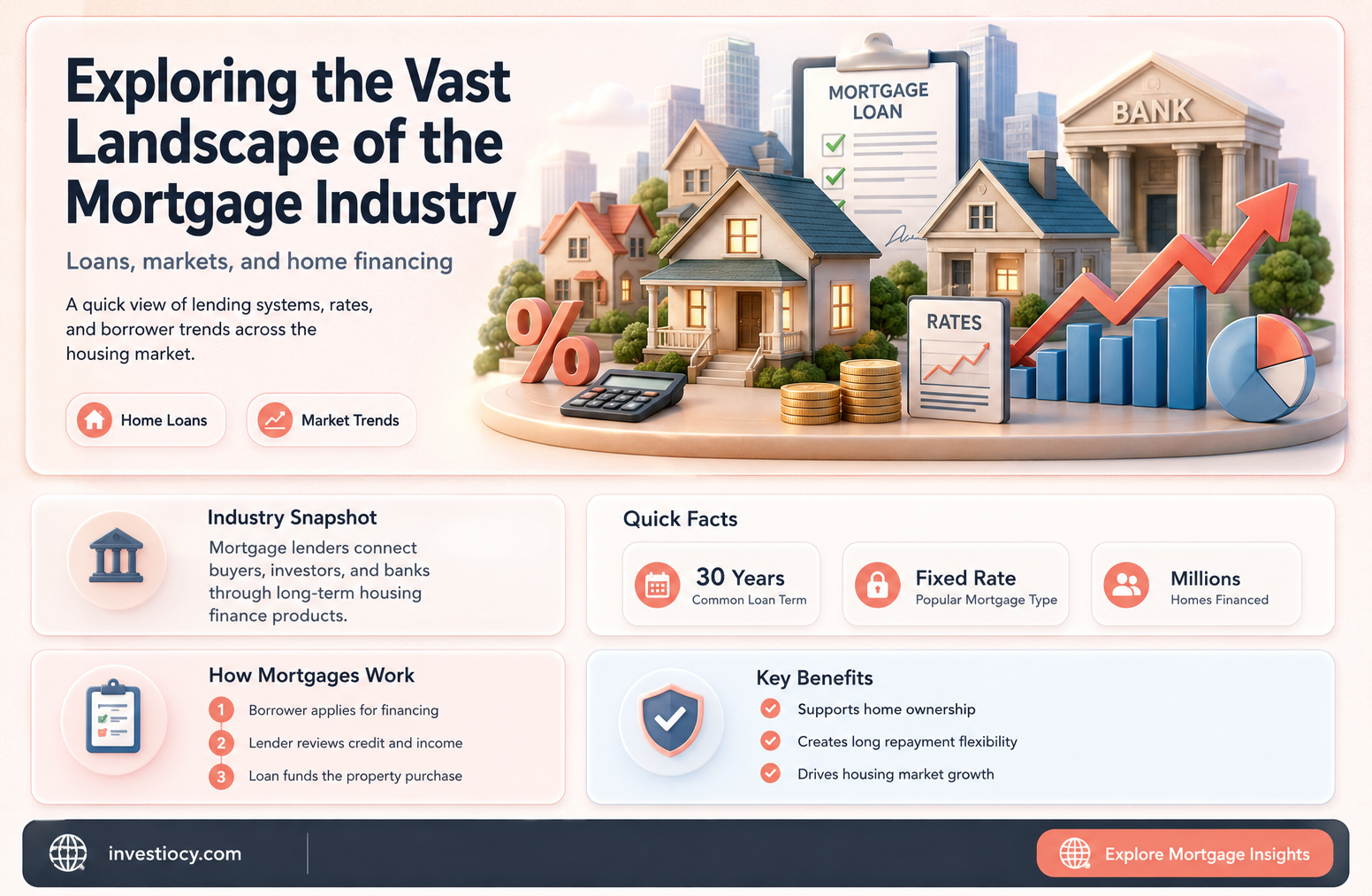
The mortgage industry is a significant sector within the global financial system, playing a crucial role in facilitating homeownership and real estate transactions. As of recent estimates, the worldwide mortgage market is valued at approximately $15 trillion, with the United States alone accounting for around $11 trillion of this total. This industry involves various stakeholders, including lenders, borrowers, brokers, and government agencies, all working together to originate, service, and manage mortgage loans. The size and scope of the mortgage industry underscore its importance in driving economic growth, providing financial stability, and shaping housing policies. Understanding the scale and dynamics of this industry is essential for anyone interested in real estate, finance, or economic trends.
Explore related products


What You'll Learn
- Market Size: Total value of outstanding mortgages, trends in mortgage lending, and growth projections
- Industry Players: Key lenders, market share distribution, and roles of banks, credit unions, and non-banks
- Regulatory Environment: Government policies, compliance requirements, and impact of regulations on lending practices
- Technological Advancements: Digital mortgage platforms, automation in underwriting, and use of AI and blockchain
- Consumer Behavior: Homeownership rates, mortgage application volumes, and borrower demographics

Market Size: Total value of outstanding mortgages, trends in mortgage lending, and growth projections
The total value of outstanding mortgages globally is a staggering figure, reflecting the immense scale of the mortgage industry. As of the latest available data, this value exceeds tens of trillions of dollars, underscoring the critical role mortgages play in the global economy. This substantial market size is the result of decades of growth, driven by increasing demand for homeownership and the expansion of credit markets.
Trends in mortgage lending have evolved significantly over the years. One notable trend is the shift towards more stringent lending standards following the 2008 financial crisis, aimed at reducing the risk of defaults. This has led to a more stable mortgage market, albeit with challenges for some borrowers in securing financing. Another trend is the rise of digital mortgage platforms, which have streamlined the lending process and made it more accessible to consumers.
Growth projections for the mortgage industry indicate continued expansion, albeit at a slower pace than in previous decades. Factors contributing to this growth include population growth, urbanization, and the increasing affordability of housing in many regions. However, challenges such as rising interest rates and economic uncertainty could impact future growth trajectories.
To put the market size into perspective, consider that the total value of outstanding mortgages in the United States alone is over $10 trillion. This figure represents a significant portion of the country's GDP and highlights the importance of the mortgage industry to the overall economy.
In conclusion, the mortgage industry's market size is immense, with outstanding mortgages totaling tens of trillions of dollars globally. Trends such as stricter lending standards and digital platforms have shaped the industry, while growth projections suggest continued expansion despite potential challenges. Understanding these dynamics is crucial for stakeholders in the mortgage market, from lenders and borrowers to policymakers and investors.
Exploring the Size and Scope of Freedom Mortgage
You may want to see also
Explore related products


Industry Players: Key lenders, market share distribution, and roles of banks, credit unions, and non-banks
The mortgage industry is a complex ecosystem with various players vying for market share. At the forefront are key lenders, including banks, credit unions, and non-banks, each playing a distinct role in shaping the industry's landscape. Understanding the distribution of market share among these entities provides valuable insights into the competitive dynamics at play.
Banks, traditionally the dominant players in the mortgage industry, have seen their market share erode in recent years. This shift can be attributed to the rise of non-banks, which have capitalized on technological advancements and innovative business models to gain a foothold in the market. Non-banks, such as online lenders and fintech companies, have disrupted the traditional lending process by offering faster, more convenient, and often more competitive mortgage options.
Credit unions, on the other hand, have maintained a relatively stable market share, thanks to their strong community ties and focus on member service. These not-for-profit institutions have leveraged their unique business model to offer competitive mortgage rates and personalized service, appealing to borrowers seeking a more community-oriented lending experience.
The distribution of market share among these industry players has significant implications for the overall mortgage industry. As non-banks continue to gain ground, banks may need to adapt their strategies to remain competitive. This could involve investing in technology to streamline the lending process, improving customer service, or exploring new business models. Credit unions, meanwhile, may need to balance their commitment to member service with the need to adapt to changing market conditions.
In conclusion, the mortgage industry is undergoing a significant transformation, driven in part by the evolving roles of key lenders. Understanding the market share distribution and the distinct roles played by banks, credit unions, and non-banks is crucial for navigating this complex landscape. As the industry continues to evolve, it will be interesting to see how these players adapt and innovate to meet the changing needs of borrowers.
Exploring the Size and Scope of Guild Mortgage: A Comprehensive Overview
You may want to see also
Explore related products


Regulatory Environment: Government policies, compliance requirements, and impact of regulations on lending practices
The regulatory environment plays a crucial role in shaping the mortgage industry. Government policies and compliance requirements significantly influence lending practices, affecting everything from loan approval processes to interest rates. For instance, the Dodd-Frank Act in the United States, enacted in response to the 2008 financial crisis, introduced stringent regulations aimed at preventing predatory lending and improving financial stability. These regulations have led to more rigorous underwriting standards, which in turn have impacted the accessibility of mortgages for certain demographics.
Compliance requirements also impose operational costs on lenders, which can be passed on to borrowers in the form of higher interest rates or fees. Additionally, regulations can limit the types of mortgage products that lenders can offer, potentially reducing innovation in the industry. However, they also provide a level of protection for consumers, ensuring that lenders adhere to certain ethical standards and transparency in their dealings.
The impact of regulations on lending practices can vary depending on the specific policies and the economic context. For example, during periods of economic downturn, governments may implement policies to stimulate lending, such as lowering interest rates or relaxing underwriting standards. Conversely, during times of economic growth, regulations may be tightened to prevent overheating in the housing market.
In conclusion, the regulatory environment is a key factor in determining the size and scope of the mortgage industry. While regulations can impose costs and constraints on lenders, they also provide stability and protection for consumers, ultimately contributing to the overall health of the industry.
Exploring the Vast Landscape of the Mortgage Industry
You may want to see also
Explore related products


Technological Advancements: Digital mortgage platforms, automation in underwriting, and use of AI and blockchain
The mortgage industry has undergone significant transformations in recent years, largely driven by technological advancements. Digital mortgage platforms have revolutionized the way borrowers interact with lenders, streamlining the application process and reducing the need for physical paperwork. Automation in underwriting has further expedited the loan approval process, allowing for faster and more accurate assessments of creditworthiness. The integration of artificial intelligence (AI) and blockchain technology has enhanced security, transparency, and efficiency in mortgage transactions.
One notable example of these advancements is the use of AI-powered chatbots by mortgage lenders to provide instant customer support and answer queries about loan products and services. These chatbots can handle a wide range of inquiries, from basic information about interest rates to more complex questions about loan eligibility criteria. By leveraging natural language processing and machine learning algorithms, these chatbots can continuously improve their responses based on user interactions, providing a more personalized and efficient customer experience.
Blockchain technology has also played a crucial role in transforming the mortgage industry. By creating a secure and immutable ledger of transactions, blockchain has enabled lenders to verify the authenticity of documents and reduce the risk of fraud. Smart contracts, which are self-executing contracts with the terms of the agreement directly written into code, have further automated the mortgage process, allowing for seamless and transparent transactions between parties.
Moreover, the use of big data analytics has enabled mortgage lenders to gain deeper insights into borrower behavior and preferences. By analyzing vast amounts of data, lenders can identify patterns and trends that can inform their decision-making processes and help them develop more targeted marketing strategies. This data-driven approach has not only improved the efficiency of mortgage lending but has also allowed lenders to offer more competitive rates and terms to borrowers.
In conclusion, technological advancements such as digital mortgage platforms, automation in underwriting, and the use of AI and blockchain have significantly transformed the mortgage industry. These innovations have enhanced the overall efficiency, security, and customer experience of mortgage lending, positioning the industry for continued growth and evolution in the years to come.
Exploring the Scale and Impact of Movement Mortgage
You may want to see also
Explore related products





Consumer Behavior: Homeownership rates, mortgage application volumes, and borrower demographics
The mortgage industry's size is intricately linked to consumer behavior, particularly in terms of homeownership rates, mortgage application volumes, and borrower demographics. A closer examination of these factors reveals a complex interplay that shapes the industry's landscape.
Homeownership rates serve as a key indicator of the mortgage industry's health. In recent years, the United States has experienced a decline in homeownership, with the rate hovering around 65% in 2022, down from its peak of 69.2% in 2004. This trend can be attributed to various factors, including rising housing prices, increased student loan debt, and changing societal norms regarding homeownership. As a result, the mortgage industry has had to adapt to a shifting market, with lenders focusing on alternative products such as adjustable-rate mortgages and non-conforming loans to cater to a more diverse range of borrowers.
Mortgage application volumes provide another lens through which to view the industry's size. In 2021, the Mortgage Bankers Association reported that mortgage applications reached their highest level since 2008, with refinance applications accounting for the majority of the increase. This surge in applications can be attributed to historically low interest rates, which have made refinancing an attractive option for many homeowners. However, as interest rates begin to rise, the industry is likely to experience a slowdown in application volumes, leading to a decrease in overall lending activity.
Borrower demographics also play a crucial role in shaping the mortgage industry. Millennials, who make up the largest generation in the United States, are increasingly entering the housing market, with many opting for FHA loans due to their lower down payment requirements. Additionally, the rise of the gig economy has led to an increase in non-traditional borrowers, such as freelancers and independent contractors, who require specialized mortgage products that take into account their unique income structures. As the industry continues to evolve, lenders will need to develop innovative solutions to cater to these emerging demographics.
In conclusion, the mortgage industry's size is deeply intertwined with consumer behavior, and a nuanced understanding of homeownership rates, mortgage application volumes, and borrower demographics is essential for lenders and policymakers alike. By examining these factors in detail, we can gain valuable insights into the industry's current state and future trajectory, ultimately informing strategies for growth and adaptation in a rapidly changing market.
Exploring the Scale and Influence of Impac Mortgage in Today's Market
You may want to see also
Frequently asked questions
The mortgage industry in the United States is substantial, with the total mortgage debt outstanding often exceeding $10 trillion. This figure represents the cumulative value of all mortgages held by households and businesses.
The average mortgage loan amount in the U.S. varies by region and lender, but as of recent data, it typically ranges between $200,000 to $300,000 for a single-family home.
There are tens of millions of mortgages in the U.S. The exact number fluctuates based on factors such as interest rates, housing market conditions, and economic trends.
Approximately 30-40% of U.S. homes are mortgage-free, meaning the owners have paid off their mortgages or purchased the homes outright without financing.



![NMLS Study Guide 2026-2027 - 5 Full-Length Practice Tests, SAFE MLO Exam Prep Secrets Book for the Mortgage Loan Originator Exam: [4th Edition]](https://m.media-amazon.com/images/I/717iHac5CwL._AC_UL320_.jpg)


