Lester Freeman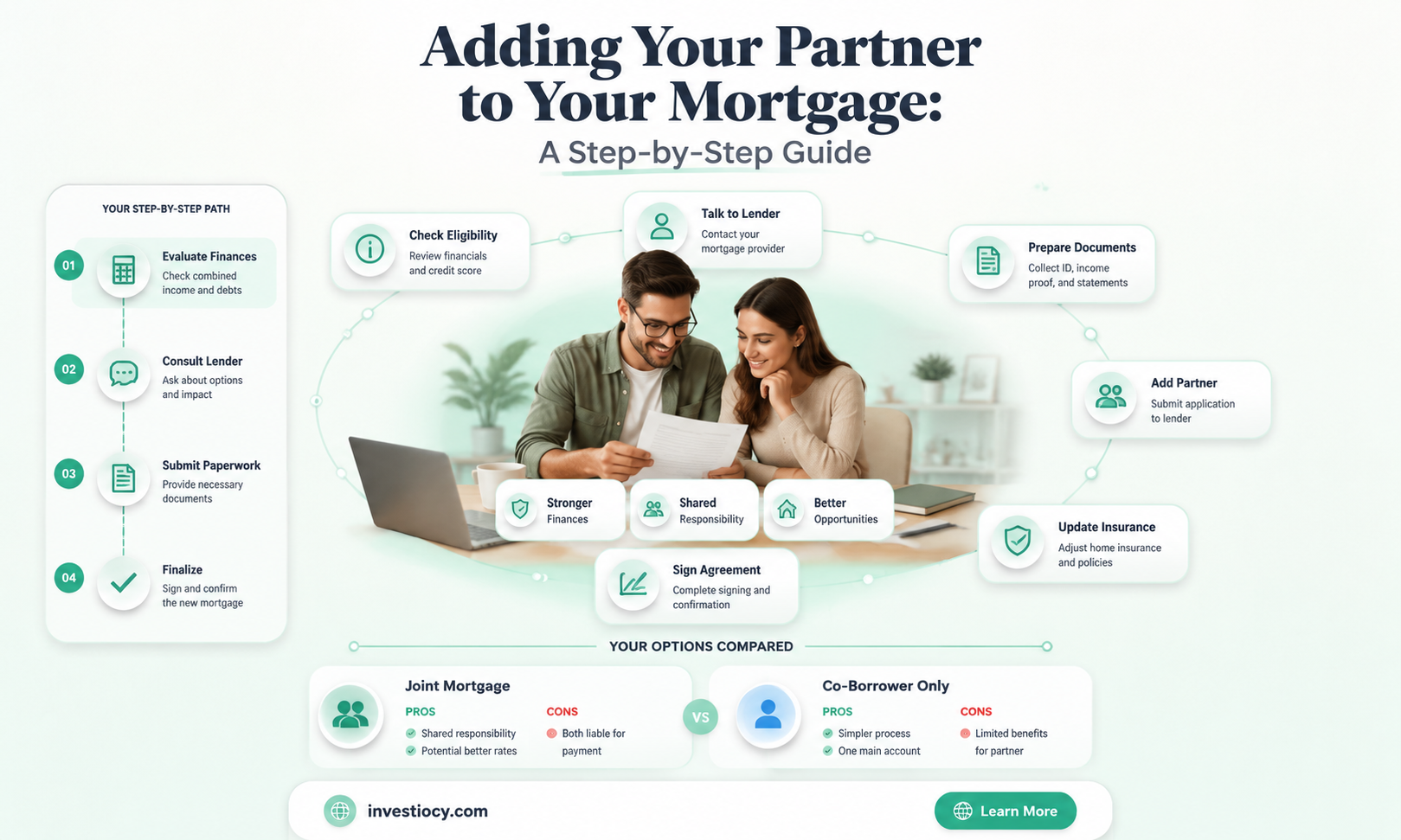
Adding a partner to your mortgage is a significant financial decision that requires careful consideration and planning. It involves several steps, including assessing your partner's creditworthiness, determining the type of mortgage modification that suits your situation, and understanding the legal and financial implications of the change. This process can be complex, as it often requires navigating through various legal documents, financial assessments, and potential changes to your loan terms. It's essential to approach this decision with a clear understanding of the benefits and risks involved, as well as the potential impact on your financial future and relationship.
Explore related products


What You'll Learn
- Eligibility Criteria: Understand the lender's requirements for adding a partner to your mortgage
- Documentation Needed: Gather necessary documents like ID, income proof, and credit reports
- Application Process: Follow the lender's procedure to submit a joint mortgage application
- Credit Score Impact: Be aware of how your partner's credit score might affect your mortgage terms
- Legal Considerations: Consult a lawyer to understand the legal implications and protect your interests

Eligibility Criteria: Understand the lender's requirements for adding a partner to your mortgage
To add a partner to your mortgage, you must first understand the eligibility criteria set by lenders. This involves a thorough assessment of both your and your partner's financial situations. Lenders will typically require proof of income, credit history, and debt-to-income ratio to determine if you both meet the necessary standards. It's crucial to note that each lender may have different criteria, so it's essential to shop around and find one that suits your specific circumstances.
One key aspect of the eligibility criteria is the credit score. Both you and your partner will need to have a good credit history to increase your chances of being approved. If one of you has a lower credit score, it may impact the overall application. In some cases, lenders may require a co-signer or additional collateral to mitigate the risk.
Another important factor is the debt-to-income ratio. Lenders will look at the total amount of debt you and your partner have, including credit cards, loans, and other financial obligations, and compare it to your combined income. A lower debt-to-income ratio indicates that you have a better ability to manage your debts and are therefore more likely to be approved for the mortgage.
In addition to these financial criteria, lenders may also consider other factors such as employment history, length of time at your current residence, and any previous bankruptcies or foreclosures. It's important to be transparent about any potential issues and to provide all necessary documentation to support your application.
Once you have a clear understanding of the eligibility criteria, you can begin the process of adding your partner to your mortgage. This may involve filling out an application, providing financial documentation, and undergoing a credit check. It's important to be patient and thorough throughout this process, as any mistakes or omissions could delay or jeopardize your application.
In conclusion, understanding the eligibility criteria is a crucial first step in adding a partner to your mortgage. By familiarizing yourself with the lender's requirements and ensuring that both you and your partner meet the necessary standards, you can increase your chances of a successful application and secure a mortgage that works for both of you.
Adding Your Name to a Mortgage: A Step-by-Step Guide
You may want to see also
Explore related products


Documentation Needed: Gather necessary documents like ID, income proof, and credit reports
To add your partner to your mortgage, you'll need to gather several key documents. Start by collecting identification documents for both you and your partner. This typically includes driver's licenses, passports, or other government-issued IDs. Make sure these documents are current and not expired.
Next, you'll need to provide proof of income. This can include recent pay stubs, W-2 forms, or tax returns. If your partner is self-employed, they may need to provide additional documentation, such as business tax returns or bank statements.
Credit reports are also essential. You can obtain these from major credit bureaus like Equifax, Experian, or TransUnion. Reviewing your credit reports beforehand can help you identify any errors or issues that might affect your mortgage application.
Additionally, you may need to provide documentation of your relationship, such as a marriage certificate or a domestic partnership agreement. This helps the lender understand the nature of your partnership and why you're adding your partner to the mortgage.
Finally, gather any other relevant documents that might be required by your lender. This could include bank statements, investment accounts, or other financial records. By having all these documents ready, you can streamline the process of adding your partner to your mortgage and increase your chances of approval.
Adding Your Adult Son to Your Mortgage: A Step-by-Step Guide
You may want to see also
Explore related products


Application Process: Follow the lender's procedure to submit a joint mortgage application
To add your partner to your mortgage, you'll need to follow the lender's specific procedure for submitting a joint mortgage application. This process typically involves several key steps. First, you'll need to gather all the necessary documentation, including proof of income, credit reports, and identification for both you and your partner. Next, you'll need to fill out the joint application form, which will require detailed information about your financial situation, employment history, and creditworthiness.
Once you've completed the application form, you'll need to submit it to the lender along with the required documentation. The lender will then review your application and may request additional information or clarification if needed. If your application is approved, you'll be issued a joint mortgage agreement that outlines the terms and conditions of the loan.
It's important to note that adding a partner to your mortgage can have significant financial implications. You'll need to consider factors such as your partner's credit score, income, and debt obligations, as these can impact the interest rate and terms of the loan. Additionally, you'll need to be aware of the potential risks involved, such as the possibility of default or foreclosure if you're unable to make the mortgage payments.
To ensure a smooth application process, it's a good idea to consult with a mortgage professional or financial advisor who can guide you through the steps and help you understand the potential implications of adding a partner to your mortgage. They can also help you compare different lenders and loan options to find the best fit for your financial situation.
In summary, adding a partner to your mortgage involves following the lender's procedure for submitting a joint mortgage application, gathering necessary documentation, filling out the application form, and submitting it to the lender for review. It's important to consider the financial implications and potential risks involved, and to seek professional advice if needed.
Adding Your Spouse to a Mortgage: A Comprehensive Guide
You may want to see also
Explore related products


Credit Score Impact: Be aware of how your partner's credit score might affect your mortgage terms
Adding a partner to your mortgage can be a significant financial decision, and it's crucial to understand the potential impact on your mortgage terms. One of the most important factors to consider is your partner's credit score. A credit score is a numerical representation of an individual's creditworthiness, and it plays a vital role in determining the interest rate and terms of your mortgage.
If your partner has a high credit score, it could positively affect your mortgage terms. Lenders may offer you a lower interest rate or more favorable terms, as they perceive you as a lower risk borrower. On the other hand, if your partner has a low credit score, it could negatively impact your mortgage terms. Lenders may charge you a higher interest rate or offer less favorable terms, as they perceive you as a higher risk borrower.
It's essential to obtain a copy of your partner's credit report and review it for any errors or discrepancies. If you find any errors, dispute them with the credit reporting agency to ensure that your partner's credit score is accurate. Additionally, it's a good idea to discuss your partner's credit history with them and understand any past financial issues that may have affected their score.
When applying for a mortgage with a partner, lenders will typically consider both of your credit scores. They may use the lower of the two scores to determine your mortgage terms, or they may use a combination of both scores. It's important to be aware of this and to discuss your options with your lender.
In some cases, it may be beneficial to apply for a mortgage in your name only, especially if your partner has a significantly lower credit score. However, this may also limit the amount of mortgage you can qualify for, as lenders will only consider your income and credit history. It's essential to weigh the pros and cons of each option and to consult with a financial advisor or mortgage broker to determine the best course of action for your specific situation.
Streamline Your Finances: Adding a Property Mortgage to QuickBooks
You may want to see also
Explore related products


Legal Considerations: Consult a lawyer to understand the legal implications and protect your interests
Adding a partner to a mortgage is not just a financial decision but also a legal one. It's crucial to understand the legal implications to protect both parties' interests. Consulting a lawyer is an essential step in this process, as they can provide tailored advice based on your specific situation.
One of the key legal considerations is the type of ownership you choose. Joint tenancy and tenancy in common are two common options, each with its own set of legal rights and responsibilities. A lawyer can explain the differences and help you decide which arrangement best suits your needs.
Another important aspect is ensuring that both parties are fully aware of their obligations and rights. This includes understanding how credit scores, income, and debt will be assessed and how they might impact the mortgage application. A lawyer can review the mortgage contract and explain any clauses that may have significant legal implications.
Furthermore, it's essential to consider the long-term implications of adding a partner to your mortgage. What happens if one party wants to sell the property or if the relationship ends? A lawyer can help you navigate these scenarios and ensure that your interests are protected in the event of unforeseen circumstances.
Lastly, a lawyer can assist with the preparation and review of all necessary legal documents. This includes the mortgage application, promissory note, and deed. Having a legal professional review these documents can help prevent errors and ensure that the process is completed smoothly and legally.
In conclusion, consulting a lawyer when adding a partner to your mortgage is a critical step. They can provide valuable guidance on ownership types, obligations, long-term implications, and document preparation, ensuring that both parties' interests are protected throughout the process.
Adding Your Child's Name to Your Mortgage: A Step-by-Step Guide
You may want to see also
Frequently asked questions
To add your partner to your mortgage, you'll need to contact your lender and inquire about their specific process. Typically, this involves filling out an application, providing necessary documentation, and meeting the lender's credit and income requirements.
Adding your partner to your mortgage can have several benefits, including:
- Improved credit score: If your partner has a better credit score, it may help improve your overall creditworthiness.
- Increased borrowing power: Combining incomes can increase your borrowing power, allowing you to qualify for a larger loan.
- Shared responsibility: Having both partners on the mortgage can provide a sense of shared responsibility and commitment to the property.
Some potential drawbacks to consider include:
- Credit impact: If your partner has a lower credit score, it may negatively impact your overall creditworthiness.
- Increased debt: Adding your partner to the mortgage may increase your overall debt, especially if you're refinancing to a larger loan amount.
- Complications in case of separation: If you and your partner separate, having both names on the mortgage can create complications in terms of property ownership and responsibility.
The specific documentation required may vary depending on your lender, but typically, you'll need to provide:
- Proof of income: Pay stubs, tax returns, and bank statements for both you and your partner.
- Credit reports: Credit reports for both you and your partner to assess creditworthiness.
- Identification: Government-issued IDs for both you and your partner.
- Property information: Details about the property, including the title and appraisal.



![NMLS Study Guide 2026-2027 - 5 Full-Length Practice Tests, SAFE MLO Exam Prep Secrets Book for the Mortgage Loan Originator Exam: [4th Edition]](https://m.media-amazon.com/images/I/717iHac5CwL._AC_UL320_.jpg)