Clark Galvan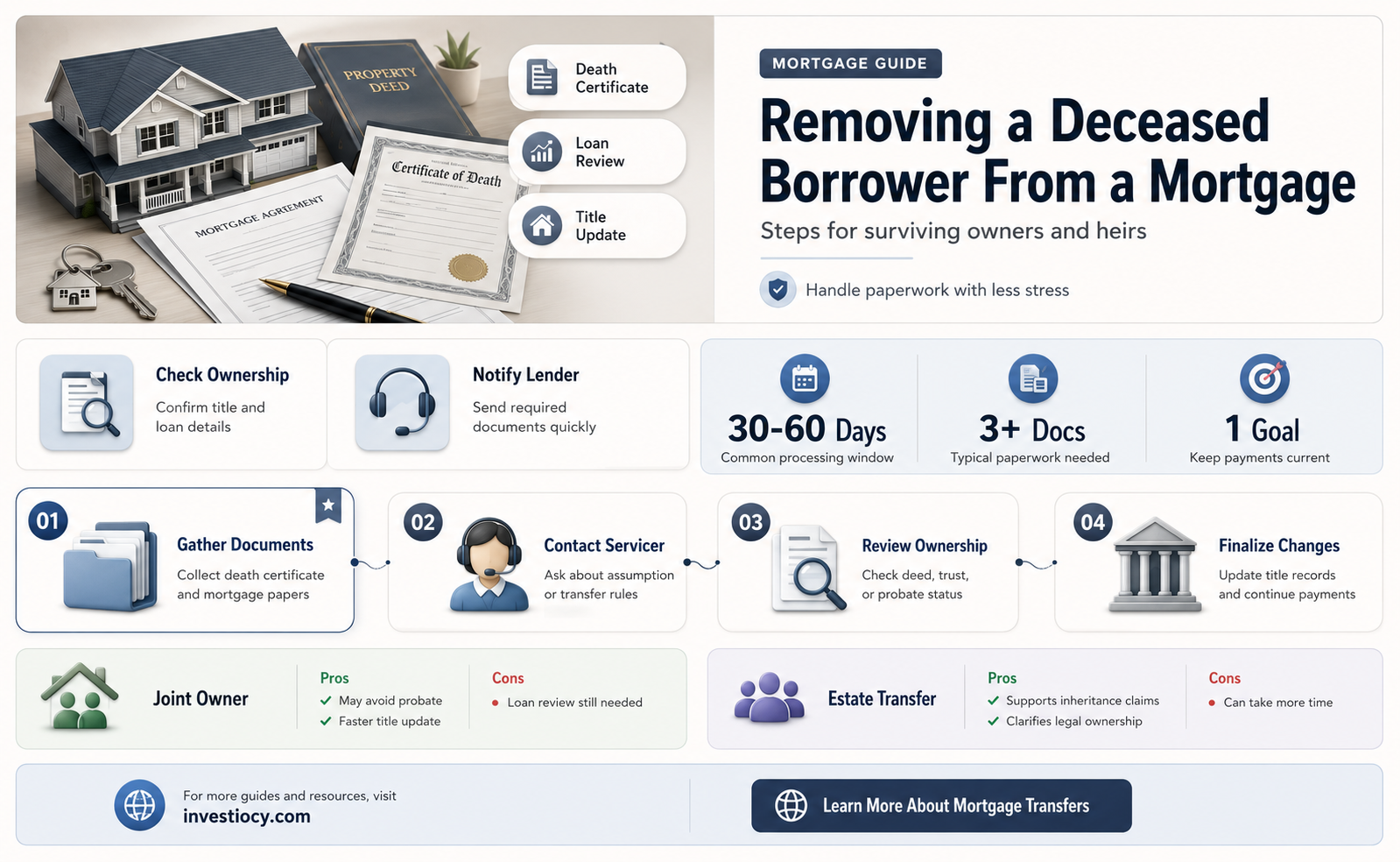
When a person passes away, their estate and financial obligations, including mortgages, need to be addressed. Removing a deceased person from a mortgage involves several steps, including notifying the lender, providing proof of death, and determining the next steps based on the estate's circumstances. It's important to act promptly to avoid potential legal and financial complications. This process can be complex and emotionally challenging, but understanding the necessary steps can help ease the burden on the surviving family members or estate executors.
Explore related products


What You'll Learn
- Contact the Lender: Reach out to the mortgage lender to inform them of the borrower's passing
- Provide Documentation: Submit necessary documents, such as a death certificate, to the lender
- Review Loan Terms: Check the mortgage agreement for any specific clauses regarding death of the borrower
- Options for Heirs: Discuss possible options with the lender for transferring the mortgage to an heir
- Legal Assistance: Consider consulting a real estate attorney to guide you through the process

Contact the Lender: Reach out to the mortgage lender to inform them of the borrower's passing
Upon the unfortunate passing of a borrower, it is crucial to promptly inform the mortgage lender to initiate the process of removing the deceased person from the mortgage. This notification serves as the first step in a series of legal and administrative procedures that must be followed to ensure the property's ownership is properly transferred and the mortgage is updated accordingly.
To contact the lender, you will need to gather certain information and documentation. This typically includes the borrower's name, account number, date of death, and a copy of the death certificate. It is advisable to reach out to the lender via phone or in writing, providing them with the necessary details and expressing your intent to proceed with the removal of the deceased borrower from the mortgage.
During this initial contact, it is important to inquire about the lender's specific requirements and procedures for handling such situations. Different lenders may have varying protocols, and understanding these upfront can help streamline the process. Additionally, be prepared to discuss the current status of the mortgage, including any outstanding payments or potential issues that may impact the removal process.
Following the initial contact, the lender will likely request additional documentation and information to complete the removal process. This may include a copy of the will, trust documents, or other legal paperwork that establishes the rightful heirs or executors of the estate. It is essential to cooperate fully with the lender's requests and provide all necessary information in a timely manner to avoid delays in the process.
Throughout this process, it is advisable to seek legal counsel to ensure that all steps are taken correctly and in accordance with applicable laws and regulations. An attorney specializing in real estate or probate law can provide valuable guidance and help navigate any complex issues that may arise during the removal of a deceased borrower from a mortgage.
Navigating the Process of Releasing a Recorded Mortgage in New Jersey
You may want to see also
Explore related products


Provide Documentation: Submit necessary documents, such as a death certificate, to the lender
To remove a deceased person from a mortgage, one of the critical steps is to provide the necessary documentation to the lender. This process typically begins with obtaining an official death certificate, which serves as legal proof of the borrower's passing. The death certificate must be certified and issued by the appropriate government authority.
Once you have the death certificate, you will need to gather additional documents that may be required by the lender. These could include a copy of the deceased person's will, if available, as well as any trust documents or letters of administration if an estate has been established. It's also important to have the deceased person's Social Security number and any other relevant identification numbers.
When submitting these documents to the lender, it's crucial to ensure that they are complete, accurate, and up-to-date. Any missing or incorrect information could delay the process or even result in the lender being unable to remove the deceased person from the mortgage. It's also important to be aware of any specific requirements or procedures that your lender may have in place for handling these types of requests.
In some cases, the lender may require additional documentation or information beyond what is listed here. For example, they may request a copy of the deceased person's credit report or proof of the estate's assets. It's important to be prepared for these requests and to provide any necessary documentation in a timely manner.
Throughout this process, it's essential to maintain open communication with the lender and to follow up regularly to ensure that the necessary steps are being taken. By providing the required documentation promptly and accurately, you can help to expedite the process of removing a deceased person from a mortgage and ensure that the transition is as smooth as possible for all parties involved.
Unlocking Your Illinois Home: A Guide to Mortgage Release
You may want to see also
Explore related products


Review Loan Terms: Check the mortgage agreement for any specific clauses regarding death of the borrower
Upon the death of a borrower, one of the critical steps in managing the mortgage is to review the loan terms. This involves scrutinizing the mortgage agreement for any specific clauses that address the death of the borrower. Such clauses can outline the lender's rights, the process for transferring the mortgage, or the conditions under which the loan may be forgiven or modified. Understanding these terms is essential for the surviving co-borrower or the deceased's estate to navigate the financial obligations and potential liabilities associated with the mortgage.
The review process should begin by obtaining a copy of the mortgage agreement from the lender. This document should be examined carefully, paying close attention to sections that mention the borrower's death. Key points to look for include whether the loan is assumable, if there are any due-on-sale clauses, or if the lender requires the loan to be paid in full upon the borrower's death. Additionally, it is important to check for any life insurance policies that may be tied to the mortgage, as these could impact the repayment process.
If the mortgage agreement contains specific instructions for handling the death of a borrower, these should be followed closely. This may involve notifying the lender of the borrower's death within a certain timeframe, providing documentation such as a death certificate, or initiating a transfer of the mortgage to another party. Failure to comply with these terms could result in penalties, increased interest rates, or even foreclosure.
In cases where the mortgage agreement does not provide clear guidance on handling the death of a borrower, it may be necessary to seek legal advice. A real estate attorney or a financial advisor can help interpret the terms of the agreement and guide the surviving co-borrower or the estate through the process of managing the mortgage. They can also assist in negotiating with the lender if necessary, to reach a mutually agreeable solution.
Ultimately, reviewing the loan terms and understanding the specific clauses related to the death of the borrower is a crucial step in the process of removing a deceased person from a mortgage. This knowledge empowers the surviving parties to make informed decisions and take the appropriate actions to manage their financial obligations effectively.
Missouri Mortgage Recording: A Step-by-Step Guide
You may want to see also
Explore related products


$11.63 $17.99


Options for Heirs: Discuss possible options with the lender for transferring the mortgage to an heir
Upon the death of a mortgagor, heirs may find themselves in a complex situation regarding the transfer of the mortgage. One possible option is to approach the lender and discuss the possibility of transferring the mortgage to an heir. This process, known as "mortgage assumption," allows the heir to take over the mortgage payments and become the new borrower. However, it's important to note that not all mortgages are assumable, and the lender's approval is required.
To initiate this process, the heir should contact the lender and inform them of the mortgagor's death. They will need to provide documentation, such as a death certificate and proof of their relationship to the deceased. The lender will then review the heir's creditworthiness and financial situation to determine if they are eligible to assume the mortgage.
If the lender approves the mortgage assumption, the heir will need to sign a new mortgage agreement and deed. This will officially transfer the mortgage to the heir's name and make them responsible for the remaining balance. It's crucial for the heir to understand the terms of the new mortgage agreement and ensure they can afford the payments.
Another option for heirs is to refinance the mortgage in their own name. This involves taking out a new mortgage to pay off the existing one. Refinancing may be a good option if the heir wants to change the loan terms, such as the interest rate or repayment period. However, it's important to consider the costs associated with refinancing, such as closing costs and potential prepayment penalties.
In some cases, heirs may choose to sell the property and use the proceeds to pay off the mortgage. This option may be necessary if the heir cannot afford the mortgage payments or if the property is in disrepair. However, selling the property may not always be the best financial decision, and heirs should carefully consider their options before making a decision.
Explore related products


Legal Assistance: Consider consulting a real estate attorney to guide you through the process
Navigating the legalities of removing a deceased person from a mortgage can be a complex and emotionally taxing process. This is where the expertise of a real estate attorney becomes invaluable. A seasoned attorney can provide the necessary guidance to ensure that all legal requirements are met, and the transition is as smooth as possible. They can help in understanding the intricacies of the law, which may vary depending on the jurisdiction, and ensure that all paperwork is correctly filed and processed.
One of the primary roles of a real estate attorney in this scenario is to assist with the probate process. This involves validating the will of the deceased, if one exists, and ensuring that the estate is distributed according to the law. The attorney can also help in obtaining the necessary court orders to remove the deceased person's name from the mortgage. This is a critical step, as it legally transfers the responsibility of the mortgage to the surviving party or parties.
In addition to handling the legal aspects, a real estate attorney can also provide emotional support during this difficult time. They can offer advice on how to deal with the grief of losing a loved one while also managing the practicalities of their estate. This can include helping to communicate with the mortgage lender, who may have their own set of requirements and procedures to follow.
It's important to note that while it may be tempting to try and handle this process alone, the risks of making errors can be significant. Incorrectly filed paperwork or missed deadlines can lead to delays, additional costs, and even legal disputes. By consulting a real estate attorney, you can ensure that the process is handled efficiently and with the utmost care.
In conclusion, the legal assistance provided by a real estate attorney can be a crucial element in the process of removing a deceased person from a mortgage. Their expertise, guidance, and support can help to alleviate the stress and uncertainty that often accompanies such a situation, allowing you to focus on what matters most – honoring the memory of your loved one and securing your financial future.
Frequently asked questions
To remove a deceased person from a mortgage, you typically need to contact the mortgage lender and provide them with a copy of the death certificate. The lender will then guide you through the process, which may involve transferring the mortgage to the surviving borrower or paying off the mortgage in full.
If the deceased person was the only borrower on the mortgage, the lender may require the estate to pay off the mortgage in full. If the estate does not have sufficient funds, the property may need to be sold to satisfy the mortgage debt.
Yes, a surviving spouse or partner may be able to take over the mortgage payments if they are listed as a co-borrower on the mortgage. However, if they are not listed as a co-borrower, they may need to apply for a new mortgage in their own name.
Yes, there may be tax implications when removing a deceased person from a mortgage. For example, if the mortgage is paid off using funds from the deceased person's estate, it may be subject to inheritance tax. Additionally, if the property is sold to satisfy the mortgage debt, there may be capital gains tax implications. It is important to consult with a tax professional to understand the specific tax implications in your situation.



![NMLS Study Guide 2026-2027 - 5 Full-Length Practice Tests, SAFE MLO Exam Prep Secrets Book for the Mortgage Loan Originator Exam: [4th Edition]](https://m.media-amazon.com/images/I/717iHac5CwL._AC_UL320_.jpg)