Laila Keith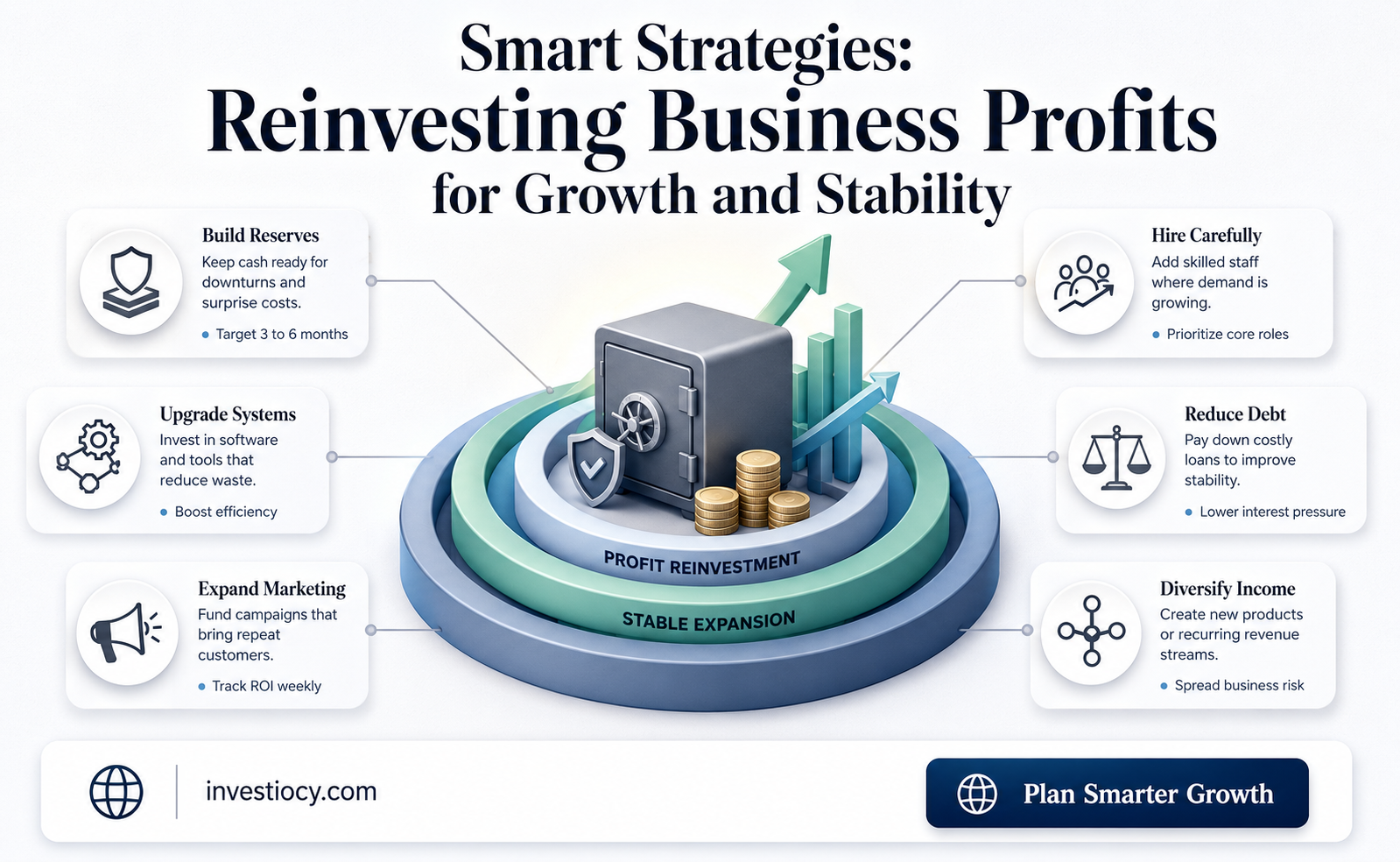
Investing business profits wisely is crucial for long-term financial stability and growth. This guide will walk you through various strategies and considerations to help you make informed decisions about where and how to invest your hard-earned money. From understanding your risk tolerance to exploring different investment vehicles such as stocks, bonds, real estate, and mutual funds, we'll cover the essentials to get you started on your investment journey. Additionally, we'll discuss the importance of diversification, tax implications, and monitoring your investments to ensure they align with your business goals and personal financial objectives.
Explore related products




What You'll Learn
- Reinvest in Growth: Allocate profits to expand operations, increase marketing efforts, or develop new products
- Pay Off Debts: Use earnings to settle business loans or credit card balances, reducing financial liabilities
- Build Emergency Fund: Create a financial cushion to handle unexpected expenses or economic downturns
- Distribute Dividends: Share profits with shareholders or reinvest in employee benefits to boost morale
- Explore New Ventures: Invest in diversifying the business portfolio by entering new markets or acquiring complementary businesses

Reinvest in Growth: Allocate profits to expand operations, increase marketing efforts, or develop new products
One effective strategy for reinvesting profits is to expand operations. This could involve opening new locations, increasing production capacity, or hiring additional staff. By doing so, businesses can increase their revenue streams and potentially capture a larger market share. However, it's crucial to carefully evaluate the potential return on investment and ensure that the expansion aligns with the company's long-term goals.
Another approach is to allocate profits towards increasing marketing efforts. This can include investing in digital marketing campaigns, social media advertising, or traditional media outlets. By boosting marketing spend, businesses can raise brand awareness, attract new customers, and ultimately drive sales growth. It's important to track the effectiveness of marketing initiatives and adjust strategies accordingly to maximize the return on investment.
Developing new products is another avenue for reinvesting profits. This can involve conducting market research to identify gaps in the market, investing in research and development, and bringing new products to market. By diversifying their product offerings, businesses can tap into new revenue streams and stay competitive in their industry. However, it's essential to carefully manage the product development process to avoid costly mistakes and ensure that new products align with customer needs and preferences.
Ultimately, the key to successful reinvestment is to carefully evaluate the potential return on investment and ensure that any allocations align with the company's long-term goals and strategic objectives. By doing so, businesses can maximize their growth potential and create sustainable value for shareholders.
Strategic Insights: Identifying Lucrative Business Investment Opportunities
You may want to see also
Explore related products


Pay Off Debts: Use earnings to settle business loans or credit card balances, reducing financial liabilities
One effective strategy for investing business profits is to prioritize paying off debts. This approach not only reduces financial liabilities but also frees up future earnings for other investment opportunities. When a business has outstanding loans or credit card balances, the interest payments can significantly eat into profits. By using earnings to settle these debts, a company can improve its financial health and increase its overall net worth.
To implement this strategy, a business should first assess its current debt situation. This involves listing all outstanding loans and credit card balances, along with their respective interest rates and minimum monthly payments. Once this information is compiled, the business can prioritize which debts to pay off first. Typically, it's advisable to focus on debts with the highest interest rates, as these will cost the most in the long run.
After prioritizing debts, the business should create a repayment plan. This plan should outline how much money will be allocated each month towards debt repayment, as well as which debts will be targeted first. It's important to be realistic when creating this plan, ensuring that the business can still meet its other financial obligations.
In addition to paying off debts, a business should also consider ways to reduce its reliance on debt in the future. This might involve improving cash flow management, negotiating better terms with suppliers, or exploring alternative financing options. By taking these steps, a business can create a more sustainable financial model and reduce the need to take on additional debt.
Ultimately, paying off debts is a crucial aspect of investing business profits. By reducing financial liabilities, a company can improve its financial stability and create more opportunities for growth and investment. With careful planning and execution, this strategy can yield significant long-term benefits for a business.
Smart Investments: Unlocking the Power of Automated Businesses
You may want to see also
Explore related products

$28


Build Emergency Fund: Create a financial cushion to handle unexpected expenses or economic downturns
An emergency fund is a critical component of financial stability for any business. It serves as a safety net to handle unforeseen expenses, economic downturns, or other financial emergencies that could otherwise disrupt operations. To build an effective emergency fund, businesses should aim to set aside a fixed percentage of their profits each month. This percentage can vary depending on the industry, business size, and risk tolerance, but a general rule of thumb is to have three to six months' worth of operating expenses in reserve.
One approach to building an emergency fund is to automate the process by setting up a regular transfer from the business's main account to a separate, high-yield savings account. This ensures that the fund grows consistently over time without requiring manual intervention. Additionally, businesses can consider supplementing their emergency fund with a line of credit or a business credit card, which can provide additional liquidity in times of need.
It's also important to regularly review and adjust the emergency fund strategy as the business grows and evolves. For example, a business that has recently expanded its operations or taken on new debt may need to increase its emergency fund to account for the increased financial risk. Conversely, a business that has paid off significant debt or has a strong cash flow position may be able to reduce its emergency fund and allocate those resources to other areas of the business.
In conclusion, building an emergency fund is a crucial step in ensuring the financial resilience of a business. By setting aside a portion of profits each month, automating the savings process, and regularly reviewing and adjusting the strategy, businesses can create a robust financial cushion to handle unexpected expenses and economic downturns.
Persuading Investors: A Guide to Securing Funding for Your Business
You may want to see also
Explore related products




Distribute Dividends: Share profits with shareholders or reinvest in employee benefits to boost morale
Deciding how to distribute dividends is a critical aspect of managing business profits. One approach is to share these profits with shareholders, providing them with a return on their investment. This can be done through cash dividends, where a portion of the profit is paid out in cash, or through stock dividends, where additional shares in the company are issued. Shareholders often appreciate receiving dividends as it provides them with immediate value and can also increase the demand for the company's stock, potentially driving up its price.
Alternatively, reinvesting profits in employee benefits can be a strategic move to boost morale and improve employee retention. This can include offering bonuses, improving healthcare benefits, or contributing to retirement plans. By investing in employees, companies can create a more satisfied and motivated workforce, which can lead to increased productivity and better overall performance. Moreover, happy employees are more likely to stay with the company, reducing turnover costs and the need for frequent recruitment.
When considering how to distribute dividends, it's essential to weigh the benefits of sharing profits with shareholders against the potential advantages of reinvesting in employees. Companies should assess their current financial situation, growth objectives, and the expectations of their stakeholders. A balanced approach might involve distributing a portion of the profits as dividends while reinvesting the remainder in employee benefits. This can help maintain shareholder satisfaction while also fostering a positive and productive work environment.
In conclusion, the decision to distribute dividends or reinvest in employee benefits should be based on a thorough analysis of the company's financial health, strategic goals, and stakeholder expectations. By carefully considering these factors, businesses can make informed decisions that maximize the value of their profits and contribute to long-term success.
Smart Strategies: Investing $20,000 in Your Business for Maximum Growth
You may want to see also
Explore related products


Explore New Ventures: Invest in diversifying the business portfolio by entering new markets or acquiring complementary businesses
Diversifying a business portfolio through new ventures is a strategic move to mitigate risks and capitalize on emerging opportunities. One effective approach is to enter new markets that align with the company's core competencies. For instance, a tech firm specializing in software solutions could expand into cybersecurity services, leveraging its existing expertise in digital technologies. This not only broadens the revenue streams but also enhances the company's resilience against market fluctuations.
Another avenue for diversification is acquiring complementary businesses. This strategy allows companies to integrate new products or services into their existing offerings, thereby enhancing their market position. For example, a retail company might acquire a logistics firm to improve its supply chain efficiency and expand its delivery capabilities. Such acquisitions can provide immediate access to new markets and customer bases, accelerating growth and increasing profitability.
When exploring new ventures, it's crucial to conduct thorough market research to identify viable opportunities and assess potential risks. This involves analyzing market trends, competitor strategies, and consumer behavior. Additionally, companies should evaluate their internal resources and capabilities to ensure they can support the new venture. This might include assessing financial reserves, human capital, and technological infrastructure.
Implementing a diversification strategy requires careful planning and execution. Companies should establish clear objectives and timelines for the new venture, allocate sufficient resources, and monitor progress closely. It's also important to maintain flexibility and adapt to changing market conditions. For instance, if a new venture is not performing as expected, the company might need to pivot its strategy or even divest the venture to minimize losses.
In conclusion, exploring new ventures through market expansion or acquisitions can be a powerful way to diversify a business portfolio and drive growth. By conducting thorough research, evaluating internal capabilities, and executing a well-planned strategy, companies can successfully navigate the complexities of diversification and reap the benefits of a more resilient and dynamic business model.
Frequently asked questions
Effective strategies for investing business profits include diversifying investments across various asset classes such as stocks, bonds, real estate, and mutual funds. It's also important to consider the risk tolerance and financial goals of the business.
A business can determine the right amount of profit to invest by assessing its cash flow, financial stability, and future growth prospects. It's advisable to consult with a financial advisor to create a tailored investment plan.
The potential risks of investing business profits include market volatility, liquidity issues, and the possibility of losing principal. However, the benefits can be substantial, including capital growth, passive income generation, and long-term financial security for the business.