Josephine Norton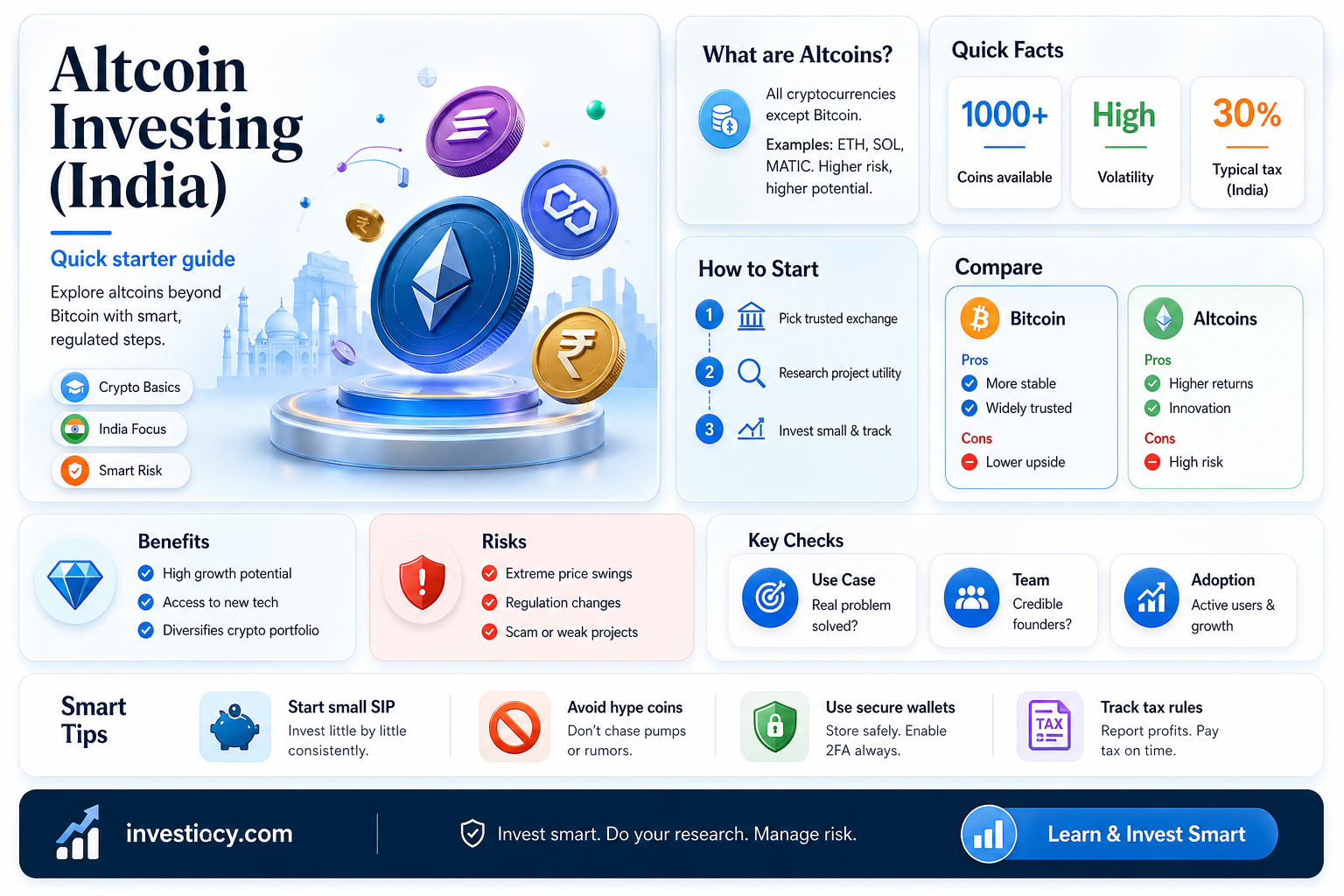
Investing in altcoins in India has gained significant traction in recent years, with many investors looking to diversify their portfolios beyond traditional assets. Altcoins, or alternative cryptocurrencies, offer a range of opportunities for those willing to take on the associated risks. In India, the regulatory landscape for cryptocurrencies is evolving, with the government and Reserve Bank of India (RBI) actively monitoring and formulating policies. Despite the uncertainties, many Indians are exploring altcoin investments through various exchanges and platforms. This guide will provide an overview of the steps involved in investing in altcoins in India, including understanding the market, choosing the right exchange, and managing your investments wisely.
Explore related products





What You'll Learn
- Research and Analysis: Identify promising altcoins, study market trends, and understand the technology behind them
- Choosing an Exchange: Select a reliable cryptocurrency exchange that supports altcoin trading and offers robust security features
- Setting Up a Wallet: Create a secure digital wallet to store your altcoins, ensuring you have control over your private keys
- Investment Strategies: Diversify your portfolio, set clear investment goals, and consider both short-term and long-term strategies
- Risk Management: Understand the risks associated with altcoin investments, use stop-loss orders, and never invest more than you can afford to lose

Research and Analysis: Identify promising altcoins, study market trends, and understand the technology behind them
To identify promising altcoins, investors should begin by conducting thorough research on various cryptocurrencies. This involves analyzing market trends, understanding the technology behind each altcoin, and assessing their potential for growth. One effective strategy is to focus on altcoins that address specific problems or offer unique solutions within the blockchain space. For instance, investors might look into altcoins that provide enhanced privacy features, faster transaction speeds, or more efficient consensus mechanisms.
Studying market trends is crucial for making informed investment decisions. Investors should analyze historical price data, trading volumes, and market capitalization to identify patterns and potential opportunities. Tools such as candlestick charts, moving averages, and relative strength index (RSI) can be helpful in this regard. Additionally, keeping an eye on news and developments within the cryptocurrency industry can provide valuable insights into market movements and emerging trends.
Understanding the technology behind altcoins is essential for evaluating their long-term viability. Investors should delve into the specifics of each altcoin's blockchain, such as its consensus algorithm, scalability, and security features. For example, altcoins that utilize proof-of-stake (PoS) consensus mechanisms may offer higher energy efficiency compared to those that use proof-of-work (PoW). Similarly, altcoins with layer-2 scaling solutions may be better positioned to handle increased transaction volumes.
Investors should also consider the team behind each altcoin, as well as its community support and adoption rates. A strong development team with a clear roadmap and active community engagement can be indicative of a promising altcoin. Furthermore, partnerships with established companies or organizations can lend credibility and potential use cases to an altcoin.
In conclusion, identifying promising altcoins requires a multifaceted approach that includes researching market trends, understanding the underlying technology, and evaluating the potential for growth. By focusing on altcoins that address specific problems, studying market data, and assessing the technology and team behind each altcoin, investors can make more informed decisions and potentially uncover lucrative investment opportunities in the Indian altcoin market.
Navigating the Dogecoin Investment Landscape in India: A Beginner's Guide
You may want to see also
Explore related products


Choosing an Exchange: Select a reliable cryptocurrency exchange that supports altcoin trading and offers robust security features
Selecting a reliable cryptocurrency exchange is paramount when investing in altcoins in India. Begin by researching exchanges that support altcoin trading and prioritize robust security features. Look for exchanges with a strong reputation, transparent operations, and a history of secure transactions. Consider the exchange's regulatory compliance and whether it operates within the legal framework of India. Evaluate the exchange's user interface and customer support to ensure a smooth trading experience. Additionally, assess the fees associated with trading and withdrawals, as these can significantly impact your investment returns. By carefully choosing an exchange, you can mitigate risks and enhance your altcoin investment journey in India.
Explore related products


Setting Up a Wallet: Create a secure digital wallet to store your altcoins, ensuring you have control over your private keys
To set up a secure digital wallet for storing altcoins, it's crucial to understand the importance of private keys. In the context of cryptocurrency, private keys are the equivalent of passwords, granting access to your digital assets. Losing control of your private keys can result in the permanent loss of your altcoins. Therefore, the first step in creating a secure wallet is to choose a reputable wallet provider that emphasizes user control over private keys. Look for wallets that offer features like multi-factor authentication and allow you to back up your private keys securely.
Once you've selected a suitable wallet provider, follow the instructions to create a new wallet. This typically involves generating a unique wallet address and setting up a strong password. Ensure that your password is complex and not easily guessable. It's also advisable to enable two-factor authentication (2FA) for an additional layer of security. This can be done by linking your wallet to an authenticator app or receiving SMS codes.
After setting up your wallet, the next step is to secure your private keys. Most wallets provide an option to export your private keys, which you should do and store in a safe location. Consider using a hardware wallet or a secure offline storage method to protect your keys from potential cyber threats. It's essential to keep your private keys confidential and never share them with anyone.
In addition to securing your private keys, it's important to be aware of common security risks associated with digital wallets. Phishing attacks, where malicious actors attempt to trick you into revealing your private keys, are a significant threat. Be cautious of unsolicited emails or messages asking for your wallet information. Always verify the authenticity of the source before entering any sensitive details.
Regularly updating your wallet software is another crucial aspect of maintaining security. Wallet providers often release updates that include security patches and new features. By keeping your wallet up to date, you can ensure that you have the latest protections against potential vulnerabilities.
In conclusion, setting up a secure digital wallet for altcoins involves choosing a reputable provider, creating a strong password, enabling two-factor authentication, securing your private keys, being vigilant against phishing attacks, and regularly updating your wallet software. By following these steps, you can significantly reduce the risk of losing your altcoins to cyber threats and ensure a safer investment experience.
Explore related products


Investment Strategies: Diversify your portfolio, set clear investment goals, and consider both short-term and long-term strategies
Diversifying your portfolio is a fundamental investment strategy that can help mitigate risks associated with investing in altcoins. By spreading your investments across various assets, you reduce the impact of any single asset's performance on your overall portfolio. This is particularly important in the volatile altcoin market, where prices can fluctuate dramatically. Consider investing in a mix of established cryptocurrencies like Bitcoin and Ethereum, along with altcoins that have strong use cases and development teams.
Setting clear investment goals is crucial for success in the altcoin market. Determine whether you are investing for short-term gains or long-term growth, and tailor your strategy accordingly. Short-term strategies might involve day trading or swing trading, where you take advantage of price fluctuations to make quick profits. Long-term strategies, on the other hand, focus on holding assets for an extended period, riding out market volatility in anticipation of future growth.
When investing in altcoins, it's essential to consider both short-term and long-term strategies. Short-term strategies can help you capitalize on market trends and make quick profits, but they also come with higher risks. Long-term strategies, while potentially more stable, require patience and a willingness to weather market storms. A balanced approach that combines both short-term and long-term strategies can help you achieve your investment goals while managing risk.
Research is key when investing in altcoins.),Thoroughly investigate each asset you're considering, including its technology, development team, and use case. Look for altcoins with strong community support and a clear roadmap for future development. Be wary of assets with vague or unrealistic promises, as these are often red flags for potential scams também.
Risk management is a critical aspect of altcoin investment. Always set stop-loss orders to limit your potential losses, and never invest more than you can afford to lose. Consider using dollar-cost averaging (DCA) to spread your investments over time, reducing the impact of market volatility. Additionally, keep a close eye on market trends and be prepared to adjust your strategy as needed.
Finally, stay informed about regulatory developments in India regarding altcoins. The legal landscape is constantly evolving, and staying up-to-date can help you make informed investment decisions. Join online communities and forums to connect with other investors, share insights, and stay informed about the latest market news and trends.
Explore related products


Risk Management: Understand the risks associated with altcoin investments, use stop-loss orders, and never invest more than you can afford to lose
Investing in altcoins carries inherent risks due to their volatility and the lack of regulatory oversight. It's crucial to understand these risks before committing any funds. Start by researching the altcoin's market history, its development team, and its underlying technology. Look for red flags such as unrealistic promises, lack of transparency, or a history of security breaches.
One effective risk management strategy is to use stop-loss orders. These are instructions to your exchange to sell a coin if it falls below a certain price, limiting your potential losses. For example, if you buy an altcoin at ₹100 and set a stop-loss at ₹80, your exchange will automatically sell the coin if its price drops to ₹80, preventing further losses.
Never invest more than you can afford to lose. Altcoin investments should be considered high-risk and should not jeopardize your financial stability. Create a budget for your investments and stick to it. Diversify your portfolio by investing in multiple altcoins rather than putting all your funds into one. This can help mitigate the risk of significant losses if one coin underperforms.
Stay updated on market news and trends. The altcoin market is highly speculative and can be influenced by a wide range of factors, including regulatory changes, technological advancements, and market sentiment. Regularly review your investments and adjust your strategy as needed. Consider consulting with a financial advisor who has experience in cryptocurrency investments to get personalized advice.
Remember, risk management is an ongoing process. As the market evolves, so should your strategies. Stay vigilant, stay informed, and always prioritize the preservation of your capital.
Frequently asked questions
Altcoins are alternative cryptocurrencies to Bitcoin. They often use different technologies and protocols and may offer different features such as faster transaction times or enhanced privacy.
As of my last update in June 2024, the legal status of cryptocurrencies, including altcoins, in India is complex. The government has not explicitly banned them, but there have been regulatory challenges and changes. It's essential to consult the latest legal and regulatory guidelines before investing.
To buy altcoins in India, you typically need to use a cryptocurrency exchange that operates in the country. You can transfer funds from your bank account to the exchange and then purchase the altcoins of your choice.
Some popular altcoins that might be available in the Indian market include Ethereum (ETH), Ripple (XRP), Litecoin (LTC), and Cardano (ADA). However, availability can vary depending on the exchange and regulatory environment.
Investing in altcoins carries several risks, including high volatility, the potential for significant losses, regulatory uncertainty, and the risk of scams or fraudulent activities. It's crucial to do thorough research and consider your risk tolerance before investing.