Lester Freeman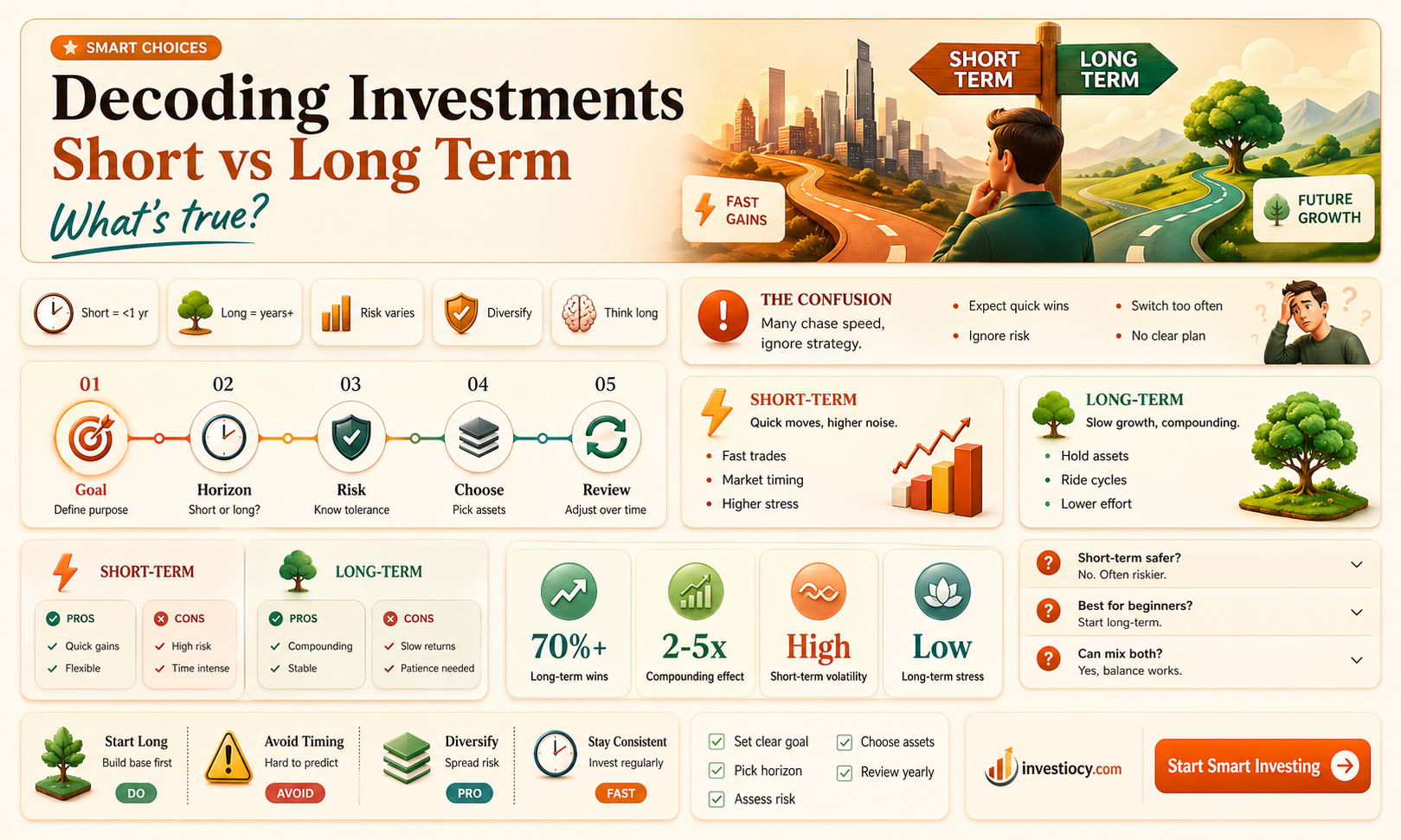
When comparing short- and long-term investments, it's essential to understand the distinct characteristics and strategies involved in each approach. Short-term investments typically involve assets that can be easily converted to cash within a year or less, such as savings accounts, money market funds, or short-term bonds. These investments are generally considered less risky due to their liquidity and lower volatility, making them suitable for emergency funds or short-term financial goals. On the other hand, long-term investments encompass assets intended to be held for an extended period, often several years or decades, such as stocks, real estate, or long-term bonds. These investments generally offer higher potential returns but come with greater risks, including market fluctuations and illiquidity. A key statement that holds true in this context is that long-term investments historically tend to yield higher returns than short-term investments, despite the associated risks. This is primarily due to the power of compounding and the ability to ride out market cycles over an extended period. However, it's crucial for investors to align their investment choices with their risk tolerance, financial goals, and time horizon to ensure a balanced and effective investment strategy.
| Characteristics | Values |
|---|---|
| Investment Horizon | Short-term investments typically have a horizon of less than one year, while long-term investments span several years or even decades. |
| Risk Profile | Short-term investments are generally considered less risky as they involve shorter commitment periods, but they may offer lower returns. Long-term investments can be riskier due to market volatility over extended periods but have the potential for higher returns. |
| Liquidity | Short-term investments usually offer higher liquidity, meaning they can be easily converted to cash without significant loss of value. Long-term investments may have lower liquidity, as they often involve assets that are less easily sold. |
| Return Expectations | Short-term investments typically offer lower returns compared to long-term investments. Long-term investments have the potential for higher returns due to the power of compounding over time. |
| Examples | Examples of short-term investments include savings accounts, money market funds, and short-term bonds. Examples of long-term investments include stocks, real estate, and long-term mutual funds. |
| Market Volatility Impact | Short-term investments are less affected by market volatility as they have a shorter time frame. Long-term investments are more susceptible to market fluctuations but can also benefit from market recoveries over time. |
| Investor Suitability | Short-term investments may be more suitable for investors who need quick access to their funds or are risk-averse. Long-term investments are often preferred by investors with a longer time horizon and a higher risk tolerance. |
| Tax Implications | Short-term investments may have different tax implications compared to long-term investments. For example, short-term capital gains are often taxed at a higher rate than long-term capital gains. |
| Diversification | Both short-term and long-term investments can benefit from diversification. However, long-term investments may require more diversification due to the increased risk associated with market volatility over extended periods. |
| Management Fees | Short-term investments may have lower management fees compared to long-term investments, as they often involve simpler investment strategies. Long-term investments may have higher fees due to the need for ongoing management and research. |
| Minimum Investment | Short-term investments often have lower minimum investment requirements, making them more accessible to a wider range of investors. Long-term investments may have higher minimums, particularly for certain asset classes like real estate. |
| Regulatory Environment | Both short-term and long-term investments are subject to regulatory oversight, but the specific regulations may vary depending on the investment type and jurisdiction. |
| Market Access | Short-term investments may offer more frequent market access, allowing investors to react quickly to market changes. Long-term investments may have less frequent market access, particularly for assets that are not easily traded. |
| Emotional Impact | Short-term investments can be more emotionally taxing due to the need for frequent monitoring and decision-making. Long-term investments may be less emotionally demanding as they require a longer-term perspective and less frequent adjustments. |
| Legacy Planning | Long-term investments are often used for legacy planning, as they can provide a source of wealth for future generations. Short-term investments are less commonly used for this purpose due to their shorter time horizon. |
Explore related products


What You'll Learn
- Risk vs. Return: Short-term investments generally have lower returns but are less risky than long-term investments
- Liquidity: Short-term investments offer higher liquidity, allowing investors to access their funds more quickly than long-term investments
- Compounding Interest: Long-term investments benefit from compounding interest, which can significantly increase the overall return over time
- Market Volatility: Short-term investments are more susceptible to market volatility, while long-term investments tend to weather market fluctuations better
- Investment Goals: The choice between short- and long-term investments depends on the investor's financial goals, time horizon, and risk tolerance

Risk vs. Return: Short-term investments generally have lower returns but are less risky than long-term investments
Short-term investments, such as savings accounts or money market funds, typically offer lower returns compared to long-term investments like stocks or real estate. However, they also come with lower risk, making them an attractive option for investors with a shorter time horizon or those looking to preserve their capital.
One of the key advantages of short-term investments is their liquidity. Investors can easily access their funds without incurring significant penalties or fees, which is not always the case with long-term investments. This makes short-term investments ideal for emergency funds or for saving up for a specific goal, such as a down payment on a house or a vacation.
On the other hand, long-term investments have the potential to generate higher returns due to the power of compounding. Over time, the earnings on these investments can grow exponentially, leading to significant wealth accumulation. However, long-term investments also come with higher risk, as market fluctuations can lead to substantial losses.
When comparing short- and long-term investments, it's essential to consider an investor's risk tolerance, time horizon, and financial goals. For those with a low risk tolerance or a short time horizon, short-term investments may be the better choice. However, for those willing to take on more risk in pursuit of higher returns, long-term investments may be more suitable.
In conclusion, the statement "Risk vs. Return: Short-term investments generally have lower returns but are less risky than long-term investments" is true. Short-term investments offer lower returns but come with lower risk and higher liquidity, making them ideal for certain situations. Long-term investments, on the other hand, have the potential for higher returns but come with higher risk and lower liquidity. Ultimately, the choice between short- and long-term investments depends on an investor's individual circumstances and goals.
Debunking Myths: Not All Long-Term Investments Guarantee Returns
You may want to see also
Explore related products


Liquidity: Short-term investments offer higher liquidity, allowing investors to access their funds more quickly than long-term investments
Short-term investments are often favored for their higher liquidity, which is a critical factor for investors who may need to access their funds on short notice. Liquidity refers to the ease with which an asset can be converted into cash without significantly affecting its market price. Short-term investments, such as savings accounts, money market funds, and short-term bonds, typically have maturities of less than one year, allowing investors to quickly convert these assets into cash with minimal loss of value.
In contrast, long-term investments, such as stocks, real estate, and long-term bonds, may require a longer time horizon to realize their full value and may be more difficult to sell quickly without incurring a significant loss. This illiquidity can be a disadvantage for investors who may need to access their funds for emergencies, unexpected expenses, or other financial obligations.
The higher liquidity of short-term investments can also provide investors with greater flexibility in managing their portfolios. For example, investors can use short-term investments as a cash reserve to take advantage of market opportunities or to rebalance their portfolios as needed. Additionally, short-term investments can be used to fund short-term financial goals, such as saving for a down payment on a house or paying off high-interest debt.
However, it is important to note that short-term investments typically offer lower returns than long-term investments. This is because short-term investments are generally less risky, and as a result, they offer lower interest rates or dividends. Long-term investments, on the other hand, have the potential to generate higher returns over time, but they also carry a higher level of risk.
In conclusion, while short-term investments offer higher liquidity and greater flexibility, they also come with lower returns. Investors should carefully consider their financial goals, risk tolerance, and time horizon when deciding between short-term and long-term investments.
Characteristics of Long-Term Investments: A Comprehensive Guide
You may want to see also
Explore related products

$12.41 $19.95


Compounding Interest: Long-term investments benefit from compounding interest, which can significantly increase the overall return over time
Compounding interest is a powerful force in the world of finance, particularly when it comes to long-term investments. It's the process by which the interest earned on an investment is reinvested, earning more interest over time. This can significantly increase the overall return on an investment, making it a key factor in the success of long-term financial planning.
To illustrate the impact of compounding interest, consider the following example: Suppose you invest $1,000 at an annual interest rate of 5%. After one year, you would have earned $50 in interest, bringing your total investment to $1,050. In the second year, you would earn 5% interest on the new total, which is $1,050. This means you would earn $52.50 in interest in the second year, bringing your total to $1,102.50. As you can see, the interest earned in the second year is greater than the interest earned in the first year, and this trend continues as the investment grows.
Over time, the effect of compounding interest can be dramatic. For instance, if you were to invest $1,000 at a 5% annual interest rate and leave it untouched for 20 years, your investment would grow to approximately $2,653.30. This is more than double the original investment, and it's all due to the power of compounding interest.
In contrast, short-term investments do not benefit from compounding interest to the same extent. When you invest money for a short period, such as a few months or a year, the interest earned is typically not reinvested. Instead, it is paid out to you as a lump sum at the end of the investment period. This means that you do not have the opportunity to earn interest on the interest, and your returns are limited to the initial investment plus the interest earned over the short term.
In conclusion, compounding interest is a key advantage of long-term investments over short-term investments. By reinvesting the interest earned, long-term investments can grow significantly over time, providing a much higher return than short-term investments. This makes long-term investments a more attractive option for those looking to build wealth and achieve their financial goals.
Explore related products


Market Volatility: Short-term investments are more susceptible to market volatility, while long-term investments tend to weather market fluctuations better
Market volatility can significantly impact investment portfolios, particularly in the short term. Short-term investments, such as stocks or bonds held for less than a year, are more susceptible to market volatility due to their higher liquidity and the frequency with which they are traded. This increased trading activity can lead to rapid price fluctuations, making it challenging for investors to predict returns and manage risk effectively.
In contrast, long-term investments, which are typically held for several years or even decades, tend to weather market fluctuations better. This is because long-term investments are less affected by short-term market movements and are more likely to benefit from the overall growth trend of the market. Additionally, long-term investments often have lower transaction costs and taxes, which can further enhance their returns over time.
One key advantage of long-term investments is the ability to ride out market downturns. Historical data shows that markets tend to recover from downturns over time, and investors who hold onto their long-term investments are more likely to see their portfolios recover and even grow in value. This is not to say that long-term investments are immune to risk, but rather that they are better positioned to withstand short-term market volatility.
Another important consideration is the role of diversification in managing market volatility. Both short-term and long-term investments can benefit from diversification, which involves spreading investments across different asset classes, sectors, and geographic regions. By diversifying their portfolios, investors can reduce their exposure to any single market or asset class, thereby mitigating the impact of market volatility on their overall returns.
In conclusion, while market volatility can be a significant concern for investors, particularly those with short-term investments, long-term investments tend to be more resilient. By understanding the differences between short-term and long-term investments and implementing strategies such as diversification, investors can better manage market volatility and achieve their financial goals.
Investment Goals: The choice between short- and long-term investments depends on the investor's financial goals, time horizon, and risk tolerance
The choice between short- and long-term investments is a critical decision that hinges on an investor's financial goals, time horizon, and risk tolerance. Short-term investments, typically those with a maturity of less than five years, are often favored by investors seeking liquidity and lower risk. These investments, such as high-yield savings accounts, certificates of deposit (CDs), and short-term government bonds, offer relatively stable returns and easy access to funds. However, they generally yield lower returns compared to long-term investments.
On the other hand, long-term investments, which have a maturity of five years or more, are preferred by investors with a longer time horizon and a higher risk tolerance. These investments, including stocks, mutual funds, and real estate, have the potential for higher returns but also come with greater volatility and risk. Long-term investors must be prepared to weather market fluctuations and economic downturns, but historically, such investments have outperformed short-term options over extended periods.
When setting investment goals, it's essential to consider the purpose of the investment. For instance, if the goal is to save for a down payment on a house within the next two years, short-term investments would be more appropriate. Conversely, if the goal is to build a retirement nest egg over the next 30 years, long-term investments would be a better fit.
Risk tolerance also plays a significant role in the decision-making process. Investors with a low risk tolerance may prefer the stability of short-term investments, while those with a higher risk tolerance may be more comfortable with the volatility of long-term investments. It's crucial to assess one's risk tolerance honestly and choose investments that align with it to avoid sleepless nights and impulsive decisions.
In conclusion, the choice between short- and long-term investments is not a one-size-fits-all decision. It requires careful consideration of an investor's financial goals, time horizon, and risk tolerance. By understanding these factors and selecting investments that align with them, investors can create a portfolio that meets their needs and helps them achieve their financial objectives.
Frequently asked questions
Generally, long-term investments carry less risk compared to short-term investments.
Typically, long-term investments offer higher returns than short-term investments.
Short-term investments usually have higher liquidity, meaning they can be converted to cash more quickly.
Short-term investments tend to be more volatile, with greater fluctuations in value over a shorter period.
Long-term investments are often aligned with long-term financial goals, such as retirement, while short-term investments are more suitable for immediate or near-term financial needs.