 Laila Keith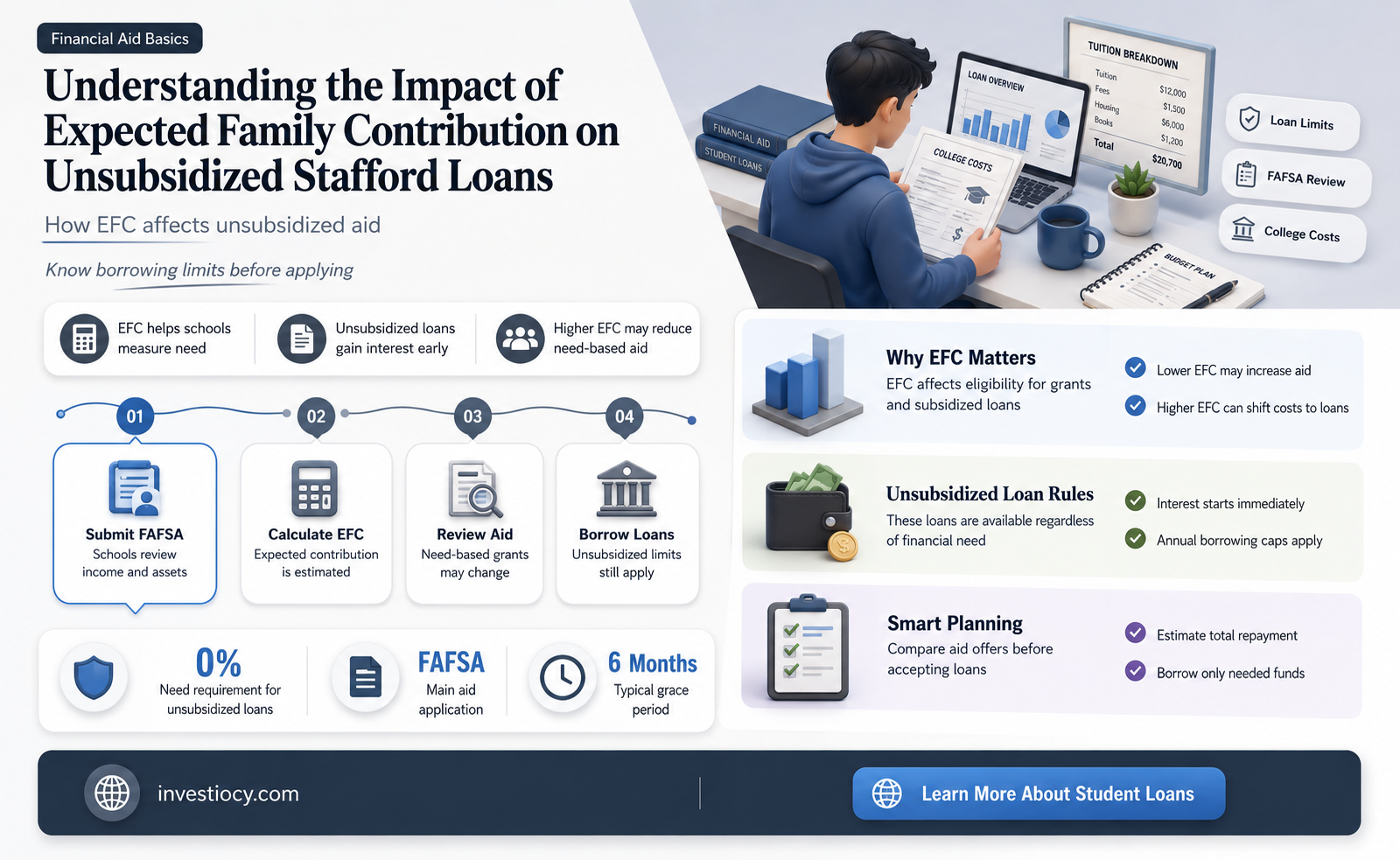
The Expected Family Contribution (EFC) is a crucial factor in determining the amount of financial aid a student is eligible to receive, including unsubsidized Stafford loans. Calculated based on a family's income, assets, and the number of family members attending college, the EFC represents the amount of money a family is expected to contribute towards a student's education. When it comes to unsubsidized Stafford loans, which are available to both undergraduate and graduate students regardless of financial need, the EFC can still play a role in the overall financial aid package. While these loans are not based on financial need, they are subject to annual and aggregate loan limits. Therefore, understanding how the EFC affects the availability and amount of unsubsidized Stafford loans is essential for students and families navigating the college financial aid process.
Explore related products


$14.99 $6.95


What You'll Learn
- Understanding Expected Family Contribution (EFC): Definition and calculation of EFC for federal student aid
- Stafford Loan Basics: Overview of subsidized and unsubsidized Stafford loans, including eligibility and borrowing limits
- EFC's Impact on Loan Subsidization: Explanation of how EFC determines eligibility for subsidized Stafford loans
- Repayment Options: Various repayment plans available for Stafford loans, including income-driven repayment
- Financial Aid Strategies: Tips for minimizing EFC and maximizing financial aid for college education

Understanding Expected Family Contribution (EFC): Definition and calculation of EFC for federal student aid
The Expected Family Contribution (EFC) is a crucial metric in determining a student's eligibility for federal aid, including unsubsidized Stafford loans. It represents the amount of money a family is expected to contribute towards a student's education expenses. The EFC is calculated based on a formula that takes into account the family's income, assets, number of family members, and the number of family members attending college.
To calculate the EFC, the family must first complete the Free Application for Federal Student Aid (FAFSA). This form collects detailed information about the family's financial situation, which is then used to determine the EFC. The formula used to calculate the EFC is complex and takes into account various factors, including:
- Income: The family's total income from the previous year is a significant factor in determining the EFC. The higher the income, the higher the EFC will be.
- Assets: The family's assets, such as savings accounts, investments, and property, are also considered in the EFC calculation. Assets can impact the EFC, but the effect is typically less pronounced than income.
- Family Size: The number of people in the family, including parents and siblings, is taken into account. A larger family size can result in a lower EFC.
- Number of Family Members in College: If multiple family members are attending college simultaneously, this can reduce the EFC for each student.
Once the EFC is calculated, it is used to determine the student's eligibility for various types of federal aid, including unsubsidized Stafford loans. The EFC directly affects the amount of aid a student can receive, as it represents the portion of education expenses that the family is expected to cover.
In summary, understanding the Expected Family Contribution is essential for students and families navigating the federal aid process. By completing the FAFSA and providing accurate financial information, families can determine their EFC and better understand their options for funding higher education.
Understanding Excess Distribution: Does It Include Loan Basis?
You may want to see also
Explore related products


$20.99 $25.99


Stafford Loan Basics: Overview of subsidized and unsubsidized Stafford loans, including eligibility and borrowing limits
Subsidized Stafford loans are available to undergraduate students who demonstrate financial need, as determined by the FAFSA. The federal government pays the interest on these loans while the borrower is in school, making them a more affordable option for students with limited financial resources. To be eligible for a subsidized Stafford loan, students must be enrolled at least half-time in a degree or certificate program at an accredited institution.
Unsubsidized Stafford loans, on the other hand, are available to both undergraduate and graduate students, regardless of financial need. These loans do not have the same interest-free benefit as subsidized loans, meaning the borrower is responsible for paying all accrued interest. However, unsubsidized loans can be a valuable resource for students who need additional funding beyond what is available through subsidized loans or other forms of financial aid.
The borrowing limits for Stafford loans vary depending on the student's year in school and whether they are pursuing an undergraduate or graduate degree. For undergraduate students, the annual borrowing limit is $5,500 for freshmen, $6,500 for sophomores, and $7,500 for juniors and seniors. Graduate students can borrow up to $20,500 per year. It's important to note that these limits are subject to change and may be adjusted based on the student's individual circumstances.
One key difference between subsidized and unsubsidized Stafford loans is the impact of the expected family contribution (EFC). The EFC is a measure of a family's financial ability to contribute to a student's education, as determined by the FAFSA. For subsidized loans, the EFC directly affects the amount of loan funding a student is eligible to receive. Students with a lower EFC may qualify for a larger subsidized loan. In contrast, the EFC does not affect the eligibility or borrowing limits for unsubsidized loans. This means that students can borrow the same amount in unsubsidized loans regardless of their family's financial situation.
When considering Stafford loans, it's essential for students to understand the differences between subsidized and unsubsidized options and how the EFC impacts their eligibility. By carefully reviewing the borrowing limits and interest rates associated with each type of loan, students can make informed decisions about their financial aid and better plan for their educational expenses.
Exploring the Universal Path: Do We All Encounter Loans?
You may want to see also
Explore related products


$16.95 $16.95


EFC's Impact on Loan Subsidization: Explanation of how EFC determines eligibility for subsidized Stafford loans
The Expected Family Contribution (EFC) plays a pivotal role in determining a student's eligibility for subsidized Stafford loans. Essentially, the EFC is a measure of a family's financial strength and is calculated based on the information provided in the Free Application for Federal Student Aid (FAFSA). This calculation takes into account various factors such as family income, assets, number of family members, and the number of family members attending college.
In the context of subsidized Stafford loans, the EFC directly impacts the amount of loan a student can receive. Subsidized loans are designed to assist students who demonstrate financial need, and the EFC helps in assessing this need. The lower the EFC, the higher the likelihood of a student qualifying for a subsidized loan, as it indicates that the family has limited financial resources to contribute towards the student's education.
Moreover, the EFC not only determines eligibility but also influences the interest rate and repayment terms of the loan. For instance, students with a lower EFC may be eligible for loans with lower interest rates and more favorable repayment conditions. This is because the government aims to make higher education accessible to students from all financial backgrounds, and subsidized loans are a means to achieve this goal.
It's important to note that the EFC does not affect unsubsidized Stafford loans in the same way. Unsubsidized loans are available to students regardless of their financial need, and the EFC does not determine the interest rate or repayment terms for these loans. However, understanding the EFC is still crucial for students applying for unsubsidized loans, as it can impact their overall financial aid package and the amount of debt they may incur.
In conclusion, the Expected Family Contribution is a critical factor in the loan subsidization process for Stafford loans. It not only determines a student's eligibility for subsidized loans but also influences the loan's interest rate and repayment terms. By understanding how the EFC is calculated and its impact on loan subsidization, students can make informed decisions about their financial aid options and better plan for their educational expenses.
Impact of Exit Counseling on Loan Disbursement: What You Need to Know
You may want to see also
Repayment Options: Various repayment plans available for Stafford loans, including income-driven repayment
For borrowers of Stafford loans, understanding the various repayment options is crucial to managing their debt effectively. One of the most flexible repayment plans available is the income-driven repayment (IDR) plan. This plan adjusts the monthly payment amount based on the borrower's income and family size, making it more manageable for those with lower incomes. There are several types of IDR plans, including the Revised Pay As You Earn (REPAYE) plan, the Pay As You Earn (PAYE) plan, the Income-Based Repayment (IBR) plan, and the Income-Contingent Repayment (ICR) plan. Each plan has its own eligibility requirements and benefits, so borrowers should carefully review their options to determine which plan best suits their financial situation.
In addition to IDR plans, Stafford loan borrowers may also be eligible for other repayment plans, such as the Standard Repayment plan, the Graduated Repayment plan, and the Extended Repayment plan. The Standard Repayment plan is the default repayment plan for Stafford loans, with a fixed monthly payment amount over a 10-year period. The Graduated Repayment plan allows borrowers to start with lower monthly payments that gradually increase over time, while the Extended Repayment plan extends the repayment period to up to 25 years, resulting in lower monthly payments. Borrowers should consider their long-term financial goals and current financial situation when choosing a repayment plan.
It's important to note that the repayment plan a borrower chooses can have a significant impact on the total amount of interest paid over the life of the loan. For example, IDR plans may result in lower monthly payments, but they can also lead to higher total interest paid due to the longer repayment period. On the other hand, plans with higher monthly payments, such as the Standard Repayment plan, may result in lower total interest paid. Borrowers should use online loan repayment calculators or consult with a financial aid advisor to estimate the total cost of their loan under different repayment plans.
Another factor to consider when choosing a repayment plan is the potential for loan forgiveness. Some repayment plans, such as IDR plans, offer loan forgiveness after a certain number of qualifying payments. For example, under the REPAYE plan, borrowers may be eligible for loan forgiveness after 20 years of qualifying payments. However, it's important to note that loan forgiveness may be subject to certain conditions, such as maintaining a specific repayment plan and making timely payments. Borrowers should carefully review the terms and conditions of their repayment plan to understand their eligibility for loan forgiveness.
In conclusion, Stafford loan borrowers have a variety of repayment options available to them, each with its own benefits and drawbacks. By carefully considering their financial situation, long-term goals, and the terms and conditions of each repayment plan, borrowers can choose a plan that best suits their needs and helps them manage their debt effectively.
Exploring the Role of Financial Intermediaries in Every Loan
You may want to see also
Financial Aid Strategies: Tips for minimizing EFC and maximizing financial aid for college education
To minimize the Expected Family Contribution (EFC) and maximize financial aid for college education, it's crucial to understand the factors that influence the EFC calculation. The EFC is determined by a formula that considers the family's income, assets, number of family members, and the number of family members attending college. By strategically managing these factors, families can potentially reduce their EFC and increase their eligibility for financial aid.
One effective strategy is to optimize the timing of income and asset reporting. Since the EFC is based on the previous year's income and assets, families can plan their finances to minimize taxable income and asset values during the year prior to applying for financial aid. This might involve accelerating income recognition, maximizing retirement contributions, or strategically using 529 college savings plans to reduce reportable assets.
Another important consideration is the number of family members and the number attending college. Families with multiple children attending college simultaneously may be eligible for a higher amount of financial aid due to the increased financial burden. Additionally, families can explore options such as income-sharing agreements or education loans to help cover the costs of college education.
Families should also be aware of the impact of student loans on the EFC. While subsidized Stafford loans are based on financial need and do not require interest payments during school, unsubsidized Stafford loans are available to all students regardless of financial need and do accrue interest. By understanding the differences between these loan types and strategically managing loan debt, families can minimize the overall cost of college education and reduce the EFC.
In conclusion, minimizing the EFC and maximizing financial aid for college education requires a comprehensive understanding of the factors that influence the EFC calculation. By optimizing income and asset reporting, considering the number of family members and those attending college, and strategically managing student loan debt, families can potentially reduce their financial burden and increase their eligibility for financial aid.
Exploring Loan Recasting Options: A Comprehensive Lender Comparison
You may want to see also
Frequently asked questions
Yes, your Expected Family Contribution (EFC) can impact the amount you're eligible to borrow through an unsubsidized Stafford loan. The EFC is calculated based on your family's income and assets, and it determines how much financial aid you can receive. If your EFC is high, you may be eligible for less in loans or other forms of financial aid.
The Expected Family Contribution (EFC) is calculated using a formula that takes into account your family's adjusted gross income, untaxed income, and assets. The calculation also considers the number of family members and the number of dependents attending college. You can use the Free Application for Federal Student Aid (FAFSA) to determine your EFC.
Subsidized Stafford loans are available to undergraduate students who demonstrate financial need, and the government pays the interest on these loans while you're in school and during any deferment periods. Unsubsidized Stafford loans, on the other hand, are available to both undergraduate and graduate students, and you're responsible for paying the interest on these loans from the time they're disbursed.
Yes, you can still receive an unsubsidized Stafford loan even if your Expected Family Contribution (EFC) is high. However, your eligibility for other forms of financial aid, such as grants and scholarships, may be limited. It's important to explore all of your financial aid options and to consult with a financial aid advisor to determine the best way to fund your education.
