Clark Galvan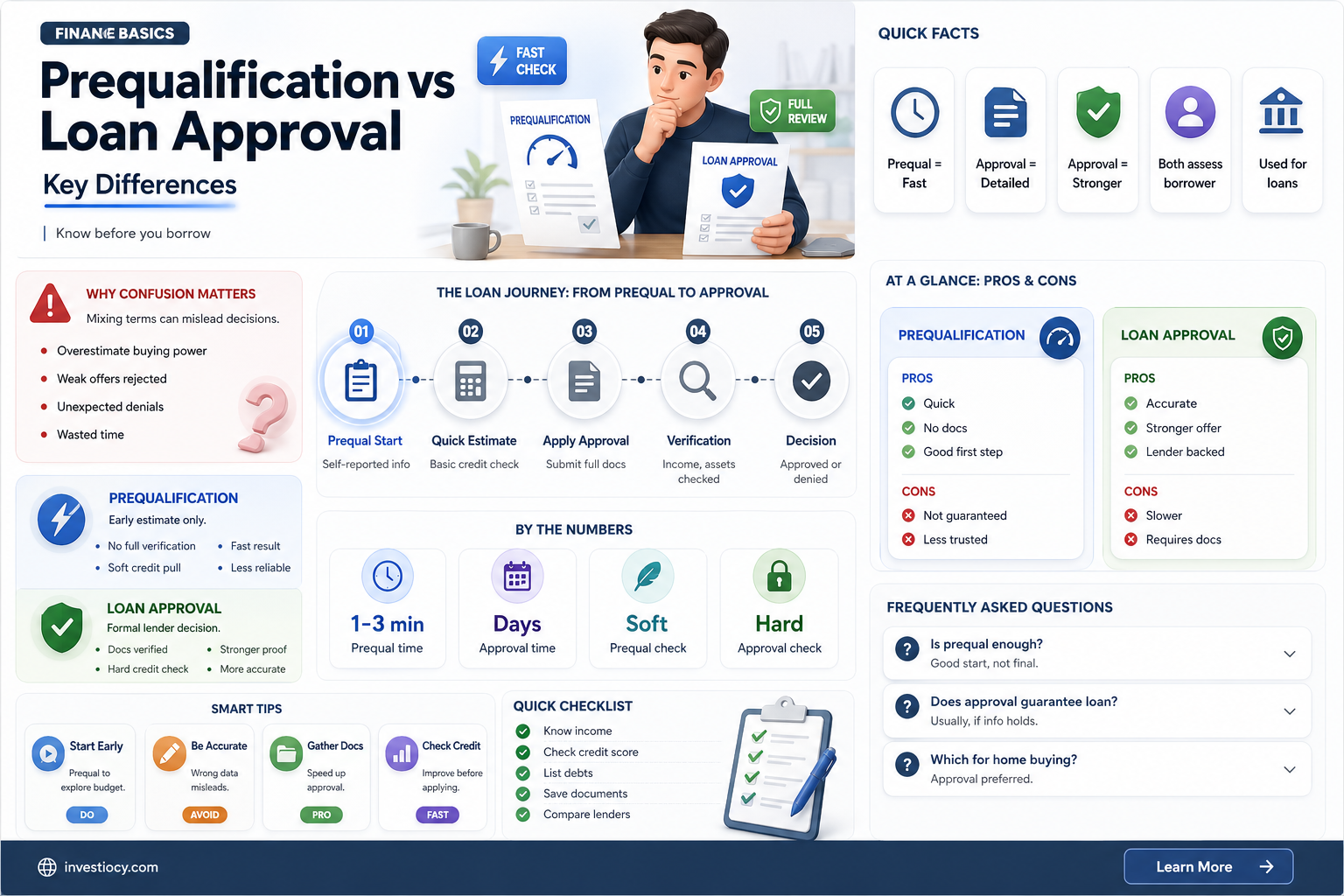
Prequalification is an initial step in the loan application process where a lender evaluates a borrower's creditworthiness based on information provided. It's a way to gauge whether a borrower is likely to qualify for a loan and, if so, for what amount and under what terms. However, it's important to note that prequalification does not guarantee a loan. It merely indicates that the borrower meets the lender's preliminary criteria. Final approval depends on a more thorough review of the borrower's financial situation, including income verification, debt-to-income ratio, and other factors. Therefore, while prequalification can give borrowers a sense of their eligibility, it's not a definitive promise of loan approval.
Explore related products


What You'll Learn
- Definition of Prequalification: Understanding what prequalification entails and its significance in the loan application process
- Prequalification vs. Preapproval: Differentiating between prequalification and preapproval, and their implications for loan approval
- Factors Considered in Prequalification: Overview of credit score, income, debt, and other factors lenders review during prequalification
- Benefits of Prequalification: Exploring how prequalification can help borrowers understand their loan options and negotiate better terms
- Limitations of Prequalification: Discussing why prequalification does not guarantee final loan approval and what can change during the formal application process

Definition of Prequalification: Understanding what prequalification entails and its significance in the loan application process
Prequalification is a preliminary evaluation by a lender to determine if a potential borrower meets the basic criteria for a loan. This process involves a review of the borrower's credit score, income, and other financial information to assess their creditworthiness. Prequalification is often the first step in the loan application process and can help borrowers understand their chances of approval before submitting a formal application.
One of the key aspects of prequalification is that it does not guarantee loan approval. While prequalification can provide a good indication of whether a borrower is likely to be approved, it is not a binding agreement between the lender and the borrower. Lenders may still require additional information and documentation before making a final decision, and they may also consider other factors such as the borrower's debt-to-income ratio and employment history.
Prequalification is significant because it allows borrowers to get a sense of their financial standing and identify any potential issues that may affect their ability to secure a loan. This can help them make informed decisions about their financial future and take steps to improve their creditworthiness if necessary. Additionally, prequalification can save time and effort by preventing borrowers from submitting formal loan applications that are unlikely to be approved.
In summary, prequalification is an important step in the loan application process that can provide valuable insights into a borrower's financial situation. However, it is essential to understand that prequalification does not guarantee loan approval and that lenders may still require additional information before making a final decision. By recognizing the significance of prequalification and its limitations, borrowers can make more informed decisions about their financial future and increase their chances of securing a loan.
Explore related products





Prequalification vs. Preapproval: Differentiating between prequalification and preapproval, and their implications for loan approval
Prequalification and preapproval are two distinct steps in the loan application process, each serving a unique purpose and carrying different implications for potential borrowers. While both terms are often used interchangeably, understanding their differences is crucial for anyone seeking a loan.
Prequalification is an initial assessment by a lender to determine if a borrower meets the basic criteria for a loan. This step typically involves a soft credit check, which does not impact the borrower's credit score, and a review of their financial information, such as income, debt, and assets. Prequalification provides a preliminary indication of whether a borrower is likely to be approved for a loan and the potential loan amount they may qualify for. However, it is important to note that prequalification does not guarantee loan approval, as it is based on self-reported information and a more thorough evaluation is required for final approval.
On the other hand, preapproval involves a more comprehensive review of the borrower's financial situation, including a hard credit check, which can affect their credit score. During preapproval, the lender verifies the borrower's income, employment, credit history, and other financial details to determine their creditworthiness. If preapproved, the borrower receives a commitment letter outlining the loan terms, interest rate, and amount they are approved for. Preapproval carries more weight than prequalification, as it indicates a higher likelihood of loan approval, but it is still not a final guarantee.
The implications of prequalification versus preapproval are significant for borrowers. Prequalification allows individuals to quickly gauge their chances of securing a loan and the potential loan amount, which can be helpful when shopping for homes or other major purchases. However, it is a less reliable indicator of final approval compared to preapproval. Preapproval, while more time-consuming and impactful on credit scores, provides a stronger assurance of loan approval and allows borrowers to move forward with their financial plans with greater confidence.
In conclusion, while both prequalification and preapproval are important steps in the loan application process, they serve different purposes and carry different implications for borrowers. Prequalification offers a preliminary assessment of loan eligibility, while preapproval provides a more definitive indication of loan approval. Understanding these differences can help borrowers navigate the loan application process more effectively and make informed financial decisions.
Factors Considered in Prequalification: Overview of credit score, income, debt, and other factors lenders review during prequalification
Lenders scrutinize several key factors during the prequalification process to assess a borrower's creditworthiness. The primary factor is the credit score, which provides a snapshot of the borrower's credit history and their ability to repay debts. A higher credit score generally indicates a lower risk to the lender and can lead to more favorable loan terms. However, it's important to note that different lenders may have varying minimum credit score requirements, and some may consider alternative credit scoring models that take into account additional factors such as rent payments or utility bills.
Income is another critical factor in the prequalification process. Lenders want to ensure that the borrower has a stable and sufficient income to cover their monthly loan payments. This is typically evaluated by reviewing the borrower's pay stubs, tax returns, and bank statements. Debt-to-income ratio (DTI) is also a key consideration, as it measures the percentage of the borrower's monthly income that goes towards paying debts. A lower DTI ratio indicates that the borrower has more income available to cover their loan payments and is therefore considered less risky.
In addition to credit score and income, lenders also review the borrower's debt obligations, including credit card debt, student loans, and other outstanding loans. They want to ensure that the borrower is not overextended and has the capacity to take on additional debt. The type of debt, as well as the interest rates and repayment terms, can also impact the lender's decision. For example, a borrower with a high amount of high-interest credit card debt may be considered a higher risk than a borrower with a similar amount of low-interest student loan debt.
Other factors that lenders may consider during prequalification include the borrower's employment history, assets, and any outstanding legal or financial obligations. Employment history can provide insight into the borrower's job stability and potential for future income growth. Assets, such as savings accounts, investments, or property, can serve as collateral for the loan and may also indicate the borrower's financial stability. Outstanding legal or financial obligations, such as child support or alimony payments, can impact the borrower's ability to repay the loan and may be taken into account by the lender.
It's important to note that prequalification does not guarantee a loan, but rather provides an initial assessment of the borrower's creditworthiness. The final loan decision will depend on a more thorough review of the borrower's financial situation, as well as other factors such as the loan amount, interest rate, and repayment terms. Borrowers should also be aware that prequalification may involve a soft credit inquiry, which can impact their credit score, although the impact is typically minimal and temporary.
Benefits of Prequalification: Exploring how prequalification can help borrowers understand their loan options and negotiate better terms
Prequalification serves as a critical first step in the loan application process, offering borrowers a clear understanding of their financial standing and the loan options available to them. By providing a snapshot of their creditworthiness, prequalification empowers borrowers to make informed decisions about the type and amount of loan they can afford. This preliminary assessment not only helps in setting realistic expectations but also aids in identifying potential areas for financial improvement, such as debt consolidation or credit score enhancement.
One of the key benefits of prequalification is its ability to streamline the loan application process. By obtaining a prequalification letter, borrowers can demonstrate their financial readiness to lenders, which can lead to a smoother and more efficient loan approval process. This letter also serves as a valuable tool for borrowers when shopping for loans, as it allows them to compare different loan options and negotiate better terms with lenders. For instance, a borrower with a strong prequalification letter may be able to secure a lower interest rate or more favorable repayment terms.
Moreover, prequalification can help borrowers avoid potential pitfalls in the loan application process. By understanding their loan options upfront, borrowers are less likely to apply for loans that are beyond their financial capabilities, reducing the risk of loan denial or financial overextension. Additionally, prequalification can help borrowers identify and correct any errors or discrepancies in their credit reports, which can improve their chances of loan approval and better terms.
In conclusion, prequalification is a valuable tool for borrowers seeking to understand their loan options and negotiate better terms. By providing a clear picture of their financial standing, prequalification empowers borrowers to make informed decisions, streamline the loan application process, and avoid potential pitfalls. As such, it is an essential step for anyone considering applying for a loan.
Limitations of Prequalification: Discussing why prequalification does not guarantee final loan approval and what can change during the formal application process
Prequalification is often seen as a preliminary step in the loan application process, providing potential borrowers with an indication of their eligibility for a loan. However, it is crucial to understand that prequalification does not guarantee final loan approval. Several factors can change during the formal application process that may impact the final decision.
One of the primary limitations of prequalification is that it is based on self-reported information. Borrowers provide details about their income, debt, and credit history, but these figures are not verified during the prequalification stage. Once a formal application is submitted, lenders will conduct a thorough verification process, which may reveal discrepancies or issues that were not initially disclosed.
Another limitation is that prequalification does not account for all the factors that lenders consider when making a final decision. For example, while prequalification may give an indication of the borrower's creditworthiness, it does not take into account the specific terms of the loan, such as the interest rate or repayment period. Additionally, lenders may have different criteria or overlays that they apply during the formal application process, which can affect the final approval.
Furthermore, prequalification is typically valid for a limited period, usually 30 to 60 days. If the borrower's financial situation changes during this time, it may impact their eligibility for the loan. For instance, if a borrower loses their job or incurs additional debt, they may no longer qualify for the loan amount they were initially prequalified for.
In conclusion, while prequalification can be a useful tool for borrowers to gauge their eligibility for a loan, it is important to recognize its limitations. Prequalification does not guarantee final loan approval, and several factors can change during the formal application process that may impact the lender's decision. Borrowers should be prepared to provide accurate and up-to-date information and should be aware that prequalification is only a preliminary step in the loan application process.
Frequently asked questions
No, prequalification does not guarantee a loan. It is an initial step in the loan application process where a lender evaluates your creditworthiness based on information you provide. Prequalification gives you an idea of whether you might be eligible for a loan and what interest rate you might qualify for, but it is not a binding agreement.
Prequalification is a preliminary evaluation of your creditworthiness, while preapproval is a more formal process where the lender verifies the information you provided during prequalification. Preapproval often involves a hard credit check and a more detailed review of your financial situation. While prequalification gives you an estimate of your eligibility, preapproval provides a more definitive answer on whether you qualify for a loan and the terms you might receive.
Prequalification typically involves a soft credit check, which does not negatively impact your credit score. However, if you proceed to the preapproval stage, a hard credit check will be conducted, which can temporarily lower your credit score. It's important to note that multiple hard inquiries within a short period can have a more significant impact on your credit score, so it's advisable to limit the number of loan applications you submit.