Clark Galvan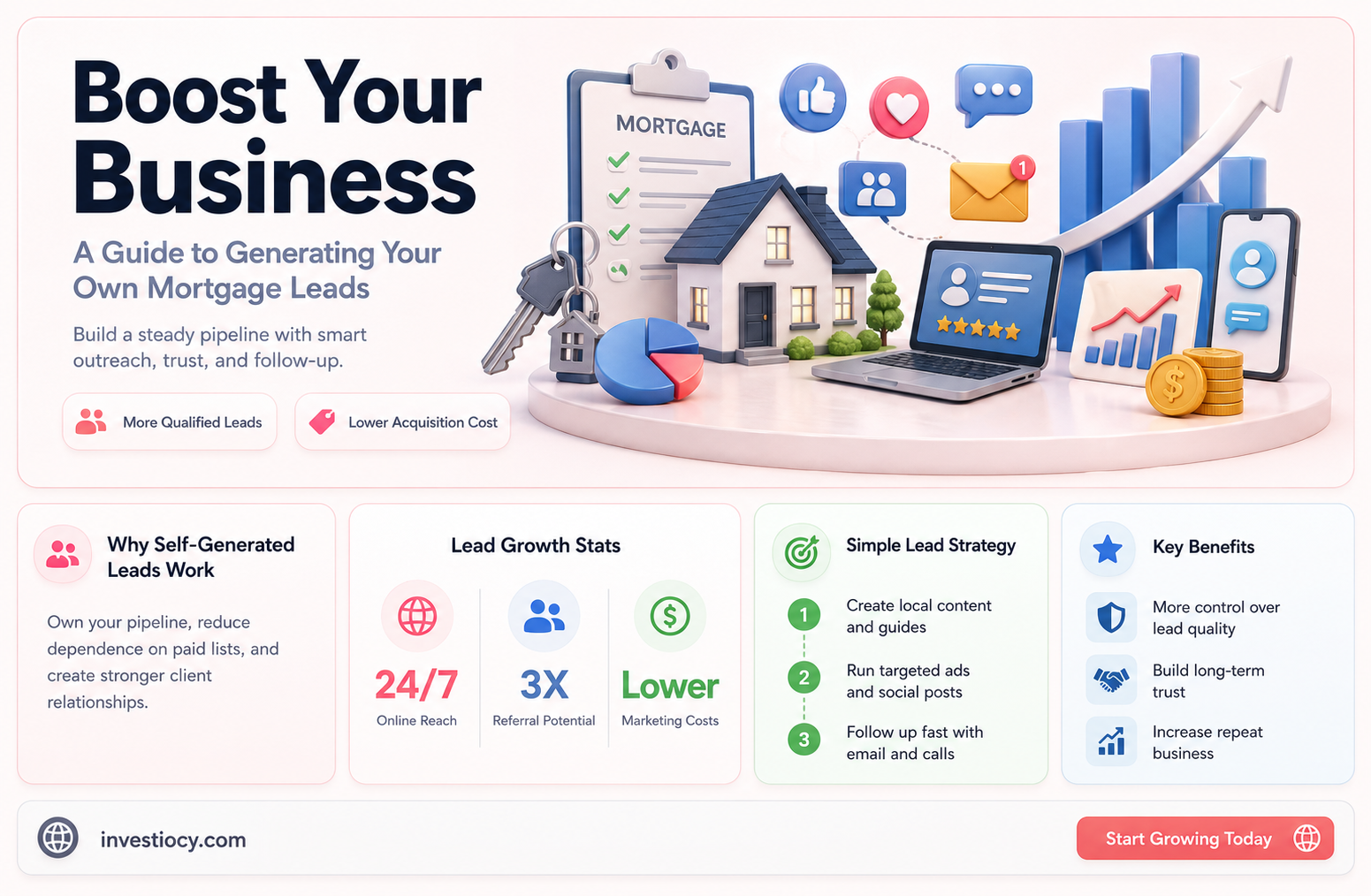
To generate your own mortgage leads, you'll need to implement a strategic marketing plan that targets potential homebuyers and refinancers. Start by creating a professional website that showcases your expertise and services, including a user-friendly mortgage calculator and a lead capture form. Utilize search engine optimization (SEO) techniques to improve your website's visibility on search engines like Google. Leverage social media platforms to engage with your audience, share valuable content, and run targeted ads. Consider offering free resources, such as e-books or webinars, to attract potential clients and establish yourself as a thought leader in the industry. Networking with real estate agents, attending local events, and participating in online forums can also help you build relationships and generate leads. By combining these tactics with consistent follow-up and nurturing, you can create a steady pipeline of mortgage leads and grow your business.
Explore related products




What You'll Learn
- Understanding Mortgage Leads: Define mortgage leads and their importance in the loan origination process
- Identifying Target Audience: Determine the ideal demographic and psychographic profiles for mortgage lead generation
- Marketing Strategies: Explore various marketing channels such as social media, email, and content marketing to attract leads
- Lead Capture Techniques: Learn about effective methods to capture leads, including landing pages and call-to-actions
- Lead Nurturing and Conversion: Discover strategies to nurture leads and convert them into paying clients

Understanding Mortgage Leads: Define mortgage leads and their importance in the loan origination process
Mortgage leads are potential borrowers who have expressed interest in obtaining a mortgage loan. These leads are crucial in the loan origination process as they represent the initial pool of prospects from which lenders can identify and engage with qualified borrowers. The quality and quantity of mortgage leads can significantly impact a lender's ability to generate new business and maintain a robust pipeline of loans.
The importance of mortgage leads lies in their role as the foundation of the lending process. Without a steady stream of leads, lenders would struggle to find new borrowers and maintain their market share. Leads can be generated through various channels, including online advertising, social media, referrals, and direct mail campaigns. The key is to identify the most effective channels for reaching potential borrowers and converting them into qualified leads.
Once a lead is generated, it is essential to nurture it through the lending process. This involves building a relationship with the potential borrower, providing them with valuable information about mortgage options, and guiding them through the application and approval process. By effectively managing mortgage leads, lenders can increase their conversion rates and generate more revenue.
In the context of creating your own mortgage leads, it is important to understand the different types of leads and their value. For example, exclusive leads are more valuable than shared leads because they are only provided to one lender, reducing competition and increasing the likelihood of conversion. Additionally, understanding the demographics and preferences of potential borrowers can help lenders tailor their marketing efforts and improve lead quality.
To generate high-quality mortgage leads, lenders should focus on providing value to potential borrowers. This can be achieved by offering educational resources, such as guides on the mortgage process or tips for first-time homebuyers. By positioning themselves as a trusted advisor, lenders can build credibility and increase the likelihood of attracting qualified leads.
In conclusion, mortgage leads are a critical component of the loan origination process. By understanding the importance of leads and implementing effective strategies for generating and nurturing them, lenders can improve their business outcomes and maintain a competitive edge in the market.
Smart Strategies for Making Extra Mortgage Payments
You may want to see also
Explore related products


Identifying Target Audience: Determine the ideal demographic and psychographic profiles for mortgage lead generation
To effectively generate mortgage leads, it's crucial to first identify your target audience with precision. This involves delving into demographic data to pinpoint the age groups, income levels, and geographic locations that are most likely to require mortgage services. For instance, you might focus on first-time homebuyers, typically aged between 25 and 40, with a steady income and a desire to settle down. Alternatively, you could target older individuals looking to refinance their existing mortgages or invest in a second home.
Beyond demographics, psychographic profiling is equally important. This entails understanding the values, attitudes, and behaviors of your potential clients. Are they risk-averse or open to financial opportunities? Do they prioritize stability or are they willing to take on more debt for a larger home? By creating detailed psychographic profiles, you can tailor your marketing messages to resonate with your audience's motivations and concerns, increasing the likelihood of engagement and conversion.
One effective strategy for identifying your target audience is to analyze existing customer data. If you've already been in the mortgage business for some time, you likely have a wealth of information about your past clients. By examining their characteristics and behaviors, you can identify patterns and trends that can inform your lead generation efforts. For example, you might notice that a significant portion of your clients are professionals in their 30s and 40s who are looking to purchase their first home. This insight could guide you in creating targeted marketing campaigns that speak directly to this demographic.
Another approach is to conduct market research, either through surveys, focus groups, or online analytics tools. This can provide valuable insights into the needs and preferences of your potential clients, helping you to refine your target audience further. For instance, you might discover that there's a growing demand for mortgage services among self-employed individuals or those with non-traditional income sources. By understanding these trends, you can position yourself to meet the needs of these underserved segments.
In conclusion, identifying your target audience is a critical step in generating mortgage leads. By combining demographic and psychographic data with insights from existing customer relationships and market research, you can create a comprehensive profile of your ideal clients. This, in turn, will enable you to craft targeted marketing messages and strategies that are more likely to resonate with your audience and drive conversions.
Simplifying Your Wells Fargo Mortgage Payment Process
You may want to see also
Explore related products


Marketing Strategies: Explore various marketing channels such as social media, email, and content marketing to attract leads
To effectively generate mortgage leads, it's crucial to leverage a variety of marketing channels. Social media platforms like Facebook, Instagram, and LinkedIn can be powerful tools for reaching potential clients. By creating targeted ads and engaging content, you can attract individuals who are actively searching for mortgage services. Email marketing is another effective strategy, allowing you to send personalized messages directly to potential leads. Building an email list through website sign-ups or purchasing targeted lists can help you reach a wider audience.
Content marketing is a valuable long-term strategy for generating mortgage leads. By creating informative blog posts, videos, and infographics, you can establish yourself as an expert in the field and attract organic traffic to your website. This approach not only helps with lead generation but also builds trust and credibility with potential clients. Additionally, partnering with influencers or other businesses in the real estate industry can help you tap into their existing networks and reach new leads.
When implementing these marketing strategies, it's important to track and analyze your results to determine which channels are most effective for your business. Utilizing tools like Google Analytics and social media insights can provide valuable data on your audience's behavior and preferences. By continuously refining your marketing approach based on this data, you can optimize your lead generation efforts and achieve better results over time.
In summary, exploring various marketing channels such as social media, email, and content marketing can significantly enhance your ability to attract mortgage leads. By creating targeted and engaging content, building relationships with potential clients, and continuously analyzing your results, you can develop a successful lead generation strategy for your mortgage business.
How to Make an Overpayment on Your Barclays Mortgage: A Step-by-Step Guide
You may want to see also
Lead Capture Techniques: Learn about effective methods to capture leads, including landing pages and call-to-actions
Effective lead capture techniques are essential for generating mortgage leads. One of the most successful methods is creating high-converting landing pages. These pages are designed to capture visitor information in exchange for a valuable offer, such as a free eBook or a consultation. To create an effective landing page, focus on a clear and compelling headline, use bullet points to highlight the benefits of your offer, and include a prominent call-to-action (CTA) button. Ensure your landing page is mobile-friendly and loads quickly to improve user experience and conversion rates.
Another powerful lead capture technique is the use of targeted call-to-actions. CTAs are prompts that encourage visitors to take a specific action, such as filling out a contact form or scheduling a consultation. To maximize the effectiveness of your CTAs, make sure they are relevant to the content on the page and use action-oriented language. For example, instead of saying "Learn More," use "Get Your Free Consultation Now." Place CTAs strategically on your website, especially on pages with high traffic, to increase the likelihood of lead generation.
Social media platforms can also be leveraged for lead capture. By running targeted ads and promoting valuable content, you can attract potential clients and encourage them to provide their contact information. Use lead generation forms within social media platforms to simplify the process for users and increase conversion rates. Additionally, engaging with users through comments and messages can help build relationships and trust, ultimately leading to more qualified leads.
Email marketing remains a vital component of lead capture strategies. By offering valuable content or exclusive deals in exchange for email addresses, you can build a list of potential clients. Use segmentation and personalization to tailor your email campaigns to specific groups, increasing the relevance and effectiveness of your messaging. Implementing a lead nurturing program can help move prospects through your sales funnel, converting them into paying clients over time.
Lastly, consider using webinars and online events as lead capture tools. By hosting informative sessions on topics relevant to your target audience, you can attract potential clients and capture their contact information during the registration process. Follow up with attendees after the event to provide additional value and move them further along in your sales process.
In conclusion, effective lead capture techniques involve a combination of strategic planning, compelling content, and targeted actions. By implementing these methods, you can increase your chances of generating high-quality mortgage leads and growing your business.
Lead Nurturing and Conversion: Discover strategies to nurture leads and convert them into paying clients
To effectively nurture leads and convert them into paying clients in the mortgage industry, it's crucial to understand the buyer's journey. This process involves several stages, from initial awareness to consideration and finally, decision-making. By tailoring your approach to each stage, you can significantly increase the likelihood of conversion.
One strategy is to provide valuable content that addresses the specific needs and concerns of potential clients at each stage. For instance, during the awareness stage, you might offer educational resources about mortgage options, interest rates, and the home-buying process. As leads move into the consideration stage, you can provide more personalized content, such as case studies or testimonials, that demonstrate the benefits of your services.
Another key aspect of lead nurturing is consistent follow-up. This doesn't mean bombarding leads with emails or calls, but rather maintaining regular, meaningful communication. You can use email marketing campaigns, social media engagement, or even direct mail to stay in touch. The goal is to build trust and establish your brand as a reliable, knowledgeable resource.
When it comes to conversion, timing is everything. You need to strike while the iron is hot, so to speak. This means being attentive to the signals that a lead is ready to make a decision, such as increased engagement with your content or inquiries about specific mortgage products. By being proactive and responsive, you can capitalize on these opportunities and guide leads through the final stages of the sales process.
In addition to these strategies, it's important to continuously monitor and analyze your lead nurturing efforts. This involves tracking key metrics, such as open rates, click-through rates, and conversion rates, to identify areas for improvement. By refining your approach based on data-driven insights, you can optimize your lead nurturing and conversion strategies for maximum effectiveness.
Frequently asked questions
Effective strategies for generating your own mortgage leads include leveraging social media platforms to reach a wider audience, creating informative content such as blogs or videos that address common mortgage concerns, networking with real estate professionals who can refer potential clients, and utilizing online advertising to target specific demographics interested in mortgage services.
To generate mortgage leads through social media, you can create a professional profile on platforms like LinkedIn, Facebook, or Twitter, regularly post valuable content related to mortgages and home financing, engage with users by responding to comments and messages promptly, join relevant groups or forums where potential clients may be seeking advice, and use targeted advertising to reach individuals who are likely to be interested in mortgage services.
To attract mortgage leads, you should create content that provides valuable information and addresses common questions or concerns related to mortgages. This can include blog posts, infographics, videos, or webinars that cover topics such as understanding credit scores, choosing the right mortgage type, navigating the home buying process, or tips for refinancing. By offering helpful and informative content, you can establish yourself as an expert in the field and attract potential clients who are seeking guidance on their mortgage needs.