 Inaya Mclaughlin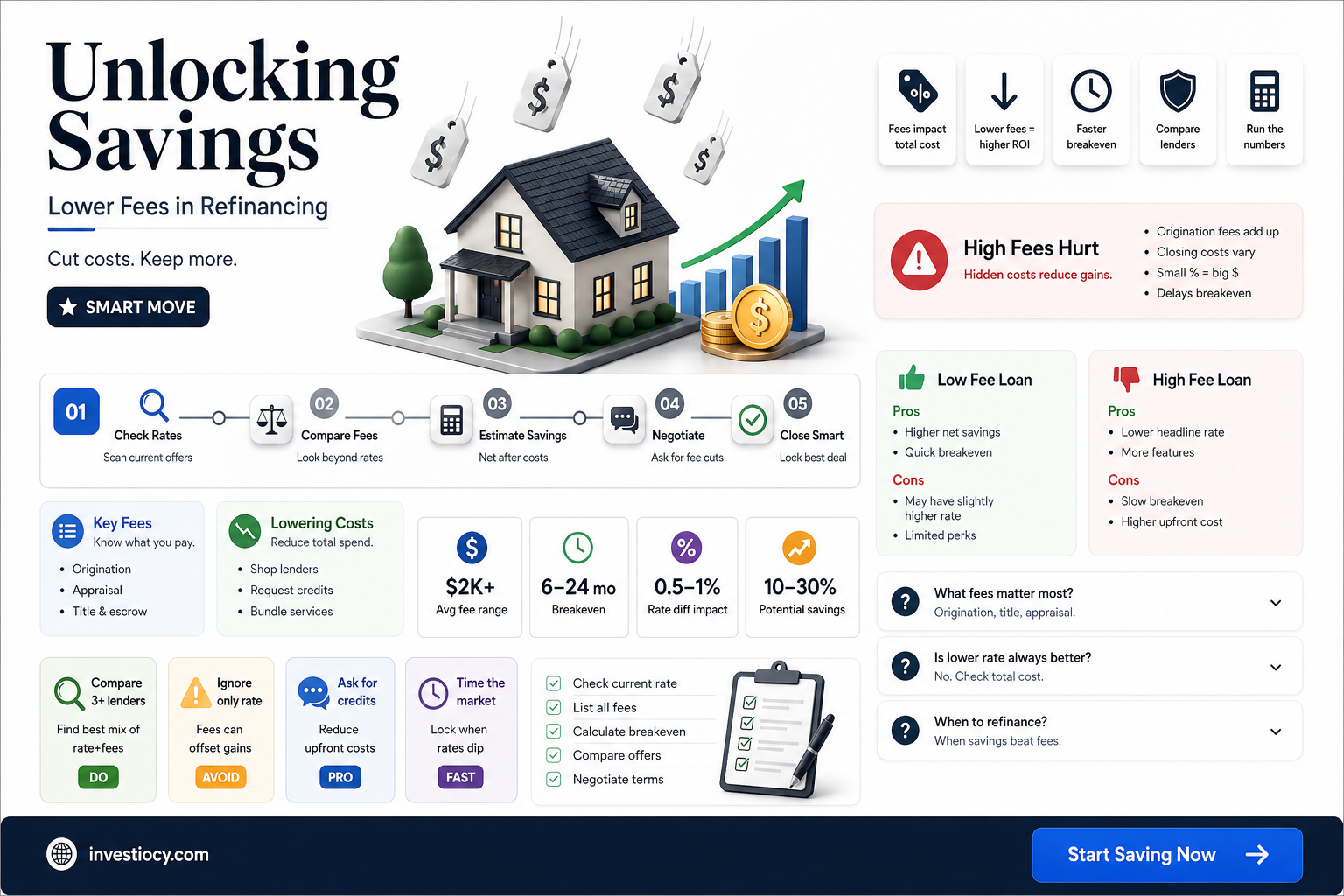
Lowering the fees associated with refinancing your mortgage can have several significant benefits. Firstly, it reduces the upfront costs, making the refinancing process more accessible and affordable for homeowners. This can be particularly advantageous for those looking to take advantage of lower interest rates or change their loan terms. Secondly, lower fees can lead to a faster break-even point, allowing homeowners to start saving money on their monthly payments sooner. Additionally, reduced fees can make refinancing more attractive for those with limited equity or those who plan to sell their home in the near future, as it minimizes the financial burden of the refinancing process. Overall, lowering the fees can make refinancing a more viable and cost-effective option for a wider range of homeowners.
Explore related products


What You'll Learn
- Reduced Monthly Payments: Lower fees decrease the overall cost, allowing for smaller monthly installments
- Increased Savings: With reduced fees, homeowners can save more money over the life of the loan
- Faster Equity Build: Lower costs can lead to quicker accumulation of home equity
- Improved Cash Flow: Reduced mortgage payments free up more cash for other financial needs or investments
- Enhanced Financial Flexibility: Lower fees make it easier to manage unexpected expenses or financial emergencies

Reduced Monthly Payments: Lower fees decrease the overall cost, allowing for smaller monthly installments
Lowering the fees associated with refinancing a mortgage can have a significant impact on the overall cost of the loan. One of the primary benefits of reduced fees is the ability to secure smaller monthly installments. This can be particularly advantageous for homeowners who are looking to manage their cash flow more effectively or who may be facing financial constraints.
When refinancing a mortgage, various fees are typically involved, including application fees, origination fees, and closing costs. By reducing these fees, the total amount borrowed can be decreased, leading to lower monthly payments. For example, if a homeowner is refinancing a $200,000 mortgage and the fees are reduced by $5,000, the new loan amount would be $195,000. Assuming the same interest rate and loan term, the monthly payment on the new loan would be lower than the original loan, resulting in immediate savings.
Furthermore, reduced fees can also lead to long-term savings. Over the life of a mortgage, even small reductions in monthly payments can add up to significant savings. For instance, if the reduced fees result in a monthly payment that is $100 lower, over the course of a 30-year loan, this would equate to $36,000 in savings. This can be a substantial amount of money that can be used for other financial goals, such as investing, paying off other debts, or saving for retirement.
In addition to the financial benefits, reducing the fees associated with refinancing a mortgage can also provide peace of mind. Homeowners who are able to secure lower monthly payments may feel less stressed about their financial obligations and more confident in their ability to manage their finances. This can lead to improved overall well-being and a greater sense of financial security.
In conclusion, reducing the fees associated with refinancing a mortgage can have a significant impact on the overall cost of the loan, leading to smaller monthly installments and long-term savings. This can be particularly beneficial for homeowners who are looking to manage their cash flow more effectively or who may be facing financial constraints. By understanding the benefits of reduced fees, homeowners can make more informed decisions about refinancing their mortgage and achieving their financial goals.
Liberation from Debt: The Joy of a Mortgage-Free Life
You may want to see also
Explore related products


Increased Savings: With reduced fees, homeowners can save more money over the life of the loan
Homeowners who refinance their mortgages often do so with the goal of reducing their monthly payments or shortening the term of their loan. However, one of the most significant benefits of refinancing, especially when fees are lowered, is the potential for increased savings over the life of the loan. By securing a lower interest rate and reducing the fees associated with refinancing, homeowners can save thousands of dollars in interest payments and other costs.
For example, consider a homeowner who refinances a $200,000 mortgage from a 30-year term with a 4.5% interest rate to a 20-year term with a 3.5% interest rate. Assuming the homeowner pays $2,000 in closing costs, the total savings over the life of the loan could exceed $40,000. This is because the lower interest rate results in lower monthly payments, and the shorter term means the homeowner pays less interest overall. Additionally, by reducing the fees associated with refinancing, the homeowner can further increase their savings.
Another way to look at the potential savings is to consider the break-even point. This is the point at which the savings from the lower monthly payments equal the cost of refinancing. By lowering the fees, homeowners can reach this break-even point more quickly, which means they can start enjoying the full benefits of their savings sooner. For instance, if the homeowner in the previous example reduces their closing costs from $2,000 to $1,000, they could reach the break-even point in just over two years, compared to nearly four years with the higher fees.
It's also important to consider the long-term impact of these savings. By reducing the fees and securing a lower interest rate, homeowners can free up more money in their monthly budget, which can be used for other financial goals, such as saving for retirement, paying off other debts, or investing in home improvements. Over time, these savings can compound, leading to even greater financial benefits.
In conclusion, lowering the fees associated with refinancing a mortgage can have a significant impact on a homeowner's savings over the life of the loan. By securing a lower interest rate and reducing closing costs, homeowners can save thousands of dollars in interest payments and other expenses, reach the break-even point more quickly, and enjoy greater financial flexibility in the long term.
Understanding Inflation's Effect on Your Mortgage Costs
You may want to see also
Explore related products


Faster Equity Build: Lower costs can lead to quicker accumulation of home equity
Lowering the fees associated with refinancing your mortgage can have a profound impact on the speed at which you build equity in your home. Equity is the difference between the market value of your property and the outstanding balance of your mortgage. The quicker you can increase this equity, the more financial flexibility and security you'll have as a homeowner.
One of the primary benefits of reducing refinancing fees is that it allows you to allocate more of your monthly mortgage payments towards the principal balance of your loan. When you refinance with lower fees, you're essentially reducing the overall cost of borrowing, which frees up more of your money to go directly towards paying down the loan. This results in a faster reduction of your mortgage balance and, consequently, a quicker buildup of equity.
For example, let's consider a scenario where a homeowner refinances a $200,000 mortgage with an interest rate of 4.5% to a new rate of 3.5%. Assuming the homeowner continues to make the same monthly payments, the lower interest rate would result in a significant reduction in the total amount of interest paid over the life of the loan. This savings could amount to tens of thousands of dollars, which would otherwise be wasted on interest payments. Instead, this money can now be used to pay down the principal balance more quickly, leading to a faster accumulation of equity.
Furthermore, lower refinancing fees can also make it more feasible for homeowners to refinance in the first place. High upfront costs can often deter people from refinancing, even when it would be financially beneficial to do so. By reducing these fees, more homeowners are able to take advantage of refinancing opportunities, which can lead to a more stable and secure financial situation.
In conclusion, lowering the fees associated with refinancing your mortgage can have a significant impact on the speed at which you build equity in your home. By reducing the overall cost of borrowing and allowing more of your monthly payments to go towards the principal balance, you can accumulate equity more quickly and enjoy greater financial flexibility and security as a homeowner.
Decoding Modern Mortgages: Insights from Jared Vennett
You may want to see also
Explore related products






Improved Cash Flow: Reduced mortgage payments free up more cash for other financial needs or investments
Reducing mortgage payments through refinancing can significantly improve a homeowner's cash flow, providing more financial flexibility. This is particularly beneficial for those with high-interest rates or longer loan terms. By lowering the monthly mortgage burden, individuals can allocate more funds towards other essential expenses, savings, or investment opportunities.
For instance, consider a homeowner paying $1,500 per month on a 30-year mortgage with a 4.5% interest rate. If they refinance to a 15-year mortgage with a 3% interest rate, their monthly payments could drop to around $1,000. This reduction of $500 per month, or $6,000 annually, can be substantial over the course of the loan.
The freed-up cash can be directed towards various financial goals. Homeowners might choose to invest in retirement accounts, such as a 401(k) or IRA, or in other assets like stocks, bonds, or real estate. Alternatively, the extra funds could be used to pay off high-interest debt, such as credit cards or personal loans, thereby reducing overall financial stress.
Moreover, improved cash flow can also provide a cushion for unexpected expenses or emergencies. Having more liquidity can help homeowners avoid dipping into savings or incurring additional debt when faced with unforeseen costs, such as home repairs or medical bills.
In summary, refinancing a mortgage to lower payments can have a profound impact on a homeowner's financial well-being. By freeing up more cash each month, individuals can better manage their finances, invest in their future, and build a more secure financial foundation.
Explore related products


Enhanced Financial Flexibility: Lower fees make it easier to manage unexpected expenses or financial emergencies
Lowering the fees associated with refinancing your mortgage can significantly enhance your financial flexibility. This is particularly beneficial when managing unexpected expenses or financial emergencies. For instance, if you're facing a sudden medical bill or a necessary home repair, having reduced refinancing fees can free up more of your budget to cover these costs without straining your finances.
One of the primary advantages of lower fees is the ability to allocate funds more effectively. When you refinance your mortgage with reduced fees, you're not only lowering your monthly payments but also potentially freeing up a lump sum of money that can be used for emergency funds or other financial priorities. This can be especially helpful for individuals who are looking to build a safety net or pay off high-interest debt.
Moreover, lower refinancing fees can make it more feasible to explore other financial opportunities. For example, you might consider investing in a retirement account or a college savings plan. By reducing the costs associated with refinancing, you're able to redirect those savings towards long-term financial goals, which can have a compounding effect on your overall financial health.
Another aspect to consider is the psychological impact of lower fees. Financial stress can be a significant burden, and knowing that you have the flexibility to manage unexpected expenses can provide a sense of security and peace of mind. This, in turn, can lead to better financial decision-making and a more proactive approach to managing your finances.
In conclusion, enhanced financial flexibility through lower refinancing fees is not just about immediate cost savings. It's about creating a buffer against financial emergencies, enabling better allocation of funds, and fostering a more secure and stable financial future. By understanding and leveraging these benefits, homeowners can make more informed decisions about their mortgage refinancing options.
Frequently asked questions
Lowering the fees when refinancing your mortgage can significantly reduce the overall cost of the refinancing process. This can lead to more savings over the life of your loan, as you'll pay less in upfront costs and potentially secure a lower interest rate.
When refinancing a mortgage, you can potentially lower various fees such as application fees, appraisal fees, underwriting fees, and closing costs. By negotiating these fees or choosing a lender with lower fee structures, you can save money on the refinancing process.
To find a lender that offers lower fees for mortgage refinancing, you can shop around and compare rates and fees from multiple lenders. Look for lenders that advertise low or no application fees, and consider working with a mortgage broker who can help you find the best deal. Additionally, you can ask your current lender if they can offer you a better rate or waive certain fees to retain your business.
