Josephine Norton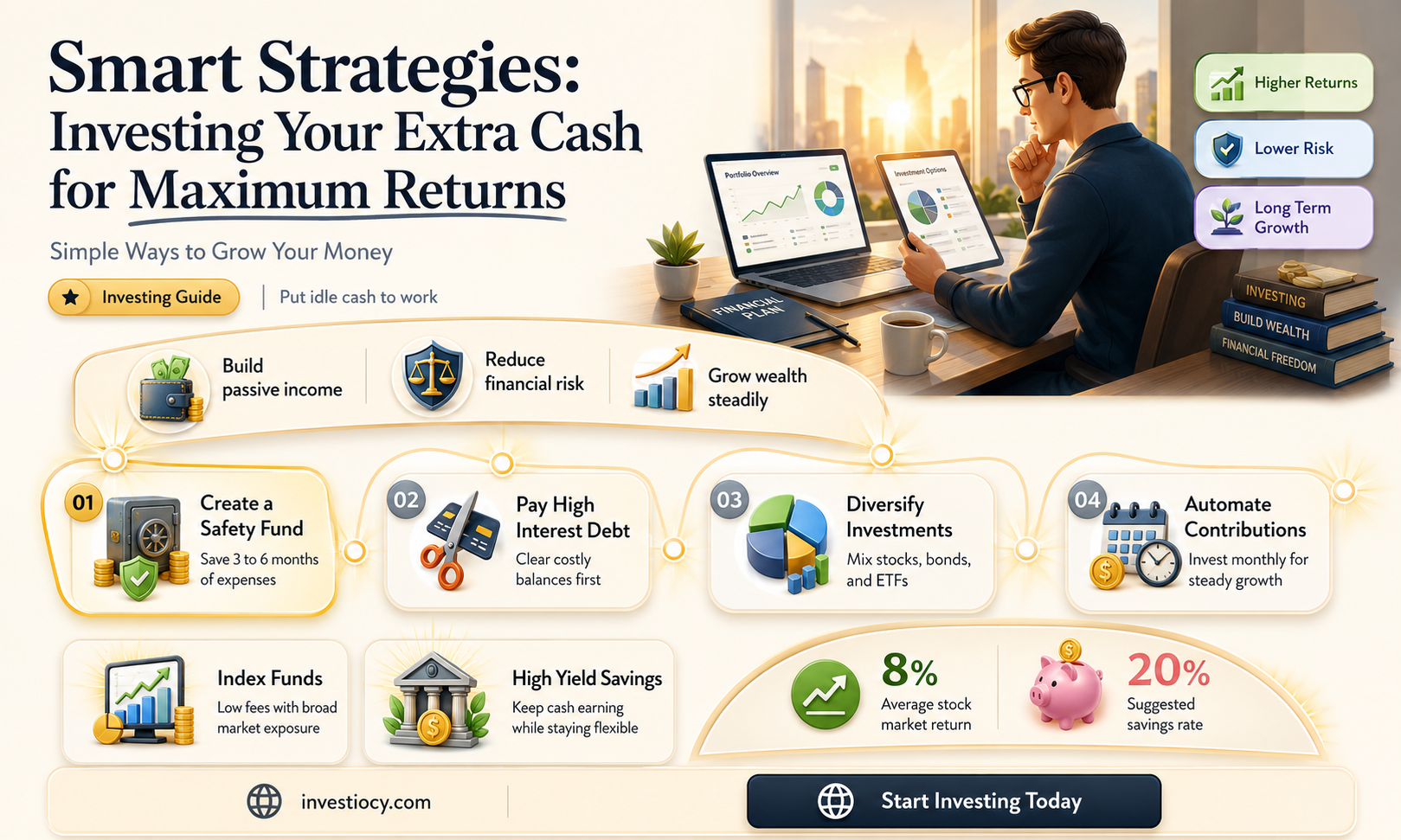
Investing extra cash can be a pivotal step towards achieving financial goals and securing a stable future. Whether you're looking to grow your wealth over time, save for a specific purpose, or simply make your money work harder for you, understanding the various investment options available is crucial. From high-yield savings accounts and bonds to stocks, mutual funds, and real estate, each investment vehicle comes with its own set of risks and rewards. By diversifying your portfolio and aligning your investments with your risk tolerance and long-term objectives, you can potentially maximize returns while minimizing potential losses. It's also important to consider factors such as liquidity, fees, and tax implications when making investment decisions. With careful planning and a well-informed strategy, investing extra cash can help you build wealth and achieve financial freedom.
Explore related products


What You'll Learn
- High-Yield Savings Accounts: Earn higher interest rates on your savings with these accounts
- Stock Market Investing: Invest in stocks to potentially grow your money over time
- Real Estate Investment Trusts (REITs): Invest in real estate without owning property directly
- Peer-to-Peer Lending: Lend money to individuals or businesses through online platforms
- Cryptocurrency Investing: Invest in digital currencies like Bitcoin or Ethereum

High-Yield Savings Accounts: Earn higher interest rates on your savings with these accounts
High-yield savings accounts are a type of savings account that offers a higher interest rate than traditional savings accounts. These accounts are designed to help individuals earn more on their savings, making them an attractive option for those looking to grow their money.
One of the main benefits of high-yield savings accounts is the ability to earn a higher interest rate. This can be especially beneficial for individuals who have a large amount of savings or who are looking to save for a specific goal, such as a down payment on a house or a vacation. Additionally, high-yield savings accounts often have no minimum balance requirements, making them accessible to individuals with varying amounts of savings.
When choosing a high-yield savings account, it is important to consider factors such as the interest rate, fees, and accessibility. Some high-yield savings accounts may have higher fees than traditional savings accounts, so it is important to weigh the benefits of the higher interest rate against the potential costs. Additionally, some high-yield savings accounts may have limited accessibility, such as requiring online banking or having a limited number of branches.
To maximize the benefits of a high-yield savings account, it is important to regularly monitor the interest rate and fees associated with the account. This will allow individuals to ensure that they are getting the best possible return on their savings. Additionally, it is important to consider other investment options, such as certificates of deposit or investment accounts, to determine the best way to grow savings.
In conclusion, high-yield savings accounts can be a valuable tool for individuals looking to earn more on their savings. By carefully considering factors such as interest rate, fees, and accessibility, individuals can choose a high-yield savings account that meets their needs and helps them achieve their financial goals.
Unlocking Financial Insights: Understanding Cash Flow from Investing Activities
You may want to see also
Explore related products


$13.6 $18

$3.99 $20.99


Stock Market Investing: Invest in stocks to potentially grow your money over time
Investing in the stock market can be a powerful way to grow your money over time, but it's crucial to understand the basics before diving in. Start by educating yourself on the different types of stocks available, such as blue-chip, growth, and value stocks. Each type carries its own risk profile and potential for returns. For instance, blue-chip stocks are known for their stability and consistent dividends, making them a good choice for beginners. Growth stocks, on the other hand, are more volatile but offer higher potential for capital gains. Value stocks are undervalued by the market and can be a good buy if you're willing to hold them for the long term.
Once you've chosen the type of stocks you want to invest in, it's important to diversify your portfolio. This means spreading your investments across different sectors and industries to minimize risk. For example, you might invest in technology, healthcare, and consumer goods stocks to create a balanced portfolio. Additionally, consider investing in index funds or ETFs, which track a specific market index and offer broad diversification with lower fees than actively managed funds.
Timing is also a critical factor in stock market investing. While it's impossible to predict market movements with certainty, there are strategies you can use to maximize your returns. One approach is to invest regularly, regardless of market conditions, using a strategy known as dollar-cost averaging. This helps to smooth out market volatility and avoid the temptation to try to time the market. Another strategy is to reinvest your dividends, which can help your investments grow more quickly over time.
It's also important to be aware of the risks associated with stock market investing. Market volatility can lead to significant losses, especially in the short term. Additionally, individual stocks can be affected by company-specific news and events, which can cause sudden price swings. To mitigate these risks, it's essential to have a long-term investment horizon and to avoid investing money you'll need in the near future.
Finally, consider seeking professional advice if you're new to stock market investing. A financial advisor can help you create a personalized investment plan that aligns with your goals and risk tolerance. They can also provide guidance on tax-efficient investing strategies and help you navigate the complexities of the stock market.
In summary, stock market investing can be a rewarding way to grow your money over time, but it requires careful planning and consideration of the risks involved. By educating yourself on the different types of stocks, diversifying your portfolio, timing your investments wisely, and seeking professional advice when needed, you can increase your chances of success in the stock market.
Maximize Your Returns: Cashing Out Investments on Cash App
You may want to see also
Explore related products



Real Estate Investment Trusts (REITs): Invest in real estate without owning property directly
Real Estate Investment Trusts (REITs) offer a compelling avenue for individuals looking to invest in real estate without the hassles of property ownership. By pooling money from multiple investors, REITs enable the purchase and management of income-generating properties, such as office buildings, shopping centers, and apartment complexes. This investment vehicle provides a way to diversify one's portfolio and tap into the lucrative real estate market, all while avoiding the responsibilities and risks associated with direct property ownership.
One of the primary benefits of investing in REITs is the potential for attractive returns. REITs are required to distribute at least 90% of their taxable income to shareholders in the form of dividends, which can provide a steady stream of passive income. Additionally, REITs have historically outperformed other asset classes, such as stocks and bonds, over the long term. This makes them an appealing option for investors seeking to grow their wealth while minimizing the risks associated with market volatility.
Another advantage of REITs is their liquidity. Unlike direct property investments, which can be illiquid and difficult to sell, REIT shares can be easily traded on major stock exchanges. This allows investors to quickly and efficiently adjust their holdings in response to changing market conditions or personal financial needs. Furthermore, REITs offer a low barrier to entry, with many REITs allowing investors to purchase shares with as little as a few hundred dollars.
However, it is important to note that REITs do come with some risks. One of the primary risks is interest rate sensitivity. When interest rates rise, the cost of borrowing for REITs increases, which can negatively impact their profitability. Additionally, REITs are subject to market risks, such as fluctuations in property values and rental rates. It is crucial for investors to carefully evaluate these risks and consider their individual financial goals and risk tolerance before investing in REITs.
In conclusion, Real Estate Investment Trusts (REITs) provide a unique opportunity for investors to participate in the real estate market without the burdens of direct property ownership. With their potential for attractive returns, liquidity, and low barrier to entry, REITs can be a valuable addition to a diversified investment portfolio. However, investors must be mindful of the associated risks and carefully consider their investment objectives before committing to REITs.
Smart Strategies for Growing Your Wealth: A Cash Investment Guide
You may want to see also
Explore related products


Peer-to-Peer Lending: Lend money to individuals or businesses through online platforms
Peer-to-peer lending has emerged as a popular alternative investment option, allowing individuals to lend money directly to borrowers through online platforms. This method of investing can offer higher returns than traditional savings accounts, but it also comes with its own set of risks and considerations.
One of the key benefits of peer-to-peer lending is the potential for higher interest rates. By cutting out the middleman, lenders can earn more on their investments, while borrowers can access loans at lower rates. However, it's important to note that these returns are not guaranteed and can vary depending on the platform and the borrowers you choose to lend to.
When considering peer-to-peer lending, it's crucial to research the platform thoroughly. Look for established platforms with a good reputation and a strong track record of performance. It's also important to diversify your investments across multiple borrowers to minimize risk. This means lending smaller amounts to a variety of individuals or businesses, rather than investing a large sum in a single borrower.
Another factor to consider is the level of risk you're comfortable with. Peer-to-peer lending can be riskier than other forms of investment, as there is no government insurance protecting your funds. If a borrower defaults on their loan, you may not get your money back. It's important to understand the risks involved and to only invest money that you can afford to lose.
Finally, it's worth noting that peer-to-peer lending can be a relatively illiquid investment. Unlike stocks or bonds, which can be easily bought and sold, peer-to-peer loans typically have a fixed term, and it may be difficult to sell your investment before the loan matures. This means that you should be prepared to hold onto your investment for the full term of the loan.
In conclusion, peer-to-peer lending can be a rewarding investment option for those willing to take on the associated risks. By carefully selecting a reputable platform, diversifying your investments, and understanding the potential risks and rewards, you can make the most of this alternative investment opportunity.
Smart Strategies: Where to Invest Your Extra Cash Wisely
You may want to see also
Explore related products




Cryptocurrency Investing: Invest in digital currencies like Bitcoin or Ethereum
Cryptocurrency investing has emerged as a popular way to grow extra cash, with digital currencies like Bitcoin and Ethereum leading the charge. Unlike traditional investments, cryptocurrencies operate on decentralized networks using blockchain technology, which means they're not controlled by any central authority. This decentralization is a key factor in their appeal, as it offers a level of security and transparency that many investors find attractive.
Before diving into cryptocurrency investing, it's crucial to understand the basics. Cryptocurrencies are digital or virtual currencies that use cryptography for security, making them difficult to counterfeit. They're typically bought and sold on cryptocurrency exchanges, and their value can fluctuate wildly due to market demand and other factors. Bitcoin, the first and most well-known cryptocurrency, was created in 2009, and since then, thousands of other cryptocurrencies have entered the market.
One of the most significant advantages of investing in cryptocurrencies is the potential for high returns. While the value of cryptocurrencies can be volatile, many investors have seen substantial gains over time. For example, Bitcoin's value increased from around $1,000 in early 2017 to nearly $20,000 by the end of that year. However, it's essential to note that past performance is not indicative of future results, and the cryptocurrency market is highly unpredictable.
To start investing in cryptocurrencies, you'll need to set up a digital wallet and purchase some coins. There are various types of digital wallets, including software wallets, hardware wallets, and paper wallets, each with its own level of security and convenience. Once you have a wallet, you can buy cryptocurrencies on an exchange using fiat currency or other cryptocurrencies. It's important to research the exchange you plan to use, as some have been known to experience security breaches or other issues.
As with any investment, there are risks associated with cryptocurrency investing. One of the primary concerns is the lack of regulation, which can make it difficult to protect your investments if something goes wrong. Additionally, the high volatility of cryptocurrency prices means that you could potentially lose a significant amount of money if the market turns against you. It's also important to be aware of the environmental impact of cryptocurrency mining, as the process can consume a large amount of energy.
Despite these risks, many investors believe that cryptocurrencies have the potential to revolutionize the way we think about money and investing. As the market continues to evolve and mature, it's likely that we'll see more mainstream adoption and increased regulatory oversight. If you're considering investing in cryptocurrencies, it's essential to do your research, understand the risks, and never invest more than you can afford to lose.
Smart Investing on Cash App: Your Guide to Financial Growth
You may want to see also
Frequently asked questions
Low-risk investment options for extra cash include high-yield savings accounts, certificates of deposit (CDs), money market funds, and U.S. Treasury securities. These options offer relatively stable returns with minimal risk.
To determine your risk tolerance, consider factors such as your financial goals, time horizon, and personal comfort level with market fluctuations. You can also take a risk tolerance quiz or consult with a financial advisor to help assess your risk profile.
Whether to pay off debt or invest extra cash depends on the interest rates of your debts and the potential returns of your investments. Generally, if your debt interest rates are higher than the investment returns, it's advisable to pay off the debt first. Conversely, if your investment returns are expected to be higher, you may choose to invest the extra cash.