Lester Freeman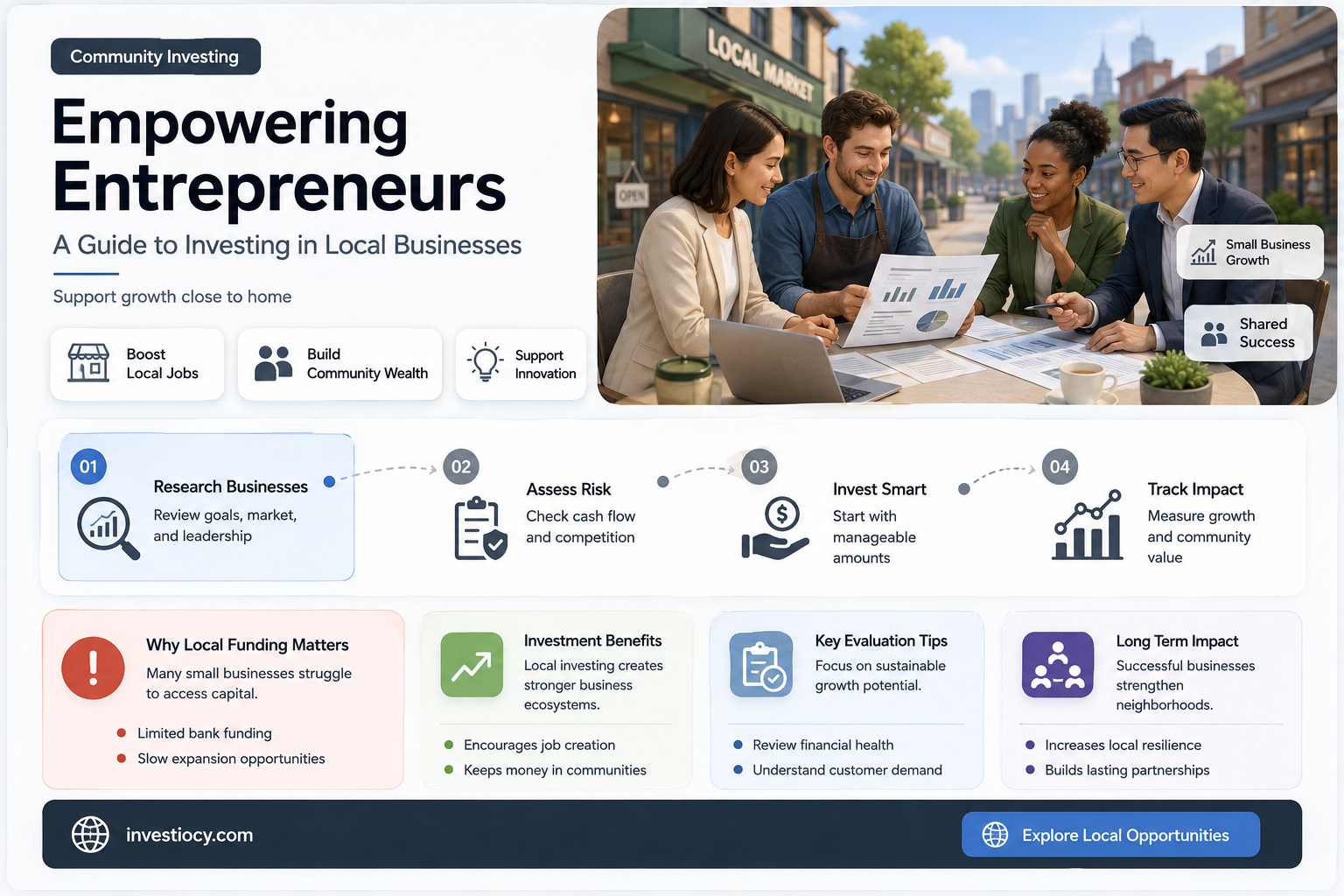
Investing in a local business can be a rewarding venture, both financially and for the community. It allows you to support local entrepreneurs and contribute to the growth and vitality of your neighborhood. When considering investing in a local business, it's important to research the business thoroughly, understand its financial health, and align its values with your own. Look for businesses with a strong track record, a clear vision for growth, and a management team that is passionate and experienced. Additionally, consider the potential return on investment and the level of risk involved. By investing in local businesses, you not only have the opportunity to earn a financial return but also to make a positive impact on your community by helping to create jobs and foster economic development.
Explore related products


What You'll Learn
- Research Local Market: Identify business opportunities, market trends, and potential competitors in your area
- Evaluate Business Plan: Assess the company's strategy, financial projections, and management team
- Determine Investment Amount: Decide how much capital to invest based on your financial goals and risk tolerance
- Negotiate Terms: Discuss and agree on investment terms, including equity, interest rates, and repayment schedules
- Monitor and Support: Regularly review business performance and provide guidance to ensure growth and success

Research Local Market: Identify business opportunities, market trends, and potential competitors in your area
To effectively research the local market, begin by conducting a thorough SWOT analysis of the area. This involves identifying the strengths, weaknesses, opportunities, and threats that exist within the market. Strengths might include a skilled workforce or a strong customer base, while weaknesses could be limited resources or infrastructure. Opportunities may arise from emerging trends or untapped niches, and threats could come from established competitors or economic downturns. By understanding these factors, you can better position your investment to capitalize on strengths and opportunities while mitigating weaknesses and threats.
Next, analyze market trends to determine the direction in which the local economy is moving. Look for patterns in consumer behavior, technological advancements, and regulatory changes that could impact the market. For example, if there is a growing trend towards sustainability, businesses that focus on eco-friendly products or services may have a competitive advantage. Similarly, if there is an increase in remote work, businesses that cater to this lifestyle may see increased demand.
Identifying potential competitors is also crucial in understanding the local market landscape. Research existing businesses in the area that offer similar products or services to what you are considering investing in. Analyze their market share, customer reviews, and pricing strategies to determine how they are positioned in the market. This information can help you identify gaps in the market that your investment could fill, as well as potential challenges you may face from established competitors.
In addition to these steps, consider engaging with local business owners and community leaders to gain insights into the market. They can provide valuable information about the local business climate, potential opportunities, and challenges that may not be immediately apparent through research alone. Attending local business events and networking with other entrepreneurs can also help you build relationships and gain a deeper understanding of the market.
Finally, use data and analytics tools to gather and analyze market data. This can include demographic information, consumer spending habits, and industry trends. By leveraging data, you can make more informed decisions about where to invest and how to position your business for success in the local market.
In conclusion, researching the local market is a critical step in identifying business opportunities, understanding market trends, and assessing potential competitors. By conducting a SWOT analysis, analyzing market trends, identifying competitors, engaging with the local community, and leveraging data, you can gain a comprehensive understanding of the market and make informed investment decisions.
Smart Investments: Unlocking the Power of Automated Businesses
You may want to see also
Explore related products


Evaluate Business Plan: Assess the company's strategy, financial projections, and management team
To evaluate a business plan effectively, begin by scrutinizing the company's strategy. This involves examining the business model, market analysis, competitive landscape, and growth potential. A robust strategy should clearly articulate how the company plans to achieve its goals, including specific tactics and milestones. Look for a comprehensive SWOT analysis that honestly addresses potential weaknesses and threats, as well as opportunities for growth.
Next, delve into the financial projections. This section should include detailed income statements, balance sheets, and cash flow statements for at least three to five years. Pay close attention to revenue growth rates, profit margins, and break-even points. It's crucial to assess the realism of these projections based on market trends and the company's historical performance, if available. Additionally, consider the funding requirements and how the company plans to utilize the investment.
The management team is another critical aspect to evaluate. Assess the experience, skills, and track record of the key personnel. A strong management team should have a diverse set of skills that complement each other, including leadership, financial acumen, marketing expertise, and operational knowledge. Look for evidence of their ability to execute strategies effectively and adapt to changing market conditions.
When evaluating the business plan, it's also important to consider the exit strategy. This could include plans for an initial public offering (IPO), acquisition, or succession planning. A well-thought-out exit strategy demonstrates the company's long-term vision and provides a clear path for investors to realize their returns.
Finally, don't overlook the importance of due diligence. Verify the accuracy of the information provided in the business plan by conducting independent research and analysis. This may involve reviewing industry reports, consulting with experts, and examining regulatory filings. Due diligence helps to mitigate risks and ensures that the investment aligns with your financial goals and risk tolerance.
In conclusion, evaluating a business plan requires a thorough analysis of the company's strategy, financial projections, management team, exit strategy, and due diligence. By focusing on these key areas, investors can make informed decisions and increase their chances of successful local business investments.
Persuading Investors: A Guide to Securing Funding for Your Business
You may want to see also
Explore related products





Determine Investment Amount: Decide how much capital to invest based on your financial goals and risk tolerance
To determine the investment amount for a local business, begin by assessing your financial goals. Are you looking for a short-term return or long-term growth? Your investment strategy should align with these objectives. For instance, if you're aiming for long-term growth, you might consider investing a larger sum to support the business's expansion and development. Conversely, if you're seeking short-term returns, a smaller, more liquid investment might be more appropriate.
Next, evaluate your risk tolerance. Investing in a local business can be risky, as it may not have the same level of stability as larger, more established companies. Consider how much financial risk you're willing to take on. If you're risk-averse, you might opt for a smaller investment to minimize potential losses. On the other hand, if you're comfortable with higher risk for the potential of greater returns, you might choose to invest more.
It's also important to consider the business's financial health and growth potential. Review the business's financial statements, if available, to get a sense of its revenue, expenses, and profitability. Look for signs of growth, such as increasing sales or expanding operations. If the business appears to be thriving, you might feel more confident investing a larger amount. However, if the business is struggling or in a declining industry, you might want to invest less or avoid investing altogether.
Another factor to consider is your own financial situation. Ensure that you have enough liquidity to cover your living expenses and any unexpected costs before investing in a local business. It's generally advisable to have an emergency fund in place before making any significant investments. Additionally, consider your long-term financial goals, such as retirement or saving for a down payment on a house. Make sure that investing in a local business aligns with these goals and doesn't jeopardize your financial stability.
Finally, consult with a financial advisor or accountant to get personalized advice on your investment strategy. They can help you assess your financial situation, risk tolerance, and goals to determine an appropriate investment amount. Remember, investing in a local business can be a rewarding way to support your community and potentially earn returns, but it's crucial to approach it with careful consideration and planning.
Strategic Insights: Identifying Lucrative Business Investment Opportunities
You may want to see also
Explore related products


Negotiate Terms: Discuss and agree on investment terms, including equity, interest rates, and repayment schedules
Before entering into any investment agreement, it's crucial to negotiate terms that are favorable to both parties. This involves a detailed discussion about the type of investment, whether it's a loan or equity, and the associated interest rates or profit-sharing arrangements. Repayment schedules must also be clearly outlined to avoid future disputes.
One effective strategy is to approach the negotiation with a clear understanding of your priorities and limits. For instance, if you're looking for a quick return on investment, you might opt for a higher interest rate on a loan. Conversely, if you're willing to take on more risk for a potentially larger reward, equity investment could be the way to go. It's also important to consider the business's cash flow and growth projections when determining repayment schedules.
During negotiations, it's beneficial to maintain a collaborative attitude. Remember, the goal is to create a mutually beneficial agreement. Be open to compromise and consider the business owner's perspective. They may have unique insights into the company's operations and future potential that could influence your investment decision.
Another key aspect of negotiating investment terms is due diligence. Thoroughly review the business's financial statements, market analysis, and growth strategy. This will help you assess the risk associated with the investment and make informed decisions about the terms. Don't hesitate to ask for additional information or clarification on any points that are unclear.
Finally, it's essential to have a written agreement that clearly outlines the negotiated terms. This document should include details about the investment amount, interest rates or profit-sharing arrangements, repayment schedules, and any other relevant terms. Having a written agreement helps protect both parties' interests and provides a clear reference point in case of any future disputes.
Smart Strategies: Investing $20,000 in Your Business for Maximum Growth
You may want to see also
Explore related products





Monitor and Support: Regularly review business performance and provide guidance to ensure growth and success
Regular monitoring and support are crucial to the success of any local business investment. This involves setting clear performance benchmarks and conducting periodic reviews to assess progress. For instance, investors might establish quarterly meetings with the business owner to discuss financial statements, operational challenges, and strategic goals. By doing so, they can identify potential issues early and provide targeted guidance to address them.
One effective way to support a local business is by offering mentorship and expertise. Investors can leverage their own experience and knowledge to help the business owner make informed decisions. This might include advising on marketing strategies, financial management, or product development. Additionally, investors can connect the business with their professional network, potentially opening up new opportunities for partnerships or sales.
Another key aspect of monitoring and support is ensuring that the business has access to sufficient capital. Investors should be prepared to provide additional funding if necessary, either through loans or equity investments. This can help the business expand its operations, invest in new equipment, or weather unexpected financial challenges.
Investors should also be mindful of the business's cash flow and profitability. They can work with the owner to develop a comprehensive financial plan, including projections for revenue and expenses. This plan can serve as a roadmap for achieving long-term financial stability and growth.
Ultimately, the goal of monitoring and support is to create a sustainable and thriving business. By providing ongoing guidance and resources, investors can help local businesses overcome obstacles and reach their full potential. This not only benefits the investors themselves but also contributes to the economic vitality of the community.
Smart Strategies: Reinvesting Business Profits for Growth and Stability
You may want to see also
Frequently asked questions
When deciding to invest in a local business, consider the business's financial health, market potential, competitive landscape, management team, and the terms of the investment. It's also important to assess the business's alignment with your personal investment goals and risk tolerance.
To evaluate the financial health of a local business, review their financial statements, including income statements, balance sheets, and cash flow statements. Look for consistent revenue growth, profitability, manageable debt levels, and sufficient liquidity. Additionally, consider the business's credit history and any outstanding legal or financial issues.
Common methods of investing in a local business include purchasing equity (stocks or shares), providing debt financing (loans), or investing through crowdfunding platforms. Each method has its own risks and potential returns, so it's important to understand the terms and implications of each investment option.
To mitigate risks when investing in a local business, diversify your investment portfolio, conduct thorough due diligence, negotiate favorable investment terms, and maintain active communication with the business's management. Additionally, consider seeking professional advice from a financial advisor or attorney.
Investing in a local business can offer several benefits, including the potential for higher returns compared to traditional investments, the opportunity to support and grow a local economy, and the chance to be involved in a business that aligns with your personal values and interests. Additionally, local businesses may offer more personalized and engaged management teams, which can lead to better investment outcomes.