Josephine Norton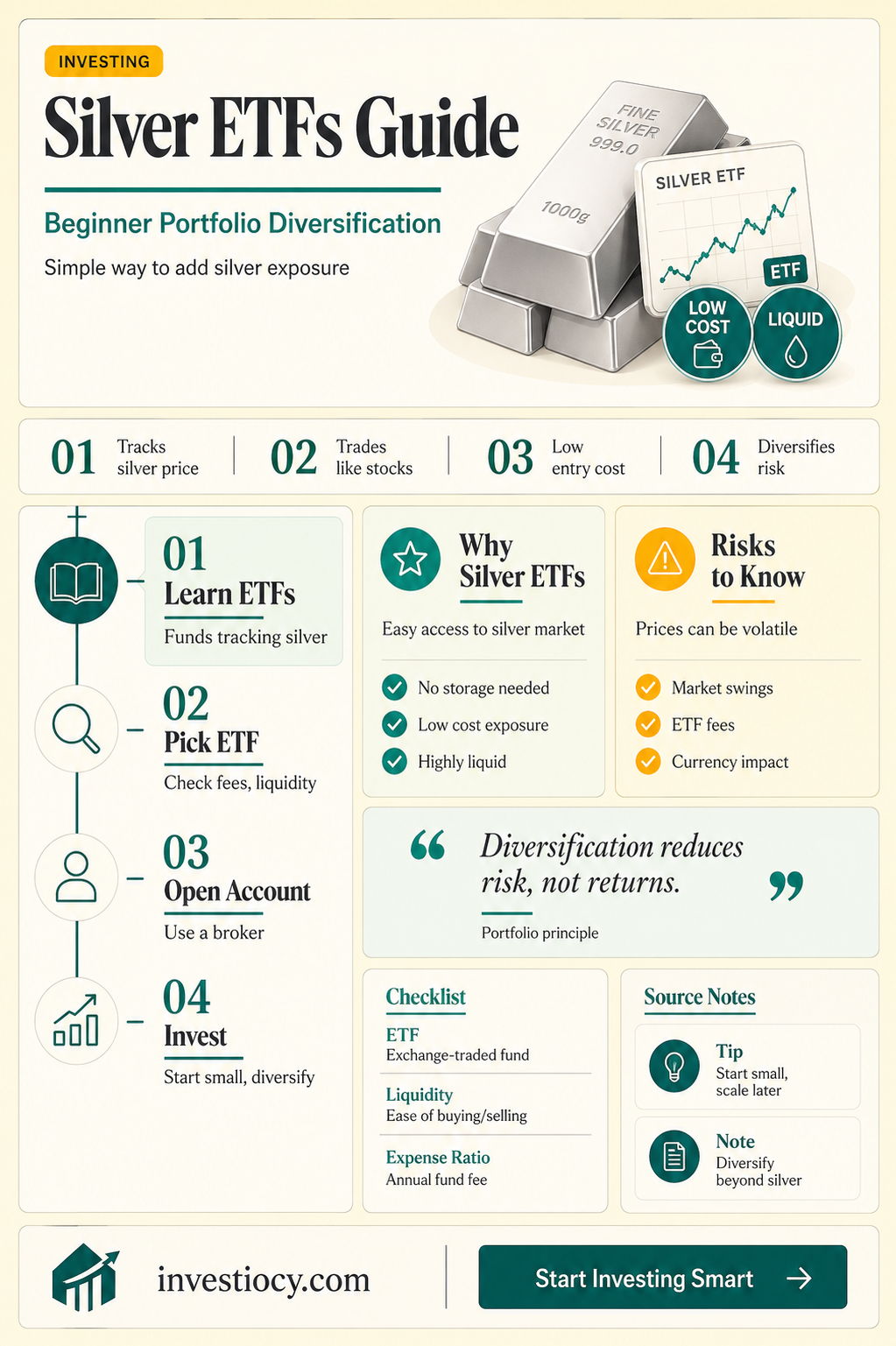
Investing in silver ETFs (Exchange-Traded Funds) can be a strategic move for those looking to diversify their portfolio and hedge against inflation. Silver ETFs track the price of silver and are backed by physical silver reserves, offering investors a convenient way to gain exposure to the precious metal without the need for physical storage. To start investing in silver ETFs, one should first research and select a reputable ETF provider, considering factors such as expense ratios, liquidity, and the fund's investment strategy. Once a suitable silver ETF is chosen, investors can purchase shares through a brokerage account, similar to buying stocks. It's essential to monitor the performance of the ETF and adjust the investment strategy as needed to align with market trends and personal financial goals.
Explore related products


What You'll Learn
- Understanding Silver ETFs: Learn about exchange-traded funds that track silver prices and their benefits
- Choosing the Right Silver ETF: Research and compare different silver ETFs based on fees, performance, and investment strategy
- Opening a Brokerage Account: Select a brokerage platform and open an account to start investing in silver ETFs
- Setting Investment Goals: Determine your investment objectives, risk tolerance, and time horizon for investing in silver ETFs
- Monitoring and Rebalancing: Regularly review your silver ETF investment and adjust your portfolio as needed to meet your goals

Understanding Silver ETFs: Learn about exchange-traded funds that track silver prices and their benefits
Silver ETFs, or exchange-traded funds that track silver prices, offer investors a convenient and efficient way to gain exposure to the silver market. These funds hold physical silver or invest in silver-related securities, allowing investors to benefit from price movements in the metal without the need to store or manage physical bullion. One of the key benefits of silver ETFs is their liquidity, as they can be bought and sold on stock exchanges throughout the trading day, providing investors with flexibility and ease of access.
Another advantage of silver ETFs is their diversification potential. By investing in a fund that tracks silver prices, investors can spread their risk across a basket of silver-related assets, reducing their exposure to individual stock or market risks. This diversification can help to mitigate volatility and provide a more stable investment experience. Additionally, silver ETFs often have lower fees and expenses compared to other investment options, such as mutual funds or individual stocks, making them a cost-effective way to invest in the silver market.
Investors should also consider the tax implications of investing in silver ETFs. In many jurisdictions, gains from the sale of silver ETFs are treated as capital gains, which may be subject to taxation. However, some silver ETFs are structured as grantor trusts, which can offer more favorable tax treatment. It is important for investors to consult with a tax advisor to understand the specific tax implications of investing in silver ETFs in their jurisdiction.
When selecting a silver ETF, investors should consider factors such as the fund's size, liquidity, and expense ratio. Larger funds with higher trading volumes tend to have lower expense ratios and tighter bid-ask spreads, which can result in lower costs for investors. Additionally, investors should review the fund's prospectus to understand its investment objectives, risks, and holdings. Some silver ETFs may also offer options for margin trading or short selling, which can provide investors with additional flexibility in their investment strategies.
In conclusion, silver ETFs can be a valuable addition to an investor's portfolio, offering exposure to the silver market with the benefits of diversification, liquidity, and cost-effectiveness. By carefully considering the factors outlined above, investors can make informed decisions about how to incorporate silver ETFs into their investment strategy.
Diversify Your Portfolio: A Guide to Investing in BRICS ETFs
You may want to see also
Explore related products



Choosing the Right Silver ETF: Research and compare different silver ETFs based on fees, performance, and investment strategy
To choose the right silver ETF, it's crucial to conduct thorough research and compare various options based on key factors such as fees, performance, and investment strategy. Start by identifying a list of potential silver ETFs to invest in. You can use financial websites, investment platforms, or consult with a financial advisor to gather recommendations. Once you have a list, delve into the details of each ETF.
Fees are an important consideration as they can significantly impact your overall returns. Look for ETFs with low expense ratios, which are typically expressed as a percentage of the fund's assets. For example, an expense ratio of 0.50% means that for every $100 invested, $0.50 goes towards fees annually. Compare the fees of different silver ETFs to find the most cost-effective option.
Performance is another critical factor to evaluate. Analyze the historical returns of each silver ETF over various time periods, such as the past year, three years, five years, and ten years. Consider both the absolute returns and the relative performance compared to the broader market or other silver-related investments. Keep in mind that past performance is not a guarantee of future results, but it can provide valuable insights into the ETF's potential.
Investment strategy is also essential to consider. Some silver ETFs may focus solely on physical silver holdings, while others may include a mix of physical silver, silver mining stocks, or even derivatives. Understand the investment strategy of each ETF and how it aligns with your own investment goals and risk tolerance. For instance, if you're looking for a more conservative approach, you may prefer an ETF that primarily holds physical silver.
In addition to these factors, consider the liquidity of the ETF. A highly liquid ETF will have a large number of shares outstanding and a high trading volume, making it easier to buy and sell shares without significantly impacting the price. This can be particularly important for investors who may need to quickly exit their position.
Finally, take into account any additional features or benefits offered by the ETF, such as dividend payments or tax advantages. By carefully evaluating fees, performance, investment strategy, liquidity, and other factors, you can make an informed decision when choosing the right silver ETF for your investment portfolio.
Explore related products


$29.95


Opening a Brokerage Account: Select a brokerage platform and open an account to start investing in silver ETFs
To begin investing in silver ETFs, the first crucial step is selecting a suitable brokerage platform. This decision should be based on several factors, including the platform's reputation, user interface, transaction fees, and the range of ETFs available. Reputable platforms like Vanguard, Fidelity, or Charles Schwab are well-known for their extensive investment options and reliable services. Once you've chosen a platform, the next step is to open an account. This typically involves filling out an online application form, providing identification documents, and linking a bank account for funding.
When opening an account, it's essential to consider the type of account you wish to establish. Options include individual accounts, joint accounts, retirement accounts (such as IRAs or 401(k)s), or custodial accounts for minors. Each account type has its own set of rules and tax implications, so it's wise to consult with a financial advisor if you're unsure. After your account is approved and funded, you can start searching for silver ETFs on the platform. Look for ETFs that track the price of silver or invest in silver-related companies.
Before making your first investment, it's crucial to understand the risks associated with silver ETFs. Silver prices can be highly volatile, influenced by various factors such as market demand, geopolitical events, and inflation rates. It's also important to be aware of the fees associated with ETFs, including management fees, transaction costs, and potential capital gains taxes. To mitigate these risks, consider diversifying your portfolio by investing in a mix of different asset classes and sectors.
Once you've selected a silver ETF, the final step is to place your trade. This involves specifying the number of shares you wish to purchase and setting an appropriate price limit. You can choose to place a market order, which will execute immediately at the current market price, or a limit order, which will only execute if the price reaches your specified limit. After your trade is executed, monitor your investment regularly to ensure it aligns with your financial goals and risk tolerance.
In conclusion, opening a brokerage account and investing in silver ETFs requires careful consideration of various factors, including platform selection, account type, risk management, and investment strategy. By following these steps and staying informed about market conditions, you can make well-informed decisions and potentially benefit from the opportunities presented by silver ETFs.
Explore related products





Setting Investment Goals: Determine your investment objectives, risk tolerance, and time horizon for investing in silver ETFs
Before investing in silver ETFs, it's crucial to establish clear investment goals. These objectives should align with your overall financial strategy and personal priorities. For instance, are you looking to preserve capital, generate income, or achieve long-term growth? Understanding your goals will help you select the most appropriate silver ETF and manage your portfolio effectively.
Risk tolerance is another key factor to consider. Investing in silver ETFs can be volatile, and it's essential to determine how much risk you're willing to take on. Assess your financial situation, including your income, expenses, and existing investments. Consider your age, investment horizon, and personal comfort level with market fluctuations. A higher risk tolerance may lead you to choose more aggressive silver ETFs, while a lower risk tolerance might necessitate a more conservative approach.
Your investment horizon is the length of time you plan to hold your silver ETF investments. This timeframe can significantly impact your investment strategy. For short-term investors, liquidity and low transaction costs may be more important, while long-term investors can focus on growth potential and diversification. Evaluate your financial goals and determine whether you're investing for the short, medium, or long term.
To set realistic investment goals, it's helpful to research historical silver ETF performance and market trends. Analyze the volatility of silver prices and the impact of economic factors on the metal's value. Consider consulting with a financial advisor or conducting your own due diligence to gain a deeper understanding of the silver ETF market.
Once you've established your investment goals, risk tolerance, and time horizon, you can begin to explore different silver ETF options. Look for ETFs that align with your objectives and risk profile. Consider factors such as expense ratios, tracking error, and diversification when selecting a silver ETF. By carefully evaluating your options, you can make an informed investment decision that supports your overall financial strategy.
Explore related products




Monitoring and Rebalancing: Regularly review your silver ETF investment and adjust your portfolio as needed to meet your goals
Regularly reviewing your silver ETF investment is crucial to ensure that your portfolio remains aligned with your financial goals and risk tolerance. This involves monitoring the performance of your silver ETF holdings, assessing market conditions, and making adjustments as necessary. By doing so, you can capitalize on opportunities, mitigate risks, and maintain a balanced investment strategy.
To effectively monitor your silver ETF investment, consider setting up a schedule for regular reviews, such as quarterly or semi-annually. During these reviews, analyze the performance of your silver ETFs relative to your overall portfolio and benchmark indices. Evaluate whether your investment thesis remains valid and if the ETFs are still meeting your expectations. Additionally, stay informed about market developments, economic indicators, and geopolitical events that could impact the price of silver and the performance of your ETFs.
Rebalancing your portfolio is an essential part of maintaining a diversified investment strategy. As market conditions change, the weightings of different asset classes within your portfolio may shift, potentially leading to an imbalance. By rebalancing, you can ensure that your portfolio remains aligned with your target asset allocation and risk profile. When rebalancing, consider the tax implications of selling and buying securities, and aim to minimize transaction costs.
One practical tip for monitoring and rebalancing your silver ETF investment is to use a portfolio tracking tool or app. These tools can help you keep track of your holdings, monitor performance, and receive alerts when your portfolio deviates from your target allocation. Additionally, consider consulting with a financial advisor or investment professional for guidance on monitoring and rebalancing your silver ETF investment, especially if you are new to investing or have complex financial goals.
In conclusion, monitoring and rebalancing your silver ETF investment is a critical component of successful portfolio management. By regularly reviewing your holdings, staying informed about market conditions, and making adjustments as needed, you can maintain a balanced investment strategy and work towards achieving your financial goals.
Frequently asked questions
A Silver ETF (Exchange-Traded Fund) is a type of investment fund that holds silver bullion or silver mining stocks. It allows investors to buy and sell shares in the fund on stock exchanges, providing a convenient way to invest in silver without needing to store physical bullion.
When choosing a Silver ETF, consider factors such as the fund's expense ratio, the type of silver investments it holds (physical bullion or mining stocks), its performance history, and the liquidity of the fund. It's also important to research the fund's management team and their investment strategy.
Investing in a Silver ETF offers several benefits, including diversification of your investment portfolio, a hedge against inflation, and the potential for capital appreciation. Silver ETFs also provide a convenient and cost-effective way to invest in silver, as they eliminate the need for storing physical bullion and offer lower transaction costs compared to buying and selling individual silver bars or coins.