Clark Galvan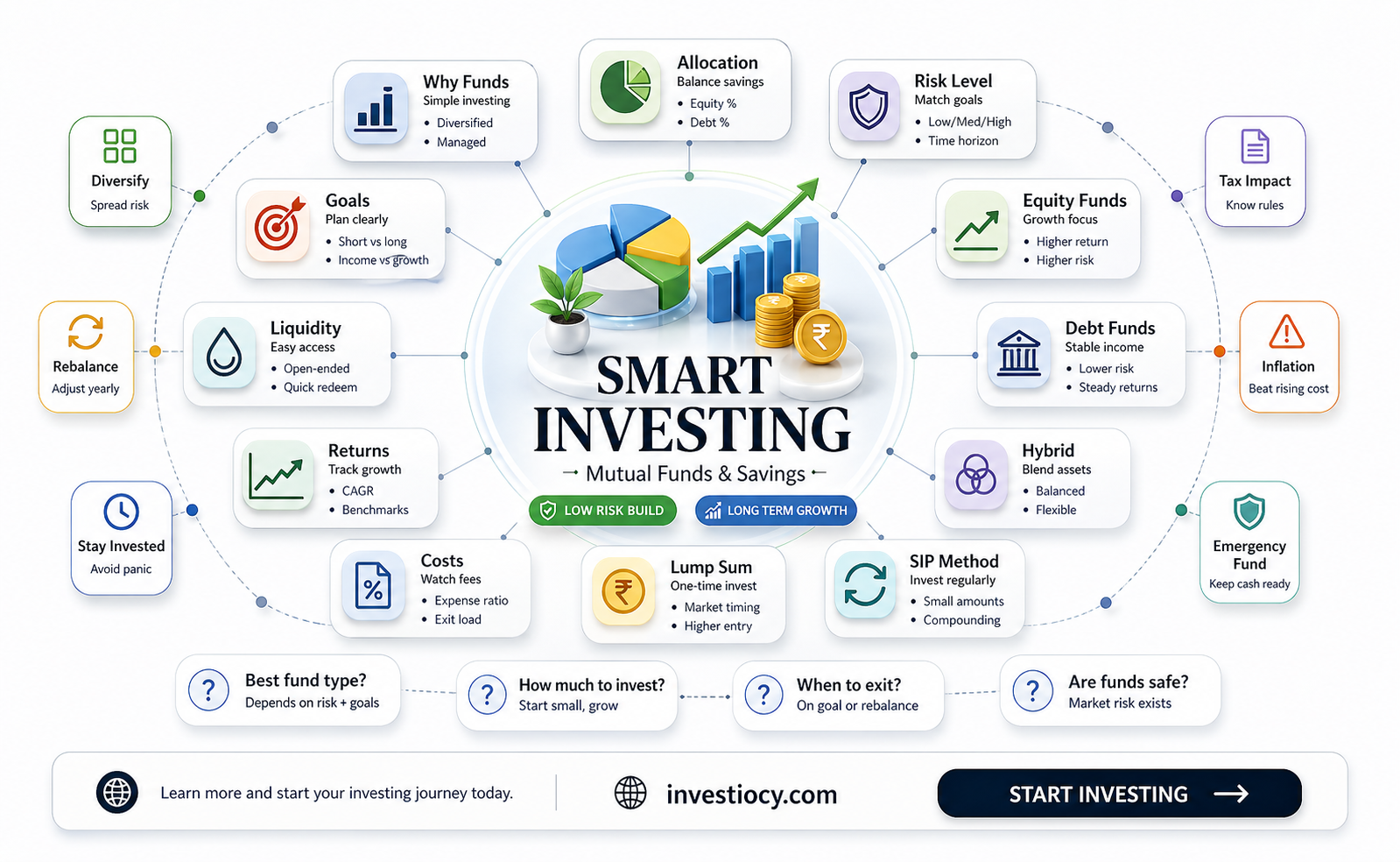
Investing in mutual funds is a popular strategy for growing savings over time. When considering what percentage of savings to invest in mutual funds, it's essential to evaluate individual financial goals, risk tolerance, and investment horizon. A common recommendation is to allocate a portion of savings that aligns with one's risk profile and long-term objectives. For instance, younger investors with a higher risk tolerance may choose to invest a larger percentage of their savings in mutual funds, while those nearing retirement may opt for a more conservative approach. It's crucial to strike a balance between potential returns and the need for liquidity and stability. Consulting with a financial advisor can provide personalized guidance tailored to specific circumstances.
Explore related products


What You'll Learn
- Risk Tolerance: Assess your comfort with market fluctuations and potential losses
- Investment Goals: Determine if you're saving for short-term needs or long-term objectives
- Time Horizon: Consider how long your money can remain invested before needing access
- Diversification: Evaluate how mutual funds fit into your overall investment portfolio mix
- Expense Ratios: Understand the costs associated with mutual funds and their impact on returns

Risk Tolerance: Assess your comfort with market fluctuations and potential losses
Assessing your risk tolerance is a critical step in determining how much of your savings should be invested in mutual funds. Risk tolerance refers to your ability and willingness to withstand fluctuations in the market and potential losses. It's a personal measure that varies greatly from individual to individual, influenced by factors such as age, financial goals, income level, and personal temperament.
To evaluate your risk tolerance, consider how you would react to a significant drop in the stock market. Would you be able to sleep at night knowing that a portion of your savings could be at risk? Or would the uncertainty keep you up, causing undue stress? If you're more comfortable with the idea of potential losses and market volatility, you may have a higher risk tolerance. Conversely, if the thought of losing money makes you anxious, you may have a lower risk tolerance.
One way to gauge your risk tolerance is by taking a risk tolerance quiz. These quizzes typically ask a series of questions about your financial situation, investment experience, and emotional response to market changes. Based on your answers, the quiz will categorize you as a conservative, moderate, or aggressive investor. This can help you determine the appropriate asset allocation for your portfolio, including the percentage of savings that should be invested in mutual funds.
It's important to note that risk tolerance is not a fixed trait; it can change over time as your financial situation and goals evolve. For example, a young investor with a long time horizon may have a higher risk tolerance than an older investor nearing retirement. Additionally, your risk tolerance may be influenced by external factors such as economic conditions and market trends.
Ultimately, understanding your risk tolerance is essential for making informed investment decisions. By assessing your comfort with market fluctuations and potential losses, you can create a portfolio that aligns with your financial goals and personal preferences, helping you achieve long-term financial success.
Explore related products

$15.95 $15.95


Investment Goals: Determine if you're saving for short-term needs or long-term objectives
Determining your investment goals is a crucial first step in deciding how to allocate your savings. Are you saving for a down payment on a house in the next five years, or are you investing for retirement several decades away? The time horizon for your goals will significantly influence the percentage of your savings that should be invested in mutual funds.
For short-term goals, such as buying a car or funding a vacation, it's generally advisable to keep a larger portion of your savings in low-risk, liquid accounts like high-yield savings or money market funds. These options provide easy access to your money when you need it and are less volatile than mutual funds, which can experience significant fluctuations in value over short periods.
In contrast, long-term goals like retirement or paying for a child's college education allow for a more aggressive investment strategy. With a longer time horizon, you can afford to take on more risk in pursuit of higher returns. As a result, a greater percentage of your savings can be allocated to mutual funds, particularly those that invest in stocks, which have historically provided the highest long-term returns.
A common rule of thumb is to subtract your age from 100 to determine the appropriate asset allocation. For example, a 30-year-old might allocate 70% of their savings to stocks and 30% to bonds, while a 60-year-old might reverse this allocation. However, this is just a starting point, and your individual circumstances, risk tolerance, and goals should be carefully considered when making investment decisions.
Ultimately, the key to successful investing is to align your asset allocation with your specific goals and time horizon. By doing so, you can ensure that you're taking the right level of risk to achieve your objectives while minimizing the potential for losses that could derail your plans.
Explore related products


Time Horizon: Consider how long your money can remain invested before needing access
The time horizon is a critical factor in determining the appropriate percentage of savings to invest in mutual funds. It refers to the length of time your money can remain invested before you need access to it. This period can significantly influence your investment strategy and the level of risk you're willing to take.
For short-term goals, such as saving for a down payment on a house or a vacation, you may need to access your funds within a few years. In this case, it's generally advisable to invest a smaller percentage of your savings in mutual funds, as the market can be volatile in the short term. A more conservative approach, such as investing 20-30% of your savings in mutual funds, may be more suitable.
On the other hand, if you have a longer time horizon, such as saving for retirement, you may be able to ride out market fluctuations and take on more risk. In this scenario, you could consider investing a higher percentage of your savings in mutual funds, potentially up to 60-70%. This allows your investments to grow over time and take advantage of compound interest.
It's also important to consider your personal risk tolerance and financial situation when determining the appropriate percentage to invest in mutual funds. If you have a high risk tolerance and a stable financial situation, you may be more comfortable investing a larger portion of your savings. Conversely, if you have a low risk tolerance or are in a more precarious financial position, you may want to invest a smaller percentage.
Ultimately, the key is to strike a balance between risk and reward, taking into account your time horizon, financial goals, and personal circumstances. By carefully considering these factors, you can develop an investment strategy that aligns with your needs and helps you achieve your financial objectives.
Explore related products


Diversification: Evaluate how mutual funds fit into your overall investment portfolio mix
Mutual funds offer a diversified investment option, pooling money from multiple investors to spread risk across various assets. This diversification is crucial in managing risk and optimizing returns within your investment portfolio. By investing in mutual funds, you gain exposure to a broad range of securities, which can help mitigate the impact of any single asset's poor performance.
To evaluate how mutual funds fit into your overall investment portfolio mix, consider your investment goals, risk tolerance, and time horizon. If you're a conservative investor with a low risk tolerance, you may want to allocate a larger portion of your portfolio to mutual funds that invest in bonds or other fixed-income securities. Conversely, if you're a more aggressive investor with a higher risk tolerance and a longer time horizon, you may want to allocate more to mutual funds that invest in stocks or other equity securities.
It's also important to consider the fees associated with mutual funds, as they can impact your overall returns. Look for funds with low expense ratios and avoid funds with high loads or fees. Additionally, consider the fund's track record and the experience of its management team. A fund with a strong track record and experienced management is more likely to perform well in the future.
When constructing your portfolio, it's essential to maintain a balanced mix of assets. Mutual funds can play a significant role in achieving this balance, but they shouldn't be the only component. Consider allocating a portion of your portfolio to individual stocks, bonds, real estate, or other alternative investments to further diversify your holdings.
Regularly reviewing and rebalancing your portfolio is crucial to ensure that your investments remain aligned with your goals and risk tolerance. As your circumstances change, you may need to adjust your asset allocation to reflect your new priorities. By periodically evaluating your mutual fund investments and making necessary adjustments, you can maintain a well-diversified portfolio that helps you achieve your financial objectives.
Explore related products


Expense Ratios: Understand the costs associated with mutual funds and their impact on returns
Mutual funds come with various costs that can significantly impact your returns over time. One of the most important metrics to understand is the expense ratio, which represents the annual fees charged by the fund as a percentage of its assets. These fees cover management, administrative, and other operational costs. A higher expense ratio means more of your investment is being eaten away by fees, leaving you with lower returns.
For example, let's say you invest $10,000 in a mutual fund with an expense ratio of 1%. This means you'll be charged $100 in fees annually. Over a 10-year period, assuming an average annual return of 7%, you would have earned $9,975 without any fees. However, with the 1% expense ratio, your net return would be $8,170, resulting in a loss of $1,805 due to fees.
It's crucial to compare expense ratios when selecting mutual funds. A difference of even 0.5% can have a substantial impact on your long-term returns. Index funds typically have lower expense ratios than actively managed funds, as they require less management and research. When evaluating funds, also consider other costs such as front-end or back-end loads, which are fees charged when you buy or sell shares.
To minimize the impact of expense ratios on your returns, consider the following strategies:
- Invest in low-cost index funds: These funds track a specific market index and have lower management fees.
- Avoid high-cost actively managed funds: Unless you have a compelling reason to believe an actively managed fund will outperform the market, opt for lower-cost alternatives.
- Be mindful of fund size: Smaller funds may have higher expense ratios due to economies of scale.
- Consider fee waivers or breakpoints: Some funds offer fee waivers or reduced fees for larger investments.
By understanding and managing expense ratios, you can keep more of your hard-earned money working for you in the market.
Frequently asked questions
For a beginner, it's generally recommended to start with a conservative approach. You might consider investing 10% to 20% of your savings in mutual funds, while keeping the rest in a high-yield savings account or other low-risk investments. This allows you to get accustomed to the market without exposing yourself to too much risk.
The recommended percentage of savings to invest in mutual funds can vary significantly based on your age and financial goals. Younger investors with a longer time horizon might consider investing a higher percentage, potentially up to 50% or more, to take advantage of compound interest and growth potential. Conversely, older investors nearing retirement may want to reduce their exposure to mutual funds and focus on more stable, income-generating investments.
It's generally advisable to adjust your investment percentage based on market conditions and your personal financial situation. During bull markets, you might consider increasing your investment in mutual funds, while during bear markets, it may be wise to reduce your exposure and focus on more conservative investments. Regularly reviewing and rebalancing your portfolio can help ensure that your investments remain aligned with your goals and risk tolerance.