Josephine Norton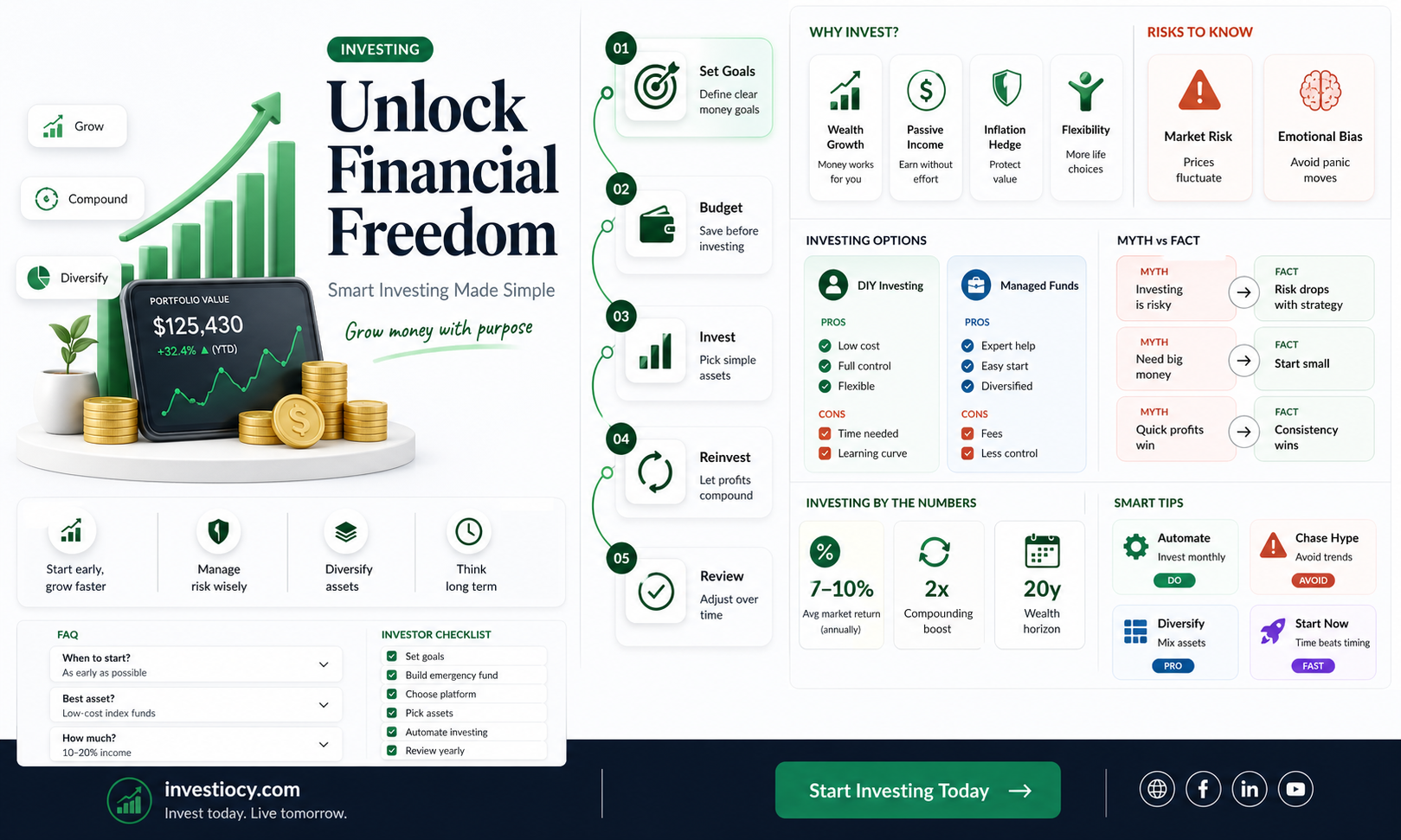
Investing is a crucial aspect of financial planning that can help individuals achieve their long-term goals and secure their financial future. By investing, people can grow their wealth over time, outpacing inflation and increasing their purchasing power. Whether it's saving for retirement, a down payment on a house, or funding a child's education, investing provides a means to accumulate the necessary funds. Additionally, investing can help individuals diversify their income streams, reducing reliance on a single source of income and providing a safety net in case of unexpected financial setbacks. With various investment options available, such as stocks, bonds, mutual funds, and real estate, people can choose a strategy that aligns with their risk tolerance and financial objectives.
Explore related products


$37.99 $44.99


What You'll Learn
- Financial Growth: Investing allows your money to grow over time, potentially outpacing inflation and increasing your wealth
- Retirement Planning: Investments can provide a steady income stream in retirement, ensuring financial security in your later years
- Diversification: Spreading investments across various assets can reduce risk and protect your portfolio from market volatility
- Tax Benefits: Many investment options offer tax advantages, such as deductions or lower tax rates on returns
- Achieving Goals: Investing can help you save for specific objectives, like buying a home, funding education, or starting a business

Financial Growth: Investing allows your money to grow over time, potentially outpacing inflation and increasing your wealth
Investing is a powerful tool for financial growth, allowing your money to work for you over time. By putting your funds into investments such as stocks, bonds, or mutual funds, you can potentially earn returns that outpace inflation, thereby increasing your wealth. This is particularly important in today's economic climate, where the purchasing power of money can erode quickly due to rising prices.
One of the key benefits of investing is the potential for compound returns. When you reinvest the earnings from your investments, you can generate returns on those returns, leading to exponential growth over time. For example, if you invest $1,000 at an annual return rate of 7%, after 10 years, your investment could grow to approximately $1,967. This growth can be even more significant over longer periods, such as 20 or 30 years.
Another advantage of investing is the ability to diversify your portfolio. By spreading your money across different types of investments, you can reduce the risk associated with any single investment. This diversification can help protect your wealth from market volatility and economic downturns. For instance, during the 2008 financial crisis, investors who had diversified portfolios were better able to weather the storm and recover their losses more quickly than those who had all their money in a single investment.
Investing also offers the opportunity to achieve specific financial goals. Whether you're saving for retirement, a down payment on a house, or your child's education, investing can help you reach these goals more quickly than saving alone. By setting clear objectives and choosing investments that align with your risk tolerance and time horizon, you can create a tailored plan that works towards your financial aspirations.
However, it's important to note that investing does come with risks. The value of investments can fluctuate, and there's always the possibility of losing money. It's crucial to educate yourself about the different types of investments and their associated risks before making any decisions. Consulting with a financial advisor can also be beneficial in creating a well-diversified portfolio that meets your specific needs and goals.
In conclusion, investing is a valuable strategy for financial growth, offering the potential for compound returns, diversification, and the achievement of specific financial goals. While there are risks involved, careful planning and education can help mitigate these risks and maximize the benefits of investing. By starting early and staying committed to your investment plan, you can set yourself on the path to long-term financial success.
Exploring the Psychology Behind Investment Decisions
You may want to see also
Explore related products

$19.99 $32.99

$16.59 $16.99


Retirement Planning: Investments can provide a steady income stream in retirement, ensuring financial security in your later years
As you approach retirement, ensuring a steady income stream becomes paramount. Investments can play a crucial role in providing financial security during your later years. By strategically allocating your funds, you can create a diversified portfolio that generates regular income through dividends, interest, and capital gains. This not only helps maintain your standard of living but also offers a sense of stability and peace of mind.
One effective strategy is to focus on income-generating investments such as dividend-paying stocks, bonds, and real estate investment trusts (REITs). These assets can provide a consistent flow of income, which can be reinvested or used to cover living expenses. Additionally, consider incorporating annuities into your retirement plan, as they offer a guaranteed income stream for a predetermined period or even for life.
It's essential to strike a balance between income generation and capital preservation. While you want to ensure a steady income, you also need to protect your principal from excessive market volatility and inflation. Diversification across different asset classes and regular portfolio rebalancing can help achieve this balance. Furthermore, consulting with a financial advisor can provide personalized guidance tailored to your specific retirement goals and risk tolerance.
In conclusion, retirement planning through investments requires careful consideration of your financial objectives, risk appetite, and time horizon. By focusing on income-generating assets and maintaining a diversified portfolio, you can create a reliable income stream that supports your lifestyle in retirement. Start planning early, stay informed, and seek professional advice to navigate the complexities of retirement investing successfully.
Explore related products




Diversification: Spreading investments across various assets can reduce risk and protect your portfolio from market volatility
Imagine a farmer who has traditionally grown only wheat on his land. For years, his livelihood has depended solely on the success of his wheat crops. However, one year, a severe drought hits the region, and his entire crop fails. Faced with financial ruin, the farmer realizes that he should have diversified his crops to mitigate the risk of such an event. This parable illustrates the importance of diversification in investments. Just as the farmer could have planted different types of crops to ensure a harvest even in adverse conditions, investors can spread their investments across various assets to reduce the risk of significant losses due to market volatility.
Diversification works by reducing the correlation between the returns of different investments. When one investment performs poorly, others may perform well, thereby offsetting losses. For instance, during a stock market crash, bonds or real estate might provide a buffer against the decline in equity values. By allocating investments across different asset classes, such as stocks, bonds, real estate, and commodities, investors can create a more resilient portfolio that is less susceptible to the whims of any single market.
One common mistake investors make is over-concentration in a particular asset class or sector. This can be due to familiarity, recent performance, or a lack of knowledge about other investment options. However, over-concentration increases the risk of significant losses if the market conditions change. To avoid this, investors should regularly review their portfolios and rebalance them to maintain an appropriate level of diversification. This might involve selling some assets that have performed well and buying others that have underperformed, thereby ensuring that the portfolio remains aligned with the investor's risk tolerance and investment goals.
Another important aspect of diversification is understanding the different types of risk associated with various investments. Market risk, or systematic risk, affects all investments to some degree and cannot be completely eliminated through diversification. However, unsystematic risk, which is specific to a particular investment or sector, can be mitigated by spreading investments across different assets. For example, investing in multiple stocks within the same industry can reduce the risk of losses due to company-specific events, while investing in different industries can further diversify the portfolio against sector-wide downturns.
In conclusion, diversification is a critical strategy for reducing investment risk and protecting portfolios from market volatility. By spreading investments across various asset classes and regularly rebalancing the portfolio, investors can create a more resilient and sustainable investment strategy. This approach not only helps to mitigate losses during adverse market conditions but also positions the portfolio to take advantage of growth opportunities across different sectors and asset classes.
Explore related products


Tax Benefits: Many investment options offer tax advantages, such as deductions or lower tax rates on returns
Investing in certain financial instruments can provide significant tax benefits, making it an attractive strategy for individuals looking to optimize their financial situation. For instance, contributions to retirement accounts such as 401(k)s and IRAs are often tax-deductible, reducing the investor's taxable income for the year. This not only lowers their current tax liability but also allows their investments to grow tax-deferred, compounding returns over time.
Another example of tax-advantaged investing is the use of municipal bonds. Interest income from these bonds is typically exempt from federal taxes and may also be exempt from state and local taxes, depending on the investor's location. This can result in a higher after-tax return compared to taxable bonds, especially for investors in higher tax brackets.
Real estate investments can also offer tax benefits through depreciation deductions. Property owners can deduct the depreciation of their investment property, reducing their taxable income. Additionally, gains from the sale of investment property held for more than a year may qualify for long-term capital gains treatment, which is taxed at a lower rate than short-term gains.
Health Savings Accounts (HSAs) are another investment option with tax advantages. Contributions to HSAs are tax-deductible, and the funds can be invested in a variety of assets. The earnings grow tax-free, and withdrawals for qualified medical expenses are also tax-free. This makes HSAs a powerful tool for saving for healthcare costs while also providing a tax-efficient investment vehicle.
It's important to note that while these tax benefits can be significant, they should not be the sole reason for making an investment decision. Investors should carefully consider their overall financial goals, risk tolerance, and investment horizon before selecting any investment option. Consulting with a financial advisor or tax professional can help ensure that investments are aligned with the investor's broader financial strategy and that they are taking full advantage of available tax benefits.
Explore related products




Achieving Goals: Investing can help you save for specific objectives, like buying a home, funding education, or starting a business
Investing is a powerful tool for achieving specific financial goals. Whether you're dreaming of owning a home, funding your child's education, or starting your own business, strategic investments can help you get there faster. The key is to understand how different types of investments align with your objectives and timelines.
For instance, if you're saving for a down payment on a house, you might consider a high-yield savings account or a short-term bond fund. These options offer relatively low risk and can provide a steady return over a few years. On the other hand, if you're planning for retirement or a long-term goal, you might opt for a diversified portfolio of stocks and mutual funds, which have historically offered higher returns over extended periods.
When it comes to funding education, 529 plans are a popular choice. These tax-advantaged accounts allow you to save for tuition and other education-related expenses without incurring capital gains taxes. Similarly, if you're an entrepreneur looking to start a business, you might consider investing in a small business retirement plan, such as a SEP IRA or a Solo 401(k), which can provide both retirement savings and a source of funding for your venture.
The important thing to remember is that investing for specific goals requires careful planning and consideration of your risk tolerance, time horizon, and financial situation. By doing your research and consulting with a financial advisor, you can create a tailored investment strategy that helps you achieve your objectives while minimizing potential pitfalls.
Frequently asked questions
Investing in stocks allows individuals to own a portion of a company, potentially benefiting from its growth and profitability through dividends and capital appreciation.
Real estate investment can provide a steady income stream through rental properties, tax benefits, and the potential for property value appreciation over time.
Mutual funds offer a diversified investment portfolio managed by professionals, spreading risk across various assets and potentially yielding higher returns than individual investments.
Bonds are a form of fixed-income investment that provides regular interest payments and the return of the principal amount at maturity, offering a lower-risk option compared to stocks.
Index funds track a specific market index, offering broad diversification, low fees, and the potential for consistent returns that mirror the performance of the overall market.