Inaya Mclaughlin
Value investing is an investment paradigm that involves buying securities that appear underpriced by some form of fundamental analysis. Given its roots in the work of Benjamin Graham and its popularized practice by Warren Buffett, value investing has garnered significant attention and adherence over the years. Many investors are drawn to this strategy due to its emphasis on purchasing stocks at a discount to their intrinsic value, which can potentially lead to substantial long-term gains. However, the prevalence of value investing among the general populace can vary. While it is widely recognized and respected within the investment community, its adoption rate among individual investors may be influenced by factors such as market conditions, investor sentiment, and the availability of information and resources.
Explore related products


What You'll Learn
- Definition and Principles: Value investing involves buying securities undervalued by the market, based on fundamental analysis
- Historical Performance: Historically, value investing has shown strong returns over the long term, outperforming growth investing
- Notable Investors: Warren Buffett and Benjamin Graham are famous proponents of value investing, achieving significant success
- Criticisms and Challenges: Critics argue value investing may not work in all market conditions and requires extensive research and patience
- Current Trends: Recent trends show a resurgence in value investing due to market volatility and overvaluation concerns

Definition and Principles: Value investing involves buying securities undervalued by the market, based on fundamental analysis
Value investing is a strategy that involves purchasing securities that are undervalued by the market. This approach is based on the principle that the market price of a security does not always reflect its intrinsic value. Value investors seek to identify and buy securities that are trading below their true worth, with the expectation that the market will eventually recognize and correct this undervaluation, leading to a profit for the investor.
The concept of value investing is rooted in the idea that the market is not always efficient and that there are opportunities to exploit mispricings. This strategy requires a deep understanding of financial analysis, as investors must be able to assess the fundamental value of a security. This involves examining various factors such as the company's financial statements, management quality, industry trends, and competitive position.
One of the key principles of value investing is the margin of safety. This refers to the difference between the market price of a security and its intrinsic value. Value investors seek to buy securities with a significant margin of safety, which provides a buffer against potential losses if the market does not correct the undervaluation as expected.
Another important principle is the concept of a moat. A moat is a competitive advantage that a company possesses, which makes it difficult for competitors to erode its market share or profitability. Value investors often look for companies with strong moats, as these businesses are more likely to maintain their value over time.
Value investing is not a get-rich-quick strategy. It requires patience, discipline, and a long-term perspective. Investors must be willing to hold securities for extended periods, sometimes years, before the market recognizes their true value. Additionally, value investing involves a certain level of risk, as there is no guarantee that the market will correct the undervaluation.
In conclusion, value investing is a strategy that involves buying undervalued securities based on fundamental analysis. It requires a deep understanding of financial analysis, a focus on the margin of safety and the concept of a moat, and a long-term perspective. While it can be a profitable approach, it also involves risks and requires patience and discipline.
Exploring the Investment Gap: Socioeconomic Barriers to Financial Growth
You may want to see also
Explore related products


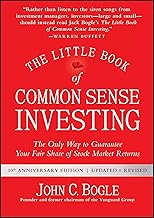


Historical Performance: Historically, value investing has shown strong returns over the long term, outperforming growth investing
Value investing has a storied history of delivering robust returns over extended periods. This investment strategy, popularized by Benjamin Graham and Warren Buffett, involves buying securities that appear underpriced by some form of fundamental analysis. Given enough time, the market tends to recognize and correct these pricing anomalies, leading to substantial gains for patient investors.
One of the most compelling arguments in favor of value investing is its long-term track record. Numerous studies have demonstrated that value stocks—those with low price-to-earnings ratios, low price-to-book ratios, and high dividend yields—tend to outperform growth stocks over time. For instance, a study by Fama and French found that value stocks outperformed growth stocks by an average of 7% per year from 1926 to 2015. This outperformance is particularly notable during periods of market volatility, where value stocks tend to be less affected by sudden downturns.
The success of value investing can be attributed to several factors. Firstly, value investors often benefit from a margin of safety, as they buy stocks at prices significantly below their intrinsic value. This reduces the risk of substantial losses if the market takes a downturn. Secondly, value investing encourages a long-term perspective, which aligns with the natural cycles of business and economic growth. By focusing on fundamental value rather than short-term market trends, value investors are better positioned to weather market fluctuations and capitalize on long-term growth opportunities.
Despite its historical success, value investing is not without its challenges. One of the primary difficulties is identifying undervalued stocks amidst a vast and complex market. This requires a deep understanding of financial analysis, as well as the ability to discern between genuinely undervalued stocks and those that are simply cheap for a reason. Additionally, value investing often involves a longer waiting period before realizing gains, which can test the patience of investors in a market that often rewards quick, speculative trades.
In conclusion, the historical performance of value investing speaks to its potential as a rewarding long-term investment strategy. By focusing on fundamental value and maintaining a patient, disciplined approach, value investors have consistently outperformed their growth-oriented counterparts. While the strategy is not without its challenges, the substantial returns it has delivered over time make it a compelling option for those willing to adopt a long-term investment horizon.
Is China's Economic Boom a Bubble Waiting to Burst?
You may want to see also
Explore related products


Notable Investors: Warren Buffett and Benjamin Graham are famous proponents of value investing, achieving significant success
Warren Buffett and Benjamin Graham are two of the most renowned figures in the world of value investing. Their success stories have become legendary, inspiring countless investors to adopt the value investing philosophy. Buffett, often referred to as the "Oracle of Omaha," has built his fortune by identifying undervalued companies with strong fundamentals and holding onto them for the long term. Graham, known as the "Father of Value Investing," developed the principles that Buffett and many others have followed to achieve significant financial success.
One of the key reasons why Buffett and Graham have been so successful is their ability to maintain a disciplined approach to investing. They have consistently emphasized the importance of buying companies at a price below their intrinsic value, a concept that is central to value investing. By doing so, they have been able to capitalize on market inefficiencies and generate substantial returns over time. Their track records speak for themselves: Buffett's investment firm, Berkshire Hathaway, has delivered an average annual return of over 20% since he took control in 1965, while Graham's investment partnership achieved an average annual return of around 20% during his tenure from 1936 to 1956.
Despite their success, Buffett and Graham have also faced criticism and skepticism from some quarters. Critics argue that value investing is no longer as effective in today's markets, where information is more readily available and competition is fiercer. However, Buffett and Graham's proponents counter that the principles of value investing remain as relevant as ever, and that the key to success lies in applying them with discipline and patience. As Buffett himself has said, "Value investing is not a get-rich-quick scheme. It requires patience, discipline, and a long-term perspective."
In conclusion, Warren Buffett and Benjamin Graham are notable investors who have achieved significant success through their commitment to value investing. Their disciplined approach, focus on intrinsic value, and long-term perspective have set them apart from other investors and have inspired generations to follow in their footsteps. While value investing may not be a guarantee of success, the track records of Buffett and Graham demonstrate that it can be a highly effective strategy for those who are willing to put in the time and effort to master it.
Fear and Finances: Understanding the Hesitance to Invest
You may want to see also
Explore related products

$8.73 $19.99


Criticisms and Challenges: Critics argue value investing may not work in all market conditions and requires extensive research and patience
Value investing, a strategy popularized by Benjamin Graham, has its fair share of critics who argue that it may not be effective in all market conditions. One of the primary criticisms is that value investing requires extensive research and patience, which can be a significant barrier to entry for many investors. This is particularly true in today's fast-paced financial markets, where quick gains and instant gratification are often sought after.
Critics also point out that value investing can be highly dependent on the investor's ability to accurately assess the intrinsic value of a stock. This requires a deep understanding of financial statements, industry trends, and market dynamics, which not all investors possess. Furthermore, value stocks may remain undervalued for extended periods, leading to prolonged waiting times for investors to realize gains.
Another challenge associated with value investing is that it may not perform well in certain market conditions, such as during economic downturns or in highly speculative markets. In these scenarios, value stocks may be overlooked by investors who are more focused on short-term gains or who are driven by market sentiment rather than fundamental analysis.
Despite these criticisms, proponents of value investing argue that the strategy has a proven track record of success over the long term. They point to the fact that many successful investors, such as Warren Buffett, have built their fortunes on the principles of value investing. Additionally, value investing can provide a more stable and predictable source of returns compared to other investment strategies that are more susceptible to market volatility.
In conclusion, while value investing may not be suitable for all investors or market conditions, it remains a viable and potentially rewarding strategy for those who are willing to put in the time and effort required to succeed. By focusing on fundamental analysis and maintaining a long-term perspective, value investors can potentially achieve significant gains while minimizing risk.
Is Robinhood Still Relevant? A Look at Its Current Status
You may want to see also
Explore related products


Current Trends: Recent trends show a resurgence in value investing due to market volatility and overvaluation concerns
The recent resurgence in value investing can be attributed to several key factors. Firstly, market volatility has increased significantly, leading many investors to seek more stable and predictable investment options. Value investing, which focuses on purchasing undervalued stocks with strong fundamentals, offers a refuge from the uncertainty of the broader market. Additionally, concerns about overvaluation in certain sectors, particularly in technology and growth stocks, have prompted investors to look for alternatives that offer better long-term value.
One of the driving forces behind this trend is the growing awareness among investors of the importance of diversification. Value investing provides a way to diversify portfolios by adding assets that are less correlated with the overall market. This can help to mitigate risk and improve overall portfolio performance, especially during times of market downturns.
Another factor contributing to the resurgence of value investing is the increasing availability of data and analytical tools. Investors now have access to a wealth of information that can help them identify undervalued stocks and make more informed investment decisions. This democratization of data has leveled the playing field, allowing individual investors to compete more effectively with institutional investors.
Furthermore, the current economic environment, characterized by low interest rates and inflation concerns, has created a favorable backdrop for value investing. In such conditions, value stocks tend to outperform growth stocks, as they are less sensitive to changes in interest rates and offer more attractive yields.
In conclusion, the resurgence in value investing is a response to market volatility, overvaluation concerns, and the growing importance of diversification. The increasing availability of data and analytical tools, along with the current economic environment, has further fueled this trend. As investors continue to seek stable and predictable investment options, value investing is likely to remain a popular strategy in the foreseeable future.
Exploring Satisfaction with Fisher Investments: A Comprehensive Analysis
You may want to see also
Frequently asked questions
Yes, value investing is a popular investment strategy followed by many individuals and institutional investors.
Value investing is an investment paradigm that involves buying securities that appear underpriced by some form of fundamental analysis.
Warren Buffett is one of the most famous and successful value investors.
The key principles of value investing include buying below intrinsic value, focusing on fundamentals, and having a long-term perspective.
Value investing focuses on buying undervalued securities, while growth investing emphasizes investing in companies with high growth potential.