Clark Galvan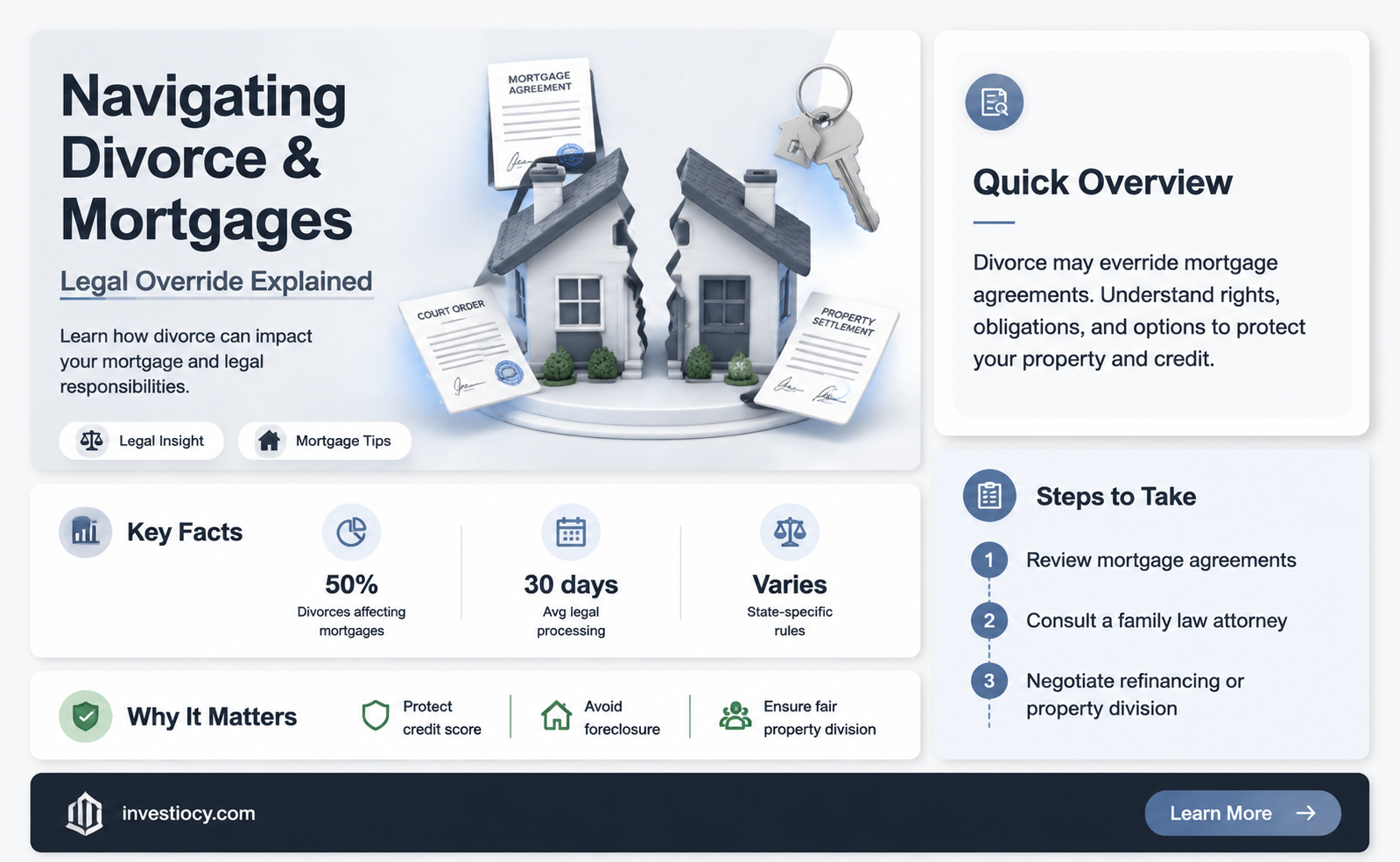
A divorce decree and a mortgage are two distinct legal documents that serve different purposes. While a divorce decree outlines the terms and conditions of the dissolution of a marriage, including the division of assets and debts, a mortgage is a financial agreement between a borrower and a lender for the purpose of purchasing property. In the event of a divorce, the question of whether a divorce decree overrides a mortgage often arises. The answer is not straightforward, as it depends on various factors, including the specific terms of the divorce decree, the mortgage agreement, and the laws of the jurisdiction in which the divorce is granted. Generally, a divorce decree does not automatically override a mortgage, but it may impact the parties' obligations and rights under the mortgage agreement.
Explore related products


What You'll Learn
- Legal Precedence: Examines which document, the divorce decree or mortgage, holds greater legal weight in financial matters
- Property Division: Discusses how marital property, including mortgages, is typically divided during divorce proceedings
- Financial Obligations: Explores whether a divorce decree can absolve one party from their mortgage payment responsibilities
- Refinancing Options: Considers the possibilities and requirements for refinancing a mortgage post-divorce to remove an ex-spouse
- Impact on Credit: Analyzes the potential effects of a divorce decree on the credit scores of both parties involved

Legal Precedence: Examines which document, the divorce decree or mortgage, holds greater legal weight in financial matters
In the realm of family law and real estate, a critical question often arises: does a divorce decree override a mortgage? To answer this, we must delve into the concept of legal precedence and examine which document holds greater weight in financial matters.
A divorce decree is a court order that outlines the terms and conditions of a divorce, including the division of assets and debts. It is a legally binding document that both parties must adhere to. On the other hand, a mortgage is a loan agreement between a borrower and a lender, secured by the borrower's property. The mortgage document specifies the terms of the loan, including the interest rate, payment schedule, and consequences of default.
When it comes to legal precedence, the divorce decree and mortgage are both important documents, but they serve different purposes. The divorce decree focuses on the equitable distribution of assets and debts between the divorcing parties, while the mortgage is primarily concerned with the lender's security interest in the property.
In most cases, the divorce decree will not override the mortgage. This is because the mortgage is a pre-existing legal obligation that both parties are responsible for, regardless of the divorce. The divorce decree may, however, address how the mortgage payments will be divided between the parties or who will be responsible for refinancing the mortgage.
There are exceptions to this general rule, such as when the divorce decree specifically states that one party is responsible for the entire mortgage debt, or when the mortgage is taken out after the divorce decree is issued. In these cases, the divorce decree may take precedence over the mortgage, as it is the more recent and specific legal document.
In conclusion, while both the divorce decree and mortgage are important legal documents, they generally serve different purposes and have different levels of legal precedence. The divorce decree focuses on the equitable distribution of assets and debts between the divorcing parties, while the mortgage is primarily concerned with the lender's security interest in the property. In most cases, the divorce decree will not override the mortgage, but there are exceptions to this rule.
Securing Your Dream Home: Does a Down Payment Guarantee a Mortgage?
You may want to see also
Explore related products


Property Division: Discusses how marital property, including mortgages, is typically divided during divorce proceedings
During divorce proceedings, the division of marital property, including mortgages, is a critical aspect that requires careful consideration. Marital property generally encompasses all assets and debts acquired during the marriage, and mortgages are no exception. The process of dividing a mortgage involves determining each spouse's share of the equity in the property and their responsibility for the outstanding debt.
One common approach to dividing a mortgage is through a process called "equitable distribution." This method aims to fairly allocate the marital assets and debts between the spouses, taking into account factors such as the length of the marriage, each spouse's income and earning potential, and their contributions to the acquisition and maintenance of the property. In some cases, the court may order the sale of the property, with the proceeds divided between the spouses according to the equitable distribution principles.
Another option is for one spouse to retain the property and assume the entire mortgage debt. This arrangement, known as "refinancing," requires the spouse to refinance the mortgage in their sole name, effectively removing the other spouse from the loan. However, this approach may not always be feasible, as it depends on the spouse's creditworthiness and ability to qualify for a new mortgage.
In situations where the property is jointly owned, but one spouse wishes to retain it, a "buyout" may be an option. This involves one spouse purchasing the other's share of the property, either through a lump-sum payment or a series of payments over time. The buyout price is typically determined by an appraisal of the property's value, and the spouses may negotiate the terms of the buyout agreement.
Regardless of the method chosen, it is essential for divorcing couples to carefully consider the tax implications of dividing a mortgage. The transfer of property and assumption of debt can have significant tax consequences, and it is advisable to consult with a tax professional to ensure that the division is structured in a tax-efficient manner.
In conclusion, the division of marital property, including mortgages, during divorce proceedings requires a thoughtful and informed approach. By understanding the various methods available and considering the unique circumstances of their situation, divorcing couples can work towards a fair and equitable resolution that minimizes financial strain and allows them to move forward with their lives.
Boosting Your Mortgage Amount: The Power of a Cosigner Revealed
You may want to see also
Explore related products


Financial Obligations: Explores whether a divorce decree can absolve one party from their mortgage payment responsibilities
A divorce decree can have significant implications for the financial obligations of the parties involved, particularly when it comes to mortgage payments. While a divorce decree may outline the division of assets and debts, it does not automatically override the terms of a mortgage agreement. This means that if one party is responsible for making mortgage payments according to the original loan agreement, they cannot simply walk away from this obligation based on the divorce decree alone.
In some cases, a divorce decree may include provisions for the transfer of property or the assumption of mortgage payments by one party. However, this is not a guarantee, and the specific terms of the divorce decree will vary depending on the circumstances of the case. It is important to note that even if a divorce decree absolves one party from their mortgage payment responsibilities, this does not necessarily mean that the lender will be bound by this decision. Lenders are not parties to the divorce proceedings and may not be aware of the terms of the divorce decree.
To ensure that mortgage payment responsibilities are properly addressed in a divorce, it is crucial for the parties involved to communicate with their lender and to obtain a clear understanding of their obligations. This may involve refinancing the mortgage, transferring the property to one party, or negotiating a new payment plan with the lender. Failure to address mortgage payment responsibilities in a divorce can lead to financial difficulties and potential legal consequences for both parties.
In conclusion, while a divorce decree can outline the division of assets and debts, it does not automatically override the terms of a mortgage agreement. It is important for the parties involved to communicate with their lender and to obtain a clear understanding of their obligations to ensure that mortgage payment responsibilities are properly addressed in the divorce.
Boosting Your Mortgage Approval Odds: The Power of a Cosigner
You may want to see also
Refinancing Options: Considers the possibilities and requirements for refinancing a mortgage post-divorce to remove an ex-spouse
Post-divorce, refinancing a mortgage to remove an ex-spouse is a critical step for many individuals seeking financial independence and stability. This process involves several key considerations and requirements that must be carefully navigated. Firstly, it's essential to understand that a divorce decree does not automatically override a mortgage agreement. Both parties remain legally responsible for the mortgage debt unless specific arrangements are made.
To refinance a mortgage post-divorce, one must typically meet certain eligibility criteria. This includes having a sufficient credit score, stable income, and enough equity in the property. Lenders will also consider the debt-to-income ratio to ensure the borrower can manage the new mortgage payments. If the ex-spouse is to be removed from the mortgage, they may need to provide documentation to support the refinance application, such as proof of income and creditworthiness.
The process of refinancing involves several steps. Initially, the borrower must gather necessary documents, including the divorce decree, current mortgage statement, proof of income, and credit reports. They should then shop around for the best refinance rates and terms, considering both fixed and adjustable-rate mortgages. Once a lender is chosen, the borrower will need to complete an application and undergo an underwriting process, which may include a home appraisal.
One unique aspect of refinancing post-divorce is the potential impact on child support and alimony payments. If the mortgage refinance results in a lower monthly payment, it could affect the amount of support owed. Additionally, if the property is sold as part of the refinance, capital gains taxes may apply, and these must be factored into the overall financial planning.
In conclusion, refinancing a mortgage to remove an ex-spouse post-divorce is a complex process that requires careful consideration of various financial and legal factors. By understanding the requirements and potential implications, individuals can make informed decisions that best suit their financial situations and long-term goals.
Understanding Deeds and Mortgages: What Does a Deed Show?
You may want to see also
Impact on Credit: Analyzes the potential effects of a divorce decree on the credit scores of both parties involved
A divorce decree can have significant implications for the credit scores of both parties involved. When a marriage ends, the financial responsibilities and assets are often divided, which can impact credit reports and scores. For instance, if one party was responsible for paying certain debts during the marriage and fails to do so post-divorce, it can negatively affect their credit score. Similarly, if joint accounts are not properly managed or closed, it can lead to credit score damage for both individuals.
One unique aspect to consider is the potential for a divorce decree to override a mortgage agreement. If the divorce decree stipulates that one party is responsible for the mortgage payments, but the mortgage agreement lists both parties as responsible, it can create confusion and potential credit issues. Lenders may continue to report the mortgage debt as joint, despite the divorce decree, leading to credit score impacts for both parties.
To mitigate these effects, it's crucial for both parties to monitor their credit reports closely following a divorce. They should ensure that all joint accounts are properly closed or transferred to individual accounts, and that all debts are being paid as agreed upon in the divorce decree. If discrepancies arise, such as a lender continuing to report a joint debt despite the divorce decree, it's important to dispute these errors with the credit bureaus.
In some cases, it may be necessary to seek legal advice to clarify the terms of the divorce decree and ensure that all financial responsibilities are properly allocated. This can help prevent misunderstandings and credit score damage down the line. By being proactive and vigilant, both parties can work to minimize the negative impact of a divorce decree on their credit scores and move forward with their financial lives.
Understanding Cosigner Rights in a Mortgage Agreement
You may want to see also
Frequently asked questions
No, a divorce decree does not override a mortgage. The mortgage remains in effect regardless of the divorce, and both parties are still responsible for the payments unless the mortgage is refinanced or the property is sold.
After a divorce, the mortgage remains in effect, and both parties are still responsible for the payments unless the mortgage is refinanced or the property is sold. The divorce decree may specify how the payments are to be made, but it does not override the mortgage.
No, a divorce decree cannot change the terms of a mortgage. The mortgage remains in effect with the same terms and conditions, and both parties are still responsible for the payments unless the mortgage is refinanced or the property is sold.
Both parties are responsible for the mortgage payments after a divorce unless the mortgage is refinanced or the property is sold. The divorce decree may specify how the payments are to be made, but it does not override the mortgage.
A divorce does not affect the ownership of a property with a mortgage. The mortgage remains in effect, and both parties are still responsible for the payments unless the mortgage is refinanced or the property is sold. The divorce decree may specify how the property is to be divided, but it does not override the mortgage.