Lester Freeman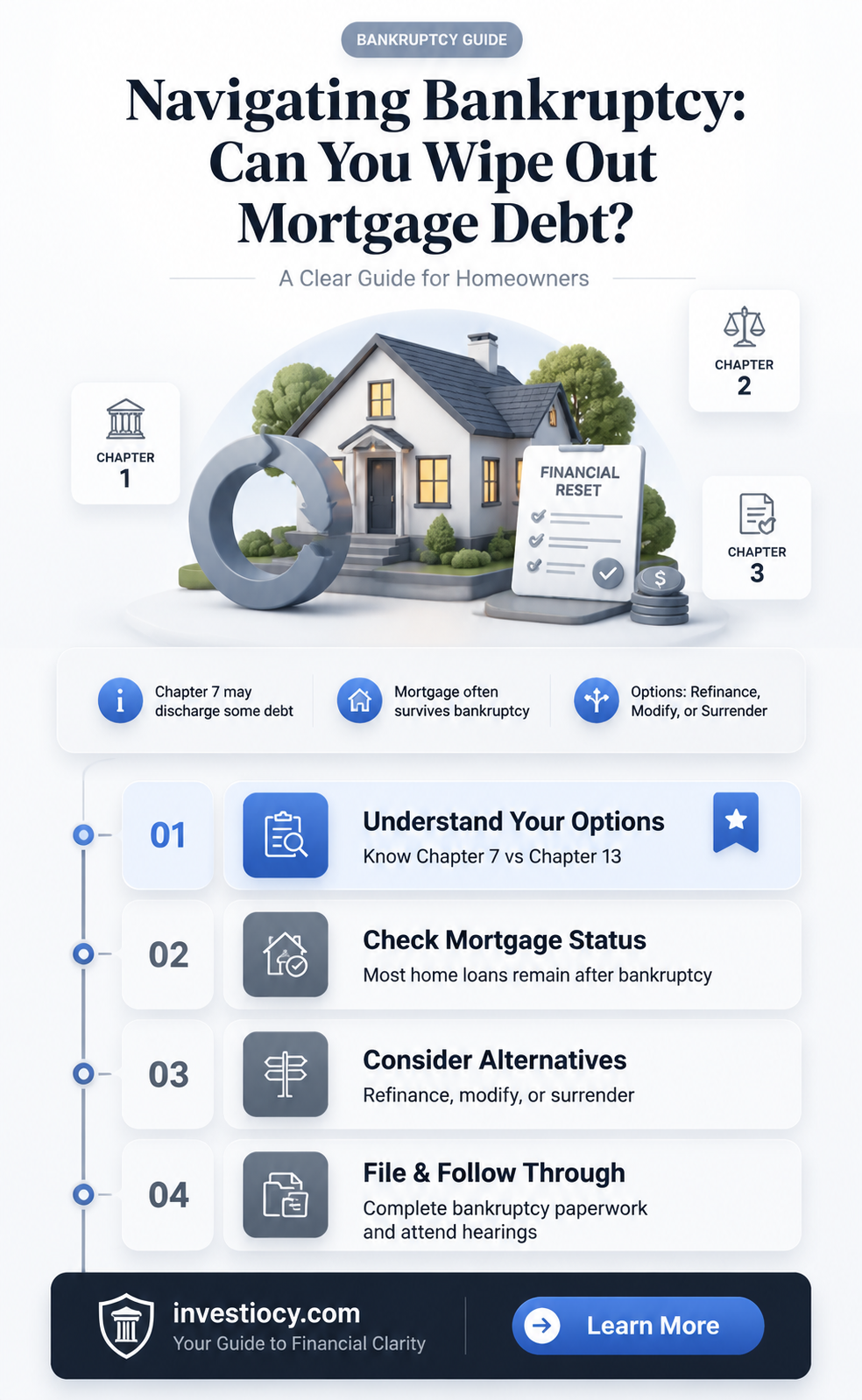
Personal bankruptcy is a legal process that allows individuals to eliminate or restructure their debts when they are unable to meet their financial obligations. One common question that arises in the context of personal bankruptcy is whether it can erase mortgage debt. The answer to this question depends on the type of bankruptcy filed and the specific circumstances of the case. In general, filing for bankruptcy can provide temporary relief from mortgage payments and potentially lead to the discharge of mortgage debt, but it is not a guaranteed outcome. The process involves a thorough examination of the debtor's financial situation, and the court may require the debtor to adhere to a repayment plan or liquidate assets to satisfy creditors. It is essential for individuals considering bankruptcy to consult with a qualified attorney to understand their options and the potential consequences of filing for bankruptcy on their mortgage debt.
Explore related products

$2.99 $12.99


What You'll Learn
- Chapter 7 vs. Chapter 13: Different bankruptcy chapters have varying impacts on mortgage debt
- Lien Retention: Bankruptcy may discharge personal liability, but liens on property often remain
- Reaffirmation Agreements: Debtors can agree to continue paying mortgages to keep the property
- Foreclosure Risks: Bankruptcy can temporarily halt foreclosure, but long-term risks may persist
- Credit Score Impact: Bankruptcy and mortgage debt can significantly affect credit scores and future lending

Chapter 7 vs. Chapter 13: Different bankruptcy chapters have varying impacts on mortgage debt
Chapter 7 and Chapter 13 bankruptcies offer different approaches to handling mortgage debt, each with its own set of implications and outcomes. Chapter 7 bankruptcy, often referred to as liquidation bankruptcy, involves the sale of non-exempt assets to pay off creditors. In the context of mortgage debt, this could mean the loss of a home if it is not protected by an exemption. However, if the home is sold, any remaining mortgage debt after the sale may be discharged, providing a fresh start for the debtor.
On the other hand, Chapter 13 bankruptcy, known as reorganization bankruptcy, allows debtors to keep their property, including their home, while restructuring their debts into a manageable repayment plan. This plan typically lasts three to five years, during which time the debtor makes regular payments to a trustee who distributes the funds to creditors. At the end of the repayment period, any remaining unsecured debts, including portions of mortgage debt that were not paid off through the plan, are discharged.
One key difference between the two chapters is the treatment of secured debts, such as mortgages. In Chapter 7, secured debts are not automatically discharged; the debtor must either reaffirm the debt, which means agreeing to continue making payments according to the original loan terms, or surrender the property securing the debt. In contrast, Chapter 13 allows debtors to modify the terms of their secured debts, potentially reducing the principal balance, interest rate, or monthly payments, making it easier to keep their home and manage their debt.
Another important consideration is the impact on credit scores. Both Chapter 7 and Chapter 13 bankruptcies will negatively affect credit scores, but the extent and duration of the impact can vary. Chapter 7 bankruptcy may result in a more significant drop in credit scores initially, but the impact typically diminishes over time as the debtor rebuilds their credit. Chapter 13 bankruptcy, while still affecting credit scores, may have a less severe impact because the debtor is demonstrating a commitment to repaying their debts through the structured repayment plan.
In summary, the choice between Chapter 7 and Chapter 13 bankruptcy depends on the debtor's specific circumstances, including their ability to pay off debts, the value of their assets, and their long-term financial goals. While Chapter 7 offers a quicker path to debt discharge, it may come at the cost of losing property. Chapter 13, on the other hand, provides a more structured approach to debt repayment, allowing debtors to retain their assets while gradually improving their financial situation.
Understanding Navy Federal Mortgage Pre-Qualification: Does It Go to Underwriting?
You may want to see also
Explore related products


Lien Retention: Bankruptcy may discharge personal liability, but liens on property often remain
Bankruptcy can provide a fresh start for individuals overwhelmed by debt, but it's important to understand that not all debts are treated equally. While bankruptcy may discharge personal liability for certain debts, liens on property often remain. This means that even after completing the bankruptcy process, creditors may still have a claim on your assets.
Liens are legal claims on property that secure a debt. They can be placed on various types of assets, including real estate, vehicles, and personal property. When you file for bankruptcy, you may be able to discharge your personal liability for the debt, but the lien on your property typically remains in place. This is because bankruptcy only affects unsecured debts, and liens are considered secured debts.
For example, if you have a mortgage on your home and file for bankruptcy, you may be able to discharge your personal liability for the mortgage debt. However, the lien on your home will likely remain, meaning the lender can still foreclose on your property if you fail to make payments. This is a crucial distinction to understand when considering bankruptcy as a debt relief option.
Lien retention can have significant implications for your financial future. Even after bankruptcy, you may still be at risk of losing your assets if you're unable to satisfy the lien. It's essential to carefully consider the impact of lien retention on your overall financial situation and to explore all available options for managing your debt.
In some cases, it may be possible to negotiate with creditors to remove liens or to modify the terms of the lien. This could involve paying off the debt in full, refinancing the debt, or entering into a settlement agreement. Consulting with a bankruptcy attorney or a financial advisor can help you understand your options and develop a strategy for managing liens on your property.
In conclusion, while bankruptcy can provide relief from personal liability for certain debts, it's important to be aware that liens on property often remain. Understanding the implications of lien retention and exploring all available options for managing your debt is crucial for achieving a successful financial recovery after bankruptcy.
Understanding Mortgage Notes: The Role of a Notary Public Explained
You may want to see also
Reaffirmation Agreements: Debtors can agree to continue paying mortgages to keep the property
In the context of personal bankruptcy, reaffirmation agreements offer a structured approach for debtors to retain their property while managing their financial obligations. These agreements are legally binding contracts between the debtor and the creditor, typically a mortgage lender, wherein the debtor commits to continuing their mortgage payments despite the bankruptcy filing. This arrangement allows the debtor to keep their home or other mortgaged property, provided they adhere to the agreed-upon payment terms.
Reaffirmation agreements are particularly beneficial when the debtor's mortgage is current or only slightly delinquent. By reaffirming the debt, the debtor can avoid the risk of foreclosure and maintain their credit score, albeit with the bankruptcy filing still impacting their overall creditworthiness. It's crucial to note that reaffirmation agreements are voluntary and must be entered into knowingly and willingly by both parties. The debtor should carefully consider their financial situation and ability to meet the payment obligations before committing to such an agreement.
The process of entering into a reaffirmation agreement typically involves several steps. Initially, the debtor and creditor must negotiate the terms of the agreement, which may include the monthly payment amount, interest rate, and repayment period. Once the terms are agreed upon, the debtor must sign the reaffirmation agreement, which is then submitted to the bankruptcy court for approval. The court will review the agreement to ensure it is fair and in the best interest of the debtor. If approved, the reaffirmation agreement becomes a legally binding contract, and the debtor is obligated to make the agreed-upon payments.
It's important to recognize that reaffirmation agreements are not suitable for all debtors. Those who are significantly behind on their mortgage payments or facing imminent foreclosure may not benefit from such an arrangement. Additionally, debtors should be aware that reaffirming a mortgage debt does not erase the bankruptcy filing from their credit report, and it may still impact their ability to obtain future credit. Debtors should consult with a bankruptcy attorney to discuss the specifics of their situation and determine whether a reaffirmation agreement is a viable option for managing their mortgage debt during bankruptcy.
Understanding NACA Mortgages: Is PMI Included?
You may want to see also
Foreclosure Risks: Bankruptcy can temporarily halt foreclosure, but long-term risks may persist
Bankruptcy can provide a temporary reprieve from foreclosure, but it does not eliminate the underlying mortgage debt. This means that while the immediate threat of losing your home may be averted, the long-term risk of foreclosure remains. In fact, bankruptcy can sometimes make it more difficult to keep your home, as it may damage your credit score and make it harder to refinance your mortgage or obtain a new loan.
One of the key risks associated with bankruptcy is that it does not address the root cause of the financial distress that led to the foreclosure threat in the first place. Unless you are able to address these underlying issues, such as high levels of debt or a lack of income, you may find yourself in a similar situation in the future. Additionally, bankruptcy can have a negative impact on your ability to obtain credit in the future, which can make it more difficult to secure a new mortgage or other types of loans.
Another important consideration is that bankruptcy does not automatically discharge mortgage debt. While some types of debt, such as credit card debt or personal loans, may be discharged in bankruptcy, mortgage debt is typically not. This means that you will still be responsible for paying your mortgage, even after you have filed for bankruptcy. If you are unable to make your mortgage payments, you may still face the risk of foreclosure.
In some cases, bankruptcy can actually accelerate the foreclosure process. This is because bankruptcy can trigger a clause in your mortgage contract known as a "due-on-sale" clause, which allows the lender to demand immediate payment of the entire mortgage balance if the property is transferred to a new owner. If you are unable to make this payment, the lender may initiate foreclosure proceedings.
To mitigate these risks, it is important to carefully consider the potential consequences of bankruptcy before filing. You should consult with a qualified bankruptcy attorney to discuss your options and determine whether bankruptcy is the right choice for your situation. Additionally, you should take steps to address the underlying financial issues that led to the foreclosure threat, such as creating a budget, reducing expenses, and increasing income. By taking a proactive approach to managing your finances, you can reduce the risk of foreclosure and improve your long-term financial stability.
Understanding Multiple Indebtedness Mortgages: Maturity Insights
You may want to see also
Credit Score Impact: Bankruptcy and mortgage debt can significantly affect credit scores and future lending
Bankruptcy and mortgage debt can have a profound impact on an individual's credit score, which is a critical factor in determining their ability to secure future loans and favorable interest rates. When a person files for bankruptcy, it is typically reported to the credit bureaus and can result in a significant drop in their credit score. This negative mark can remain on their credit report for several years, making it challenging to obtain new credit or refinance existing debt.
In the context of mortgage debt, bankruptcy can lead to the loss of a home if the individual is unable to continue making mortgage payments. This not only results in the loss of a significant asset but also further damages their credit score due to the missed payments and potential foreclosure. Additionally, if the mortgage debt is not fully discharged through bankruptcy, the individual may still be responsible for paying off the remaining balance, which can continue to affect their credit score and financial stability.
The impact of bankruptcy and mortgage debt on credit scores can vary depending on the specific circumstances of the individual's situation. Factors such as the type of bankruptcy filed, the amount of debt discharged, and the individual's overall financial history can all influence the severity and duration of the credit score impact. It is essential for individuals considering bankruptcy to carefully weigh the potential consequences and explore all available options before making a decision.
One strategy that individuals can use to mitigate the impact of bankruptcy and mortgage debt on their credit scores is to work with a credit counselor or financial advisor. These professionals can help individuals develop a plan to manage their debt, improve their credit score, and rebuild their financial stability over time. Additionally, individuals should be proactive in monitoring their credit reports and disputing any inaccuracies or errors that may further damage their credit score.
In conclusion, bankruptcy and mortgage debt can have a significant and long-lasting impact on an individual's credit score and future lending opportunities. It is crucial for individuals to understand the potential consequences and take steps to manage their debt and rebuild their creditworthiness over time. By working with professionals and staying informed about their financial situation, individuals can minimize the negative effects of bankruptcy and mortgage debt on their credit scores and overall financial health.
Understanding Mortgage Agreements: Non-Borrowing Spouse's Signature Requirements
You may want to see also
Frequently asked questions
Personal bankruptcy can potentially erase mortgage debt, but it depends on the type of bankruptcy filed and the specific circumstances of the case.
There are two main types of bankruptcy available to individuals: Chapter 7 and Chapter 13.
Chapter 7 bankruptcy can discharge unsecured debts, but it does not automatically discharge secured debts like mortgages. However, if the property is surrendered to the lender, the mortgage debt may be discharged.
Chapter 13 bankruptcy allows individuals to reorganize their debts and create a repayment plan. Mortgage debt can be included in this plan, and the individual may be able to keep their property while making payments over time.
Filing for bankruptcy can have several consequences, including damage to credit scores, difficulty obtaining loans in the future, and potential loss of assets. It is important to consult with a bankruptcy attorney to understand the specific implications of filing for bankruptcy in your situation.