Josephine Norton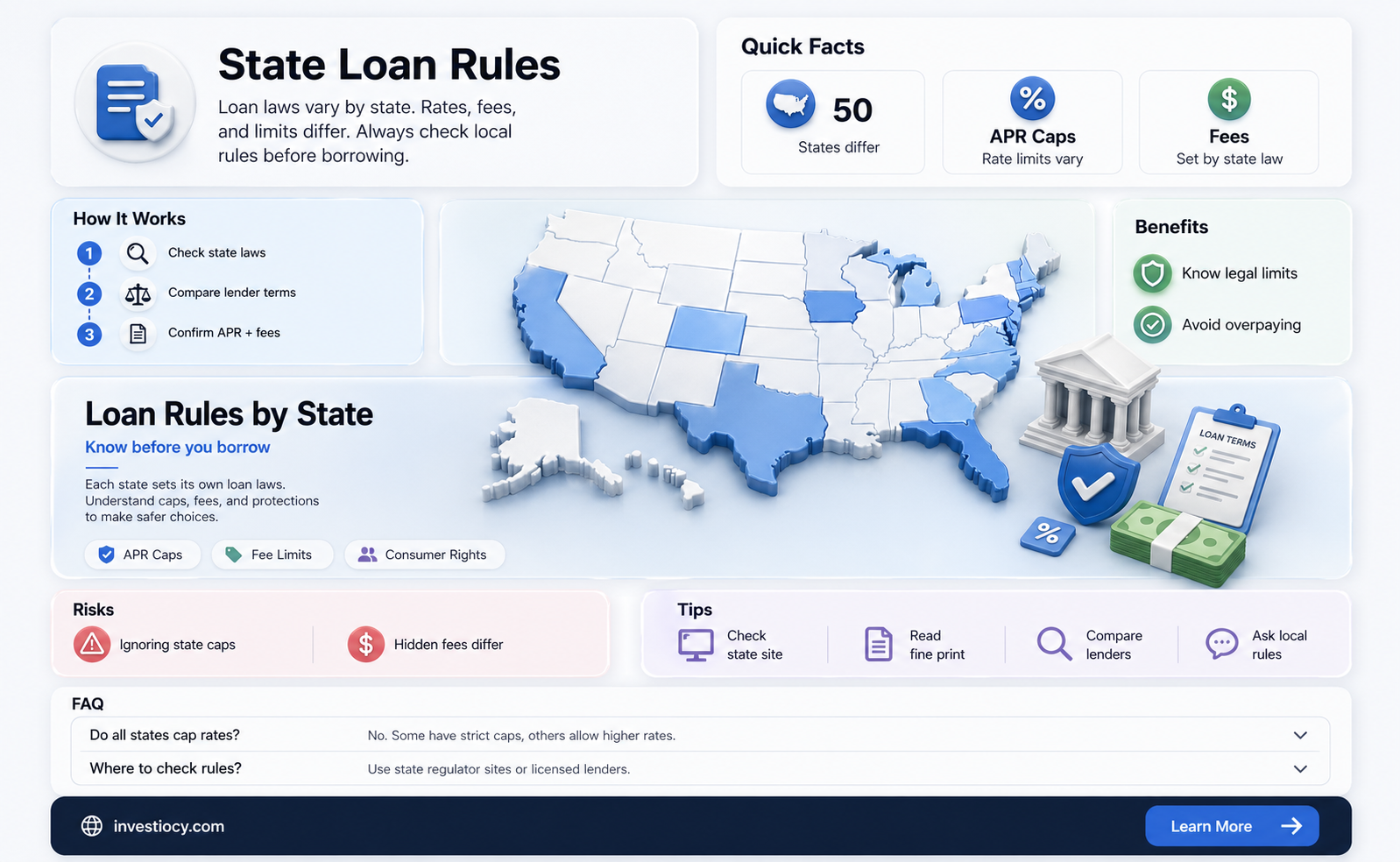
Loan regulations in the United States can indeed vary significantly from state to state. While federal laws provide a baseline for lending practices, individual states have the authority to enact their own regulations, which can result in a complex patchwork of rules and requirements across the country. These variations can impact everything from the types of loans available to consumers, to the interest rates and fees that lenders can charge, and even the qualifications needed to obtain a loan. Understanding these state-specific differences is crucial for both lenders and borrowers to navigate the lending landscape effectively and ensure compliance with local laws.
| Characteristics | Values |
|---|---|
| Federal Oversight | The Federal Reserve and the Office of the Comptroller of the Currency (OCC) oversee banks and ensure compliance with federal laws. |
| State Oversight | State banking departments regulate state-chartered banks and credit unions, enforcing state laws and regulations. |
| Licensing Requirements | Lenders must obtain licenses to operate in each state, meeting specific capital, liquidity, and other requirements. |
| Interest Rate Caps | States may impose caps on interest rates for certain types of loans, such as payday loans or personal loans. |
| Loan Terms | Regulations may dictate maximum loan terms, repayment periods, and renewal options. |
| Disclosure Requirements | Lenders must provide borrowers with detailed disclosures about loan terms, interest rates, and fees. |
| Consumer Protections | States may have additional consumer protection laws, such as prohibitions on certain lending practices or requirements for credit counseling. |
| Enforcement Actions | State and federal regulators can take enforcement actions against lenders that violate regulations, including fines, cease and desist orders, and revocation of licenses. |
| Interstate Lending | Federal law allows banks to export interest rates and loan terms from their home state to other states, subject to certain limitations. |
| Online Lending | Online lenders must comply with both federal and state regulations, which can vary depending on the lender's location and the borrower's state of residence. |
| Mortgage Lending | Mortgage loans are subject to specific federal and state regulations, including the Truth in Lending Act (TILA) and the Real Estate Settlement Procedures Act (RESPA). |
| Student Loan Lending | Federal student loans are regulated by the Department of Education, while private student loans are subject to state and federal consumer protection laws. |
| Payday Lending | Payday loans are heavily regulated in many states, with some states banning them altogether or imposing strict limits on loan amounts and interest rates. |
| Title Loans | Title loans, which use a vehicle as collateral, are also subject to state regulations, with some states prohibiting them or limiting loan amounts and interest rates. |
| Debt Collection | Debt collection practices are regulated by the Fair Debt Collection Practices Act (FDCPA) at the federal level and by state laws, which may provide additional protections for consumers. |
| Credit Reporting | Credit reporting agencies are regulated by the Fair Credit Reporting Act (FCRA) at the federal level and by state laws, which may impose additional requirements for credit reporting and dispute resolution. |
Explore related products


What You'll Learn
- State-Specific Loan Laws: Different states have unique loan regulations, impacting interest rates, terms, and borrower protections
- Licensing Requirements: Lenders must obtain state licenses, which can vary in requirements and fees from state to state
- Interest Rate Caps: Some states impose limits on interest rates to protect consumers from predatory lending practices
- Disclosure Requirements: States may mandate specific disclosures to borrowers, such as loan terms, APR, and repayment schedules
- Enforcement and Penalties: States have their own enforcement mechanisms and penalties for non-compliance with loan regulations

State-Specific Loan Laws: Different states have unique loan regulations, impacting interest rates, terms, and borrower protections
State-specific loan laws in the USA create a complex regulatory landscape that borrowers must navigate. Each state has its own set of statutes and regulations governing loan practices, which can significantly impact the terms and conditions of loans available to residents. For instance, some states have strict caps on interest rates, while others allow lenders more flexibility. This variation means that a loan offer in one state may not be available or may have different terms in another.
One key area where state laws differ is in the regulation of payday loans. Some states, like California, have implemented strict limits on the amount and duration of payday loans, as well as caps on fees. In contrast, states like Texas have more lenient regulations, allowing for higher loan amounts and longer repayment terms. These differences reflect the varying policy approaches states take to balance consumer protection with the need for accessible credit.
Another important aspect of state-specific loan laws is the protection they offer to borrowers. States like New York have robust laws against predatory lending, providing borrowers with strong legal recourse against abusive practices. Meanwhile, states with weaker regulations may leave borrowers more vulnerable to unscrupulous lenders. Understanding these protections is crucial for borrowers to ensure they are not taken advantage of.
The impact of state laws on loan terms can also affect the overall cost of borrowing. For example, a state with a high interest rate cap may result in higher loan costs for borrowers, as lenders may charge the maximum allowed rate to compensate for the regulatory constraints. Conversely, states with lower caps may offer more affordable borrowing options. Borrowers should therefore consider the regulatory environment of their state when evaluating loan offers.
In conclusion, the patchwork of state-specific loan laws in the USA creates a varied and sometimes confusing landscape for borrowers. By understanding the unique regulations in their state, borrowers can make more informed decisions about their loan options and better protect themselves from predatory practices.
Explore related products


Licensing Requirements: Lenders must obtain state licenses, which can vary in requirements and fees from state to state
Lenders operating in the United States must navigate a complex web of state-specific licensing requirements. Each state has its own set of regulations and fees that lenders must adhere to in order to legally offer loans within that state's borders. This means that a lender looking to operate nationwide must obtain multiple licenses, each with its own unique set of criteria and costs.
The requirements for obtaining a state license can vary significantly. Some states may require lenders to have a physical presence within the state, while others may allow for online-only operations. The fees associated with obtaining and maintaining a state license can also differ widely, ranging from a few hundred dollars to several thousand dollars per year. Additionally, some states may impose restrictions on the types of loans that can be offered, such as limiting the maximum interest rate or loan amount.
To illustrate the complexity of state licensing requirements, consider the example of a lender looking to offer personal loans in three different states: California, Texas, and New York. In California, the lender would need to obtain a Finance Lenders Law License, which requires a minimum net worth of $250,000 and an annual fee of $975. In Texas, the lender would need to register with the Texas Office of Consumer Credit Commissioner and pay an annual fee of $400. In New York, the lender would need to obtain a license from the New York State Department of Financial Services, which requires a minimum net worth of $1 million and an annual fee of $2,500.
As this example demonstrates, the process of obtaining state licenses can be both time-consuming and costly. Lenders must carefully research the requirements of each state in which they wish to operate and ensure that they are in compliance with all relevant regulations. Failure to obtain the necessary licenses can result in legal penalties, including fines and even criminal charges.
In conclusion, the licensing requirements for lenders in the United States can vary significantly from state to state. Lenders must be aware of these differences and take steps to ensure that they are in compliance with all relevant regulations. This may involve obtaining multiple licenses, paying annual fees, and adhering to state-specific restrictions on loan offerings. By understanding and navigating these complex requirements, lenders can legally operate within the United States and provide financial services to consumers across the country.
Explore related products




Interest Rate Caps: Some states impose limits on interest rates to protect consumers from predatory lending practices
Interest rate caps are a regulatory measure implemented by some states in the USA to curb predatory lending practices. These caps set a maximum limit on the interest rates that lenders can charge on certain types of loans, such as payday loans, title loans, and installment loans. The primary goal of these caps is to protect consumers from exorbitant interest rates that can lead to financial hardship and debt traps.
One notable example of a state with strict interest rate caps is Colorado. In 2018, Colorado voters approved Proposition 111, which capped the annual percentage rate (APR) on payday loans at 36%. This move was aimed at reining in the predatory lending industry, which had been charging triple-digit interest rates on short-term loans. Since the implementation of this cap, many payday lenders have either closed down or shifted their business models to comply with the new regulations.
On the other hand, some states have chosen not to impose interest rate caps, opting instead for other regulatory measures to protect consumers. For instance, Texas has a reputation for having a relatively deregulated lending environment, with no caps on interest rates for most types of loans. However, the state does have some protections in place, such as requiring lenders to disclose loan terms and conditions clearly and prohibiting certain deceptive practices.
The debate over interest rate caps is complex and multifaceted. Proponents argue that these caps are necessary to prevent predatory lending and protect vulnerable consumers from financial exploitation. They point to studies showing that high-interest loans can lead to a cycle of debt, where borrowers are unable to pay off their loans and are forced to take out new ones at even higher interest rates.
Opponents of interest rate caps, on the other hand, argue that these regulations can have unintended consequences. They claim that caps can limit access to credit for consumers who may not be able to obtain loans from traditional banks or other sources. Additionally, they argue that interest rate caps can drive lenders out of business, reducing competition and potentially leading to higher prices for consumers.
In conclusion, interest rate caps are a contentious issue in the realm of loan regulations in the USA. While some states have embraced these caps as a way to protect consumers from predatory lending, others have chosen alternative regulatory approaches. The effectiveness of interest rate caps in achieving their intended goals remains a subject of ongoing debate and research.
Explore related products



Disclosure Requirements: States may mandate specific disclosures to borrowers, such as loan terms, APR, and repayment schedules
Disclosure requirements are a critical aspect of loan regulations that vary significantly from state to state in the USA. These mandates are designed to ensure transparency and protect borrowers by requiring lenders to provide detailed information about loan terms, Annual Percentage Rates (APRs), and repayment schedules. The specifics of these disclosures can differ widely, reflecting the unique regulatory environments and consumer protection priorities of each state.
For instance, some states may require lenders to disclose the total cost of the loan, including all fees and interest, while others might mandate more detailed breakdowns of monthly payments and the allocation of payments towards principal and interest. Additionally, certain states may have specific requirements for disclosing the risks associated with variable-rate loans or the consequences of late payments.
The variation in disclosure requirements can have a significant impact on both lenders and borrowers. Lenders must adapt their practices and documentation to comply with the regulations of each state they operate in, which can increase operational complexity and costs. Borrowers, on the other hand, benefit from these disclosures by gaining a clearer understanding of the terms and conditions of their loans, enabling them to make more informed financial decisions.
One notable example of state-specific disclosure requirements is the California Residential Mortgage Lending Act, which mandates that lenders provide borrowers with a detailed disclosure statement outlining the loan terms, APR, and repayment schedule. This statement must be delivered to the borrower at least three business days before the loan is consummated, allowing the borrower sufficient time to review and understand the terms of the loan.
In contrast, states like Texas have different disclosure requirements under the Texas Finance Code, which may include specific disclosures about the loan's interest rate, fees, and repayment terms. These disclosures are intended to ensure that borrowers are fully aware of the costs and obligations associated with their loans.
Overall, the diversity in disclosure requirements across states highlights the importance of understanding and complying with local regulations when engaging in lending activities. By providing borrowers with clear and comprehensive information about their loans, these requirements play a crucial role in promoting financial transparency and protecting consumers from predatory lending practices.
Explore related products





Enforcement and Penalties: States have their own enforcement mechanisms and penalties for non-compliance with loan regulations
Each state in the USA has the authority to enforce its own loan regulations, which can lead to a complex patchwork of rules and penalties across the country. This decentralized approach means that lenders and borrowers must navigate a variety of state-specific requirements and consequences for non-compliance. For instance, some states may impose strict caps on interest rates, while others may have more lenient rules.
Enforcement mechanisms can vary widely from state to state. Some states have dedicated regulatory agencies that actively monitor and investigate potential violations, while others may rely on consumer complaints to initiate action. Additionally, the penalties for non-compliance can range from fines and penalties to more severe consequences, such as license revocation or even criminal charges.
One unique aspect of state-level enforcement is the ability to tailor penalties to the specific needs and circumstances of the state. For example, a state with a high rate of predatory lending may impose more stringent penalties on lenders who engage in such practices. This flexibility allows states to address specific issues and protect their citizens more effectively.
However, this state-by-state approach can also create challenges for lenders and borrowers. Lenders must ensure that they are compliant with the regulations of each state in which they operate, which can be a complex and time-consuming process. Borrowers, on the other hand, may find it difficult to understand their rights and responsibilities under different state laws.
To navigate this complex landscape, both lenders and borrowers should consult with legal professionals who are familiar with the specific loan regulations and enforcement mechanisms of their state. By doing so, they can ensure that they are in compliance with all applicable laws and avoid potential penalties for non-compliance.
Frequently asked questions
Yes, loan regulations can vary significantly from state to state in the USA. Each state has its own laws and regulations governing loans, interest rates, and lending practices.
Some states have stricter regulations on payday loans, limiting the amount that can be borrowed or the interest rate that can be charged. Other states have more lenient regulations, allowing for higher loan amounts and interest rates. Additionally, some states have specific laws governing mortgage lending, while others follow federal guidelines.
Federal loan regulations set a baseline for lending practices across the country, but state regulations can add additional requirements or restrictions. In cases where state and federal regulations conflict, federal law typically takes precedence. However, states are often free to enact their own laws that are more stringent than federal regulations.