Lester Freeman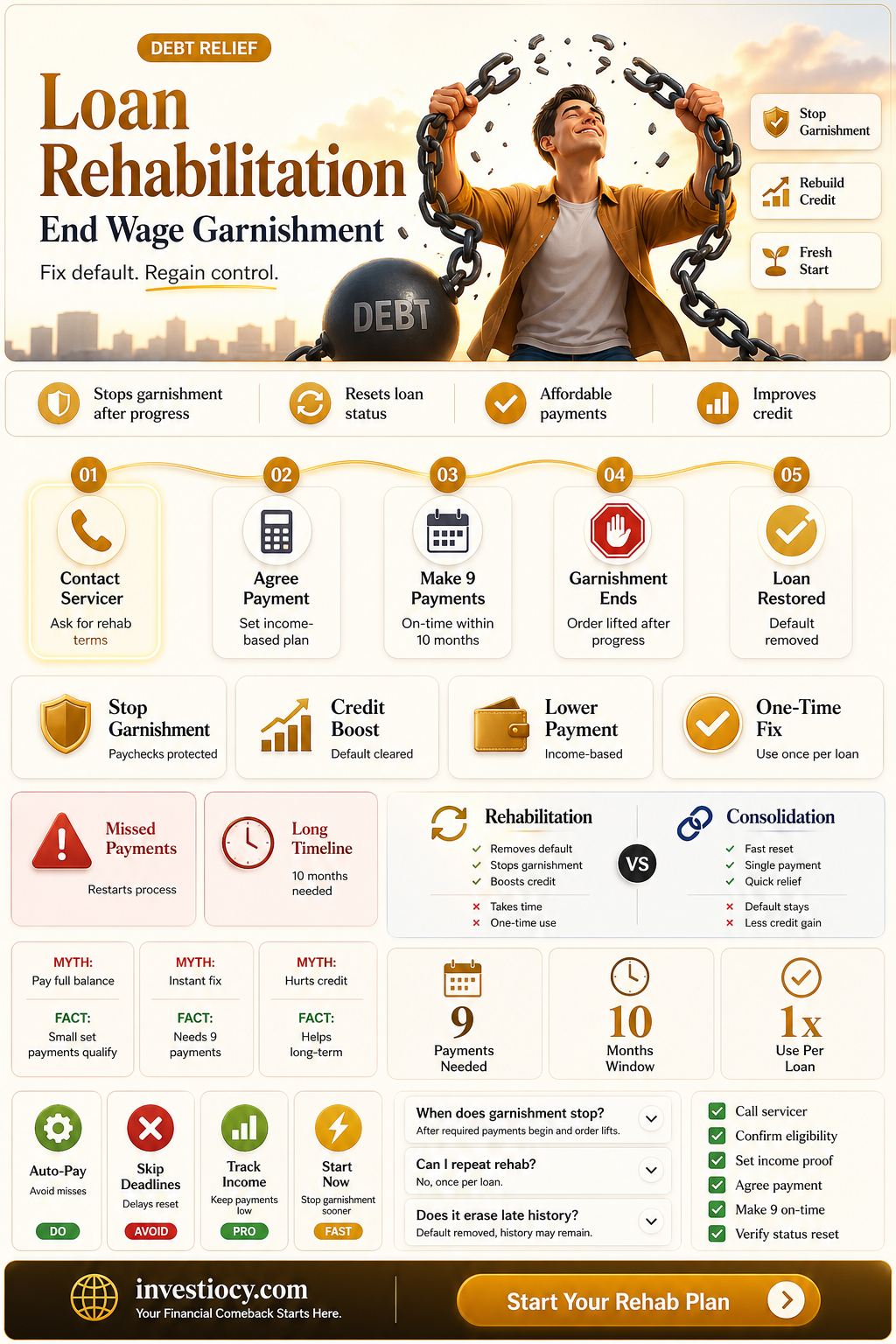
Loan rehabilitation is a process that can help borrowers who have defaulted on their student loans regain good standing and potentially stop wage garnishment. Wage garnishment occurs when a court orders an employer to withhold a portion of an employee's wages to pay off a debt. In the case of student loans, this can happen when a borrower defaults on their loan repayments. Loan rehabilitation involves working with the loan servicer to establish a new repayment plan that is affordable for the borrower. Once the borrower makes a certain number of on-time payments under the new plan, they may be eligible to have the wage garnishment stopped. Additionally, loan rehabilitation can also help remove the default from the borrower's credit report, which can improve their overall financial situation.
Explore related products


What You'll Learn
- Understanding Loan Rehabilitation: Process and benefits of loan rehabilitation, including potential impacts on wage garnishment
- Wage Garnishment Laws: Overview of laws governing wage garnishment and how they intersect with loan rehabilitation status
- Rehabilitation vs. Garnishment: Comparison of loan rehabilitation programs and their effectiveness in stopping wage garnishment
- Steps to Stop Garnishment: Practical steps borrowers can take to halt wage garnishment through loan rehabilitation
- Common Misconceptions: Addressing frequent misunderstandings about loan rehabilitation and its effects on wage garnishment

Understanding Loan Rehabilitation: Process and benefits of loan rehabilitation, including potential impacts on wage garnishment
Loan rehabilitation is a structured process designed to help borrowers who have defaulted on their student loans regain good standing and avoid further financial penalties. This process typically involves making a series of on-time payments, which demonstrates to the lender that the borrower is committed to repaying the debt. One of the significant benefits of loan rehabilitation is the potential to stop wage garnishment, a legal action where a portion of a borrower's wages is withheld to repay the defaulted loan. By entering into a rehabilitation agreement, borrowers can often halt this garnishment, providing immediate financial relief.
The process of loan rehabilitation varies depending on the type of loan and the lender's policies. Generally, it requires the borrower to make a certain number of consecutive, on-time payments, usually nine to twelve months' worth. During this period, the borrower must also agree to adhere to specific terms and conditions set by the lender, which may include regular communication and updates on their financial situation. Successful completion of the rehabilitation program can lead to the removal of the default status from the borrower's credit report, improving their credit score and making it easier to secure future loans or credit.
In addition to stopping wage garnishment, loan rehabilitation can have several other positive impacts on a borrower's financial well-being. It can prevent further collection actions, such as lawsuits or property liens, and may also result in the removal of late fees and other penalties associated with the defaulted loan. Furthermore, rehabilitated loans are often eligible for more favorable repayment terms, such as lower interest rates or extended repayment periods, which can make managing the debt more manageable in the long term.
However, it is essential for borrowers to carefully consider the terms of any rehabilitation agreement and ensure that they can meet the required payment schedule. Failure to complete the rehabilitation program successfully can lead to the resumption of collection activities, including wage garnishment. Additionally, borrowers should be aware that loan rehabilitation may not be an option for all types of loans or in all circumstances, and it is crucial to consult with a financial advisor or the lender directly to determine the best course of action.
In conclusion, loan rehabilitation can be a valuable tool for borrowers seeking to overcome default and improve their financial situation. By understanding the process and benefits of rehabilitation, including its potential to stop wage garnishment, borrowers can make informed decisions and take proactive steps towards regaining control of their finances.
State-by-State Variations in Loan Regulations: What You Need to Know
You may want to see also
Explore related products


Wage Garnishment Laws: Overview of laws governing wage garnishment and how they intersect with loan rehabilitation status
Wage garnishment laws vary by jurisdiction but generally allow creditors to deduct a portion of an individual's wages to satisfy a debt. These laws are designed to ensure that creditors can recover owed funds while also protecting debtors from excessive financial hardship. In the context of loan rehabilitation, wage garnishment can be a significant concern for individuals struggling to repay their loans.
Loan rehabilitation is a process that allows borrowers to regain good standing on defaulted loans by making a series of on-time payments. Successfully completing loan rehabilitation can have several benefits, including the removal of the default from the borrower's credit report and the potential cessation of wage garnishment. However, the intersection of wage garnishment laws and loan rehabilitation status can be complex.
In some cases, wage garnishment may continue even after a borrower has entered loan rehabilitation. This is because wage garnishment is often a legal remedy that remains in effect until the debt is fully satisfied or a court order is issued to stop the garnishment. Borrowers in loan rehabilitation may need to take additional steps, such as negotiating with their creditors or seeking legal assistance, to halt wage garnishment.
Conversely, in other cases, entering loan rehabilitation may automatically trigger the cessation of wage garnishment. This is particularly true if the loan rehabilitation program is government-sponsored or if the creditor has agreed to stop garnishment as part of the rehabilitation agreement. In these situations, borrowers should ensure that they understand the terms of their rehabilitation program and monitor their paychecks to confirm that garnishment has stopped.
Ultimately, the impact of loan rehabilitation on wage garnishment depends on the specific circumstances of the borrower and the terms of the rehabilitation program. Borrowers should carefully review their loan agreements, consult with their creditors, and seek legal advice if necessary to fully understand their rights and obligations under wage garnishment laws and loan rehabilitation programs.
Explore related products


Rehabilitation vs. Garnishment: Comparison of loan rehabilitation programs and their effectiveness in stopping wage garnishment
Loan rehabilitation programs are designed to help borrowers who have defaulted on their student loans regain good standing and avoid the consequences of default, such as wage garnishment. These programs typically require borrowers to make a certain number of on-time payments, after which their loans are considered rehabilitated. One of the primary benefits of loan rehabilitation is that it can stop wage garnishment, which is a process where a portion of a borrower's wages is withheld to repay the defaulted loan.
There are several types of loan rehabilitation programs available, each with its own set of requirements and benefits. For example, the U.S. Department of Education offers a loan rehabilitation program for federal student loans that requires borrowers to make nine on-time payments within a 10-month period. Once the loan is rehabilitated, the borrower is no longer subject to wage garnishment and may be eligible for other benefits, such as loan forgiveness or a lower interest rate.
In comparison, wage garnishment is a more immediate and forceful method of collecting on a defaulted loan. It does not require the borrower's consent and can result in a significant portion of their wages being withheld. Wage garnishment can also have negative consequences for the borrower's credit score and financial stability.
When considering loan rehabilitation versus wage garnishment, it is important for borrowers to weigh the pros and cons of each option. Loan rehabilitation may be a more favorable choice for those who are able to make the required payments and want to avoid the negative consequences of wage garnishment. However, wage garnishment may be a more effective option for lenders who are seeking to collect on a defaulted loan quickly.
Ultimately, the effectiveness of loan rehabilitation programs in stopping wage garnishment depends on the borrower's ability to make the required payments and the lender's willingness to participate in the program. For borrowers who are struggling with student loan debt, it is important to explore all available options and seek guidance from a financial advisor or student loan expert.
Explore related products


Steps to Stop Garnishment: Practical steps borrowers can take to halt wage garnishment through loan rehabilitation
To halt wage garnishment through loan rehabilitation, borrowers must first understand the process and requirements involved. Loan rehabilitation is a structured plan offered by lenders to help borrowers who have defaulted on their loans. It typically involves making a series of on-time payments to demonstrate financial stability and commitment to repaying the debt. Borrowers should contact their lender directly to inquire about rehabilitation options and to determine if they are eligible.
Once eligibility is confirmed, borrowers need to negotiate the terms of the rehabilitation plan. This may include agreeing to a specific payment schedule, providing proof of income, and disclosing any other financial obligations. It is crucial to ensure that the agreed-upon terms are feasible and sustainable to avoid further default. Borrowers should also be aware of any fees or costs associated with the rehabilitation process and factor these into their financial planning.
During the rehabilitation period, borrowers must make all payments on time and in full. Late or missed payments can jeopardize the rehabilitation agreement and may result in the resumption of wage garnishment. Additionally, borrowers should monitor their credit reports to ensure that the lender is accurately reporting their payments to the credit bureaus. This can help to improve their credit score over time and may also impact their eligibility for future loans or credit.
Upon successful completion of the rehabilitation plan, borrowers should receive confirmation from the lender that the wage garnishment has been stopped. It is important to keep this documentation for future reference and to verify that the garnishment has indeed been halted. Borrowers should also continue to make timely payments on their rehabilitated loan to maintain their financial stability and avoid any further issues with wage garnishment.
In summary, stopping wage garnishment through loan rehabilitation requires borrowers to proactively engage with their lender, negotiate feasible repayment terms, make consistent on-time payments, and monitor their credit reports. By following these steps, borrowers can effectively halt wage garnishment and work towards improving their financial situation.
Explore related products


Common Misconceptions: Addressing frequent misunderstandings about loan rehabilitation and its effects on wage garnishment
One common misconception about loan rehabilitation is that it automatically stops wage garnishment. In reality, the process of stopping wage garnishment through loan rehabilitation involves several steps and is not immediate. Loan rehabilitation is a program offered by the Department of Education to help borrowers who have defaulted on their federal student loans. While it can eventually lead to the cessation of wage garnishment, it is important to understand the timeline and requirements involved.
To begin the process, borrowers must first contact their loan servicer to initiate the rehabilitation process. This typically involves making nine voluntary, on-time payments over a period of 10 months. These payments are usually lower than the standard monthly payment amount and are designed to be manageable for the borrower. Once the rehabilitation process is complete, the borrower's loans are considered rehabilitated, and the default status is removed from their credit report.
However, the removal of the default status does not automatically stop wage garnishment. The borrower must also request a wage garnishment cessation from their employer. This request is usually made through the loan servicer and involves providing documentation of the rehabilitated loan status. The employer is then required to stop garnishing the borrower's wages within a certain timeframe, typically within 30 days of receiving the request.
It is also important to note that loan rehabilitation does not guarantee that wage garnishment will never occur again. If the borrower defaults on their loans in the future, wage garnishment can resume. Therefore, it is crucial for borrowers to maintain their loan payments and communicate with their loan servicer if they encounter any difficulties.
In summary, while loan rehabilitation can lead to the cessation of wage garnishment, it is a process that requires time, effort, and adherence to specific requirements. Borrowers should be aware of the steps involved and the potential for future wage garnishment if they do not maintain their loan payments.
Frequently asked questions
Yes, loan rehabilitation typically stops wage garnishment immediately once you have successfully completed the rehabilitation program.
Loan rehabilitation involves making a series of on-time payments to bring your defaulted loan back into good standing. The specific process and timeline can vary depending on the lender and the type of loan.
The length of the loan rehabilitation period can vary, but it often takes several months to a year or more to complete, depending on the lender's requirements and your financial situation.
Loan rehabilitation can help you remove the default status from your credit report, improve your credit score, and regain eligibility for federal student aid. It can also stop wage garnishment and collection calls.
It may be more challenging to rehabilitate a loan that has been in default for an extended period, as the lender may have already taken legal action or sold the debt to a collection agency. However, it's still worth exploring your options and contacting the lender to discuss potential rehabilitation plans.