 Lester Freeman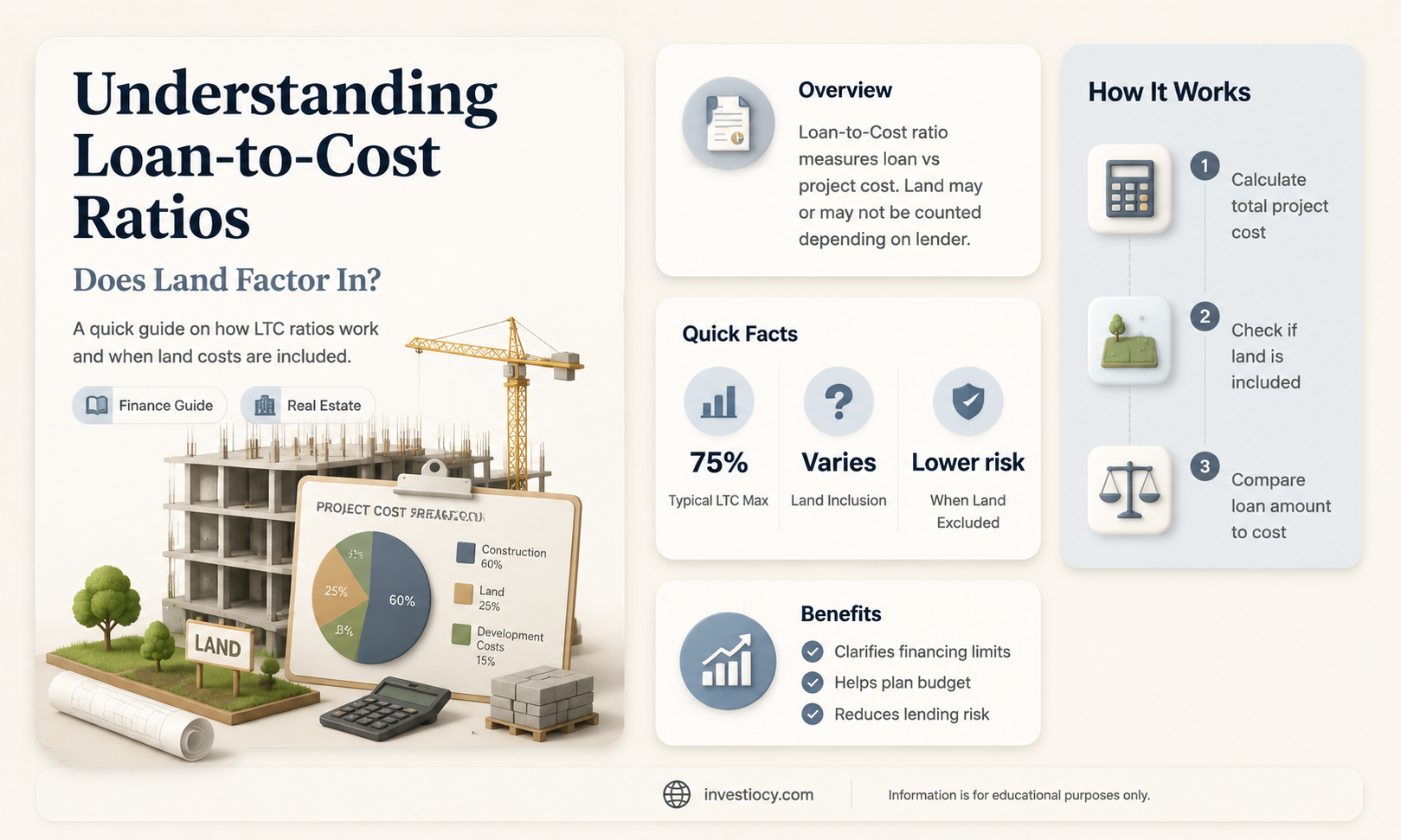
The question of whether a loan-to-cost ratio includes land is a crucial aspect of construction financing and real estate development. The loan-to-cost ratio is a metric used by lenders to assess the risk of a construction project by comparing the amount of the loan to the total cost of the project. This ratio helps determine the borrower's equity in the project and the lender's potential exposure to risk. When it comes to land, its inclusion in the loan-to-cost calculation can significantly impact the overall ratio and, consequently, the terms of the loan. Land is often a substantial component of a project's total cost, and its value can fluctuate based on market conditions, zoning regulations, and other factors. Therefore, understanding whether and how land is factored into the loan-to-cost ratio is essential for both borrowers and lenders to make informed decisions and mitigate potential financial risks.
Explore related products


What You'll Learn

Definition of Loan-to-Cost Ratio
The Loan-to-Cost (LTC) ratio is a crucial metric in the realm of construction financing, representing the proportion of a loan relative to the total cost of a project. This ratio is expressed as a percentage and is calculated by dividing the loan amount by the project's total cost and then multiplying by 100. For instance, if a construction project costs $1 million and the loan secured for it is $700,000, the LTC ratio would be 70%. This metric is vital for lenders to assess the risk associated with financing a project, as it directly impacts their exposure and potential returns.
In the context of whether the LTC ratio includes land, it's essential to understand that land acquisition costs are typically factored into the total project cost. Therefore, if the loan covers the cost of purchasing the land as well as the construction expenses, the LTC ratio would indeed include the land cost. This inclusion is critical because the value of the land can significantly influence the overall project cost and, consequently, the LTC ratio. For developers and lenders alike, it's important to consider how the land cost affects the financial viability and risk profile of the project.
When evaluating the LTC ratio, lenders often have specific guidelines and thresholds they adhere to, which can vary depending on the type of project and the lender's risk appetite. For example, some lenders may prefer an LTC ratio of 60% or lower for residential construction projects, while others might be more lenient for commercial projects. Understanding these thresholds is key for developers seeking financing, as it can impact their ability to secure a loan and the terms they are offered.
Moreover, the LTC ratio is not only a tool for lenders but also a valuable metric for developers to manage their project finances effectively. By closely monitoring the LTC ratio, developers can ensure they are staying within budget and avoiding over-leveraging, which can lead to financial distress. Additionally, a well-managed LTC ratio can help developers negotiate better loan terms and interest rates, ultimately improving the profitability of their projects.
In conclusion, the Loan-to-Cost ratio is a fundamental concept in construction financing that provides a snapshot of a project's financial health. It includes all costs associated with a project, such as land acquisition and construction expenses, and is a critical factor in determining the viability and risk of a development. By understanding and effectively managing the LTC ratio, both lenders and developers can make informed decisions that contribute to the success of their projects.
Exploring LoanStar College's TRS Options: A Comprehensive Guide
You may want to see also
Explore related products


Components of Loan-to-Cost Ratio
The Loan-to-Cost (LTC) ratio is a critical metric in real estate financing, representing the proportion of a loan relative to the total cost of a project. This ratio helps lenders assess the risk associated with a loan and determine the borrower's equity stake in the project. To understand the LTC ratio fully, it's essential to break down its components and how they interact.
The numerator of the LTC ratio is the loan amount, which includes all the funds borrowed for the project. This can encompass various types of loans, such as construction loans, term loans, or lines of credit. The loan amount is typically determined by the lender based on the project's appraisal, the borrower's creditworthiness, and the loan terms agreed upon.
The denominator of the LTC ratio is the total project cost, which is a comprehensive figure that includes all expenses associated with the acquisition, development, and construction of the property. This can include land acquisition costs, construction costs, architectural and engineering fees, permits, and other ancillary expenses. Understanding what is included in the total project cost is crucial for accurately calculating the LTC ratio.
One common question in real estate finance is whether the LTC ratio includes land costs. The answer is yes; land costs are typically included in the total project cost when calculating the LTC ratio. This is because the land is a fundamental component of the project, and its acquisition cost is a significant part of the overall investment. However, the specific treatment of land costs can vary depending on the project type and the lender's policies.
For example, in a construction project, the land cost might be included as part of the total construction cost. In contrast, for a land acquisition and development project, the land cost might be listed separately as a distinct component of the total project cost. Lenders may also have different requirements for how land costs are documented and appraised, which can impact the LTC ratio calculation.
In summary, the LTC ratio is a vital tool in real estate finance that helps lenders evaluate the risk and equity distribution of a loan. By understanding the components of the LTC ratio, including the loan amount and total project cost, borrowers can better navigate the financing process and ensure they are presenting a strong financial case for their projects.
Understanding the Impact of Loan Reports on Your Credit Score
You may want to see also
Explore related products


Importance of Loan-to-Cost Ratio
The loan-to-cost ratio is a critical metric in the realm of construction financing, serving as a safeguard for both lenders and borrowers. This ratio ensures that the loan amount does not exceed a certain percentage of the total project cost, thereby mitigating the risk of cost overruns and ensuring that the borrower has sufficient equity invested in the project. For instance, if a construction project is estimated to cost $1 million, a loan-to-cost ratio of 80% would limit the loan amount to $800,000, requiring the borrower to contribute at least $200,000 in equity.
One of the key benefits of maintaining an appropriate loan-to-cost ratio is that it helps to prevent the borrower from becoming overextended financially. By ensuring that the borrower has a significant stake in the project, lenders can be more confident that the borrower will be motivated to manage the project effectively and avoid cost overruns. Additionally, a lower loan-to-cost ratio can result in more favorable loan terms, such as lower interest rates and longer repayment periods, as the lender perceives less risk.
In the context of land acquisition, the loan-to-cost ratio can be particularly important. When purchasing land for a construction project, the cost of the land itself can be a significant portion of the total project cost. A high loan-to-cost ratio in this scenario could leave the borrower with little financial cushion to handle unexpected expenses or changes in the project scope. Therefore, lenders often scrutinize the loan-to-cost ratio more closely when the land cost is a substantial component of the overall project budget.
To illustrate this point, consider a scenario where a borrower is purchasing a plot of land for $500,000 and plans to build a structure that will cost an additional $500,000. If the lender agrees to a loan-to-cost ratio of 75%, the borrower would be able to secure a loan for $750,000, leaving them with a $250,000 equity investment in the project. This structure provides a balance between the borrower's financial commitment and the lender's risk exposure.
In conclusion, the loan-to-cost ratio is a vital tool in construction financing, helping to ensure that projects are financially viable and that both lenders and borrowers are protected from undue risk. By carefully managing this ratio, borrowers can secure the necessary funding for their projects while also demonstrating their commitment to the success of the venture.
Understanding Loan Reporting During Forbearance Periods: A Guide
You may want to see also
Explore related products


![The Land Before Time [Blu-ray]](https://m.media-amazon.com/images/I/71k3db5m-+L._AC_UY218_.jpg)

![The Land Before Time: The Complete Collection [DVD]](https://m.media-amazon.com/images/I/816Hjt4wUiL._AC_UY218_.jpg)

Loan-to-Cost Ratio Calculation
The Loan-to-Cost (LTC) ratio is a crucial metric in real estate financing, providing lenders with a clear picture of the risk associated with a particular loan. Calculating the LTC ratio involves dividing the loan amount by the total cost of the project, which includes both the acquisition cost of the land and the construction costs. This ratio helps lenders determine whether the borrower has sufficient equity in the project to mitigate potential risks.
To calculate the LTC ratio, you need to know the total loan amount and the total project cost. The loan amount is the sum of all funds borrowed for the project, including any fees or interest that will be capitalized into the loan. The total project cost, on the other hand, encompasses the purchase price of the land, construction costs, and any other expenses directly related to the development of the property. It's important to note that the LTC ratio does not include indirect costs such as marketing expenses or administrative fees.
For example, if a borrower is seeking a loan of $500,000 to purchase land valued at $200,000 and construct a building estimated to cost $300,000, the LTC ratio would be calculated as follows: $500,000 (loan amount) / $500,000 (total project cost) = 1.0. This means the loan amount is equal to the total project cost, resulting in a 100% LTC ratio.
Lenders typically have specific guidelines for acceptable LTC ratios, which can vary depending on the type of project and the borrower's creditworthiness. A lower LTC ratio indicates that the borrower has more equity in the project, which can reduce the lender's risk and potentially lead to more favorable loan terms. Conversely, a higher LTC ratio may require the borrower to provide additional collateral or accept less favorable loan conditions.
In conclusion, the Loan-to-Cost ratio is a fundamental calculation in real estate financing that helps lenders assess the risk of a loan. By understanding how to calculate the LTC ratio and its implications, borrowers can better position themselves to secure financing for their projects.
State-by-State Variations in Loan Regulations: What You Need to Know
You may want to see also
Explore related products


![The Land Before Time [DVD]](https://m.media-amazon.com/images/I/91C835ojCQL._AC_UY218_.jpg)


Loan-to-Cost Ratio Examples
Let's consider an example to illustrate how the loan-to-cost ratio works in practice. Suppose a developer is planning to build a commercial property and has secured a loan of $800,000. The total cost of the project, including land acquisition, construction, and other expenses, is $1,000,000. In this scenario, the loan-to-cost ratio would be calculated as 80% ($800,000 / $1,000,000). This ratio indicates that the loan covers 80% of the total project cost, leaving the developer to contribute the remaining 20% as equity.
Now, let's examine a different example to demonstrate how the loan-to-cost ratio can vary depending on the project. Imagine a homeowner is planning to renovate their kitchen and has taken out a loan of $50,000. The total cost of the renovation, including materials, labor, and permits, is $75,000. In this case, the loan-to-cost ratio would be 66.67% ($50,000 / $75,000). This ratio suggests that the loan covers approximately two-thirds of the renovation cost, with the homeowner responsible for the remaining one-third.
It's important to note that the loan-to-cost ratio is a crucial metric for lenders when evaluating the risk of a loan. A higher ratio indicates a higher level of risk, as the borrower is contributing less equity to the project. Lenders may require a lower ratio for certain types of projects or may impose additional conditions, such as a higher interest rate or shorter repayment term, to mitigate the risk.
In the context of land acquisition, the loan-to-cost ratio can be particularly relevant. For instance, if a developer is purchasing a plot of land for $200,000 and plans to build a property on it, the lender may require a lower loan-to-cost ratio for the land acquisition portion of the project. This is because land values can be more volatile than construction costs, and lenders may want to ensure that the borrower has sufficient equity in the project to absorb any potential losses.
To summarize, the loan-to-cost ratio is a key financial metric that helps lenders assess the risk of a loan and determine the borrower's equity contribution to a project. By examining examples of how this ratio is calculated and applied in different scenarios, we can gain a better understanding of its importance in the lending process.
Exploring the Loan Signing System: Exam Requirements Uncovered
You may want to see also
Frequently asked questions
Yes, the loan-to-cost ratio typically includes the cost of the land. This ratio is calculated by dividing the total loan amount by the total cost of the project, which includes both the construction costs and the land acquisition costs.
The loan-to-cost ratio and the loan-to-value ratio are two different metrics used in real estate financing. The loan-to-cost ratio compares the loan amount to the total cost of the project, including land and construction costs. In contrast, the loan-to-value ratio compares the loan amount to the appraised value of the completed project.
A typical loan-to-cost ratio for construction projects can vary depending on the type of project and the lender's requirements. However, it is common for lenders to offer loan-to-cost ratios of up to 80% or 90% for qualified borrowers and projects. This means that the borrower would need to contribute 10% to 20% of the total project cost as equity.


![The Land Before Time: The Complete TV Series [DVD]](https://m.media-amazon.com/images/I/71ed4sHI18L._AC_UY218_.jpg)

