 Faith Morrow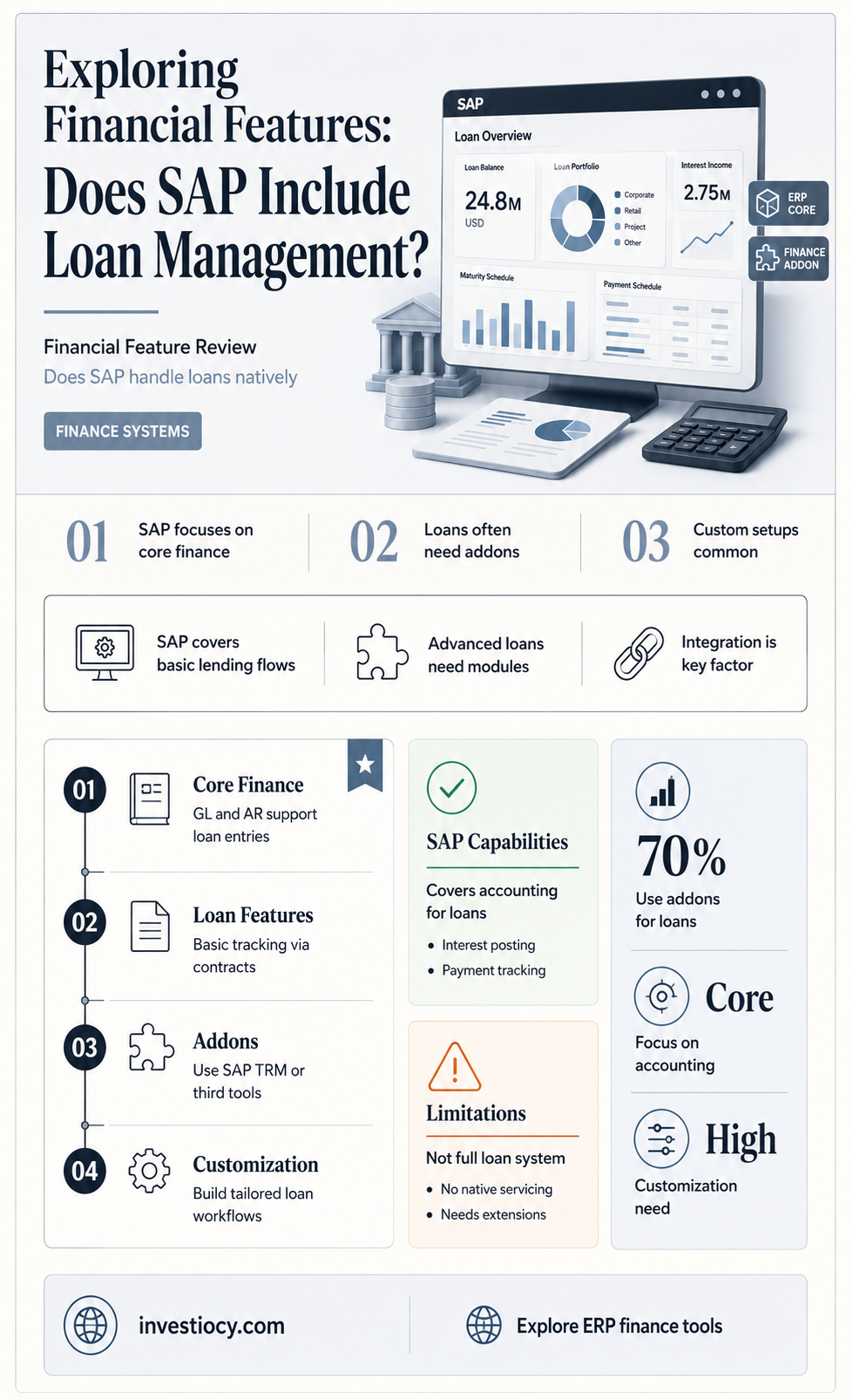
SAP, a leading enterprise resource planning (ERP) software, offers a comprehensive suite of financial management tools. One of the key features within SAP's financial module is the ability to manage loans. This functionality allows businesses to track and process various types of loans, including those to employees, customers, or from financial institutions. By integrating loan management into its ERP system, SAP provides a centralized platform for businesses to streamline their financial operations, ensuring efficient handling of loan applications, disbursements, repayments, and reporting. This capability is particularly valuable for organizations looking to maintain a clear overview of their financial liabilities and assets, as well as those seeking to automate and optimize their loan-related processes.
Explore related products




What You'll Learn
- Overview of SAP: Understanding the core functionalities and modules of SAP software
- SAP Financial Accounting: Exploring the financial modules, including loan management features
- Loan Types in SAP: Different kinds of loans (e.g., personal, business) and how they're managed
- SAP Loan Processing: Steps involved in processing loans within the SAP system
- Integrations and Add-ons: Third-party integrations or add-ons that enhance SAP's loan management capabilities

Overview of SAP: Understanding the core functionalities and modules of SAP software
SAP, which stands for Systems, Applications, and Products in Data Processing, is a multinational software corporation that specializes in enterprise software to manage business operations and customer relations. SAP software is known for its comprehensive suite of applications that cater to various business needs, from financial management to supply chain operations. One of the core functionalities of SAP is its Financial Accounting (FI) module, which is integral to managing loans and other financial transactions within a business.
The FI module in SAP is designed to track financial transactions and produce accurate financial statements. It includes functionalities for recording and managing loans, both receivable and payable. This module allows businesses to maintain detailed records of loan transactions, including interest rates, repayment schedules, and amortization. By using SAP's FI module, companies can ensure compliance with financial regulations and have a clear overview of their financial health.
In addition to the FI module, SAP offers other modules that complement loan management. For instance, the Treasury module provides tools for managing cash flow, investments, and risk. The Asset Accounting module can be used to track and manage fixed assets, which may be used as collateral for loans. Furthermore, SAP's integration capabilities allow it to connect with various banking systems, facilitating seamless loan transactions and reconciliations.
SAP's software is highly customizable, enabling businesses to tailor the system to their specific loan management needs. Whether a company is looking to manage a small number of loans or a large portfolio, SAP can be configured to meet those requirements. The software also offers robust reporting and analytics capabilities, providing businesses with valuable insights into their loan management processes.
In conclusion, SAP software does indeed include functionalities for managing loans through its Financial Accounting module and other complementary modules. By leveraging SAP's capabilities, businesses can streamline their loan management processes, ensure compliance with financial regulations, and gain a comprehensive understanding of their financial situation.
Exploring Santander's Bridging Loan Options: A Comprehensive Guide
You may want to see also
Explore related products


SAP Financial Accounting: Exploring the financial modules, including loan management features
SAP Financial Accounting is a comprehensive module within the SAP ERP system that offers a wide range of financial management features. One of the key components of this module is loan management, which enables organizations to efficiently handle various types of loans, including term loans, revolving credit, and mortgages. This functionality is particularly beneficial for businesses that need to manage multiple loans with different terms and conditions.
The loan management features in SAP Financial Accounting allow for the creation and maintenance of loan master records, which contain all the relevant details about each loan, such as the loan amount, interest rate, repayment schedule, and collateral information. The system also provides tools for processing loan disbursements, repayments, and adjustments, ensuring that all financial transactions are accurately recorded and reflected in the company's financial statements.
In addition to basic loan management, SAP Financial Accounting offers advanced features such as loan amortization, which automatically calculates the periodic interest and principal payments based on the loan terms. This helps organizations to accurately track the outstanding loan balance and ensure compliance with financial reporting standards. The module also supports the management of loan guarantees and collateral, which are essential for mitigating credit risk and securing loan repayments.
One of the unique aspects of SAP Financial Accounting's loan management features is its integration with other financial modules, such as accounts payable, accounts receivable, and cash management. This seamless integration enables organizations to have a holistic view of their financial position and cash flow, allowing for better decision-making and financial planning. For example, the system can automatically update the cash flow statement when loan repayments are made, providing real-time visibility into the company's liquidity.
Overall, SAP Financial Accounting's loan management features provide organizations with a robust and flexible solution for managing their loan portfolios. By automating loan processing and integrating with other financial modules, the system helps to streamline financial operations, reduce errors, and improve financial transparency. This makes it an invaluable tool for businesses that need to effectively manage their loans and ensure compliance with financial regulations.
How SAP Implementation Impacts Loan Processes and Financial Management
You may want to see also
Explore related products


$80.44 $89.95


Loan Types in SAP: Different kinds of loans (e.g., personal, business) and how they're managed
SAP, a leading enterprise resource planning (ERP) software, offers comprehensive financial management capabilities, including loan management. Within SAP, loans are categorized into different types based on their nature and purpose, such as personal loans and business loans. Each loan type is managed through specific modules and processes tailored to meet the unique requirements of that loan category.
Personal loans in SAP are typically managed through the Retail Banking module, which provides functionalities for processing consumer loans, such as mortgages, auto loans, and unsecured personal loans. This module enables banks to handle the entire loan lifecycle, from application and approval to disbursement and repayment, ensuring a seamless and efficient process for both the lender and the borrower.
On the other hand, business loans are managed through the Corporate Banking module, which caters to the needs of corporate customers. This module supports various types of business loans, including term loans, revolving credit facilities, and trade finance. It offers advanced features for risk assessment, collateral management, and loan syndication, enabling banks to effectively manage their business loan portfolios and mitigate potential risks.
In addition to these core loan types, SAP also provides specialized modules for managing other forms of loans, such as student loans and microloans. These modules are designed to address the specific requirements of these loan categories, ensuring compliance with relevant regulations and providing tailored functionalities for efficient loan processing and management.
Overall, SAP's loan management capabilities are designed to provide a flexible and scalable solution for banks and financial institutions of all sizes. By offering specialized modules for different loan types, SAP enables organizations to streamline their loan processes, improve customer service, and mitigate risks, ultimately driving business growth and profitability.
Exploring Santander's Loan Options: A Comprehensive Guide
You may want to see also
Explore related products


SAP Loan Processing: Steps involved in processing loans within the SAP system
SAP Loan Processing involves several critical steps to ensure that loans are managed efficiently within the SAP system. The process begins with the initial loan application, where borrowers submit their requests through the SAP portal. This application is then reviewed by the loan officer, who verifies the borrower's eligibility and creditworthiness.
Once the application is approved, the loan officer creates a loan record in the SAP system, detailing the loan amount, interest rate, repayment terms, and other relevant information. The system then generates a loan agreement, which is sent to the borrower for signature. Upon receipt of the signed agreement, the loan officer finalizes the loan record and initiates the disbursement process.
The disbursement of funds is a crucial step in the SAP Loan Processing workflow. The system automatically calculates the loan amount to be disbursed, taking into account any applicable fees or charges. The loan officer then approves the disbursement request, and the funds are transferred to the borrower's account.
Throughout the loan lifecycle, the SAP system tracks and manages various aspects of the loan, including repayment schedules, interest accrual, and outstanding balances. The system also provides reporting and analytics capabilities, allowing loan officers to monitor loan performance and identify potential risks or issues.
In summary, SAP Loan Processing streamlines the loan management process by automating key tasks, ensuring data accuracy, and providing real-time insights into loan performance. This helps financial institutions to improve efficiency, reduce errors, and make informed decisions about loan approvals and disbursements.
Exploring the Impact of SAP on Unsubsidized Loan Dynamics
You may want to see also
Explore related products


Integrations and Add-ons: Third-party integrations or add-ons that enhance SAP's loan management capabilities
SAP's loan management capabilities can be significantly enhanced through various third-party integrations and add-ons. These tools offer additional functionalities that complement SAP's core features, providing a more comprehensive solution for managing loans. For instance, integrating with credit scoring platforms can streamline the loan approval process by automating credit checks and risk assessments. This not only speeds up decision-making but also ensures that loan officers have access to the most up-to-date and accurate credit information.
Another valuable integration is with electronic payment systems, which facilitates seamless and secure transactions. This reduces the risk of errors and fraud associated with manual payment processing. Additionally, integrating with customer relationship management (CRM) software can improve communication and engagement with borrowers, enabling loan officers to track interactions and provide personalized service.
Add-ons such as loan origination systems can also play a crucial role in enhancing SAP's loan management capabilities. These systems automate the loan application process, from initial inquiry to final approval, reducing the time and effort required by loan officers. Furthermore, they often include features for tracking loan performance and managing collections, providing a complete end-to-end solution for loan management.
When selecting third-party integrations or add-ons, it is essential to consider factors such as compatibility with SAP's existing infrastructure, the reputation and reliability of the vendor, and the specific needs of the organization. Conducting thorough research and consulting with industry experts can help ensure that the chosen solutions align with the organization's goals and objectives.
In conclusion, third-party integrations and add-ons can greatly enhance SAP's loan management capabilities by providing additional functionalities and automating various processes. By carefully selecting and implementing these tools, organizations can improve efficiency, reduce risk, and provide better service to their borrowers.
Exploring Santander's Loan Modification Options: A Comprehensive Guide
You may want to see also
Frequently asked questions
Yes, SAP includes a module known as SAP Loan Management which is part of the SAP Financial Accounting (FI) module. It helps in managing various types of loans, including term loans, revolving credit, and more.
Key features of SAP Loan Management include loan origination, loan servicing, loan repayment processing, interest rate management, and reporting. It also allows for the tracking of loan collateral and the management of loan agreements.
SAP Loan Management integrates seamlessly with other SAP modules such as SAP Financial Accounting (FI), SAP Controlling (CO), and SAP Treasury (TR). This integration ensures that loan data is consistent across the system and that financial statements accurately reflect loan activities.
Yes, SAP Loan Management can handle various types of interest rates, including fixed rates, floating rates, and variable rates. It also supports the calculation of interest based on different compounding frequencies.
Yes, SAP offers a mobile application called SAP Financial Services that provides access to loan information and allows users to perform certain loan-related tasks on-the-go. This app is available for both iOS and Android devices.


