Lester Freeman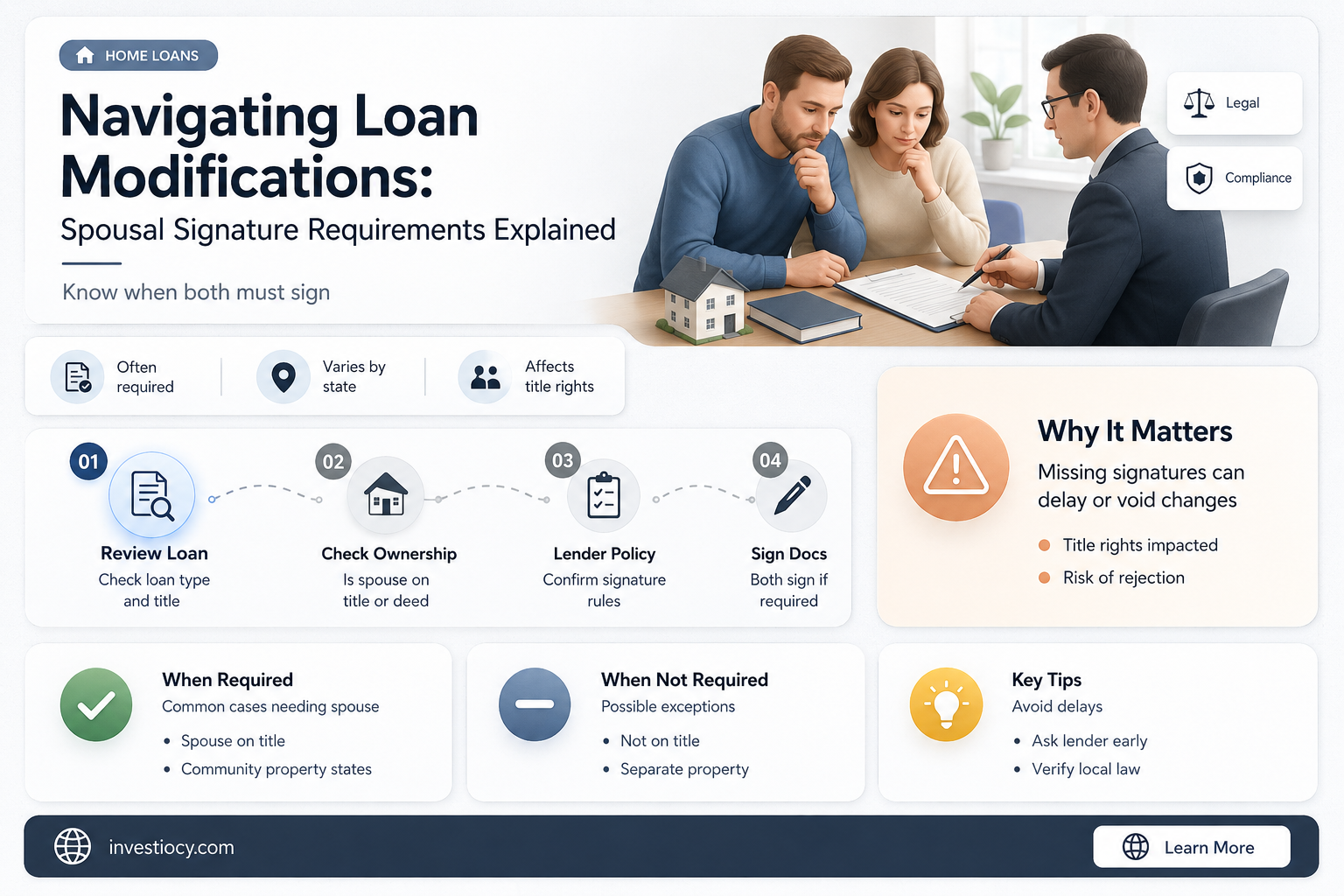
When considering loan modifications, particularly in the context of a mortgage, one critical question often arises: Does the spouse have to sign loan modifications? This query is especially pertinent in situations where only one spouse initially signed the mortgage agreement. Generally, if both spouses are on the title of the property, most lenders will require both to sign any modifications to the loan terms. This ensures that all parties are aware of and agree to the new terms. However, there can be exceptions based on specific circumstances, such as when one spouse has a power of attorney or when the modification does not change the loan's principal balance or interest rate. It's essential to consult with the lender and possibly a legal professional to understand the requirements fully and ensure compliance with all applicable laws and regulations.
Explore related products




What You'll Learn
- Legal Requirements: Understand the legal obligations regarding spousal signatures on loan modifications
- Joint Ownership: Explore how joint property ownership affects loan modification agreements
- Financial Impact: Assess how loan modifications might impact both spouses' credit scores and financial stability
- Refinancing Options: Consider alternatives like refinancing and how they may require spousal involvement
- State-Specific Laws: Research how state laws vary on the necessity of spousal signatures for loan modifications

Legal Requirements: Understand the legal obligations regarding spousal signatures on loan modifications
Understanding the legal requirements regarding spousal signatures on loan modifications is crucial for homeowners seeking to alter their mortgage terms. In many jurisdictions, when a married couple owns a property jointly, both spouses are required to sign any documents related to the mortgage, including loan modifications. This legal obligation stems from the concept of joint tenancy, where both parties have equal rights and responsibilities concerning the property.
The specific legal requirements can vary by state and the type of loan modification being pursued. For instance, some states may require spousal signatures for all modifications, while others might have exceptions for certain types of changes, such as refinancing or extending the loan term. Additionally, federal laws and regulations, such as the Truth in Lending Act (TILA) and the Real Estate Settlement Procedures Act (RESPA), may impose additional requirements or protections for borrowers.
To navigate these legal obligations, it is essential for homeowners to consult with a qualified attorney or mortgage professional who can provide guidance tailored to their specific situation. This expert can help determine whether a spousal signature is required, what the legal implications of the modification might be, and how to ensure compliance with all applicable laws and regulations.
In cases where a spouse is unwilling or unable to sign the loan modification, there may be alternative options available. For example, some lenders might offer a "non-borrowing spouse" option, where the spouse who is not participating in the modification can still retain their rights to the property. However, this option is not universally available and may come with its own set of legal and financial considerations.
Ultimately, understanding and adhering to the legal requirements regarding spousal signatures on loan modifications is a critical step in the process of modifying a mortgage. By seeking professional guidance and staying informed about the relevant laws and regulations, homeowners can ensure that their loan modification is executed smoothly and in compliance with all legal obligations.
Exploring Jumbo Loan Dynamics: Does Size Always Increase?
You may want to see also
Explore related products


Joint Ownership: Explore how joint property ownership affects loan modification agreements
In the realm of joint property ownership, the dynamics of loan modification agreements can become particularly intricate. When two or more individuals hold ownership of a property, any alterations to the loan terms must be carefully navigated to ensure all parties are in agreement and fully informed of their rights and obligations. This often necessitates the involvement of legal counsel to mediate and draft agreements that are fair and binding for all co-owners.
One of the primary considerations in joint ownership scenarios is the level of consent required from each co-owner. Typically, all co-owners must sign off on any loan modifications, as these changes can significantly impact the financial responsibilities and equity of each party. This means that if one spouse wishes to modify a loan, the other spouse's signature is generally required, regardless of their individual creditworthiness or contribution to the property's purchase.
However, there are exceptions to this rule, particularly in cases where one co-owner has a significantly larger share of the property or where there are prenuptial or postnuptial agreements in place that dictate the terms of property ownership and debt liability. In such instances, the spouse with the lesser share may not have the same level of control over loan modifications, and the agreement may be structured to reflect their reduced influence.
Another important aspect to consider is the potential impact of loan modifications on the credit scores of each co-owner. Any changes to the loan terms, such as interest rate adjustments or extensions to the repayment period, can affect the creditworthiness of all parties involved. This is especially true if the loan modification results in a higher debt-to-income ratio or if there are late payments or defaults on the modified loan.
To mitigate these risks, it is crucial for co-owners to carefully review and understand the terms of any proposed loan modification before signing. They should also consider consulting with a financial advisor or attorney to ensure that the agreement aligns with their individual financial goals and does not inadvertently jeopardize their credit standing or future borrowing capabilities.
In conclusion, joint property ownership introduces a layer of complexity to loan modification agreements that requires careful consideration and collaboration between all co-owners. By understanding the legal and financial implications of such modifications, spouses and other co-owners can make informed decisions that protect their interests and maintain a harmonious ownership relationship.
Exploring Military Benefits: College Loan Forgiveness Options
You may want to see also
Explore related products


Financial Impact: Assess how loan modifications might impact both spouses' credit scores and financial stability
Loan modifications can have significant implications for both spouses' credit scores and overall financial stability. When considering a loan modification, it's crucial to understand how these changes might affect each spouse's creditworthiness and the household's financial health.
One key factor to consider is the impact on credit scores. Loan modifications, such as extending the repayment term or reducing the interest rate, can lead to a temporary drop in credit scores for both spouses. This is because credit scoring models take into account the terms of your loans, and modifications can be seen as a sign of financial distress. However, over time, consistently making payments on the modified loan can help rebuild credit scores.
Another important aspect is the effect on financial stability. Loan modifications can provide immediate relief by reducing monthly payments, which can help alleviate financial stress for the household. This can be particularly beneficial if one spouse has experienced a job loss or reduction in income. However, it's essential to consider the long-term implications, such as the potential for increased interest payments over the life of the loan or the possibility of owing a larger principal balance if the modification includes forbearing or deferring payments.
To mitigate these risks, it's advisable for both spouses to carefully review the terms of the loan modification and consult with a financial advisor or credit counselor. They can help assess the potential impact on credit scores and financial stability, and provide guidance on the best course of action for the specific situation.
In conclusion, while loan modifications can offer immediate financial relief, they also come with potential drawbacks that can affect both spouses' credit scores and financial stability. It's crucial to weigh the pros and cons carefully and seek professional advice to make an informed decision that aligns with the household's long-term financial goals.
Exploring EIDL Loans in the Latest Stimulus Package: What You Need to Know
You may want to see also
Explore related products





Refinancing Options: Consider alternatives like refinancing and how they may require spousal involvement
Refinancing a loan can be a viable alternative to modifying an existing loan, especially when considering the involvement of a spouse. In many cases, refinancing may require the signature of both spouses, particularly if the loan is secured by a jointly owned property. This is because refinancing typically involves taking out a new loan to pay off the existing one, and lenders often require all parties with an interest in the property to be involved in the new loan agreement.
One unique aspect of refinancing that sets it apart from loan modifications is the potential for changing the loan terms entirely. This could include adjusting the interest rate, extending or shortening the loan term, or even switching from an adjustable-rate to a fixed-rate mortgage. Such changes can have significant implications for both spouses, affecting their financial obligations and long-term planning.
When considering refinancing, it's crucial to evaluate the potential benefits and drawbacks. For instance, refinancing to a lower interest rate could reduce monthly payments and save money over the life of the loan. However, it may also extend the loan term, potentially increasing the total amount paid in interest. Additionally, refinancing often involves closing costs, which can be substantial and may offset some of the savings from a lower interest rate.
In situations where one spouse is reluctant to sign a loan modification, refinancing could provide a way to address their concerns while still achieving the desired financial outcome. By presenting refinancing as an alternative, couples can explore different options that may better align with their individual preferences and financial goals.
Ultimately, the decision to refinance should be made carefully, with both spouses fully understanding the implications and potential risks. Consulting with a financial advisor or mortgage professional can help ensure that all aspects of refinancing are thoroughly considered, and that the chosen option is in the best interest of both parties.
Unraveling the Mystery: Missing Documents and Their Impact on Nelnet Loans
You may want to see also
Explore related products


State-Specific Laws: Research how state laws vary on the necessity of spousal signatures for loan modifications
In the realm of loan modifications, the necessity of spousal signatures is a critical aspect that varies significantly from state to state. This variation is primarily due to the differing marital property laws and the extent to which they protect the interests of both spouses in financial matters. For instance, in community property states like California, Texas, and New York, both spouses are generally required to sign loan modifications to ensure that the interests of the marital community are protected. This is because, in these states, property acquired during marriage is considered jointly owned by both spouses, and any modifications to loans taken out during the marriage could potentially impact the marital estate.
On the other hand, in separate property states like Florida, Pennsylvania, and Illinois, the requirement for spousal signatures on loan modifications is less stringent. In these states, property acquired by one spouse is generally considered separate property, and therefore, the other spouse may not have a legal claim to it. As a result, loan modifications may only require the signature of the spouse who is responsible for the loan or who has an ownership interest in the property being modified.
Furthermore, some states have specific laws that address the issue of spousal signatures on loan modifications. For example, in Arizona, a spouse may not be required to sign a loan modification if they have waived their rights to the property in a prenuptial or postnuptial agreement. Similarly, in Nevada, a spouse may not be required to sign a loan modification if they have given their consent in writing.
It is also important to note that federal laws, such as the Truth in Lending Act (TILA) and the Real Estate Settlement Procedures Act (RESPA), may also impact the requirement for spousal signatures on loan modifications. These laws are designed to protect consumers from unfair lending practices and to ensure that they are fully informed about the terms of their loans. As a result, lenders may be required to obtain spousal signatures on loan modifications to comply with these federal laws, even if state law does not require it.
In conclusion, the necessity of spousal signatures on loan modifications is a complex issue that is governed by a combination of state and federal laws. Understanding these laws is essential for both lenders and borrowers to ensure that loan modifications are executed in a legally sound manner and that the interests of all parties involved are protected.
Understanding FHA Loan Requirements: Seller's Responsibilities Explained
You may want to see also
Frequently asked questions
Typically, if both spouses are listed on the mortgage, both would need to sign any loan modification documents. This ensures that all parties are aware of and agree to the new terms of the loan.
If your spouse refuses to sign, it could complicate the modification process. Lenders usually require all borrowers on the mortgage to agree to the changes. You may need to seek legal advice or mediation to resolve the issue.
If you are the sole borrower on the mortgage, you generally do not need your spouse's signature to modify the loan. However, it's always best to consult with your lender and possibly a legal professional to ensure all necessary steps are taken.
A loan modification itself may not directly impact your credit scores. However, if the modification results in a lower monthly payment and you're able to make timely payments, it could positively affect your credit over time. Conversely, if you miss payments or the modification leads to a foreclosure, it could negatively impact your credit scores.