Josephine Norton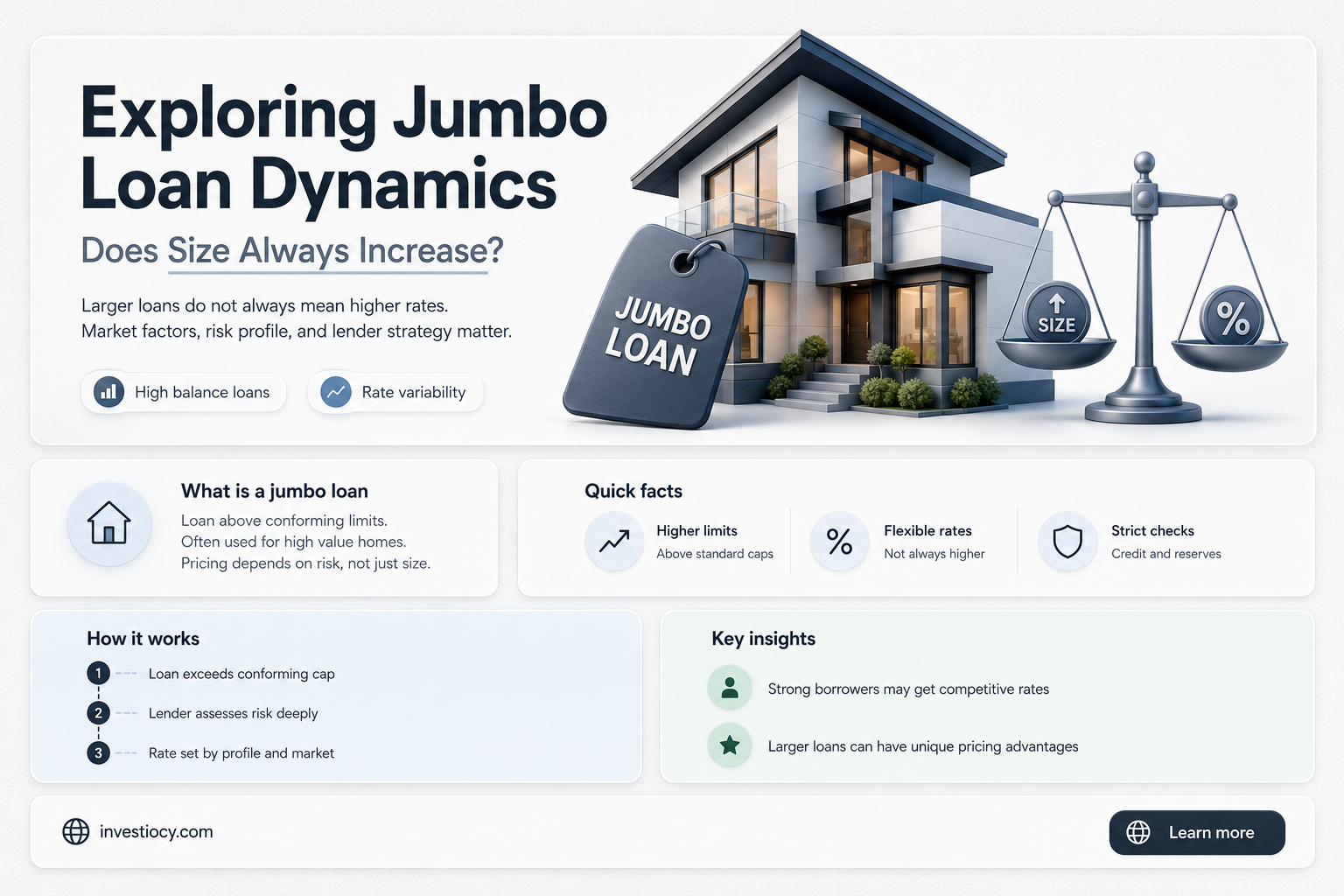
A jumbo loan is a type of mortgage that exceeds the conforming loan limits set by government-sponsored enterprises like Fannie Mae and Freddie Mac. These loans are typically used for high-value properties and are subject to stricter underwriting standards. One common question among potential borrowers is whether the size of a jumbo loan can increase over time. The answer to this question depends on various factors, including the borrower's financial situation, the property's value, and the lender's policies. In general, jumbo loans can increase in size through a process called a loan modification or refinancing, which involves altering the original loan terms to accommodate a higher loan amount. However, this process is not automatic and requires careful consideration by both the borrower and the lender.
Explore related products




What You'll Learn
- Definition and Thresholds: Jumbo loans exceed conforming loan limits set by Fannie Mae and Freddie Mac
- Market Trends: Analyze historical data to determine if jumbo loan sizes have increased over time
- Economic Factors: Discuss how inflation, interest rates, and housing market conditions impact jumbo loan amounts
- Lender Policies: Explore how different lenders' criteria and risk appetites influence jumbo loan size
- Borrower Qualifications: Outline the financial requirements and credit scores needed to secure larger jumbo loans

Definition and Thresholds: Jumbo loans exceed conforming loan limits set by Fannie Mae and Freddie Mac
Jumbo loans are a category of mortgage loans that exceed the conforming loan limits established by Fannie Mae and Freddie Mac, the two largest purchasers of mortgages in the United States. These limits are set annually and vary by region, but as of 2023, the baseline conforming loan limit for a single-family home is $726,200. Loans above this threshold are considered jumbo loans and are subject to different underwriting standards and interest rates.
The definition of a jumbo loan is straightforward: it is any loan amount that surpasses the conforming loan limits. However, the implications of this definition are significant. Jumbo loans are often used by borrowers who are purchasing high-value properties or who need to finance a larger mortgage amount due to factors such as a high cost of living or a substantial down payment. These loans typically require a higher credit score, a larger down payment, and more stringent income verification compared to conforming loans.
One of the key aspects of jumbo loans is that they are not guaranteed by Fannie Mae or Freddie Mac, which means that lenders bear more risk when issuing these loans. As a result, jumbo loan interest rates are generally higher than those for conforming loans. Additionally, jumbo loans may have different repayment terms and conditions, such as adjustable-rate options or interest-only payment periods.
Borrowers considering a jumbo loan should be aware of the specific requirements and potential challenges associated with these loans. For example, they may need to provide additional documentation to verify their income and assets, and they may face higher closing costs due to the larger loan amount. Furthermore, jumbo loans may be more difficult to refinance or sell on the secondary market, which can impact the borrower's long-term financial flexibility.
In summary, jumbo loans are mortgage loans that exceed the conforming loan limits set by Fannie Mae and Freddie Mac. These loans are subject to different underwriting standards and interest rates, and borrowers should carefully consider the specific requirements and potential challenges associated with jumbo loans before committing to one.
Shutdown Impact on Military Loans: What You Need to Know
You may want to see also
Explore related products


Market Trends: Analyze historical data to determine if jumbo loan sizes have increased over time
To analyze the market trends regarding jumbo loan sizes, we must delve into historical data. Jumbo loans, typically defined as mortgages exceeding the conforming loan limits set by Fannie Mae and Freddie Mac, have been a significant part of the housing finance landscape. Over the years, the size of these loans has been influenced by various economic factors, including interest rates, housing prices, and regulatory changes.
One approach to determining if jumbo loan sizes have increased is to examine data from government-sponsored enterprises (GSEs) and private lenders. This data can provide insights into the average loan amounts and the proportion of jumbo loans relative to overall mortgage lending. Additionally, analyzing trends in housing prices and construction costs can offer context for any changes in loan sizes, as these factors often drive the need for larger mortgages.
Another important aspect to consider is the impact of regulatory changes on jumbo loan sizes. For instance, adjustments to loan limits by the Federal Housing Finance Agency (FHFA) can directly affect the availability and size of jumbo loans. Furthermore, shifts in lending standards and borrower preferences can also influence the market dynamics.
By scrutinizing these various data points and trends, we can gain a comprehensive understanding of whether jumbo loan sizes have indeed increased over time. This analysis not only provides valuable insights for lenders and policymakers but also helps potential borrowers make informed decisions about their mortgage options.
Understanding FHA Loan Requirements: Seller's Responsibilities Explained
You may want to see also
Explore related products



Economic Factors: Discuss how inflation, interest rates, and housing market conditions impact jumbo loan amounts
Inflation plays a significant role in the size of jumbo loans. As the general price level of goods and services increases, so does the cost of purchasing a home. This means that borrowers may need to take out larger loans to afford the same property they could have bought for less just a few years ago. For example, if a home that cost $500,000 five years ago now costs $600,000 due to inflation, a borrower would need a larger loan to purchase it.
Interest rates also have a direct impact on jumbo loan amounts. When interest rates are low, borrowing becomes cheaper, and lenders may be more willing to offer larger loans. Conversely, when interest rates rise, borrowing becomes more expensive, and lenders may become more conservative in their lending practices, potentially reducing the size of jumbo loans they offer. For instance, if the interest rate on a jumbo loan increases from 3% to 4%, the monthly payment on a $1 million loan would increase by approximately $1,000, making it more challenging for borrowers to qualify for and afford such large loans.
Housing market conditions can also influence jumbo loan amounts. In a hot housing market with high demand and limited supply, home prices tend to rise, leading to an increase in the size of jumbo loans. On the other hand, in a cooling housing market with lower demand and increased supply, home prices may stabilize or even decrease, potentially reducing the need for large jumbo loans. For example, during the housing boom of the early 2000s, jumbo loan amounts increased significantly as home prices soared. However, after the housing market crash in 2008, jumbo loan amounts decreased as home prices fell and lending standards tightened.
In conclusion, economic factors such as inflation, interest rates, and housing market conditions can have a significant impact on jumbo loan amounts. Borrowers and lenders alike should carefully consider these factors when making decisions about jumbo loans, as they can affect the affordability and accessibility of these large mortgages.
Unraveling the Mystery: Missing Documents and Their Impact on Nelnet Loans
You may want to see also
Explore related products

$21.99 $24.99


Lender Policies: Explore how different lenders' criteria and risk appetites influence jumbo loan size
Lenders play a pivotal role in determining the size of jumbo loans, as their criteria and risk appetites directly influence the loan amounts they are willing to offer. For instance, a lender with a more conservative risk appetite may cap jumbo loan sizes at a lower threshold compared to a lender that is more aggressive in its lending practices. This variance in risk tolerance can lead to significant differences in the maximum loan sizes available to borrowers from different lenders.
One key factor that lenders consider when setting jumbo loan sizes is the borrower's creditworthiness. Lenders typically evaluate a borrower's credit score, debt-to-income ratio, and employment history to assess their ability to repay the loan. Borrowers with higher credit scores and lower debt-to-income ratios are generally considered less risky and may be eligible for larger loan amounts. Conversely, borrowers with lower credit scores or higher debt levels may face more stringent lending criteria and smaller loan sizes.
Another important consideration for lenders is the property's value and the loan-to-value (LTV) ratio. Lenders often have specific LTV ratio limits for jumbo loans, which can impact the maximum loan size. For example, if a lender has an LTV ratio cap of 80%, a borrower looking to purchase a $1 million property would be limited to a loan size of $800,000. This means that the borrower would need to make a down payment of at least $200,000.
Additionally, lenders may have different requirements for jumbo loan applicants in terms of income and assets. Some lenders may require borrowers to have a certain minimum income or liquid assets to qualify for a jumbo loan. These requirements can vary widely among lenders and can significantly affect the loan size that a borrower is eligible for.
In conclusion, the size of a jumbo loan is heavily influenced by the policies and risk appetites of different lenders. Borrowers should shop around and compare lenders to find the best terms and loan sizes that meet their needs. By understanding the factors that lenders consider when determining jumbo loan sizes, borrowers can better position themselves to secure the financing they require for their high-value property purchases.
Understanding Paycheck Protection Loans: Repayment Requirements Explained
You may want to see also
Explore related products


Borrower Qualifications: Outline the financial requirements and credit scores needed to secure larger jumbo loans
To secure a jumbo loan, borrowers must meet stringent financial requirements and maintain high credit scores. Lenders typically require a minimum credit score of 700 to 720 for jumbo loans, although some may consider scores as low as 680 with additional scrutiny. In addition to credit scores, borrowers must demonstrate a stable income and sufficient assets to cover the loan amount and associated costs.
One key factor in qualifying for a jumbo loan is the debt-to-income ratio (DTI). Lenders generally prefer a DTI of 36% or less, although some may allow up to 43% with compensating factors such as a high credit score or substantial assets. Borrowers must also have a significant down payment, typically ranging from 10% to 20% of the purchase price, depending on the loan amount and lender requirements.
Furthermore, borrowers must provide extensive documentation to support their loan application, including tax returns, pay stubs, bank statements, and investment account information. Lenders may also require appraisals and title insurance to ensure the property's value and clear ownership.
In summary, qualifying for a jumbo loan requires a strong financial profile, including high credit scores, stable income, low debt-to-income ratio, and substantial assets. Borrowers must also be prepared to provide detailed documentation and meet lender-specific requirements to secure these larger loan amounts.
Exploring Military Benefits: College Loan Forgiveness Options
You may want to see also
Frequently asked questions
Yes, the size of a jumbo loan can increase over time. Lenders may offer adjustable-rate jumbo loans that start with a lower interest rate and then adjust upward after a certain period, which can increase the loan balance if the borrower does not make additional payments.
The interest rate directly impacts the size of a jumbo loan. A higher interest rate means higher monthly payments, which can increase the total amount paid over the life of the loan. Conversely, a lower interest rate can result in lower monthly payments and a smaller overall loan balance.
Yes, making extra payments can help reduce the size of a jumbo loan. By paying more than the minimum monthly payment, borrowers can pay down the principal balance faster, which can lead to a smaller loan balance over time.
Several factors can influence the initial size of a jumbo loan, including the borrower's credit score, income, debt-to-income ratio, and the value of the property being purchased. Lenders may also consider the borrower's employment history and financial assets when determining the loan amount.