 Faith Morrow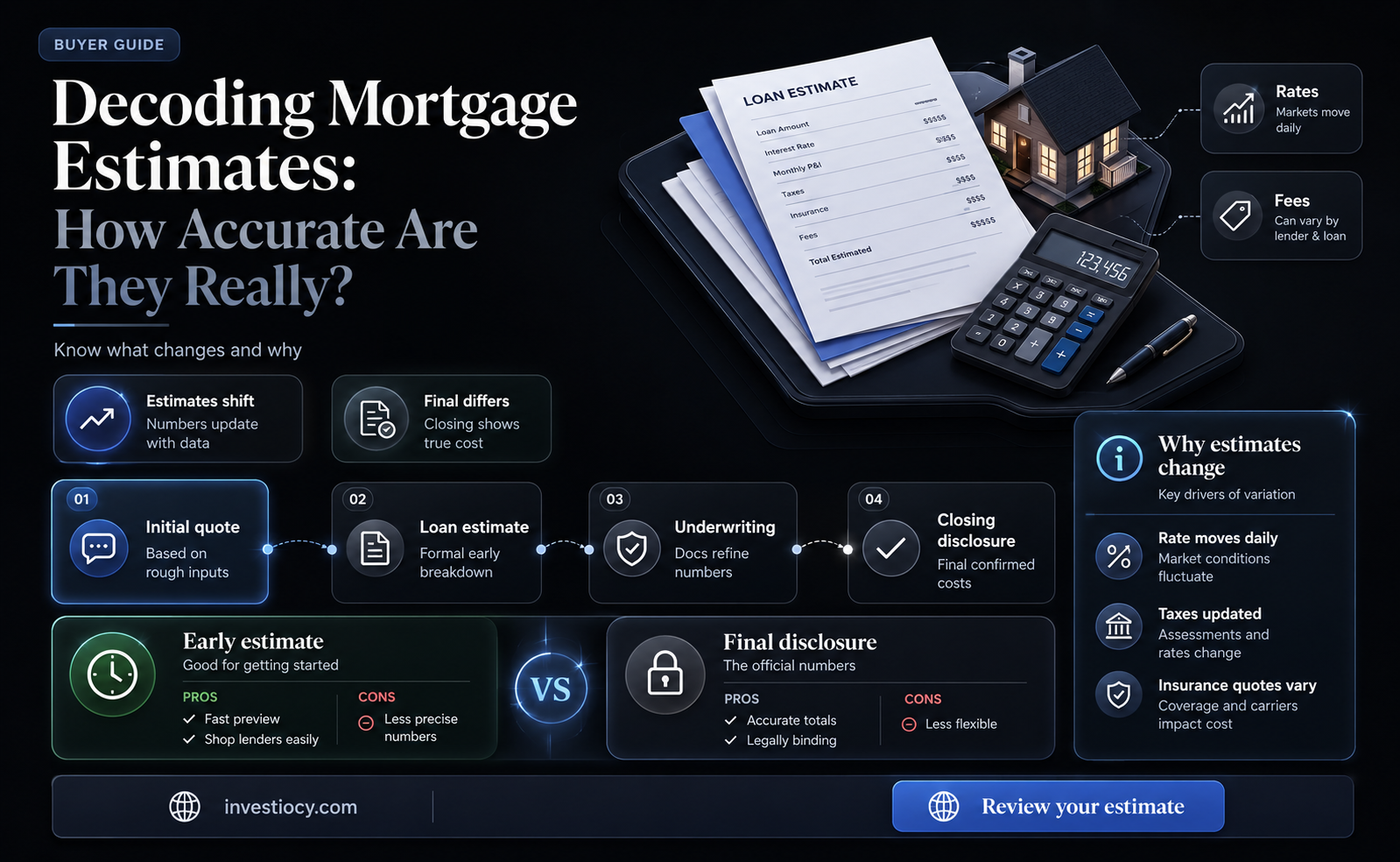
When considering a mortgage, one of the first steps is often to get a mortgage estimate. This estimate provides potential borrowers with an idea of how much they can expect to pay each month, as well as the total cost of the loan over its lifetime. However, it's important to understand that a mortgage estimate is just that - an estimate. It's not a guarantee of the final terms you'll receive, and there are several factors that can influence the accuracy of the estimate. These factors include changes in interest rates, your credit score, the property's value, and the lender's underwriting criteria. Therefore, while a mortgage estimate can be a useful tool in the home-buying process, it's crucial to approach it with a clear understanding of its limitations and the potential for changes as you move forward with your mortgage application.
| Characteristics | Values |
|---|---|
| Definition | A mortgage estimate provides an approximation of monthly payments, interest rates, and total loan costs based on preliminary information. |
| Accuracy Level | Generally accurate but subject to change based on final underwriting and appraisal. |
| Factors Influencing Accuracy | Credit score, debt-to-income ratio, loan-to-value ratio, property appraisal, and market conditions. |
| Typical Error Margin | 1-3% variance from the final mortgage terms. |
| Importance of Estimate | Helps borrowers budget and compare loan options. |
| Frequency of Updates | Estimates may be updated as new information becomes available or market conditions change. |
| Who Provides Estimates | Mortgage lenders, brokers, or online calculators. |
| Timeframe for Validity | Usually valid for 30 to 60 days, depending on the lender. |
| Documentation Required | Proof of income, credit reports, property details, and other relevant financial documents. |
| Impact on Credit Score | Multiple inquiries for mortgage estimates can slightly lower credit scores. |
| Cost of Estimate | Often free, but some lenders may charge a fee. |
| Alternatives to Estimates | Pre-approval letters, which provide a more detailed and accurate assessment. |
| Common Misunderstandings | Borrowers may confuse estimates with pre-approvals or final loan offers. |
| Legal Implications | Lenders must provide accurate estimates based on the information given, but final terms may differ. |
| Technological Advancements | Online tools and AI-driven platforms are improving the accuracy and speed of mortgage estimates. |
Explore related products


What You'll Learn

Factors Influencing Estimates
Several factors can significantly influence the accuracy of a mortgage estimate. One key factor is the borrower's credit score, which affects the interest rate and, consequently, the monthly payment amount. Lenders use credit scores to assess the risk of lending to a borrower, with higher scores typically resulting in lower interest rates.
Another important factor is the loan-to-value (LTV) ratio, which is the percentage of the home's value that the borrower is seeking to finance. A higher LTV ratio can lead to higher interest rates and may require the borrower to pay for private mortgage insurance (PMI). Additionally, the type of loan chosen, such as a fixed-rate or adjustable-rate mortgage, can impact the estimate's accuracy. Adjustable-rate mortgages (ARMs) can be particularly tricky to estimate accurately because the interest rate can change over time, affecting the monthly payment amount.
Property taxes and homeowners insurance are also critical components of a mortgage estimate. These costs can vary significantly depending on the location and value of the property, and they can impact the overall affordability of the mortgage. Furthermore, the accuracy of the estimate can be influenced by the lender's fees and closing costs, which can include origination fees, appraisal fees, and title insurance.
To ensure the accuracy of a mortgage estimate, borrowers should provide lenders with as much detailed information as possible about their financial situation, credit history, and the property they are interested in purchasing. Additionally, borrowers should be aware of the factors that can influence the estimate and should ask lenders to explain how these factors are taken into account. By understanding the various components of a mortgage estimate and how they can impact the overall cost of the loan, borrowers can make more informed decisions about their mortgage options.
Decoding Trulia's Mortgage Estimates: How Accurate Are They Really?
You may want to see also
Explore related products


Types of Mortgage Estimates
Mortgage estimates can vary significantly depending on the type of estimate provided. There are primarily three types of mortgage estimates: pre-qualification, pre-approval, and loan commitment. Each type serves a different purpose and offers varying levels of accuracy.
Pre-qualification is the most basic type of mortgage estimate. It involves a lender reviewing a borrower's financial information to determine how much they might be able to borrow. This process is relatively quick and easy, but the resulting estimate is not very accurate. Pre-qualification is often used by borrowers to get a rough idea of their borrowing potential before they start house hunting.
Pre-approval is a more detailed process that involves a lender thoroughly reviewing a borrower's financial information, including their credit score, income, and assets. This process takes longer than pre-qualification, but the resulting estimate is more accurate. Pre-approval is often used by borrowers who are serious about buying a home and want to know exactly how much they can borrow.
Loan commitment is the most accurate type of mortgage estimate. It involves a lender formally agreeing to lend a borrower a specific amount of money for a specific period of time. This process takes the longest of the three types of estimates, but it provides the most certainty for the borrower. Loan commitment is often used by borrowers who have found a home they want to buy and need to secure financing.
In conclusion, the accuracy of a mortgage estimate depends on the type of estimate provided. Pre-qualification is the least accurate, while loan commitment is the most accurate. Borrowers should choose the type of estimate that best fits their needs and timeline.
Unveiling the Truth: How Accurate Are Mortgage Surveys?
You may want to see also
Explore related products

![Construction Project Management & Estimating for Beginners: [2 in 1] From Estimates to Execution - Mastering Project Bids, Estimating Techniques and Management Essentials for New Professionals](https://m.media-amazon.com/images/I/616ElUcHKuL._AC_UY218_.jpg)


Online vs. Professional Estimates
Online mortgage estimates can be a convenient starting point for homebuyers, offering a quick snapshot of potential loan amounts and monthly payments based on basic financial inputs. However, these estimates often lack the nuance and accuracy of professional assessments, which can lead to unexpected surprises down the road.
Professional mortgage estimates, on the other hand, are tailored to the individual borrower's unique financial situation, taking into account factors such as credit history, employment stability, and debt-to-income ratio. These estimates are typically more accurate and reliable, as they are based on a comprehensive analysis of the borrower's financial profile and the specific loan options available to them.
One key advantage of professional estimates is that they can help borrowers avoid common pitfalls, such as overestimating their borrowing power or underestimating their monthly payments. By providing a more realistic picture of the borrower's financial capabilities, professional estimates can help prevent costly mistakes and ensure a smoother mortgage process.
In addition, professional mortgage estimates often come with personalized advice and guidance, which can be invaluable for first-time homebuyers or those with complex financial situations. Mortgage professionals can help borrowers navigate the intricacies of the loan application process, identify potential roadblocks, and develop strategies to improve their chances of approval.
While online mortgage estimates can be a useful tool for getting a general idea of potential loan amounts, they should be approached with caution. Borrowers should always verify the accuracy of online estimates with a professional and consider seeking personalized advice to ensure they are making informed decisions about their mortgage.
Common Estimation Errors
One of the most common estimation errors in mortgage calculations is the failure to account for all closing costs. These costs can include appraisal fees, title insurance, attorney fees, and more. They can significantly impact the overall cost of a mortgage, yet are often overlooked in initial estimates. This oversight can lead to borrowers being unprepared for the actual costs they will face at closing, potentially causing financial strain or even leading to the cancellation of the mortgage application.
Another frequent error is the miscalculation of interest rates. Mortgage interest rates can be complex, with various factors influencing the final rate a borrower will receive. These factors include credit score, loan-to-value ratio, and the type of loan chosen. An incorrect estimation of the interest rate can result in borrowers expecting a lower monthly payment than they will actually face, leading to budgeting issues and potential default on the loan.
Additionally, many borrowers make the mistake of not considering the impact of property taxes and homeowners insurance on their mortgage payments. These costs can vary widely depending on the location and value of the property, and can add hundreds or even thousands of dollars to the annual cost of a mortgage. Failing to account for these expenses can lead to borrowers underestimating their total housing costs, potentially causing financial hardship.
To avoid these common estimation errors, borrowers should work closely with their lender to ensure all costs are accounted for in the initial mortgage estimate. They should also take the time to understand the factors that influence their interest rate and how property taxes and homeowners insurance will impact their monthly payments. By doing so, borrowers can better prepare for the true costs of homeownership and avoid potential financial pitfalls.
Verifying Estimate Accuracy
To verify the accuracy of a mortgage estimate, it's crucial to understand the components that make up the estimate in the first place. A mortgage estimate typically includes the principal amount, interest rate, loan term, and monthly payments. It may also factor in additional costs such as property taxes, insurance, and closing fees. The first step in verifying the estimate's accuracy is to ensure that all these elements are correctly calculated and reflected in the provided documentation.
One effective method to verify the accuracy of a mortgage estimate is to use online mortgage calculators. These tools allow you to input the loan details and instantly receive a breakdown of the estimated costs. By comparing the results from multiple calculators, you can cross-check the figures and identify any discrepancies. Additionally, it's advisable to consult with a financial advisor or mortgage broker who can provide expert insights and help you understand any nuances or hidden costs associated with the estimate.
Another important aspect of verifying estimate accuracy is to review the assumptions made during the estimation process. For instance, the estimate may be based on a specific credit score, income level, or property value. If any of these assumptions change, the estimate may no longer be accurate. Therefore, it's essential to ensure that the assumptions align with your current financial situation and property details.
Furthermore, it's recommended to obtain multiple mortgage estimates from different lenders to compare the terms and costs. This will not only help you verify the accuracy of the estimates but also enable you to find the most competitive offer. When comparing estimates, pay close attention to the Annual Percentage Rate (APR), which provides a more comprehensive view of the loan's cost by including both the interest rate and other fees.
In conclusion, verifying the accuracy of a mortgage estimate requires a combination of due diligence, expert consultation, and comparison shopping. By understanding the estimate's components, using online calculators, reviewing assumptions, and obtaining multiple estimates, you can ensure that you have a clear and accurate picture of your potential mortgage costs. This will help you make informed decisions and avoid any surprises down the line.
Frequently asked questions
The accuracy of a mortgage estimate can vary. Initial estimates may be less precise due to assumptions about credit scores, property values, and other factors. As you provide more detailed information, the estimate becomes more accurate.
Several factors can influence the accuracy of a mortgage estimate, including changes in interest rates, property value assessments, credit score variations, and the type of mortgage chosen.
To improve the accuracy of your mortgage estimate, gather detailed financial information, obtain a recent property appraisal, check your credit report for errors, and consider consulting with a mortgage professional.
Online mortgage calculators can provide a general idea of your mortgage payments, but they may not account for all the nuances of your specific situation. For a more accurate estimate, it's advisable to consult with a lender or mortgage advisor.
It's a good practice to review and update your mortgage estimate annually or whenever there are significant changes in your financial situation, property value, or interest rates. This ensures you have the most current and accurate information.
