Lester Freeman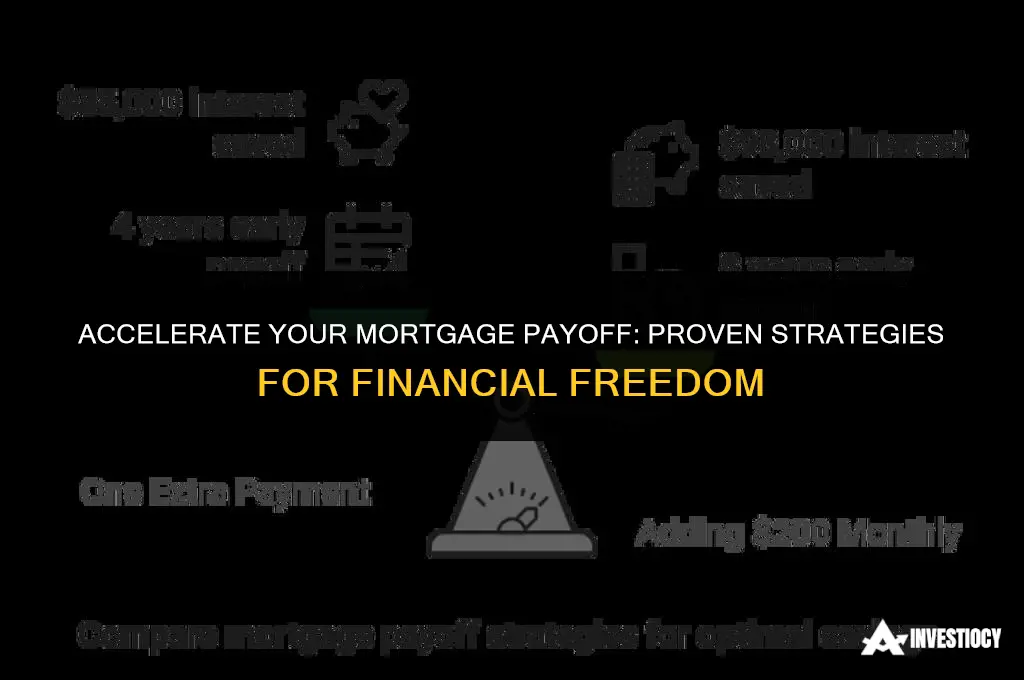
Paying off a mortgage faster can save homeowners thousands of dollars in interest and reduce the overall burden of debt. There are several strategies that can be employed to achieve this goal, including making extra payments, refinancing to a shorter term, and utilizing a bi-weekly payment schedule. Additionally, homeowners can explore options such as applying for a home equity loan or line of credit to consolidate high-interest debt and free up more funds to put towards their mortgage. By implementing these strategies and staying committed to a plan, homeowners can take control of their finances and achieve the dream of owning their home outright sooner than expected.
Explore related products


What You'll Learn
- Extra Payments: Making additional payments each month or annually to reduce the principal balance
- Refinancing Options: Exploring lower interest rates or shorter loan terms to save on interest and pay off the loan quicker
- Bi-Weekly Payments: Paying half the monthly mortgage amount every two weeks to make an extra payment annually
- Home Equity: Using home equity loans or lines of credit to pay off higher-interest debt or invest in home improvements
- Lifestyle Adjustments: Cutting expenses, increasing income, and prioritizing mortgage payments to accelerate payoff

Extra Payments: Making additional payments each month or annually to reduce the principal balance
Making extra payments on your mortgage is a powerful strategy to pay off your loan faster and save on interest. By contributing additional funds each month or annually, you can significantly reduce the principal balance, which in turn decreases the amount of interest accrued over time. This method is particularly effective in the early years of a mortgage, as the majority of payments during this period go towards interest rather than principal.
To implement this strategy, start by determining how much extra you can afford to pay each month or year. Even small amounts can make a difference. For example, adding $50 to your monthly payment on a $200,000, 30-year fixed-rate mortgage at 4% interest can save you over $27,000 in interest and reduce your payoff time by more than 5 years. Use a mortgage calculator to see the impact of different extra payment amounts on your specific loan.
When making extra payments, it's crucial to specify that the additional funds should be applied directly to the principal balance, rather than towards future payments or interest. This ensures that you're maximizing the benefit of your extra payments. Some lenders may have specific instructions or requirements for making extra payments, so be sure to check with your lender beforehand.
Consider setting up automatic extra payments through your lender or bank to make the process more convenient and ensure consistency. This can help you avoid the temptation to skip extra payments in months when your budget is tight. Additionally, some lenders offer the option to make a lump-sum payment annually, which can be a great way to apply a larger amount towards your principal balance at once.
Remember that while making extra payments can be an effective way to pay off your mortgage faster, it's important to balance this strategy with other financial goals and priorities. Ensure that you have an emergency fund in place and are not neglecting other important expenses or savings goals in order to make extra mortgage payments. By taking a thoughtful and strategic approach, you can use extra payments to accelerate your mortgage payoff while maintaining overall financial stability.
Understanding Mortgage Debt: How to Calculate What You Owe
You may want to see also
Explore related products


Refinancing Options: Exploring lower interest rates or shorter loan terms to save on interest and pay off the loan quicker
One effective strategy to pay off your mortgage faster is to explore refinancing options that offer lower interest rates or shorter loan terms. By securing a lower interest rate, you can reduce the amount of interest you pay over the life of the loan, allowing you to allocate more of your monthly payments towards the principal balance. This can significantly shorten the time it takes to pay off your mortgage.
Another option to consider is refinancing to a shorter loan term, such as a 15-year fixed-rate mortgage instead of a 30-year term. While this will increase your monthly payments, it can also lead to substantial savings in interest over the long run. Additionally, shorter loan terms often come with lower interest rates, further accelerating your path to mortgage payoff.
When exploring refinancing options, it's essential to consider the costs associated with refinancing, such as closing costs and application fees. These expenses can add up quickly, so it's crucial to weigh the potential savings against the upfront costs to determine if refinancing is the right choice for you.
It's also important to evaluate your credit score and financial situation before applying for a refinance. A higher credit score can qualify you for better interest rates, while a lower score may result in higher rates or even denial of your refinance application. Additionally, lenders will typically require proof of income, assets, and employment stability to ensure you can afford the new loan terms.
To make the most of refinancing, consider working with a mortgage professional who can help you navigate the process and find the best options for your specific situation. They can provide guidance on which loan terms and interest rates are most favorable for your goals and financial circumstances.
In conclusion, refinancing your mortgage to a lower interest rate or shorter loan term can be a powerful tool for paying off your mortgage faster. By reducing the amount of interest you pay and increasing your monthly payments towards the principal, you can significantly shorten the time it takes to become mortgage-free. However, it's crucial to carefully consider the costs and qualifications associated with refinancing to ensure it's the right strategy for your financial goals.
Celebrating Financial Freedom: How to Mark Your Mortgage as Paid Off
You may want to see also
Explore related products



Bi-Weekly Payments: Paying half the monthly mortgage amount every two weeks to make an extra payment annually
One effective strategy to pay off your mortgage faster is to make bi-weekly payments. This approach involves paying half of your monthly mortgage amount every two weeks, which results in an extra full payment being made annually. Over the course of a typical 30-year mortgage, this can significantly reduce the total interest paid and shorten the loan term.
To implement bi-weekly payments, you'll need to divide your monthly mortgage payment by two and then make one of these payments every two weeks. For example, if your monthly mortgage payment is $1,000, you would pay $500 every two weeks. This results in 26 payments per year, as opposed to the standard 12. The extra payments are applied directly to the principal balance, reducing the amount of interest accrued over time.
It's important to note that not all mortgage lenders offer bi-weekly payment options, so you'll need to check with your lender to see if this is a possibility. Some lenders may charge additional fees for setting up bi-weekly payments, so be sure to inquire about any potential costs. Additionally, you should ensure that the extra payments are being applied correctly to your principal balance and not just being held in an escrow account.
One of the benefits of bi-weekly payments is that they can help you build equity in your home more quickly. As you're making more frequent payments, you're reducing the principal balance at a faster rate, which can lead to increased home equity. This can be particularly advantageous if you're planning to sell your home in the future or if you want to refinance your mortgage.
Another advantage of bi-weekly payments is that they can help you avoid paying private mortgage insurance (PMI). If you put less than 20% down on your home, you're typically required to pay PMI until your loan-to-value ratio reaches 78%. By making bi-weekly payments, you can reach this threshold more quickly and potentially save money on PMI premiums.
In conclusion, bi-weekly payments can be a smart strategy for paying off your mortgage faster and reducing the total interest paid. However, it's important to carefully consider the potential costs and ensure that this approach aligns with your overall financial goals. By doing your research and consulting with your lender, you can determine if bi-weekly payments are the right choice for you.
Strategic Steps to Pay Off Your Chase Mortgage Faster
You may want to see also
Explore related products





![NMLS Study Guide 2026-2027 - 5 Full-Length Practice Tests, SAFE MLO Exam Prep Secrets Book for the Mortgage Loan Originator Exam: [4th Edition]](https://m.media-amazon.com/images/I/717iHac5CwL._AC_UL320_.jpg)
Home Equity: Using home equity loans or lines of credit to pay off higher-interest debt or invest in home improvements
Leveraging home equity can be a strategic move for homeowners looking to pay off their mortgage faster. By using a home equity loan or line of credit, you can tap into the value of your home to pay off higher-interest debts, such as credit cards or personal loans, which can help you save on interest payments and reduce your overall debt burden. This strategy can be particularly effective if you have a significant amount of equity in your home and are looking to consolidate your debts into a single, lower-interest payment.
One of the key benefits of using home equity to pay off debt is that it can help you save money on interest payments over time. For example, if you have a credit card with a high interest rate, such as 20%, and you use a home equity loan with a lower interest rate, such as 5%, to pay it off, you can significantly reduce the amount of interest you pay over the life of the loan. This can help you pay off your debt faster and save money in the process.
Another advantage of using home equity to pay off debt is that it can help you simplify your finances. By consolidating multiple debts into a single loan, you can reduce the number of payments you need to make each month, which can make it easier to manage your finances and stay on top of your debt payments. Additionally, home equity loans and lines of credit often have more favorable terms than other types of loans, such as personal loans or credit cards, which can make them a more attractive option for debt consolidation.
However, it's important to note that using home equity to pay off debt also comes with some risks. One of the main risks is that you are putting your home up as collateral for the loan, which means that if you are unable to make your payments, you could potentially lose your home. Additionally, home equity loans and lines of credit can have variable interest rates, which means that your payments could increase if interest rates rise. Therefore, it's important to carefully consider the risks and benefits before deciding to use home equity to pay off debt.
In conclusion, using home equity to pay off higher-interest debt can be a smart strategy for homeowners looking to pay off their mortgage faster. By consolidating their debts into a single, lower-interest loan, homeowners can save money on interest payments, simplify their finances, and potentially pay off their debt more quickly. However, it's important to carefully weigh the risks and benefits before deciding to use home equity for debt consolidation.
Strategic Steps to Pay Off Your Mortgage Faster
You may want to see also
Explore related products



Lifestyle Adjustments: Cutting expenses, increasing income, and prioritizing mortgage payments to accelerate payoff
To accelerate your mortgage payoff, a critical step involves making targeted lifestyle adjustments. These changes can significantly impact your financial trajectory and help you achieve your goal faster. Start by conducting a thorough review of your current expenses. Identify areas where you can cut back, such as reducing dining out, canceling unused subscriptions, and lowering utility bills by conserving energy. Every dollar saved can be redirected towards your mortgage payments.
Increasing your income is another powerful strategy. Consider taking on a side gig, freelancing, or pursuing a hobby that can generate additional revenue. Even small amounts can add up over time and contribute to paying down your mortgage more quickly. If possible, negotiate a raise at your current job or explore opportunities for career advancement that offer higher salaries.
Prioritizing your mortgage payments is essential. Make sure you are paying more than the minimum required each month. If your budget allows, consider making bi-weekly payments instead of monthly ones. This can help you pay off the principal balance faster and reduce the overall interest you pay over the life of the loan. Additionally, applying any bonuses, tax refunds, or unexpected windfalls directly to your mortgage can make a significant dent in your balance.
It's also important to avoid common pitfalls that can hinder your progress. Be cautious of refinancing your mortgage too frequently, as this can result in higher fees and potentially extend the life of your loan. Instead, focus on making consistent, extra payments towards your current mortgage. Remember, the key to paying off your mortgage faster is a combination of strategic expense cutting, income boosting, and disciplined payment prioritization.
Boost Your Business: A Guide to Generating Your Own Mortgage Leads
You may want to see also
Frequently asked questions
There are several strategies you can employ to pay off your mortgage faster. One popular method is to make bi-weekly payments instead of monthly payments. This can help you pay off your mortgage about 4 years faster. Another strategy is to pay a little extra each month, even if it's just $20 or $50. Over time, these extra payments can add up and significantly reduce your payoff time. Additionally, consider refinancing your mortgage to a shorter term, such as a 15-year fixed-rate mortgage, if you can afford the higher monthly payments.
Making extra payments on your mortgage can have a significant impact on your payoff time. When you make an extra payment, it goes directly towards the principal balance of your loan, reducing the amount you owe. This can help you pay off your mortgage faster and save money on interest over the life of the loan. For example, if you have a $200,000 mortgage with a 4% interest rate and you make an extra payment of $100 each month, you could pay off your mortgage about 7 years faster and save over $20,000 in interest.
Refinancing to a shorter-term mortgage, such as a 15-year fixed-rate mortgage, can offer several benefits. First, you'll pay off your mortgage faster, which can help you build equity in your home more quickly. Second, shorter-term mortgages typically have lower interest rates, which can save you money on interest over the life of the loan. Third, refinancing to a shorter-term mortgage can help you avoid paying private mortgage insurance (PMI) if you have less than 20% equity in your home. However, it's important to note that refinancing to a shorter-term mortgage will result in higher monthly payments, so you'll need to make sure you can afford the increased cost.