Laila Keith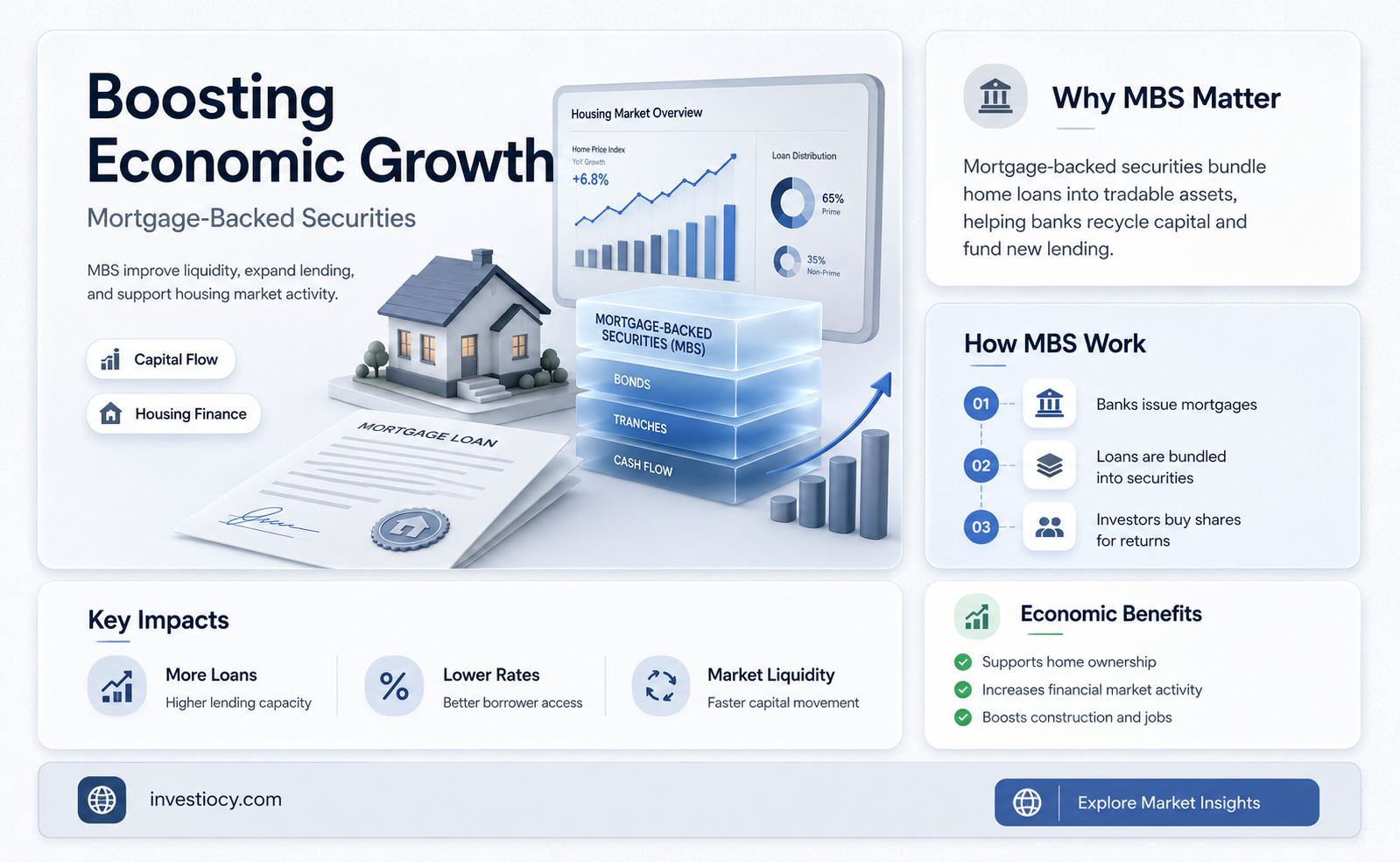
Mortgage-backed securities (MBS) play a crucial role in the economy by facilitating the flow of capital into the housing market. These financial instruments are created when a pool of mortgages is packaged and sold to investors as bonds. This process allows banks and other lending institutions to free up capital that would otherwise be tied up in long-term mortgage loans, enabling them to make more loans and stimulate economic growth. Additionally, MBS provide investors with a steady stream of income through the interest payments on the underlying mortgages, making them an attractive investment option. By connecting the housing market with the broader financial markets, MBS help to stabilize the economy and promote homeownership.
| Characteristics | Values |
|---|---|
| Definition | Mortgage-backed securities (MBS) are financial instruments that represent an ownership interest in a pool of mortgages. |
| Purpose | MBS help to facilitate the flow of capital into the housing market, enabling more people to purchase homes. |
| Structure | MBS are structured as pools of mortgages that are packaged and sold to investors. The cash flows from the underlying mortgages are used to pay interest and principal to the investors. |
| Types | There are various types of MBS, including pass-through securities, collateralized mortgage obligations (CMOs), and stripped mortgage-backed securities (SMBS). |
| Benefits to Economy | MBS help to increase liquidity in the housing market, lower interest rates, and provide a source of funding for banks and other financial institutions. |
| Risks | MBS can be risky investments, as they are subject to prepayment risk, credit risk, and interest rate risk. |
| Historical Context | MBS became popular in the 1980s and 1990s, and played a significant role in the 2008 financial crisis. |
| Current Market | The MBS market is a significant part of the global financial market, with trillions of dollars in outstanding securities. |
| Regulation | MBS are regulated by various government agencies, including the Securities and Exchange Commission (SEC) and the Federal Housing Finance Agency (FHFA). |
| Future Outlook | The future of the MBS market is uncertain, as it is influenced by factors such as interest rates, housing prices, and government policy. |
| Impact on Homeowners | MBS can impact homeowners by affecting the availability and cost of mortgage financing. |
| Impact on Banks | MBS can impact banks by providing a source of funding and influencing their lending practices. |
| Impact on Investors | MBS can impact investors by providing a source of income and influencing their investment portfolios. |
| Criticisms | MBS have been criticized for their complexity, lack of transparency, and potential for fraud. |
| Alternatives | Alternatives to MBS include other types of asset-backed securities, such as asset-backed commercial paper (ABCP) and collateralized debt obligations (CDOs). |
Explore related products


What You'll Learn
- Increased liquidity: Mortgage-backed securities (MBS) enhance liquidity in the financial system by converting illiquid assets into tradable securities
- Lower interest rates: By pooling mortgages and selling them as securities, MBS can help reduce interest rates for borrowers, making loans more affordable
- Risk distribution: MBS distribute the risk of mortgage defaults across multiple investors, reducing the risk for individual lenders and encouraging more lending
- Investment opportunities: MBS provide investors with a new asset class, offering diversification and potentially higher returns than traditional investments
- Housing market support: By facilitating mortgage lending, MBS help support the housing market, which is a key driver of economic growth and stability

Increased liquidity: Mortgage-backed securities (MBS) enhance liquidity in the financial system by converting illiquid assets into tradable securities
Mortgage-backed securities (MBS) play a crucial role in enhancing liquidity within the financial system. By converting illiquid assets, such as individual mortgages, into tradable securities, MBS enable investors to buy and sell these assets more easily. This increased liquidity has several benefits for the economy.
Firstly, it allows for more efficient allocation of capital. Investors can quickly move their funds into and out of the MBS market, responding to changes in interest rates and other economic indicators. This flexibility helps to ensure that capital is directed towards the most productive uses, supporting economic growth and development.
Secondly, increased liquidity in the MBS market can help to reduce borrowing costs for homeowners. When investors are able to buy and sell MBS more easily, they are more likely to invest in these securities, which increases demand and drives down prices. This, in turn, can lead to lower interest rates for borrowers, making it more affordable for people to purchase homes.
Thirdly, MBS can help to diversify the portfolios of investors. By providing a new asset class, MBS enable investors to spread their risk across different types of investments. This diversification can help to reduce the overall risk of an investment portfolio, making it more resilient to economic shocks.
However, it is important to note that increased liquidity in the MBS market can also have some negative consequences. For example, it can lead to increased volatility, as investors are able to react more quickly to changes in market conditions. This volatility can make it more difficult for borrowers to predict their borrowing costs and can also increase the risk of market bubbles.
In conclusion, mortgage-backed securities play an important role in enhancing liquidity in the financial system. This increased liquidity can lead to more efficient allocation of capital, lower borrowing costs for homeowners, and greater diversification for investors. However, it is important to be aware of the potential negative consequences of increased liquidity, such as increased volatility and the risk of market bubbles.
Parental Financial Support: A Game-Changer for Mortgage Approval
You may want to see also
Explore related products


Lower interest rates: By pooling mortgages and selling them as securities, MBS can help reduce interest rates for borrowers, making loans more affordable
Mortgage-backed securities (MBS) play a crucial role in the economy by helping to lower interest rates for borrowers. This is achieved through the process of pooling mortgages and selling them as securities to investors. By doing so, MBS can make loans more affordable for individuals and families, which in turn can stimulate economic growth and stability.
One of the key benefits of MBS is that they allow banks and other financial institutions to free up capital that would otherwise be tied up in mortgage loans. This freed-up capital can then be used to make new loans, which helps to increase the availability of credit in the economy. Additionally, MBS can help to reduce the risk associated with mortgage lending, as the risk is spread out among multiple investors rather than being borne by a single lender.
MBS also help to make the mortgage market more liquid, which means that it is easier for borrowers to find lenders willing to offer them loans. This increased liquidity can lead to lower interest rates, as lenders compete for borrowers' business. Furthermore, MBS can help to standardize the mortgage market, making it easier for investors to understand and evaluate the risks associated with mortgage lending.
However, it is important to note that MBS can also have some negative consequences. For example, the process of securitization can lead to a lack of transparency, making it difficult for investors to fully understand the risks associated with MBS. Additionally, the reliance on MBS can lead to a lack of diversification in the mortgage market, which can make the economy more vulnerable to shocks.
Overall, MBS can play an important role in helping to lower interest rates and make loans more affordable for borrowers. However, it is important to carefully manage the risks associated with MBS in order to ensure that they do not lead to negative consequences for the economy.
Unlocking Savings: The Power of Lower Fees in Mortgage Refinancing
You may want to see also
Risk distribution: MBS distribute the risk of mortgage defaults across multiple investors, reducing the risk for individual lenders and encouraging more lending
Mortgage-backed securities (MBS) play a crucial role in the economy by distributing the risk of mortgage defaults across multiple investors. This mechanism reduces the risk for individual lenders, thereby encouraging them to extend more credit to borrowers. By pooling mortgages together and selling them as securities, lenders can offload a significant portion of their risk, which in turn allows them to lend more money without becoming overly exposed to potential defaults.
The process of risk distribution through MBS involves several steps. First, mortgages are originated by lenders and then pooled together into a trust. This trust issues securities that represent an ownership interest in the pool of mortgages. Investors purchase these securities, effectively becoming part-owners of the mortgage pool. As borrowers make their monthly mortgage payments, the cash flows are distributed to the investors in the form of interest payments. If a borrower defaults on their mortgage, the loss is absorbed by the pool of investors rather than by a single lender.
One of the key benefits of MBS is that they allow lenders to manage their risk more effectively. By spreading the risk across multiple investors, lenders can reduce their exposure to potential losses from mortgage defaults. This, in turn, enables them to offer more competitive interest rates to borrowers and to extend credit to a wider range of individuals, including those who might not otherwise qualify for a mortgage.
Moreover, MBS can help to increase liquidity in the financial system. By providing a market for mortgages, MBS enable lenders to free up capital that would otherwise be tied up in long-term loans. This capital can then be used to make new loans, further stimulating economic activity. Additionally, the securitization process can help to standardize mortgage products, making it easier for investors to compare and evaluate different mortgage-backed securities.
In conclusion, mortgage-backed securities are an important financial innovation that helps to distribute risk, increase liquidity, and promote lending in the economy. By allowing lenders to offload risk and free up capital, MBS can contribute to a more robust and efficient financial system, ultimately benefiting both borrowers and investors.
Decoding Modern Mortgages: Insights from Jared Vennett
You may want to see also
Investment opportunities: MBS provide investors with a new asset class, offering diversification and potentially higher returns than traditional investments
Mortgage-backed securities (MBS) have emerged as a significant asset class in the financial markets, offering investors a unique opportunity for diversification and potentially higher returns compared to traditional investments. By pooling together mortgages from various borrowers, MBS create a financial instrument that can be traded on the market, thereby providing liquidity to the otherwise illiquid housing market.
One of the primary benefits of investing in MBS is the diversification it offers. Unlike traditional investments such as stocks or bonds, MBS are backed by a pool of mortgages, which can help spread risk across multiple borrowers and geographic locations. This diversification can help reduce the overall risk of an investor's portfolio, making it more resilient to market fluctuations.
In addition to diversification, MBS can also offer potentially higher returns than traditional investments. The interest payments from the underlying mortgages are pooled and distributed to MBS investors, providing a regular stream of income. Furthermore, MBS can also appreciate in value if the underlying mortgages are prepaid or if the interest rates decline, allowing investors to potentially realize capital gains.
However, it is important to note that investing in MBS also comes with certain risks. One of the primary risks is the possibility of default on the underlying mortgages. If a significant number of borrowers default on their mortgages, the value of the MBS can decline, leading to potential losses for investors. Additionally, MBS can be complex financial instruments, and investors need to have a thorough understanding of the underlying structure and risks before investing.
Despite these risks, MBS continue to be a popular investment option for those looking to diversify their portfolios and potentially earn higher returns. As the housing market continues to grow and evolve, MBS are likely to remain an important asset class for investors seeking to capitalize on the opportunities presented by the real estate market.
Liberation from Debt: The Joy of a Mortgage-Free Life
You may want to see also
Housing market support: By facilitating mortgage lending, MBS help support the housing market, which is a key driver of economic growth and stability
Mortgage-backed securities (MBS) play a crucial role in supporting the housing market, which is a key driver of economic growth and stability. By facilitating mortgage lending, MBS help to increase the availability of credit for homebuyers, thereby stimulating housing demand and construction activity. This, in turn, creates jobs, boosts consumer spending, and contributes to overall economic growth.
One of the primary ways in which MBS support the housing market is by providing liquidity to mortgage lenders. When banks and other financial institutions issue mortgages, they often package them into MBS and sell them to investors. This process frees up capital for the lenders, allowing them to make more loans to homebuyers. As a result, more people are able to access credit and purchase homes, which drives up housing demand and prices.
MBS also help to reduce the risk associated with mortgage lending. By pooling together a large number of mortgages, MBS spread the risk of default across multiple loans. This makes it less likely that a single default will have a significant impact on the overall portfolio. As a result, investors are more willing to purchase MBS, which in turn provides more funding for mortgage lenders.
Furthermore, MBS can help to stabilize the housing market during times of economic uncertainty. For example, during the 2008 financial crisis, the U.S. government intervened in the MBS market to prevent a collapse. By purchasing MBS, the government helped to maintain liquidity in the market and prevent a sharp decline in housing prices. This intervention played a key role in stabilizing the housing market and preventing a deeper economic downturn.
In conclusion, MBS are an important tool for supporting the housing market and promoting economic growth and stability. By facilitating mortgage lending, providing liquidity to lenders, reducing risk, and stabilizing the market during times of uncertainty, MBS help to ensure that the housing market remains a key driver of economic activity.
Understanding Inflation's Effect on Your Mortgage Costs
You may want to see also
Frequently asked questions
Mortgage-backed securities help the economy by providing liquidity to the mortgage market. They allow banks and other financial institutions to package and sell pools of mortgages to investors, freeing up capital to make new loans. This process helps to keep interest rates low and makes it easier for people to buy homes, which in turn stimulates the economy.
Investing in mortgage-backed securities can provide a number of benefits, including:
- Regular income: MBS typically pay monthly interest payments, which can provide a steady stream of income for investors.
- Diversification: MBS can help to diversify an investment portfolio by providing exposure to the housing market, which is not typically correlated with other asset classes.
- Government backing: Many MBS are backed by government agencies such as Fannie Mae and Freddie Mac, which can provide an added layer of security for investors.
There are several risks associated with mortgage-backed securities, including:
- Prepayment risk: If interest rates fall, borrowers may refinance their mortgages, which can lead to a loss of principal for MBS investors.
- Credit risk: If borrowers default on their mortgages, MBS investors may not receive the full amount of their investment back.
- Market risk: MBS prices can be affected by changes in interest rates and other market conditions, which can lead to losses for investors.