Faith Morrow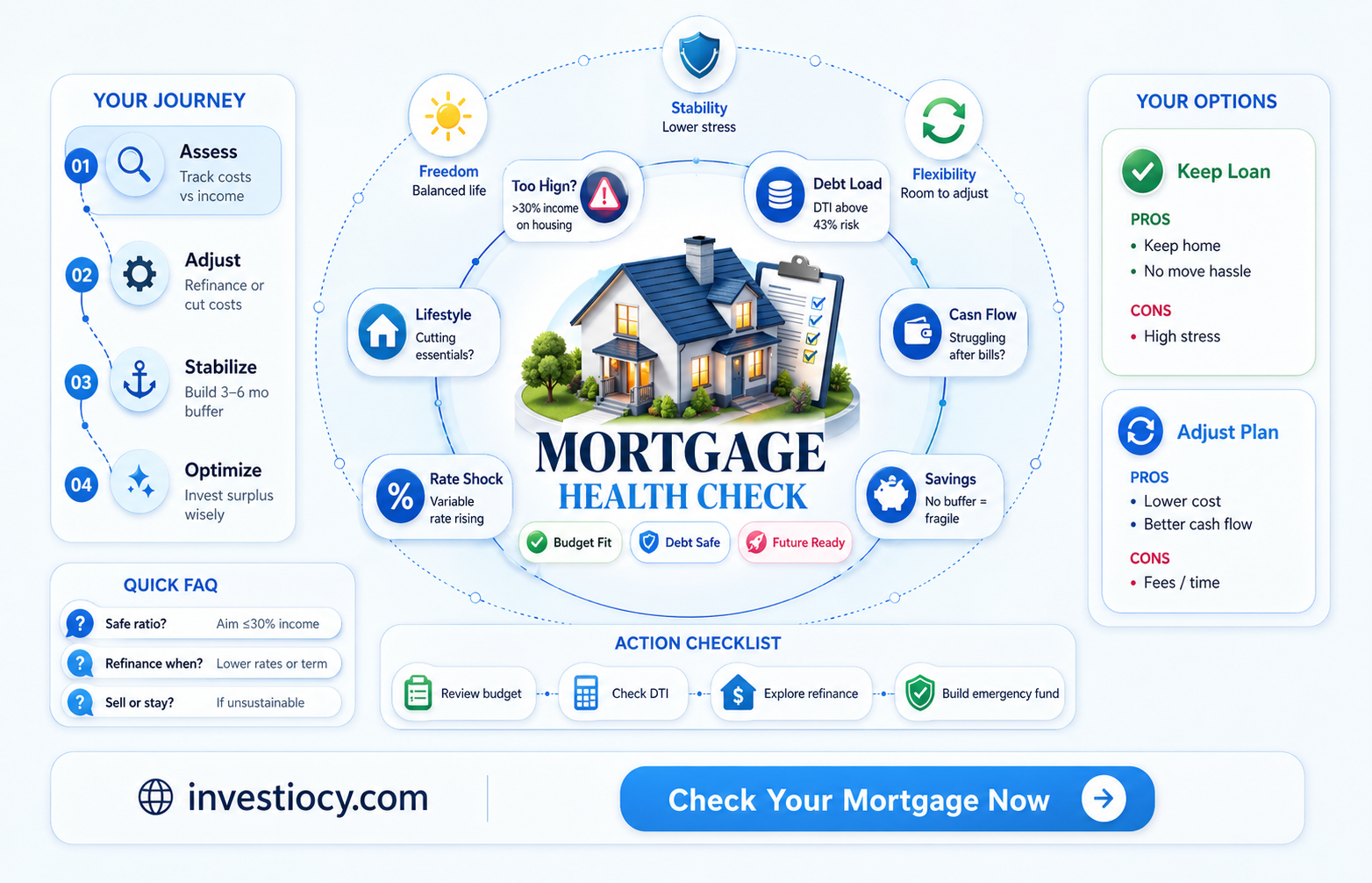
Determining how high of a mortgage is too high depends on various factors, including your income, expenses, credit score, and overall financial goals. A general rule of thumb is that your mortgage payment should not exceed 28% of your gross monthly income. However, this percentage can vary based on your individual circumstances and the current interest rates. It's essential to consider not only the principal and interest but also property taxes, insurance, and potential homeowners association fees. Additionally, you should evaluate your long-term financial objectives, such as saving for retirement or your children's education, to ensure that your mortgage doesn't hinder your ability to achieve these goals. Ultimately, the ideal mortgage amount is one that allows you to maintain a comfortable lifestyle while also building equity in your home.
Explore related products


What You'll Learn
- Income-to-Debt Ratio: Assess your monthly income against existing debts to determine mortgage affordability
- Credit Score Impact: Understand how your credit score affects mortgage rates and eligibility
- Down Payment Size: Evaluate the impact of your down payment on mortgage terms and interest
- Monthly Payment Comfort: Ensure your monthly mortgage payment aligns with your budget and financial goals
- Future Financial Flexibility: Consider how your mortgage will affect your ability to save and invest in the future

Income-to-Debt Ratio: Assess your monthly income against existing debts to determine mortgage affordability
To determine if a mortgage is too high, one crucial factor to consider is your income-to-debt ratio. This ratio compares your monthly income to your existing debts, providing a clear picture of your financial capacity to take on additional debt. Lenders typically prefer an income-to-debt ratio of 36% or less, meaning that no more than 36% of your gross monthly income should go towards debt payments, including your mortgage.
Calculating your income-to-debt ratio is straightforward. First, add up all your monthly debt payments, such as credit card bills, car loans, student loans, and any other outstanding debts. Then, divide this total by your gross monthly income. For example, if your monthly debt payments total $1,500 and your gross monthly income is $4,000, your income-to-debt ratio would be 37.5% ($1,500 / $4,000).
If your income-to-debt ratio exceeds 36%, it may be a sign that a high mortgage payment could strain your finances. In this case, it's essential to carefully consider your budget and financial goals before committing to a mortgage. You may need to adjust your budget, pay off some debts, or consider a smaller mortgage amount to ensure that your income-to-debt ratio remains within a manageable range.
Another important consideration is your credit score. A higher credit score can often lead to better interest rates and more favorable loan terms, which can impact your income-to-debt ratio. If you have a lower credit score, you may end up with a higher interest rate, increasing your monthly mortgage payment and, consequently, your income-to-debt ratio.
In addition to your income-to-debt ratio and credit score, it's crucial to factor in other expenses, such as property taxes, insurance, and maintenance costs, when assessing mortgage affordability. These costs can add up quickly and significantly impact your overall financial situation. By taking a comprehensive approach to evaluating your finances, you can make a more informed decision about how high of a mortgage is too high for your specific circumstances.
Exploring the Heights: Average Mortgage Costs for Mansions Unveiled
You may want to see also
Explore related products


Credit Score Impact: Understand how your credit score affects mortgage rates and eligibility
Your credit score plays a pivotal role in determining the mortgage rates you qualify for and your overall eligibility for a mortgage. Lenders use credit scores to assess your creditworthiness and predict your likelihood of repaying the loan on time. A higher credit score generally translates to lower interest rates and better loan terms, while a lower credit score can lead to higher rates and stricter conditions.
For instance, if you have a credit score of 750 or higher, you may qualify for the lowest interest rates available, which can significantly reduce the total cost of your mortgage over its lifetime. On the other hand, if your credit score is below 600, you may face higher interest rates, which can increase your monthly payments and the overall amount you pay for your home.
It's essential to understand that different lenders may have varying credit score requirements for mortgages. Some lenders may offer loans to borrowers with lower credit scores, but at higher interest rates. Others may have stricter requirements and only offer loans to those with excellent credit.
To improve your chances of getting a favorable mortgage rate, it's crucial to monitor and maintain a good credit score. This involves paying your bills on time, keeping your credit card balances low, and avoiding new debt. Additionally, it's a good idea to check your credit report regularly for any errors or discrepancies that could negatively impact your score.
In conclusion, your credit score has a significant impact on your mortgage rates and eligibility. By understanding how your credit score affects your mortgage options, you can take steps to improve your financial situation and secure a more affordable home loan.
Decoding the Mortgage: How Much House Can $1,800 a Month Buy?
You may want to see also
Explore related products


Down Payment Size: Evaluate the impact of your down payment on mortgage terms and interest
The size of your down payment plays a crucial role in determining the terms and interest rates of your mortgage. A larger down payment can significantly reduce the amount you need to borrow, which in turn can lead to more favorable mortgage terms. For instance, lenders often offer lower interest rates to borrowers who make a substantial down payment, as it reduces the lender's risk. Additionally, a larger down payment can help you avoid private mortgage insurance (PMI), which can add a considerable cost to your monthly mortgage payments.
To evaluate the impact of your down payment on mortgage terms and interest, consider the loan-to-value (LTV) ratio. This ratio compares the amount of the loan to the value of the property. A lower LTV ratio, achieved through a larger down payment, typically results in better mortgage terms. For example, if you're purchasing a home valued at $300,000 and you make a $60,000 down payment, your LTV ratio would be 80% ($240,000 loan / $300,000 property value). This lower ratio can lead to a lower interest rate and potentially no PMI requirement.
Another factor to consider is the type of mortgage you're applying for. Some mortgage programs, such as FHA loans, have specific down payment requirements and may offer more lenient terms for borrowers with lower down payments. However, these programs often come with additional costs, such as mortgage insurance premiums. On the other hand, conventional loans may offer better terms for larger down payments but can be more challenging to qualify for if your down payment is small.
When evaluating the impact of your down payment, it's also important to consider your overall financial situation. While a larger down payment can lead to better mortgage terms, it may also deplete your savings and leave you with less financial flexibility. It's essential to strike a balance between making a substantial down payment and maintaining enough savings for emergencies and other financial goals.
In conclusion, the size of your down payment has a significant impact on the terms and interest rates of your mortgage. A larger down payment can lead to more favorable terms, such as lower interest rates and no PMI requirement. However, it's crucial to consider your overall financial situation and the type of mortgage you're applying for when evaluating the impact of your down payment. By carefully weighing these factors, you can make an informed decision about how much down payment to make on your new home.
Explore related products


Monthly Payment Comfort: Ensure your monthly mortgage payment aligns with your budget and financial goals
To ensure your monthly mortgage payment aligns with your budget and financial goals, it's crucial to assess your current financial situation and future aspirations. Start by calculating your debt-to-income ratio, which should ideally be below 36% for a comfortable mortgage payment. This ratio helps lenders determine your ability to repay debts and is a key factor in loan approval. Next, consider your long-term financial goals, such as saving for retirement, children's education, or major purchases. Your mortgage payment should not hinder your progress towards these objectives.
Another important aspect is to evaluate your monthly expenses and income to determine how much you can comfortably allocate towards a mortgage payment. Create a detailed budget that includes all your fixed and variable expenses, and ensure there's enough room for savings and unexpected costs. It's also wise to factor in potential changes in interest rates or property taxes that could affect your monthly payment in the future.
When determining the right mortgage amount, consider the total cost of homeownership, including closing costs, property taxes, insurance, and maintenance. These additional expenses can significantly impact your overall financial comfort. It's also essential to have an emergency fund in place to cover unexpected repairs or financial emergencies, so you're not stretched too thin by your mortgage payment.
Furthermore, it's important to avoid overextending yourself by focusing on the monthly payment rather than the total loan amount. A lower monthly payment may seem attractive, but it could result in a longer loan term and more interest paid over time. Conversely, a higher monthly payment could lead to a shorter loan term and less interest, but it may strain your budget. Strike a balance that aligns with your financial goals and comfort level.
Lastly, consider seeking advice from a financial advisor or mortgage professional who can provide personalized guidance based on your unique situation. They can help you navigate the complexities of mortgage financing and ensure you make an informed decision that supports your long-term financial well-being.
Explore related products




Future Financial Flexibility: Consider how your mortgage will affect your ability to save and invest in the future
A critical aspect of evaluating mortgage affordability is understanding its impact on your future financial flexibility. Your mortgage payment is likely to be one of your largest monthly expenses, and it can significantly influence your ability to save and invest for other financial goals. To maintain financial flexibility, it's essential to consider how much of your income will be tied up in mortgage payments and how this will affect your overall financial health.
One way to assess this is by calculating your debt-to-income ratio (DTI), which compares your total monthly debt payments to your gross monthly income. Lenders typically prefer a DTI of 36% or less, but depending on your financial goals and risk tolerance, you may want to aim for an even lower ratio. For instance, if you're planning to save for a child's education or invest in retirement, you might want to keep your DTI closer to 25-30% to ensure you have enough disposable income for these purposes.
Another consideration is the length of your mortgage term. While a longer mortgage term can result in lower monthly payments, it also means you'll be paying more in interest over the life of the loan. This can reduce your ability to save and invest for other goals. Conversely, a shorter mortgage term will result in higher monthly payments but can save you money on interest and free up more of your income for other uses in the long run.
It's also important to factor in potential changes in interest rates. If you're considering an adjustable-rate mortgage (ARM), your payments could increase if interest rates rise, which could further strain your financial flexibility. On the other hand, a fixed-rate mortgage provides more predictability, allowing you to better plan for your financial future.
Ultimately, the key to maintaining future financial flexibility is to carefully balance your mortgage payments with your other financial goals and obligations. This may involve making trade-offs, such as choosing a smaller home or a longer mortgage term, in order to ensure you have enough income left over for saving and investing. By taking a proactive approach to managing your mortgage and overall financial health), you can better position yourself for long-term financial success.
Frequently asked questions
To determine if a mortgage amount is too high, you should consider your income, expenses, savings, and overall financial goals. A general rule of thumb is that your mortgage payment should not exceed 28% of your gross monthly income. Additionally, your total debt-to-income ratio, including your mortgage, should not surpass 36%. Evaluate your budget and ensure you have enough room for other expenses and savings after accounting for your mortgage payment.
Several factors can influence how much mortgage you can afford, including your income, credit score, debt-to-income ratio, down payment amount, interest rate, and loan term. Lenders will also consider your employment history, assets, and any other sources of income. Understanding these factors can help you determine a suitable mortgage amount and improve your chances of getting approved for a loan.
Taking on a mortgage that is too high can lead to financial strain and difficulties in making monthly payments. This can result in late fees, damage to your credit score, and even foreclosure in extreme cases. Additionally, a high mortgage payment can limit your ability to save for other financial goals, such as retirement or emergencies, and may impact your overall quality of life.
If your mortgage payment is too high, there are several options to consider for lowering it. You can refinance your mortgage to a lower interest rate or a longer loan term, which can reduce your monthly payment. Another option is to make a larger down payment if you haven't already closed on your mortgage. If you're struggling to make payments, you can also reach out to your lender to discuss potential modifications or assistance programs.
Managing a high mortgage payment requires careful budgeting and financial planning. Some strategies to consider include prioritizing your mortgage payment above other debts, cutting back on discretionary spending, increasing your income through side jobs or overtime, and exploring ways to reduce other monthly expenses. Additionally, building an emergency fund can provide a financial cushion in case of unexpected expenses or income loss.


![NMLS Study Guide 2026-2027 - 5 Full-Length Practice Tests, SAFE MLO Exam Prep Secrets Book for the Mortgage Loan Originator Exam: [4th Edition]](https://m.media-amazon.com/images/I/717iHac5CwL._AC_UL320_.jpg)