Laila Keith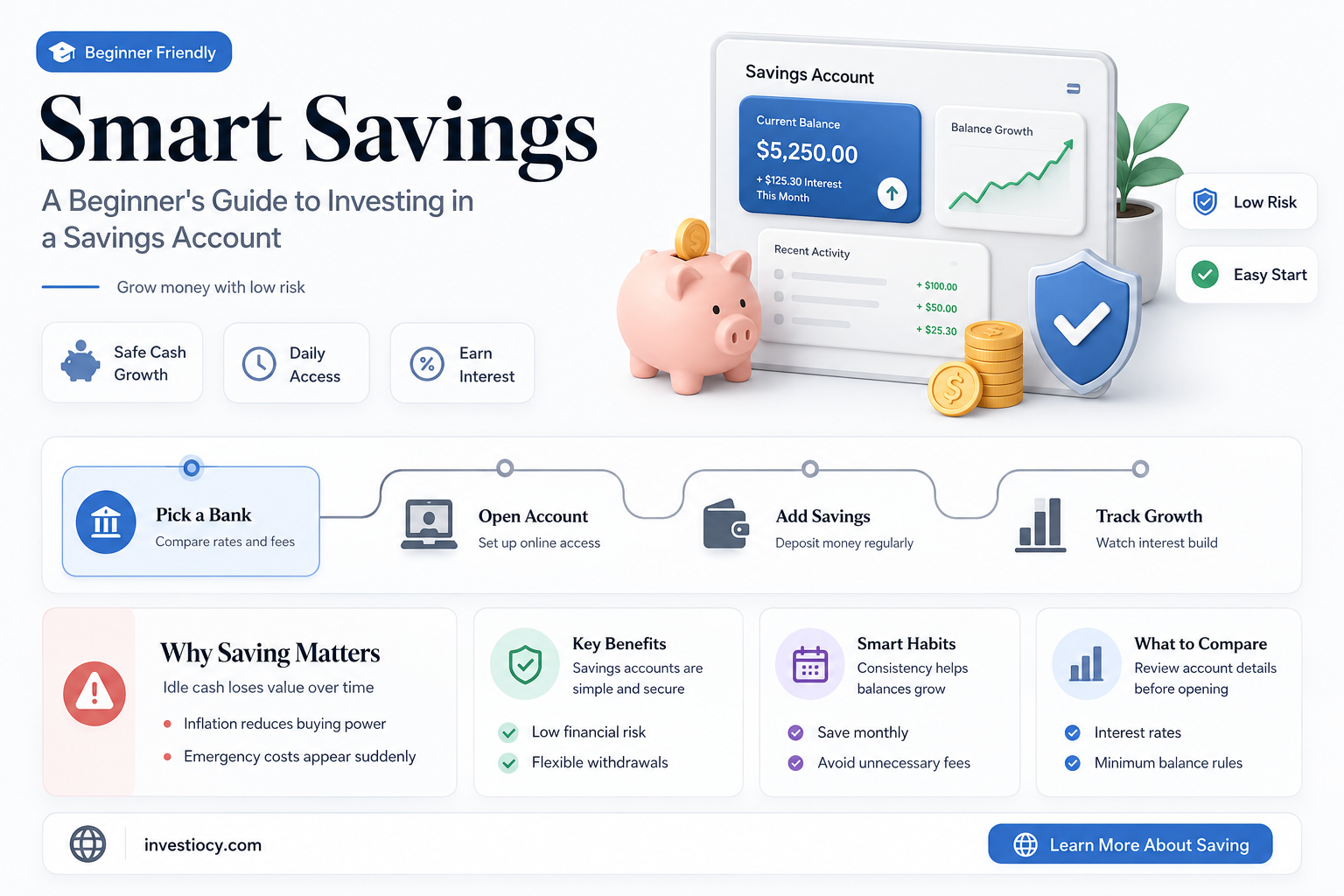
Investing in a savings account is a fundamental step towards financial security and growth. A savings account allows you to store your money safely while earning interest, providing a solid foundation for your financial future. Whether you're saving for short-term goals, such as a vacation or a down payment on a car, or long-term objectives like retirement or a child's education, understanding how to invest in a savings account is crucial. This guide will walk you through the process, from choosing the right type of savings account to maximizing your returns and avoiding common pitfalls. By following these steps, you can make the most of your savings and achieve your financial goals more effectively.
Explore related products


What You'll Learn
- Understanding Interest Rates: Learn how interest rates work and how they impact your savings growth over time
- Types of Savings Accounts: Explore different types of savings accounts, such as high-yield, money market, and certificates of deposit
- Setting Financial Goals: Define your short-term and long-term financial goals to determine the right savings strategy for you
- Automating Savings: Discover the benefits of automating your savings through direct deposits or recurring transfers
- Managing Fees and Penalties: Understand the fees and penalties associated with savings accounts and how to avoid them

Understanding Interest Rates: Learn how interest rates work and how they impact your savings growth over time
Interest rates play a crucial role in determining the growth of your savings over time. When you deposit money into a savings account, the bank pays you interest as a percentage of your deposit. This interest compounds over time, meaning you earn interest not only on your initial deposit but also on the interest you've already earned. Understanding how interest rates work can help you make informed decisions about where to invest your money and how to maximize your savings growth.
The interest rate you earn on your savings account can vary depending on several factors, including the type of account, the bank, and the current economic conditions. For example, high-yield savings accounts typically offer higher interest rates than traditional savings accounts. Additionally, interest rates tend to rise during periods of economic growth and fall during recessions. By understanding these factors, you can choose the right savings account for your needs and take advantage of favorable economic conditions to grow your savings more quickly.
One of the key concepts to understand when it comes to interest rates is the difference between simple interest and compound interest. Simple interest is calculated only on the initial deposit, while compound interest is calculated on both the initial deposit and any accumulated interest. Over time, compound interest can significantly increase the growth of your savings. For example, if you deposit $1,000 into a savings account with a 5% annual interest rate, you would earn $50 in interest after one year. With simple interest, you would continue to earn $50 each year. However, with compound interest, you would earn $52.50 in the second year ($1,050 x 5%), and $55.13 in the third year ($1,102.50 x 5%). As you can see, compound interest can lead to much faster growth of your savings over time.
Another important factor to consider when it comes to interest rates is the frequency of compounding. Some savings accounts compound interest daily, while others compound interest monthly or quarterly. The more frequently interest is compounded, the faster your savings will grow. For example, if you deposit $1,000 into a savings account with a 5% annual interest rate that compounds daily, you would earn $51.14 in interest after one year. In contrast, if the account compounds interest monthly, you would earn $50.92 in interest after one year. While the difference may seem small, it can add up over time, especially if you have a larger balance in the account.
To maximize the growth of your savings, it's important to consider not only the interest rate but also any fees associated with the account. Some savings accounts charge fees for maintenance, withdrawals, or low balances. These fees can eat into your savings and reduce the overall growth of your account. By choosing a savings account with a competitive interest rate and low fees, you can ensure that your money is working hard for you and growing as quickly as possible.
In conclusion, understanding interest rates is essential for making informed decisions about where to invest your money and how to maximize your savings growth. By considering factors such as the type of account, the bank, the current economic conditions, and the frequency of compounding, you can choose the right savings account for your needs and watch your savings grow over time. Remember to also consider any fees associated with the account to ensure that you're getting the most out of your savings.
Smart Start: Investing Your Grandchild's Savings for a Bright Future
You may want to see also
Explore related products




Types of Savings Accounts: Explore different types of savings accounts, such as high-yield, money market, and certificates of deposit
High-yield savings accounts are a popular choice for investors looking to maximize their returns without taking on significant risk. These accounts typically offer higher interest rates than traditional savings accounts, allowing your money to grow faster over time. However, it's important to note that high-yield accounts may come with higher minimum balance requirements and could potentially have more stringent withdrawal limits.
Money market accounts are another option for investors seeking a balance between liquidity and returns. These accounts often provide competitive interest rates while allowing for easy access to your funds. Money market accounts may also offer check-writing privileges and debit card access, making them a convenient choice for everyday expenses.
Certificates of deposit (CDs) are a more conservative investment option that can provide a predictable return over a fixed period. When you invest in a CD, you're essentially lending your money to a bank for a set term, during which time you'll earn a fixed interest rate. CDs are a good choice for investors who want to avoid market volatility and are willing to commit their funds for a longer period.
When choosing a savings account, it's essential to consider your financial goals, risk tolerance, and liquidity needs. High-yield accounts may be ideal for long-term savings goals, while money market accounts offer more flexibility for short-term needs. CDs can provide a stable return for investors with a longer time horizon.
To make the most of your savings account, be sure to compare interest rates, fees, and minimum balance requirements across different institutions. Additionally, consider taking advantage of features like automatic transfers and mobile banking to streamline your savings strategy.
In conclusion, exploring different types of savings accounts can help you find the best fit for your financial situation. Whether you're looking for high returns, easy access to your funds, or a predictable investment, there's a savings account option that can meet your needs.
Maximize Your HSA Savings: A Guide to Smart Investing Strategies
You may want to see also
Explore related products


Setting Financial Goals: Define your short-term and long-term financial goals to determine the right savings strategy for you
Setting financial goals is the cornerstone of creating an effective savings strategy. To begin, categorize your goals into short-term and long-term objectives. Short-term goals typically include expenses due within the next year, such as rent, utilities, groceries, and transportation costs. Long-term goals, on the other hand, are those that extend beyond a year, like purchasing a home, funding your child's education, or planning for retirement.
Once you've identified your goals, assign a monetary value to each one. This will help you visualize the total amount you need to save and prioritize your objectives accordingly. For instance, if buying a car in two years is a short-term goal, estimate the cost of the vehicle, including taxes and insurance, to determine your target savings amount.
Next, consider the time horizon for each goal. The sooner you need the funds, the more aggressive your savings strategy should be. For short-term goals, you may opt for a high-yield savings account or a money market fund, which offer liquidity and relatively higher interest rates. For long-term goals, you might choose to invest in stocks, bonds, or mutual funds, which historically provide higher returns over extended periods but come with greater risk.
It's also crucial to factor in potential risks and emergencies when setting financial goals. Building an emergency fund that covers three to six months of living expenses can provide a safety net in case of unexpected job loss or medical bills. Additionally, consider diversifying your investments to minimize risk and maximize returns.
Finally, regularly review and adjust your financial goals as your circumstances change. Life events, such as marriage, divorce, or a change in employment, can impact your savings strategy. By periodically reassessing your goals and progress, you can ensure that your savings plan remains aligned with your current needs and future aspirations.
Smart Strategies for Investing in Your Grandkids' College Future
You may want to see also
Explore related products


Automating Savings: Discover the benefits of automating your savings through direct deposits or recurring transfers
Automating your savings can be a game-changer in building financial security. By setting up direct deposits or recurring transfers, you can ensure that a portion of your income is saved consistently, without the need for manual intervention. This approach not only helps in creating a savings habit but also removes the temptation to spend the money elsewhere.
One of the primary benefits of automating savings is the power of compounding interest. When you save regularly, your money earns interest, which in turn earns more interest over time. This exponential growth can significantly boost your savings balance. For instance, if you save $100 per month at an annual interest rate of 5%, after 5 years, you would have accumulated $6,261.72, which is substantially more than the $6,000 you would have saved without interest.
Another advantage is the convenience it offers. Once you set up the automation, you don't have to remember to transfer funds manually each month. This can be particularly helpful for individuals with busy lifestyles or those who struggle with financial discipline. Moreover, many banks and financial institutions allow you to schedule transfers to coincide with your payday, making it easier to manage your cash flow.
Automating savings can also help in achieving specific financial goals. Whether you're saving for a down payment on a house, a vacation, or an emergency fund, having a consistent savings plan can make it easier to track your progress and stay motivated. You can even set up separate accounts for different goals, allowing you to allocate your savings more effectively.
In conclusion, automating your savings through direct deposits or recurring transfers can be a highly effective strategy for building wealth and achieving financial stability. By leveraging the power of compounding interest, enjoying the convenience of automatic transfers, and staying focused on your financial goals, you can make significant strides in your savings journey.
Smart Investing: Unlocking the Benefits of a 529 Savings Plan
You may want to see also
Explore related products


Managing Fees and Penalties: Understand the fees and penalties associated with savings accounts and how to avoid them
Understanding the fees and penalties associated with savings accounts is crucial for effective money management. Fees can significantly impact the growth of your savings over time, and penalties can disrupt your financial plans. To avoid these issues, it's essential to be aware of the common types of fees and penalties and learn strategies to minimize or eliminate them.
Common fees associated with savings accounts include monthly maintenance fees, ATM fees, overdraft fees, and transfer fees. To avoid these fees, consider choosing a savings account with no monthly maintenance fee, using ATMs within your bank's network, setting up overdraft protection, and limiting the number of transfers you make each month. Additionally, some banks offer fee waivers for students, seniors, or individuals who meet certain balance requirements.
Penalties in savings accounts often result from actions such as early withdrawals, excessive withdrawals, or falling below the minimum balance requirement. To avoid penalties, it's important to understand your account's terms and conditions. If you need to make an early withdrawal, consider the impact of the penalty on your savings goals and explore alternative options, such as taking a loan or using a credit card. To prevent excessive withdrawals, set up a budget and automate your savings by setting up regular transfers from your checking account.
Another strategy to avoid fees and penalties is to shop around for a savings account that aligns with your financial needs and goals. Compare the fees, interest rates, and features of different accounts to find the best option for you. Online banks and credit unions often offer competitive rates and lower fees compared to traditional brick-and-mortar banks.
In conclusion, managing fees and penalties in savings accounts requires a proactive approach. By understanding the types of fees and penalties, choosing the right account, and developing good financial habits, you can minimize the impact of fees and penalties on your savings and achieve your financial goals more effectively.