Josephine Norton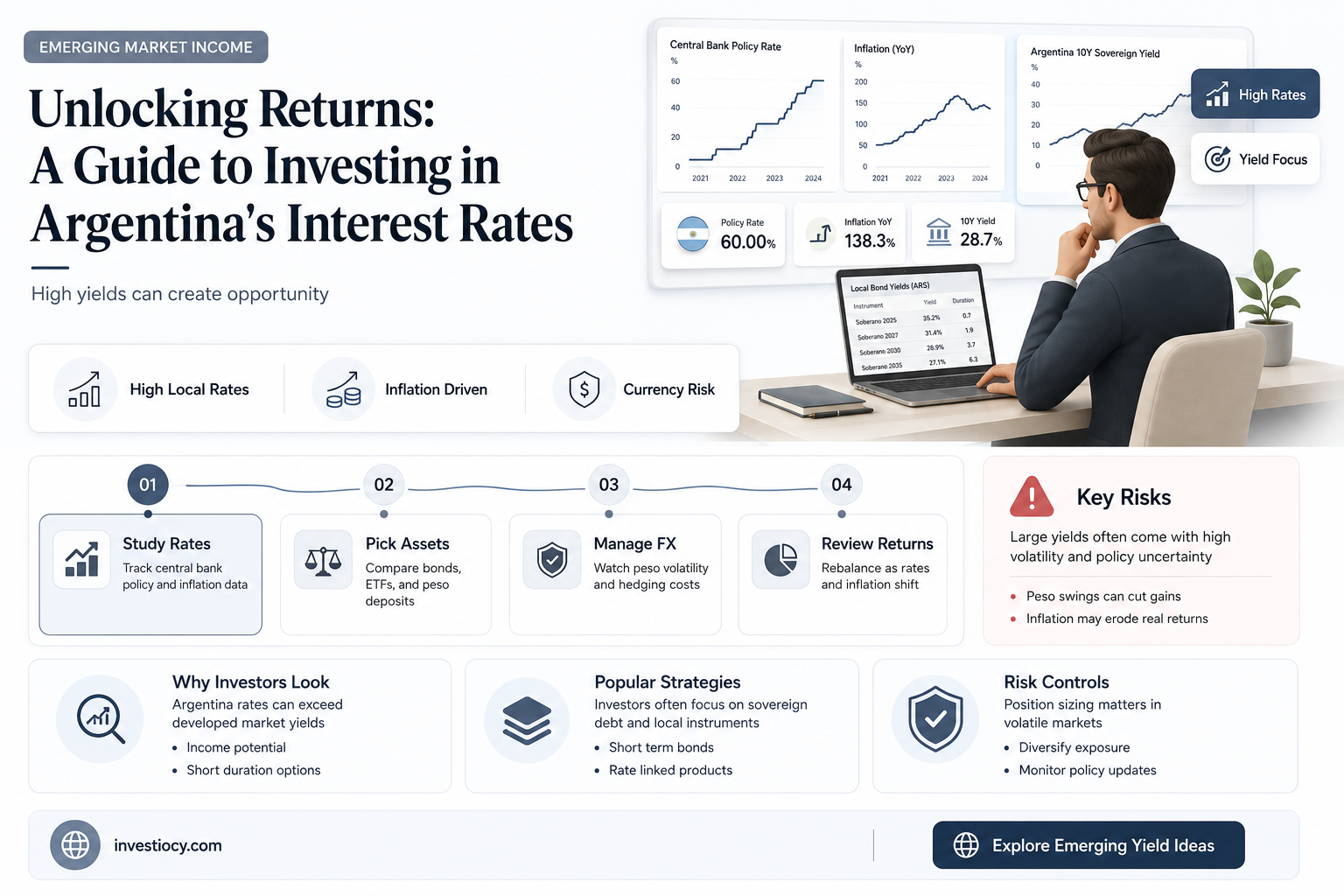
Investing in Argentina's interest rates can be a lucrative opportunity for those looking to diversify their portfolios and take advantage of the country's economic landscape. With historically high interest rates, Argentina offers potential for significant returns, especially when compared to other emerging markets. However, it's crucial to understand the risks involved, including inflation, currency fluctuations, and political instability. To navigate these challenges, investors should research the latest economic indicators, consult with financial advisors familiar with the Argentine market, and consider a balanced approach that includes both short-term and long-term investments. By doing so, they can potentially capitalize on the attractive yields while mitigating the associated risks.
Explore related products






What You'll Learn
- Understanding Argentine Interest Rates: Learn about the current economic climate and interest rate trends in Argentina
- Investment Options: Explore various investment avenues such as government bonds, corporate bonds, and mutual funds
- Risk Assessment: Evaluate the risks associated with investing in Argentine interest rates, including inflation and currency fluctuations
- Regulatory Environment: Understand the legal and regulatory framework governing investments in Argentina
- Diversification Strategies: Discover how to diversify your portfolio to mitigate risks while investing in Argentine interest rates

Understanding Argentine Interest Rates: Learn about the current economic climate and interest rate trends in Argentina
Argentina's economic climate has been marked by high inflation rates and currency volatility in recent years, which has led to a complex interest rate environment. The Central Bank of Argentina has implemented various monetary policies to curb inflation, including raising the benchmark interest rate. As of June 2024, the benchmark interest rate stands at 55%, one of the highest in the world. This high interest rate is aimed at reducing the money supply and controlling inflation, but it also presents opportunities for investors seeking high returns.
One unique aspect of Argentina's interest rate landscape is the use of inflation-adjusted interest rates. These rates are designed to protect investors from the erosive effects of inflation by adjusting the interest payment based on the consumer price index. Inflation-adjusted bonds, known as "inflation-linked bonds" or "ILBs," are a popular investment option in Argentina, offering investors a way to earn a real return above inflation.
Another important factor to consider when investing in Argentine interest rates is the country's credit risk. Argentina has a history of debt defaults, which has led to a higher perceived risk among investors. This risk is reflected in the higher interest rates offered by Argentine bonds compared to those of other emerging markets. Investors should carefully assess their risk tolerance and consider diversifying their portfolio to mitigate the potential impact of a default.
In addition to government bonds, investors can also explore other avenues for investing in Argentine interest rates, such as corporate bonds and bank deposits. Corporate bonds offer the potential for higher returns than government bonds, but they also come with higher credit risk. Bank deposits, on the other hand, are generally considered a safer investment option, but they offer lower returns than bonds.
When investing in Argentine interest rates, it is crucial to stay informed about the latest economic developments and monetary policy decisions. The Central Bank of Argentina regularly publishes reports and data on inflation, interest rates, and other economic indicators, which can help investors make informed decisions. Additionally, investors should consider consulting with a financial advisor who has expertise in Argentine markets to develop a tailored investment strategy.
In conclusion, investing in Argentine interest rates requires a thorough understanding of the country's economic climate, interest rate trends, and investment options. By carefully assessing the risks and opportunities, investors can potentially earn attractive returns in this high-yield market.
Unlocking Wealth: The Power of Compound Interest in Investing
You may want to see also
Explore related products


Investment Options: Explore various investment avenues such as government bonds, corporate bonds, and mutual funds
In the context of investing in Argentina's interest rates, exploring various investment avenues is crucial to diversifying your portfolio and managing risk. Government bonds, corporate bonds, and mutual funds are three primary options that offer different levels of risk and return.
Government Bonds:
Government bonds are debt securities issued by the Argentine government. They are generally considered lower-risk investments compared to corporate bonds and mutual funds because they are backed by the government's ability to tax and print money. However, they typically offer lower returns. When investing in government bonds, it's important to consider the bond's maturity date, coupon rate, and the current interest rate environment. For instance, if interest rates are expected to rise, existing bonds with lower rates may lose value.
Corporate Bonds:
Corporate bonds are debt securities issued by companies to raise capital. They offer higher potential returns than government bonds but come with higher risk. The risk is associated with the company's creditworthiness and its ability to repay the debt. Investors should analyze the company's financial health, credit rating, and industry trends before investing in corporate bonds. Additionally, corporate bonds can be more illiquid than government bonds, meaning they may be harder to sell quickly without affecting the price.
Mutual Funds:
Mutual funds are investment vehicles that pool money from multiple investors to invest in a diversified portfolio of assets, such as stocks, bonds, or a combination of both. They offer an easy way to diversify your investments and are managed by professional fund managers. However, they come with management fees and other expenses that can eat into your returns. When choosing a mutual fund, consider the fund's investment objective, risk level, historical performance, and fees. It's also important to understand the fund's holdings and how they align with your investment goals.
In conclusion, each investment avenue has its own set of risks and rewards. Government bonds are suitable for risk-averse investors seeking stable income, corporate bonds offer higher returns for those willing to take on more risk, and mutual funds provide diversification and professional management for a fee. By understanding the characteristics of each option, investors can make informed decisions that align with their financial goals and risk tolerance.
Unlocking Financial Growth: The Power of Compound Interest in Investment
You may want to see also
Explore related products


Risk Assessment: Evaluate the risks associated with investing in Argentine interest rates, including inflation and currency fluctuations
Investing in Argentine interest rates comes with a unique set of risks that must be carefully evaluated. One of the primary concerns is the country's history of high inflation, which can erode the purchasing power of returns. In recent years, Argentina has experienced inflation rates well above the global average, posing a significant threat to the stability of investments.
Another key risk is currency fluctuation. The Argentine peso has been known to experience sharp devaluations, which can impact the value of investments denominated in local currency. For foreign investors, this can lead to substantial losses when converting returns back into their home currency.
To mitigate these risks, investors should consider diversifying their portfolios across different asset classes and currencies. This can help to reduce exposure to any single risk factor and provide a more stable return profile. Additionally, investors may want to explore inflation-indexed instruments, which can offer some protection against the erosive effects of inflation.
It's also important to stay informed about the latest economic developments in Argentina. Monitoring indicators such as inflation rates, currency exchange rates, and government policies can help investors make more informed decisions about their investments.
Ultimately, investing in Argentine interest rates requires a thorough understanding of the associated risks and a well-diversified portfolio to mitigate potential losses. By carefully evaluating the risks and taking appropriate precautions, investors can potentially capitalize on the opportunities presented by this emerging market.
Explore related products


Regulatory Environment: Understand the legal and regulatory framework governing investments in Argentina
Navigating the regulatory landscape is crucial for any investor considering entering the Argentine market. The country's legal and regulatory framework is complex, with multiple agencies overseeing different aspects of investment. The primary regulator is the Comisión Nacional de Valores (CNV), which is responsible for regulating the securities market. Investors must also be aware of the Central Bank of Argentina's (Banco Central de la República Argentina, BCRA) role in monetary policy and its impact on interest rates.
One key aspect of the regulatory environment in Argentina is the concept of "offshore" and "onshore" investments. Offshore investments are those made by foreign entities or individuals, while onshore investments are made by Argentine residents. Offshore investors must register with the CNV and comply with its regulations, including reporting requirements and restrictions on certain types of investments. Onshore investors, on the other hand, may have different tax implications and reporting requirements.
Another important consideration is the impact of currency controls on investments. Argentina has a history of implementing currency controls to manage capital flows and stabilize the peso. These controls can affect the ability of investors to repatriate funds or convert pesos into foreign currencies. Understanding the current currency control regime and its potential impact on investment returns is essential for any investor in Argentina.
In addition to these regulatory considerations, investors must also be aware of the broader economic and political context in Argentina. The country has experienced periods of economic instability and high inflation, which can affect the performance of investments. Political changes can also lead to shifts in regulatory policies and economic conditions. Investors should closely monitor these developments and adjust their strategies accordingly.
To successfully navigate the regulatory environment in Argentina, investors should seek professional advice from local experts familiar with the country's laws and regulations. They should also stay informed about changes in the regulatory landscape and be prepared to adapt their investment strategies as needed. By understanding the legal and regulatory framework, investors can make informed decisions and mitigate potential risks in the Argentine market.
Explore related products


Diversification Strategies: Discover how to diversify your portfolio to mitigate risks while investing in Argentine interest rates
Diversifying your portfolio is crucial when investing in Argentine interest rates to mitigate risks associated with economic volatility. One effective strategy is to allocate your investments across different asset classes, such as stocks, bonds, and real estate. This approach helps to spread risk and potentially increase returns. For instance, if the interest rates rise, bond prices may fall, but stock prices could rise, balancing out the overall portfolio performance.
Another diversification strategy is to invest in different sectors within the Argentine economy. By spreading your investments across sectors like agriculture, manufacturing, and services, you can reduce the impact of any one sector's downturn on your portfolio. Additionally, consider investing in different geographic regions within Argentina to further diversify and capitalize on regional growth opportunities.
It's also important to diversify the maturity of your investments. By holding a mix of short-term and long-term bonds, you can manage the risk associated with interest rate fluctuations. Short-term bonds are less sensitive to interest rate changes, providing stability, while long-term bonds offer higher yields but come with greater risk.
Furthermore, consider incorporating international investments into your portfolio. This can help mitigate country-specific risks and provide exposure to more stable economies. However, be mindful of currency risks and ensure that your international investments align with your overall risk tolerance and investment goals.
Lastly, regularly review and rebalance your portfolio to maintain your desired level of diversification. Market conditions and economic outlooks can change rapidly, so it's essential to adjust your investments accordingly to stay on track with your financial objectives.
Frequently asked questions
As of my last update in June 2024, Argentina's central bank, the Banco Central de la República Argentina (BCRA), had set the benchmark interest rate at 45%. However, this rate can fluctuate frequently due to economic conditions, so it's essential to check the latest rate directly from the BCRA or a reliable financial news source.
Foreign investors can take advantage of Argentina's high interest rates through various financial instruments. One common method is by investing in Argentine government bonds, known as "Bonos del Tesoro Nacional" (BTNs), which are denominated in Argentine pesos and offer high yields. Another option is to invest in peso-denominated savings accounts or certificates of deposit (CDs) offered by Argentine banks. However, investors should be aware of the risks associated with currency fluctuations and political instability.
Investing in Argentina's interest rates comes with several risks. Firstly, the country has a history of economic instability, high inflation, and currency devaluation, which can erode the value of investments. Secondly, political uncertainty and changes in government policies can impact the financial markets and interest rates. Thirdly, foreign investors may face challenges in repatriating their capital due to currency controls or other regulatory restrictions. It's crucial to conduct thorough research and consult with a financial advisor before investing in Argentina.
Argentina's interest rates are among the highest in the emerging market universe. This is partly due to the country's high inflation rate and economic challenges. In comparison, other emerging markets like Brazil, Mexico, and South Africa have lower interest rates. For instance, as of June 2024, Brazil's benchmark interest rate was around 10.5%, Mexico's was approximately 8.5%, and South Africa's was about 6%. However, each country has its unique economic conditions and risks, so investors should carefully evaluate their options before making a decision.