Clark Galvan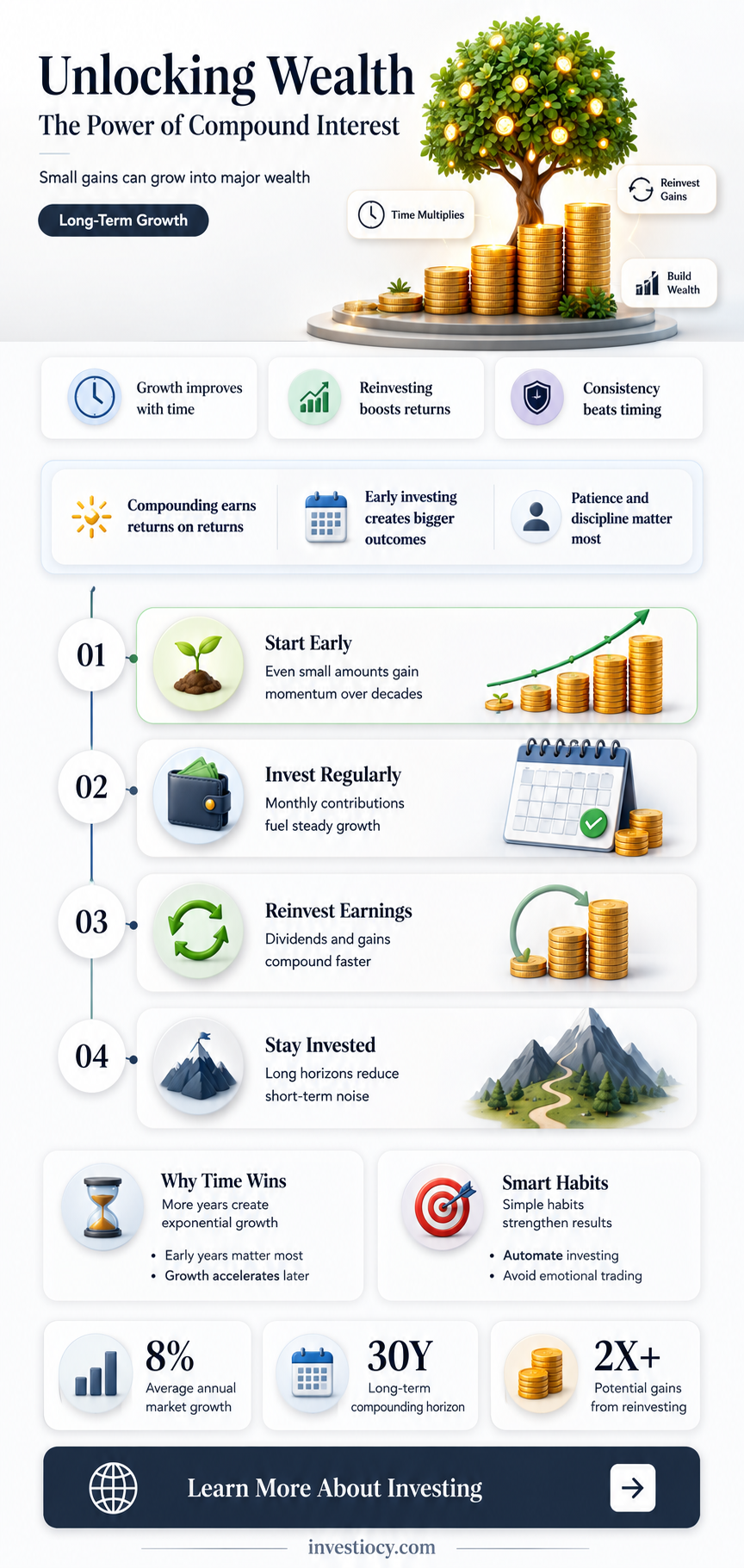
Compound interest is often considered preferable to simple interest when investing because it allows your money to grow at a faster rate over time. Unlike simple interest, which is calculated only on the initial principal amount, compound interest is calculated on both the principal and any accumulated interest. This means that as your investment grows, the amount of interest you earn also increases, leading to exponential growth. Additionally, compound interest can be reinvested to earn even more interest, further accelerating the growth of your investment. Overall, compound interest offers a more powerful way to build wealth over the long term compared to simple interest.
Explore related products



What You'll Learn
- Faster Growth: Compound interest accrues on both principal and interest, leading to exponential growth over time
- Maximized Returns: Reinvesting earnings allows for higher overall returns compared to simple interest, which only accrues on the principal
- Long-Term Benefits: The power of compounding becomes more significant over longer investment periods, enhancing wealth accumulation
- Snowball Effect: As interest earns interest, the investment grows rapidly, creating a substantial financial advantage
- Inflation Hedging: Compound interest can help offset the effects of inflation by increasing the real value of investments

Faster Growth: Compound interest accrues on both principal and interest, leading to exponential growth over time
Compound interest is a powerful force in the world of investing, and its ability to generate exponential growth over time is one of the key reasons it's preferable to simple interest. To understand why this is the case, let's dive into the mechanics of compound interest and how it can accelerate your investment returns.
At its core, compound interest is the process by which interest is earned not only on the initial principal investment but also on the accumulated interest from previous periods. This means that as time goes on, the amount of interest earned in each period grows larger, leading to a snowball effect that can significantly boost your overall returns.
To illustrate this concept, let's consider an example. Suppose you invest $1,000 in a savings account that earns a 5% annual interest rate, compounded quarterly. After one year, you would have earned $50 in interest, bringing your total balance to $1,050. In the second year, you would earn interest not only on the original $1,000 principal but also on the $50 in interest from the first year. This would result in an interest payment of $52.50 for the second year, bringing your total balance to $1,102.50.
As you can see, the amount of interest earned in each period is growing larger, and this trend will continue as long as the investment remains in the account. This exponential growth is what sets compound interest apart from simple interest, which only earns interest on the initial principal investment.
The implications of this exponential growth are significant for investors. Over time, compound interest can help your investments grow at a much faster rate than simple interest, allowing you to reach your financial goals more quickly. This is especially true for long-term investments, where the effects of compounding can be truly dramatic.
For instance, let's consider a 30-year investment of $1,000 in a mutual fund that earns an average annual return of 8%, compounded monthly. After 30 years, your investment would have grown to over $10,000, with the majority of that growth coming from the effects of compounding. In contrast, if you had invested the same amount in a simple interest account earning the same 8% annual return, your investment would have grown to just over $3,000.
In conclusion, the exponential growth potential of compound interest makes it a highly attractive option for investors looking to maximize their returns over time. By earning interest on both the principal and the accumulated interest, compound interest can help your investments grow at a much faster rate than simple interest, allowing you to reach your financial goals more quickly and securely.
Unlocking Financial Growth: The Power of Compound Interest in Investment
You may want to see also
Explore related products


$11.99 $11.99


Maximized Returns: Reinvesting earnings allows for higher overall returns compared to simple interest, which only accrues on the principal
Reinvesting earnings is a powerful strategy that can significantly boost overall investment returns. This approach allows investors to capitalize on the interest earned by their initial investment, leading to exponential growth over time. In contrast, simple interest only accrues on the principal amount, resulting in linear growth that pales in comparison to the potential of compound interest.
To illustrate this concept, consider an investment of $1,000 in a savings account that offers a 5% annual interest rate. With simple interest, the investor would earn $50 in interest each year, resulting in a total of $1,050 after one year. However, if the investor chooses to reinvest the earnings, the interest earned in the first year would be added to the principal, resulting in a new balance of $1,050. In the second year, the interest rate would be applied to this new balance, earning $52.50 in interest. This process continues, with the interest earned each year being reinvested to generate even higher returns in subsequent years.
The key to maximizing returns through reinvestment lies in the frequency of compounding. The more often interest is compounded, the greater the potential for growth. For example, an investment with a 5% annual interest rate that is compounded quarterly would yield higher returns than the same investment compounded annually. This is because the interest earned in each quarter is reinvested, allowing it to generate additional interest in subsequent quarters.
Reinvesting earnings can be particularly effective for long-term investments, such as retirement accounts or education funds. Over time, the exponential growth generated by compound interest can result in substantial returns, far exceeding the initial investment. However, it is important to note that reinvesting earnings also carries some risks, such as the potential for market fluctuations or changes in interest rates. Investors should carefully consider their risk tolerance and investment goals before deciding whether to reinvest their earnings.
In conclusion, reinvesting earnings is a powerful tool for maximizing investment returns. By allowing interest to compound over time, investors can generate exponential growth that far surpasses the linear growth of simple interest. However, it is crucial to understand the risks involved and to carefully consider the frequency of compounding and the overall investment strategy.
Explore related products


Long-Term Benefits: The power of compounding becomes more significant over longer investment periods, enhancing wealth accumulation
Over extended investment horizons, the impact of compounding interest dramatically amplifies wealth growth. This phenomenon occurs because the interest earned in previous periods becomes the base for calculating future interest, leading to an exponential increase in the investment's value. For instance, if an investment yields a modest 5% annual return, over 30 years, the total return would not simply be 30 times 5%, but rather a substantial 432% due to the compounding effect. This illustrates how compounding interest can transform relatively small, consistent returns into significant wealth over time.
One of the key advantages of compounding interest is its ability to harness the power of time, allowing investors to benefit from the reinvestment of earnings. This process creates a snowball effect, where the initial investment grows steadily, and the rate of growth accelerates as the accumulated interest is reinvested. As a result, even modest initial investments can accumulate substantial value over several decades, making compounding interest an essential tool for long-term financial planning and wealth creation.
Furthermore, compounding interest can help mitigate the erosive effects of inflation on purchasing power. By reinvesting earnings and generating exponential growth, investors can ensure that their wealth keeps pace with or outstrips the rate of inflation. This is particularly important for retirement savings, where maintaining purchasing power over extended periods is crucial. Compounding interest thus serves as a powerful ally in preserving and enhancing the value of investments over time.
In conclusion, the long-term benefits of compounding interest are profound, offering investors the potential for substantial wealth accumulation and financial security. By understanding and leveraging the power of compounding, individuals can make informed investment decisions that align with their long-term financial goals and aspirations.
Explore related products


Snowball Effect: As interest earns interest, the investment grows rapidly, creating a substantial financial advantage
The snowball effect is a powerful phenomenon in finance where the growth of an investment accelerates over time due to the compounding of interest. This effect occurs when the interest earned on an investment is reinvested, allowing it to generate even more interest in subsequent periods. As a result, the initial investment grows rapidly, creating a substantial financial advantage for the investor.
To illustrate the snowball effect, consider the following example: Suppose you invest $1,000 in a savings account that offers a 5% annual interest rate, compounded quarterly. After the first quarter, you would earn $12.50 in interest, bringing your total balance to $1,012.50. In the second quarter, you would earn interest not only on your initial $1,000 but also on the $12.50 earned in the first quarter. This would result in an interest payment of $13.13, bringing your total balance to $1,025.63. As you can see, the interest earned in each subsequent quarter increases, leading to exponential growth of your investment over time.
The snowball effect is particularly powerful when combined with regular contributions to the investment. For instance, if you were to add $100 to your investment each quarter, your balance would grow even more rapidly. After one year, your balance would be approximately $1,700, compared to around $1,150 if you had not made any additional contributions. This demonstrates how the snowball effect can significantly enhance the growth of your investment when combined with consistent saving habits.
One of the key advantages of compound interest over simple interest is that it allows your investment to grow at a faster rate over time. This is because compound interest takes into account the interest earned in previous periods, whereas simple interest is calculated only on the initial principal amount. As a result, compound interest can lead to substantial long-term growth, making it a more attractive option for investors looking to maximize their returns.
In conclusion, the snowball effect is a compelling reason why compound interest is preferable to simple interest when investing. By reinvesting the interest earned on your investment, you can accelerate its growth and create a substantial financial advantage over time. This effect is particularly powerful when combined with regular contributions, making it an effective strategy for building wealth and achieving your financial goals.
Explore related products



Inflation Hedging: Compound interest can help offset the effects of inflation by increasing the real value of investments
Inflation can erode the purchasing power of money over time, making it crucial for investors to find ways to protect their wealth. One effective strategy is to leverage compound interest, which can help offset the effects of inflation by increasing the real value of investments. This is because compound interest allows earnings to be reinvested, generating additional returns that can outpace the rate of inflation.
For example, consider an investment of $1,000 in a savings account that earns a 5% annual interest rate. After one year, the account balance would be $1,050. However, if the inflation rate is 3%, the real value of the investment would only be $1,020. By reinvesting the interest earned, the account balance would grow to $1,102.50 in the second year, assuming the same interest rate. This process of compounding can continue, allowing the investment to grow at an exponential rate that can help maintain its real value despite inflation.
To maximize the benefits of compound interest for inflation hedging, investors should consider the following strategies:
- Reinvest Earnings: Ensure that any interest or dividends earned are reinvested back into the investment to take advantage of compounding.
- Choose the Right Investment: Select investments that have a history of generating consistent returns that can outpace inflation. This might include stocks, bonds, or mutual funds.
- Monitor Inflation Rates: Keep an eye on inflation rates and adjust investment strategies accordingly. For example, if inflation is expected to rise, investors might consider increasing their allocation to investments with higher potential returns.
- Diversify: Spread investments across different asset classes and sectors to reduce risk and increase the potential for long-term growth.
By following these strategies, investors can use compound interest to help protect their wealth from the erosive effects of inflation, ensuring that their investments maintain their real value over time.
Frequently asked questions
Compound interest is more beneficial for long-term investments because it allows the interest earned to be reinvested, thereby earning additional interest. This creates a snowball effect where the investment grows exponentially over time, leading to higher returns compared to simple interest, which only earns interest on the initial principal.
The frequency of compounding significantly affects the growth of an investment. More frequent compounding, such as daily or monthly, results in a higher effective annual rate because the interest is reinvested more often, leading to faster growth. Less frequent compounding, such as annually, results in slower growth because the interest remains uninvested for longer periods.
Certainly! Let's consider an initial investment of $1,000 with an annual interest rate of 5%. Under simple interest, the interest earned each year is $50, resulting in a total interest of $500 over 10 years. The final amount would be $1,500. With compound interest, assuming annual compounding, the first year's interest is $50, but in the second year, the interest is calculated on $1,050, earning $52.50. This process continues, and by the end of 10 years, the investment grows to approximately $1,628.89. This example clearly shows that compound interest results in higher earnings over time.
While compound interest is generally more advantageous, there are scenarios where simple interest might be more beneficial. For instance, if the investment period is very short, the difference in earnings between compound and simple interest is minimal. Additionally, some savings accounts or short-term loans may offer simple interest, which can be easier to calculate and understand. In such cases, the simplicity and transparency of simple interest might be preferred over the complexity of compound interest calculations.