Inaya Mclaughlin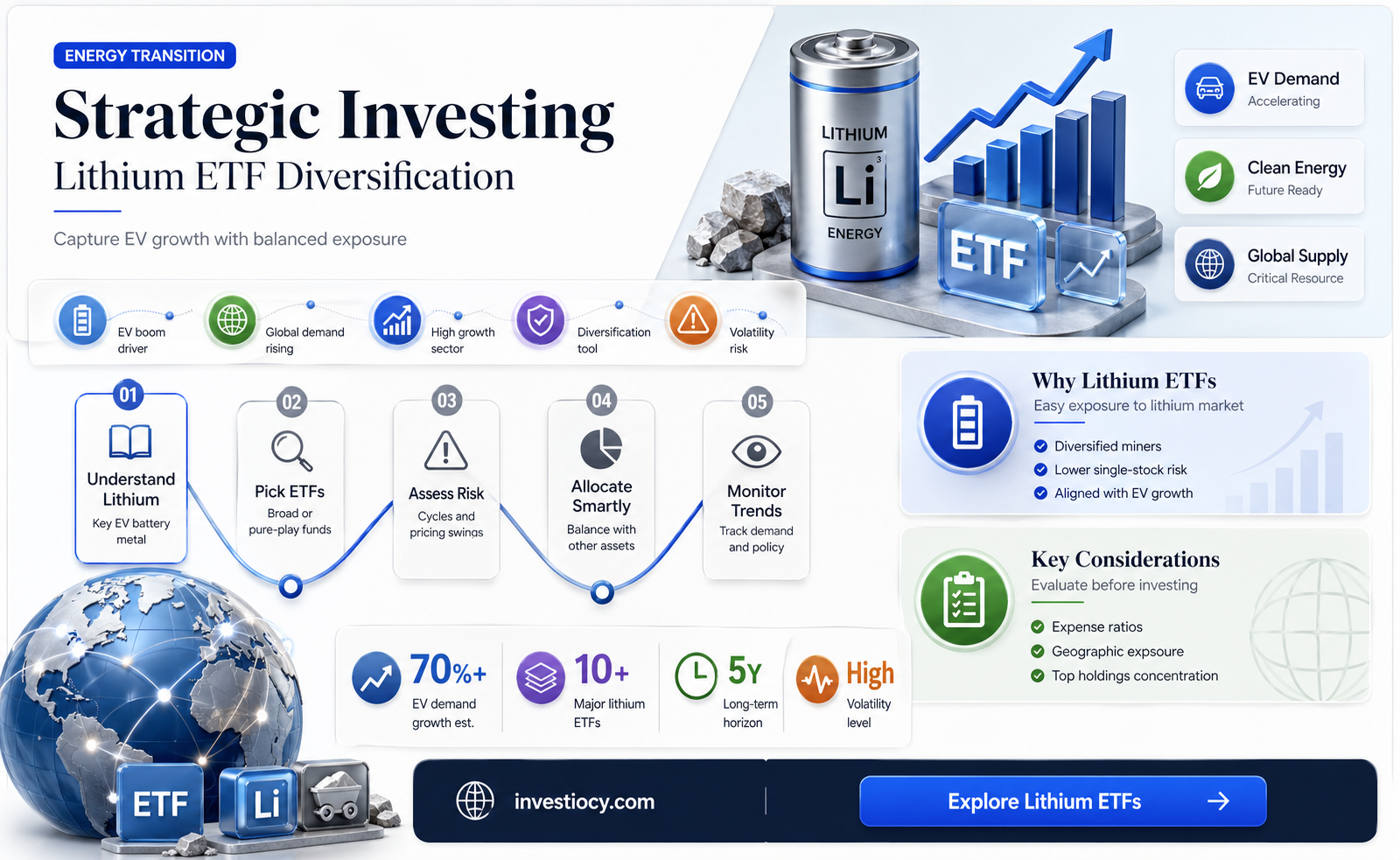
Investing in lithium ETFs has become increasingly popular as the demand for lithium, a key component in rechargeable batteries, continues to rise. This growth is driven by the expanding electric vehicle (EV) market and the increasing adoption of renewable energy technologies. Lithium ETFs offer investors a diversified way to gain exposure to the lithium industry, spreading risk across multiple companies involved in lithium mining, processing, and battery manufacturing. To invest in a lithium ETF, one typically needs to open a brokerage account, research and select a suitable lithium ETF based on factors such as expense ratio, holdings, and performance history, and then execute a buy order. It's important for investors to understand the risks associated with investing in lithium ETFs, including market volatility, geopolitical risks, and changes in technology that could impact the demand for lithium.
Explore related products


What You'll Learn
- Understanding Lithium ETFs: Learn about exchange-traded funds focused on lithium and their role in investment portfolios
- Market Analysis: Evaluate the current market trends, demand, and supply dynamics affecting lithium prices and ETFs
- Top Lithium ETFs: Identify and compare leading lithium ETFs based on performance, fees, and investment strategies
- Risk Management: Understand the risks associated with investing in lithium ETFs, including market volatility and geopolitical factors
- Investment Strategies: Develop a plan for investing in lithium ETFs, considering diversification, long-term goals, and risk tolerance

Understanding Lithium ETFs: Learn about exchange-traded funds focused on lithium and their role in investment portfolios
Lithium ETFs have gained significant traction in recent years as investors seek to capitalize on the growing demand for this critical metal, driven by the electric vehicle (EV) revolution and renewable energy storage solutions. These exchange-traded funds offer a diversified way to invest in the lithium sector, spreading risk across multiple companies and projects.
One of the key advantages of lithium ETFs is their ability to provide exposure to a broad range of lithium-related companies, from miners and refiners to battery manufacturers and technology firms. This diversification helps mitigate the risks associated with investing in individual stocks, as the performance of the ETF is not reliant on the success of a single company.
When evaluating lithium ETFs, it's essential to consider the fund's composition and the specific companies it holds. Some ETFs may focus more on established lithium producers, while others may include a higher proportion of exploration and development companies. The latter can offer higher potential returns but also come with increased risk due to the uncertainty surrounding the development of new projects.
Another factor to consider is the ETF's management fees and expense ratio. These costs can vary significantly between funds and can impact the overall returns over time. It's also important to assess the liquidity of the ETF, as this can affect the ease with which you can buy and sell shares.
Lithium ETFs can play a valuable role in a diversified investment portfolio, particularly for those looking to gain exposure to the growing lithium market without the risks associated with individual stocks. By understanding the unique characteristics and risks of these funds, investors can make informed decisions about whether lithium ETFs are a suitable addition to their investment strategy.
Diversify Your Portfolio: A Beginner's Guide to Investing in Silver ETFs
You may want to see also
Explore related products





Market Analysis: Evaluate the current market trends, demand, and supply dynamics affecting lithium prices and ETFs
The lithium market is experiencing a significant surge in demand, driven primarily by the growing adoption of electric vehicles (EVs) and renewable energy storage solutions. This increased demand has led to a notable rise in lithium prices, which has, in turn, impacted the performance of lithium ETFs. Investors looking to capitalize on this trend should consider the current market dynamics and how they might influence future price movements.
One key factor affecting lithium prices is the supply chain. Lithium mining is a complex and time-consuming process, with new projects taking years to come online. This has created a supply bottleneck, exacerbating the price increase. Additionally, geopolitical tensions, particularly in countries like Chile and Australia, which are major lithium producers, can disrupt supply chains and further drive up prices.
Another important consideration is the role of government policies and regulations. Incentives for EV adoption, such as tax credits and subsidies, can significantly impact lithium demand. Furthermore, environmental regulations and concerns about sustainable mining practices can influence the supply side of the equation. Investors should stay abreast of these policy developments to make informed decisions about their lithium ETF investments.
Technological advancements in battery technology and recycling processes could also play a crucial role in shaping the lithium market. Innovations that improve battery efficiency or extend their lifespan could reduce the overall demand for lithium, while advancements in recycling could help alleviate supply constraints. Keeping an eye on these technological developments is essential for investors looking to navigate the lithium ETF landscape.
In conclusion, a thorough market analysis of lithium ETFs requires a deep understanding of the interplay between demand and supply dynamics, geopolitical factors, government policies, and technological advancements. By considering these elements, investors can make more informed decisions and potentially capitalize on the opportunities presented by the growing lithium market.
Diversify Your Portfolio: A Guide to Investing in BRICS ETFs
You may want to see also
Explore related products





Top Lithium ETFs: Identify and compare leading lithium ETFs based on performance, fees, and investment strategies
To identify and compare leading lithium ETFs, we must first understand the key factors that influence their performance and suitability for investors. Lithium ETFs are exchange-traded funds that invest in companies involved in the lithium industry, which is crucial for the production of rechargeable batteries used in electric vehicles and consumer electronics. As the demand for lithium continues to grow, investing in lithium ETFs can provide exposure to this emerging market.
When evaluating lithium ETFs, it's essential to consider their performance, fees, and investment strategies. Performance can be measured by the ETF's historical returns, which can be found on financial websites or the ETF provider's homepage. Fees are another critical factor, as they can eat into your investment returns over time. Look for ETFs with low expense ratios, which are typically expressed as a percentage of the fund's assets. Investment strategies vary among lithium ETFs, with some focusing on pure-play lithium companies, while others may include companies involved in related industries such as battery manufacturing or electric vehicle production.
One of the top-performing lithium ETFs is the Global X Lithium & Battery Tech ETF (LIT), which has a strong track record of returns and a relatively low expense ratio. Another option is the Invesco S&P SmallCap Energy ETF (PSCE), which provides exposure to small-cap companies in the energy sector, including those involved in lithium production. For investors looking for a more diversified approach, the iShares Global Clean Energy ETF (ICLN) offers exposure to a broad range of clean energy companies, including those involved in lithium and battery technology.
When comparing these ETFs, it's important to consider their holdings and the specific companies they invest in. For example, LIT has a significant allocation to Albemarle Corporation, a leading lithium producer, while PSCE has a larger allocation to smaller companies in the energy sector. ICLN, on the other hand, has a more diversified portfolio that includes companies from various clean energy sectors.
In conclusion, when investing in lithium ETFs, it's crucial to consider factors such as performance, fees, and investment strategies. By comparing leading ETFs like LIT, PSCE, and ICLN, investors can find the best option that aligns with their investment goals and risk tolerance. Remember to always conduct thorough research and consult with a financial advisor before making any investment decisions.
Explore related products





Risk Management: Understand the risks associated with investing in lithium ETFs, including market volatility and geopolitical factors
Investing in lithium ETFs comes with its own set of risks that investors must be aware of. One of the primary risks is market volatility. The lithium market can be highly sensitive to changes in supply and demand, technological advancements, and shifts in global energy policies. This volatility can lead to significant price fluctuations, which can impact the value of lithium ETFs. Investors should be prepared for the possibility of short-term losses and should have a long-term investment horizon to ride out market fluctuations.
Geopolitical factors also play a crucial role in the risk management of lithium ETFs. Lithium is a critical component in the production of batteries for electric vehicles and energy storage systems, and its supply is concentrated in a few countries, such as Australia, Chile, and Argentina. Political instability, trade tensions, or changes in mining regulations in these countries can disrupt the supply chain and affect the price of lithium. Additionally, the increasing competition for lithium resources among major global powers can lead to geopolitical conflicts that may impact the market.
Another risk associated with lithium ETFs is the potential for technological advancements to reduce the demand for lithium. For instance, the development of alternative battery technologies that do not require lithium could lead to a decrease in the demand for lithium-ion batteries, thereby affecting the price of lithium and the value of lithium ETFs. Investors should stay informed about the latest technological developments in the battery industry to assess the potential impact on their investments.
To mitigate these risks, investors can diversify their portfolios by including a mix of lithium ETFs and other investments that are not directly correlated with the lithium market. They can also consider investing in companies that are involved in the entire lithium supply chain, from mining to battery manufacturing, to spread their risk across different segments of the industry. Furthermore, investors should regularly review their investments and adjust their portfolios as needed to reflect changes in market conditions and geopolitical factors.
In conclusion, while investing in lithium ETFs can offer significant growth potential, it is essential for investors to understand and manage the associated risks. By being aware of market volatility, geopolitical factors, and technological advancements, investors can make informed decisions and develop strategies to mitigate risks and maximize returns in the lithium market.
Explore related products


Investment Strategies: Develop a plan for investing in lithium ETFs, considering diversification, long-term goals, and risk tolerance
To develop a robust investment strategy for lithium ETFs, it's crucial to first understand the market dynamics and the factors driving lithium's value. Lithium is a key component in rechargeable batteries, particularly for electric vehicles (EVs) and consumer electronics. As the demand for EVs and sustainable energy solutions grows, so does the demand for lithium. This increased demand, coupled with limited supply, has led to significant price volatility in the lithium market.
When considering diversification, it's important to allocate a portion of your portfolio to lithium ETFs while also spreading investments across other sectors and asset classes. This helps mitigate risk and ensures that your portfolio is not overly exposed to the fluctuations in the lithium market. For long-term goals, lithium ETFs can be a strategic addition to a growth-oriented portfolio, as the demand for lithium is expected to continue rising over the next decade.
Risk tolerance plays a significant role in determining the appropriate allocation to lithium ETFs. Investors with a higher risk tolerance may choose to allocate a larger portion of their portfolio to lithium ETFs, while those with a lower risk tolerance may opt for a smaller allocation. It's also important to consider the specific lithium ETFs available, as they can vary in terms of their underlying holdings, management fees, and performance track records.
To develop a plan for investing in lithium ETFs, start by researching the top lithium ETFs in the market, such as the Global X Lithium & Battery Tech ETF (LIT) or the Amplify Lithium & Battery Technology ETF (BATT). Analyze their historical performance, expense ratios, and the composition of their portfolios. Consider consulting with a financial advisor to determine the appropriate allocation based on your individual financial goals and risk tolerance.
Once you've selected the lithium ETFs that align with your investment objectives, monitor their performance regularly and rebalance your portfolio as needed. Stay informed about market trends and news related to the lithium industry, as this can impact the value of your investments. By taking a strategic and informed approach, you can effectively incorporate lithium ETFs into your investment portfolio while managing risk and pursuing long-term growth.
Frequently asked questions
A lithium ETF (Exchange-Traded Fund) is a type of investment fund that holds a collection of stocks related to the lithium industry. These can include companies involved in lithium mining, processing, and technology. Investing in a lithium ETF can provide exposure to the growing demand for lithium, which is a key component in rechargeable batteries used in electric vehicles and renewable energy storage systems. It allows investors to diversify their portfolio by gaining access to multiple lithium-related companies with a single investment.
Choosing the right lithium ETF depends on your investment goals, risk tolerance, and market outlook. Consider the following factors: the ETF's underlying index and methodology, its expense ratio, the size and liquidity of the fund, and the performance track record. Additionally, look at the specific companies included in the ETF to ensure they align with your investment thesis. It's also important to understand the potential risks associated with investing in the lithium sector, such as market volatility, regulatory changes, and technological advancements.
Investing in lithium ETFs comes with several potential risks and challenges. These include:
- Market volatility: The lithium market can be highly volatile due to factors such as changes in supply and demand, geopolitical events, and technological advancements.
- Regulatory changes: Government policies and regulations related to the lithium industry can impact the performance of lithium ETFs.
- Technological advancements: Rapid advancements in battery technology could lead to a decrease in demand for lithium.
- Concentration risk: Some lithium ETFs may have a high concentration of stocks in a few large companies, which can increase the risk of the fund.
- Expense ratios: ETFs come with expense ratios, which are fees charged by the fund manager. These fees can eat into your investment returns over time.
It's important to carefully consider these risks and conduct thorough research before investing in a lithium ETF.