Laila Keith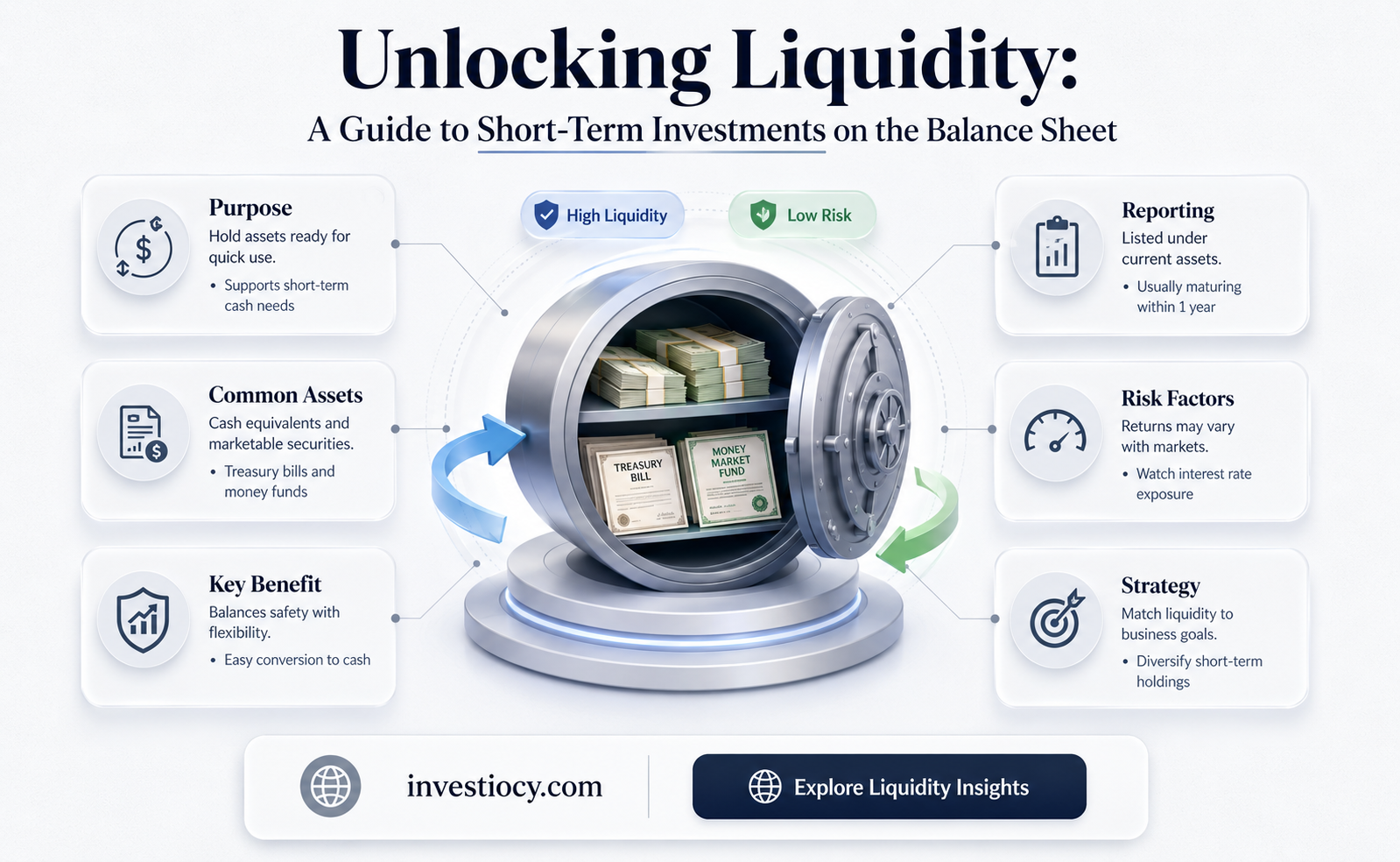
Short-term investments on the balance sheet refer to financial assets that a company expects to convert into cash or use within one year or within the company's normal operating cycle, whichever is longer. These investments are typically liquid, meaning they can be easily sold or converted into cash without significantly affecting their market value. Examples of short-term investments include cash equivalents like treasury bills, certificates of deposit, and short-term government bonds. They also encompass marketable securities that companies can sell quickly, such as stocks and bonds with high liquidity. Short-term investments play a crucial role in a company's financial strategy by providing a buffer for unexpected expenses, ensuring operational flexibility, and potentially generating additional income through interest or capital gains.
| Characteristics | Values |
|---|---|
| Definition | Short-term investments are assets held by a company for a brief period, typically less than a year, with the intention of generating a return or preserving capital. |
| Types | Common types include cash equivalents, marketable securities, short-term bonds, commercial paper, and certificates of deposit. |
| Liquidity | High liquidity, as these investments can be easily converted into cash within a short period. |
| Risk | Generally lower risk compared to long-term investments due to their short duration. |
| Return | Typically offer lower returns than long-term investments, reflecting their lower risk profile. |
| Accounting Treatment | Recorded at fair value on the balance sheet, with any changes in value reflected in the income statement. |
| Impact on Cash Flow | Short-term investments can impact cash flow positively when they mature or are sold, providing an influx of cash. |
| Management Strategy | Often used by companies to manage excess cash, maintain liquidity, and generate a modest return. |
| Market Volatility | Less affected by market volatility compared to long-term investments due to their shorter time horizon. |
| Regulatory Considerations | Subject to various regulatory requirements, such as disclosure and reporting obligations. |
| Tax Implications | Gains and losses from short-term investments are typically taxed at the company's marginal tax rate. |
| Examples | Examples include a company investing in a 3-month treasury bill or purchasing commercial paper with a 6-month maturity. |
Explore related products


What You'll Learn
- Definition: Short-term investments are assets expected to be converted to cash or used within one year
- Examples: Common examples include cash equivalents, marketable securities, and short-term bonds
- Accounting Treatment: These investments are typically recorded at cost and adjusted for any changes in market value
- Liquidity: Short-term investments enhance a company's liquidity by providing readily accessible funds
- Risk Management: They involve lower risk compared to long-term investments due to their shorter maturity period

Definition: Short-term investments are assets expected to be converted to cash or used within one year
Short-term investments are a crucial component of a company's balance sheet, representing assets that are expected to be converted into cash or utilized within a year. These investments are typically liquid, meaning they can be easily sold or exchanged for cash without significantly affecting their market value. Common examples include treasury bills, certificates of deposit, and short-term bonds.
The primary purpose of short-term investments is to provide a company with the necessary liquidity to meet its short-term obligations, such as paying suppliers, covering payroll, and addressing other operational expenses. By maintaining an adequate level of short-term investments, a company can ensure that it has the financial flexibility to respond to unexpected expenses or take advantage of new business opportunities.
Short-term investments are also an important aspect of a company's overall investment strategy. They offer a lower-risk option compared to long-term investments, as they are less susceptible to market fluctuations and changes in interest rates. However, they typically yield lower returns as well. Companies must carefully balance their short-term investment holdings with their long-term investment goals to optimize their overall financial performance.
In addition to providing liquidity and contributing to a company's investment strategy, short-term investments can also serve as a means of managing cash flow. By investing excess cash in short-term instruments, companies can generate additional income while maintaining the flexibility to access their funds when needed. This can be particularly beneficial for companies with seasonal cash flow patterns or those that experience irregular revenue streams.
When evaluating short-term investments on a balance sheet, it is important to consider the specific types of investments held, their market value, and their expected maturity dates. This information can provide insights into a company's liquidity position, its investment strategy, and its overall financial health. By analyzing short-term investments in conjunction with other balance sheet items, investors and analysts can gain a more comprehensive understanding of a company's financial situation and make more informed investment decisions.
Characteristics of Long-Term Investments: A Comprehensive Guide
You may want to see also
Explore related products




Examples: Common examples include cash equivalents, marketable securities, and short-term bonds
Short-term investments on a balance sheet are typically those that can be converted into cash within one year or less. These investments are crucial for companies as they provide liquidity and help in managing cash flows effectively. Common examples of short-term investments include cash equivalents, marketable securities, and short-term bonds.
Cash equivalents are the most liquid form of short-term investments and include items such as checking accounts, savings accounts, and money market funds. These investments are considered cash equivalents because they can be easily converted into cash with little to no notice period and carry minimal risk.
Marketable securities, on the other hand, are financial instruments that can be readily bought and sold in the financial markets. They include treasury bills, commercial paper, and certificates of deposit. These securities are considered short-term investments because they typically have maturities of one year or less and can be easily liquidated to meet short-term financial obligations.
Short-term bonds are debt securities with maturities of less than one year. They are issued by companies and governments to raise short-term capital. These bonds can be traded in the financial markets and are considered short-term investments because they can be easily converted into cash before their maturity date.
When analyzing short-term investments on a balance sheet, it is important to consider the risk and return associated with each type of investment. Cash equivalents carry the lowest risk but also offer the lowest returns. Marketable securities and short-term bonds carry slightly higher risks but offer higher returns compared to cash equivalents. Companies need to strike a balance between risk and return when selecting short-term investments to ensure they have sufficient liquidity to meet their financial obligations while also maximizing their investment returns.
In conclusion, short-term investments on a balance sheet play a critical role in managing a company's liquidity and cash flows. By understanding the different types of short-term investments and their associated risks and returns, companies can make informed decisions about how to allocate their short-term investment portfolios.
Smart Strategies: Examples of Short-Term Investments for Quick Returns
You may want to see also
Explore related products


Accounting Treatment: These investments are typically recorded at cost and adjusted for any changes in market value
Short-term investments on the balance sheet are typically recorded at cost and adjusted for any changes in market value. This accounting treatment ensures that the financial statements reflect the current value of these investments, which can fluctuate frequently due to market conditions. The cost method involves recording the initial purchase price of the investment, while subsequent adjustments are made to reflect any gains or losses incurred.
One unique aspect of this accounting treatment is that it allows companies to maintain a conservative approach to valuing their short-term investments. By recording investments at cost, companies avoid overstating their assets, which can be beneficial in managing investor expectations and maintaining a realistic view of their financial position. However, this approach may also result in understating the value of investments that have appreciated significantly, potentially leading to a less favorable perception of the company's financial health.
In practice, the accounting treatment for short-term investments requires careful monitoring of market values and timely adjustments to ensure accuracy. This can be particularly challenging for companies with large portfolios of short-term investments, as market values can change rapidly and frequently. To address this challenge, companies often employ sophisticated valuation models and rely on external market data to inform their adjustments.
Another important consideration in the accounting treatment of short-term investments is the impact on cash flow. When investments are sold, the difference between the sale price and the recorded cost is recognized as a gain or loss on the income statement. This can affect the company's reported earnings and, consequently, its cash flow. Therefore, companies must carefully manage their short-term investment portfolios to optimize their cash flow and ensure they have sufficient liquidity to meet their operational needs.
In conclusion, the accounting treatment for short-term investments on the balance sheet involves recording them at cost and adjusting for market value changes. This approach provides a conservative valuation method that can help manage investor expectations but may also result in understating the value of appreciated investments. Effective management of short-term investments requires careful monitoring of market values, timely adjustments, and a strategic approach to optimizing cash flow.
Smart Investing: Balancing Short-Term Gains and Long-Term Growth
You may want to see also
Explore related products


Liquidity: Short-term investments enhance a company's liquidity by providing readily accessible funds
Short-term investments play a crucial role in enhancing a company's liquidity by providing readily accessible funds. These investments are typically liquid assets that can be easily converted into cash within a short period, usually within three months. Examples of short-term investments include treasury bills, certificates of deposit, commercial paper, and money market funds. By holding these assets, companies ensure they have sufficient cash on hand to meet their short-term obligations, such as paying suppliers, covering payroll, and servicing debt.
One of the primary benefits of short-term investments is their ability to provide a financial cushion during periods of economic uncertainty. When companies have a robust portfolio of short-term investments, they are better equipped to weather financial storms and maintain their operations without relying on external funding sources. This financial flexibility can be particularly valuable during times of market volatility or when unexpected expenses arise.
Moreover, short-term investments can also serve as a means for companies to generate additional income. While the returns on these investments are generally lower than those of long-term investments, they can still contribute to a company's overall profitability. For instance, a company might invest its excess cash in money market funds, which typically offer higher interest rates than traditional savings accounts. Over time, these small returns can add up, providing a supplementary source of income.
However, it is essential for companies to carefully manage their short-term investments to maximize their benefits. This involves regularly monitoring the performance of these investments and adjusting the portfolio as needed to ensure it aligns with the company's liquidity requirements and risk tolerance. Companies should also consider the opportunity cost of holding short-term investments, as the funds could potentially be used for other purposes, such as investing in long-term growth initiatives.
In conclusion, short-term investments are a vital component of a company's financial strategy, offering a means to enhance liquidity, mitigate risk, and generate additional income. By carefully selecting and managing these investments, companies can ensure they have the financial resources necessary to meet their short-term obligations and maintain their long-term growth prospects.
Unlocking Profits: A Guide to Short-Term Rental Investments
You may want to see also
Explore related products


Risk Management: They involve lower risk compared to long-term investments due to their shorter maturity period
Short-term investments on the balance sheet are typically characterized by their lower risk profile compared to long-term investments. This is primarily due to their shorter maturity period, which means that the investor's capital is tied up for a shorter duration, reducing the exposure to market fluctuations and other risks. For instance, treasury bills, certificates of deposit, and money market funds are all examples of short-term investments that offer relatively stable returns with minimal risk.
One of the key advantages of short-term investments is their liquidity. Because they mature quickly, investors can easily convert them into cash without incurring significant penalties or losses. This makes them an attractive option for individuals and businesses that require quick access to their funds, such as for emergency expenses or working capital needs. Additionally, short-term investments often have lower minimum investment requirements, making them more accessible to a wider range of investors.
However, it's important to note that while short-term investments may involve lower risk, they also typically offer lower returns compared to long-term investments. This is because the shorter maturity period means that there is less time for the investment to grow in value. As a result, investors need to carefully consider their financial goals and risk tolerance when deciding whether to allocate a portion of their portfolio to short-term investments.
In terms of risk management, short-term investments can play a crucial role in diversifying a portfolio and reducing overall risk exposure. By allocating a portion of their assets to short-term investments, investors can create a buffer against market downturns and other financial shocks. This can help to protect their long-term investments, which may be more volatile but have the potential for higher returns.
Overall, short-term investments offer a unique combination of lower risk, liquidity, and accessibility that can make them an attractive option for investors looking to manage their risk exposure while still earning a return on their capital. However, it's essential to understand the trade-offs involved and to carefully consider how short-term investments fit into a broader investment strategy.
Decoding Investments: Short-Term vs Long-Term - What's True?
You may want to see also
Frequently asked questions
Short-term investments on the balance sheet are financial assets that a company expects to convert into cash or use within one year. These investments are typically liquid and can be easily sold or matured in a short period, such as treasury bills, certificates of deposit, and short-term bonds.
Short-term investments are classified as current assets on the balance sheet. Current assets are assets that the company expects to use or convert into cash within one year or within the company's normal operating cycle, whichever is longer.
The purpose of short-term investments for a company is to provide liquidity and generate returns on excess cash. Companies invest in short-term securities to keep their cash productive while maintaining the flexibility to access the funds quickly when needed for operational expenses or other financial obligations.
Some examples of short-term investments include treasury bills, certificates of deposit (CDs), commercial paper, short-term bonds, and money market funds. These investments are characterized by their short maturity periods and high liquidity, making them suitable for companies looking to manage their cash effectively.