Faith Morrow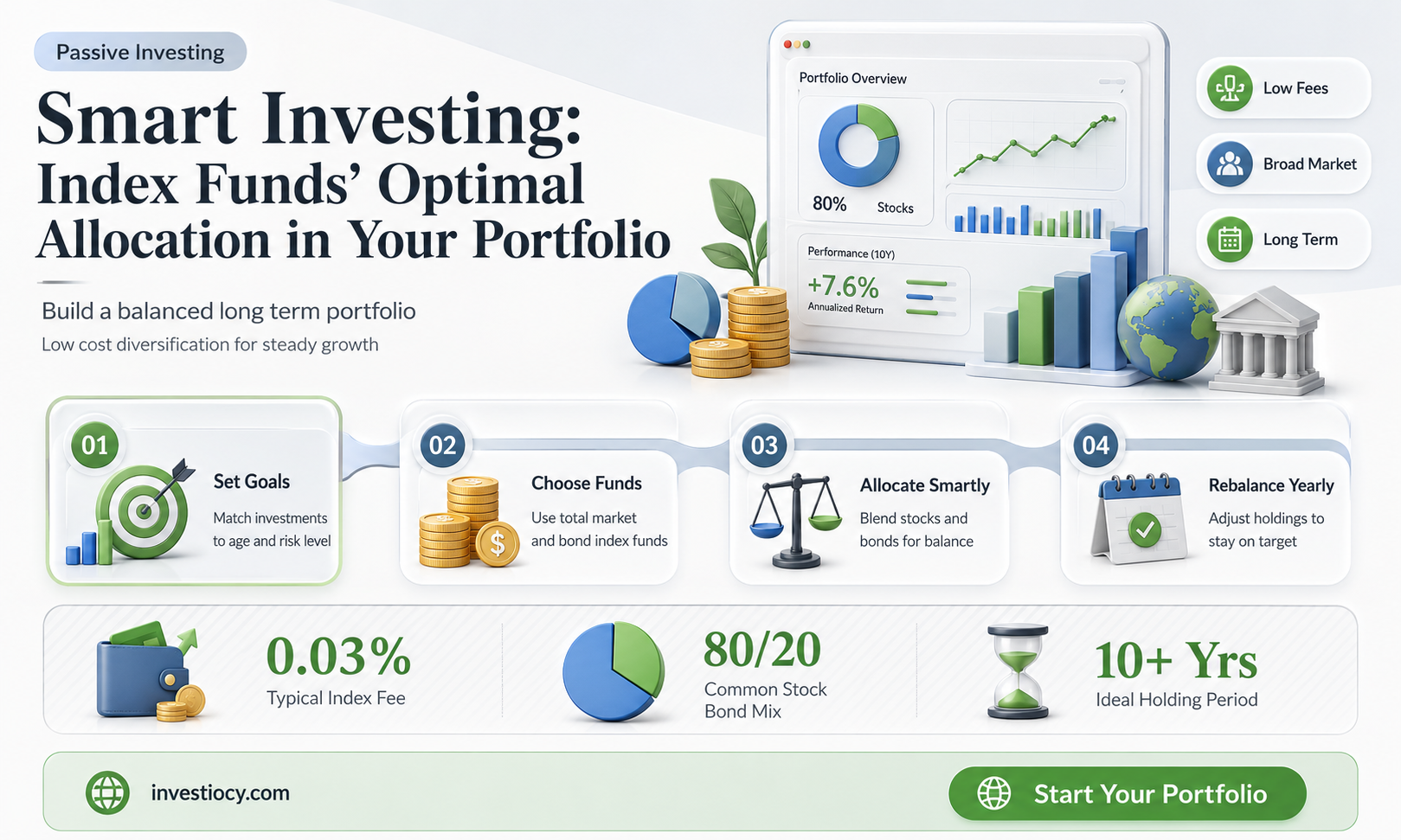
When constructing an investment portfolio, one of the key decisions is determining the appropriate allocation to index funds. Index funds are popular for their low cost, diversification, and ability to track market performance. A common strategy is to allocate a significant portion of a portfolio to index funds, as they can provide broad exposure to various asset classes and help mitigate risk. The exact percentage to invest in index funds depends on an individual's risk tolerance, investment goals, and time horizon. For example, a younger investor with a higher risk tolerance might allocate 80% or more of their portfolio to index funds, while a more conservative investor nearing retirement might opt for a lower allocation, such as 40-60%. It's also important to consider the specific types of index funds being used, such as those tracking the S&P 500, international markets, or bond indices, and how they fit into the overall asset allocation strategy.
Explore related products


What You'll Learn
- Asset Allocation: Determining the ideal mix of stocks, bonds, and other assets for your portfolio
- Risk Tolerance: Assessing your comfort level with market fluctuations and potential losses
- Investment Goals: Defining short-term and long-term objectives, such as retirement or buying a house
- Time Horizon: Considering how long you can invest before needing to access your funds
- Diversification: Spreading investments across different asset classes and sectors to minimize risk

Asset Allocation: Determining the ideal mix of stocks, bonds, and other assets for your portfolio
Determining the ideal asset allocation is a critical step in portfolio management. It involves deciding the proportion of stocks, bonds, and other assets to hold in order to achieve your investment goals while managing risk. A well-diversified portfolio can help you weather market volatility and reach your financial objectives.
To start, consider your investment horizon and risk tolerance. If you have a long time to invest and can stomach market fluctuations, you may opt for a higher allocation to stocks, which historically offer higher returns. Conversely, if you're nearing retirement or are risk-averse, you might prefer a higher allocation to bonds, which tend to be more stable but offer lower returns.
Next, think about your financial goals. Are you saving for retirement, a down payment on a house, or your child's education? Each goal may require a different asset allocation strategy. For example, a retirement portfolio might focus on long-term growth, while a savings fund for a down payment might prioritize capital preservation.
It's also important to consider the current economic environment. In a booming economy, you might increase your allocation to stocks to take advantage of growth opportunities. In a recession, you might shift towards bonds and other defensive assets to protect your capital.
Finally, regularly review and rebalance your portfolio to ensure it remains aligned with your goals and risk tolerance. As your circumstances change, your asset allocation should evolve accordingly. By periodically adjusting your mix of stocks, bonds, and other assets, you can stay on track to achieve your investment objectives.
Smart Investing: Mutual Funds and Your Savings Allocation
You may want to see also
Explore related products


Risk Tolerance: Assessing your comfort level with market fluctuations and potential losses
Determining your risk tolerance is a crucial step in deciding what percentage of your portfolio to allocate to index funds. Risk tolerance refers to your ability and willingness to withstand fluctuations in the market and potential losses. It's a personal assessment that takes into account your financial goals, time horizon, and emotional comfort with risk.
To assess your risk tolerance, consider the following factors:
- Financial Goals: Are you investing for retirement, a down payment on a house, or a shorter-term goal? The length of your investment horizon can influence your risk tolerance. Generally, the longer your horizon, the more risk you can afford to take.
- Current Financial Situation: Evaluate your current financial stability. If you have a secure job, a healthy emergency fund, and minimal debt, you may be more comfortable taking on risk. Conversely, if you're in a precarious financial position, you may want to be more conservative.
- Emotional Comfort: Honestly assess how you feel about market volatility. Do you panic when the market dips, or do you remain calm and rational? Your emotional response to risk is a significant factor in determining your risk tolerance.
- Investment Experience: Your experience with investing can also impact your risk tolerance. If you're new to investing, you may want to start with a more conservative approach until you gain confidence and experience.
- Risk Capacity: Consider your ability to absorb potential losses. If you're young and have a long time to recover from any losses, you may have a higher risk capacity. On the other hand, if you're close to retirement, you may need to be more cautious to protect your savings.
Once you've assessed these factors, you can use the results to guide your asset allocation decisions. If you determine that you have a high risk tolerance, you may decide to allocate a larger percentage of your portfolio to index funds, which tend to be more volatile but also offer the potential for higher returns. Conversely, if you have a low risk tolerance, you may opt for a more conservative allocation with a smaller percentage in index funds.
Remember, risk tolerance is not a fixed trait; it can evolve over time as your financial situation and goals change. Regularly reassessing your risk tolerance can help ensure that your investment strategy remains aligned with your needs and comfort level.
Strategic Bond Fund Investment: Finding Your Ideal Allocation Percentage
You may want to see also
Explore related products

$41 $37


Investment Goals: Defining short-term and long-term objectives, such as retirement or buying a house
Defining clear investment goals is crucial for creating a well-structured portfolio. Short-term objectives, such as saving for a down payment on a house or funding a vacation, typically require a more conservative approach with lower risk investments. In contrast, long-term goals like retirement planning can accommodate higher risk investments with greater potential for growth.
When setting investment goals, it's essential to consider the time horizon and the amount of money needed. For instance, if you're aiming to buy a house in five years, you may want to allocate a larger portion of your portfolio to stable, income-generating investments like bonds or dividend-paying stocks. On the other hand, if you're planning for retirement in 30 years, you can afford to take on more risk with a higher allocation to stocks or equity funds.
Another factor to consider is your risk tolerance. Some investors are comfortable with the volatility of the stock market and are willing to take on more risk for the potential of higher returns. Others may prefer a more conservative approach, prioritizing capital preservation over growth. Your risk tolerance should be reflected in the asset allocation of your portfolio.
It's also important to regularly review and adjust your investment goals as your circumstances change. Life events such as marriage, the birth of a child, or a job change can impact your financial priorities and risk tolerance. By periodically reassessing your goals and portfolio, you can ensure that your investments remain aligned with your needs and objectives.
In conclusion, defining short-term and long-term investment goals is a critical step in creating a diversified portfolio that meets your financial needs. By considering factors such as time horizon, risk tolerance, and life events, you can develop a tailored investment strategy that helps you achieve your objectives.
Explore related products


Time Horizon: Considering how long you can invest before needing to access your funds
Your investment time horizon plays a crucial role in determining the appropriate allocation to index funds within your portfolio. If you have a long time horizon, you can afford to take on more risk by investing a higher percentage in index funds, as you have more time to ride out market fluctuations and benefit from the historical trend of upward growth in the stock market. Conversely, if your time horizon is short, you may need to prioritize capital preservation and invest a lower percentage in index funds to avoid potential losses that could impact your ability to meet your financial goals.
For example, if you are investing for retirement and have 30 years until you plan to withdraw your funds, you might consider allocating 80-90% of your portfolio to index funds. This would allow you to take advantage of the long-term growth potential of the stock market while minimizing the impact of short-term volatility. On the other hand, if you are saving for a down payment on a house and plan to use the funds in 5 years, you might opt for a more conservative allocation of 40-50% in index funds to reduce the risk of losing money in a market downturn.
It's also important to consider your risk tolerance and financial goals when determining the appropriate allocation to index funds. If you have a high risk tolerance and are comfortable with the potential for short-term losses in pursuit of long-term gains, you may choose to invest a higher percentage in index funds. Conversely, if you have a low risk tolerance and prioritize capital preservation, you may opt for a lower allocation to index funds.
In addition to your time horizon and risk tolerance, it's essential to consider the fees associated with index funds when making your allocation decision. Index funds are known for their low fees compared to actively managed funds, but even small differences in fees can have a significant impact on your investment returns over time. Be sure to compare the fees of different index fund options and choose the one that best aligns with your investment goals and time horizon.
Ultimately, the key to successful investing is to create a diversified portfolio that aligns with your individual financial goals, risk tolerance, and time horizon. By carefully considering these factors and making informed decisions about your allocation to index funds, you can increase your chances of achieving your financial objectives and building long-term wealth.
Explore related products

$15.36 $25.95


Diversification: Spreading investments across different asset classes and sectors to minimize risk
Diversification is a key strategy in investment management, aimed at reducing risk by spreading investments across various asset classes and sectors. This approach is based on the principle that different investments perform differently under various market conditions, and by diversifying, an investor can mitigate the impact of poor performance in any single investment. For instance, during economic downturns, defensive sectors like healthcare and consumer staples tend to perform better than cyclical sectors like technology and financials. By allocating funds across these sectors, an investor can balance out losses and gains.
One effective way to achieve diversification is through index funds. Index funds track a specific market index, such as the S&P 500, and invest in a basket of securities that represent the index. This allows investors to gain exposure to a broad range of companies and sectors with a single investment. The percentage of a portfolio that should be allocated to index funds depends on the investor's risk tolerance, investment goals, and time horizon. Generally, a higher allocation to index funds is suitable for investors with a lower risk tolerance or those who are investing for the long term.
When deciding on the percentage to invest in index funds, it's important to consider the overall asset allocation strategy. A balanced portfolio typically includes a mix of stocks, bonds, and cash, with the exact proportions varying based on the investor's profile. For example, a young investor with a high risk tolerance might allocate 80% of their portfolio to stocks, including a significant portion in index funds, while an older investor nearing retirement might opt for a more conservative allocation with a higher percentage in bonds and cash.
In addition to asset allocation, investors should also consider the specific types of index funds they are investing in. There are various index funds available, each tracking different indices and offering exposure to different sectors and asset classes. For instance, a total stock market index fund provides broad exposure to the entire stock market, while a sector-specific index fund focuses on a particular industry, such as technology or healthcare. By choosing a mix of index funds that align with their investment goals and risk tolerance, investors can create a well-diversified portfolio.
To further enhance diversification, investors can also consider incorporating international index funds into their portfolio. These funds invest in securities from different countries, providing exposure to global markets and reducing reliance on a single economy. This can be particularly beneficial for investors looking to mitigate geopolitical risks or capitalize on growth opportunities in emerging markets.
In conclusion, diversification through index funds is a powerful strategy for minimizing risk and achieving long-term investment goals. By carefully considering their risk tolerance, investment goals, and time horizon, investors can determine the appropriate percentage of their portfolio to allocate to index funds and create a well-balanced and diversified investment portfolio.