Inaya Mclaughlin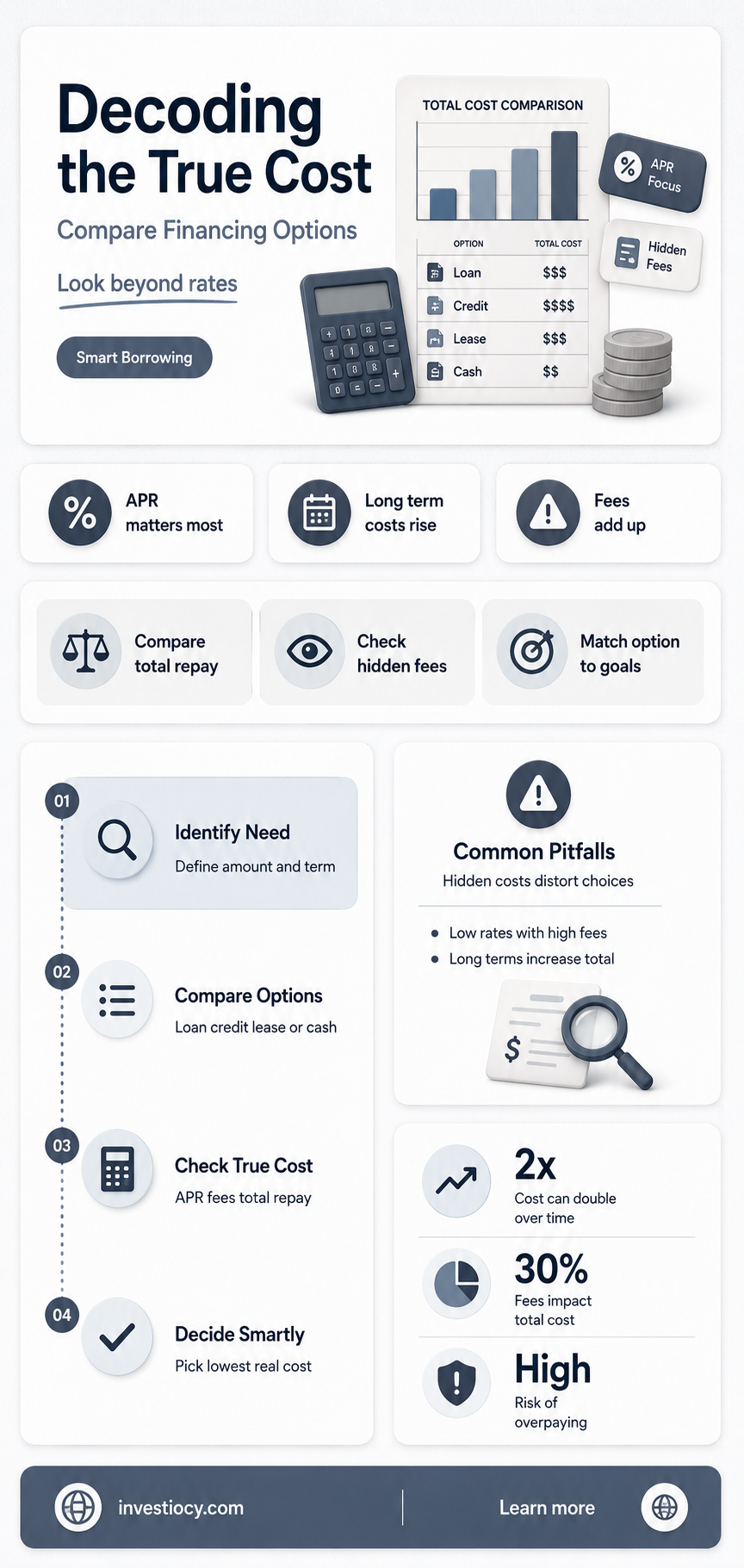
When evaluating financing options, it's crucial to consider the overall costs associated with each choice. The financing option with the highest overall costs can vary depending on several factors, including the principal amount, interest rates, repayment terms, and any additional fees or penalties. Typically, options like payday loans or credit card debt can carry high costs due to their steep interest rates and potential for accumulating debt quickly. On the other hand, long-term loans such as mortgages or student loans might have lower interest rates but could result in higher total costs over their extended repayment periods. To determine which financing option has the highest overall costs, one must carefully compare the terms and calculate the total amount paid over the life of each loan.
Explore related products


What You'll Learn
- Interest Rates: Higher interest rates increase borrowing costs over time
- Loan Terms: Longer loan terms can result in higher total interest paid
- Fees and Charges: Origination fees, closing costs, and other charges add to overall expenses
- Prepayment Penalties: Some loans penalize early repayment, increasing costs if you refinance or pay off early
- Compound Interest: Interest accruing on both principal and accumulated interest can significantly raise total costs

Interest Rates: Higher interest rates increase borrowing costs over time
Over time, higher interest rates can significantly increase the cost of borrowing, making it more expensive for individuals and businesses to finance their needs. This is because interest rates represent the cost of money, and when they rise, the amount of money you have to pay back to the lender also increases. For example, if you take out a $10,000 loan with a 5% interest rate, you'll pay back $10,500 after one year. However, if the interest rate rises to 7%, you'll pay back $10,700, which is $200 more than the previous year.
The impact of higher interest rates on borrowing costs can be particularly pronounced for long-term loans, such as mortgages or car loans. This is because the interest rate is applied to the outstanding balance of the loan for the entire term, so even small increases in the rate can result in significant additional costs over time. For instance, a 30-year mortgage with a 4% interest rate would result in total interest payments of around $144,000, while the same mortgage with a 6% interest rate would result in total interest payments of around $234,000 – a difference of nearly $90,000.
Higher interest rates can also affect the cost of credit card debt, which is often subject to variable interest rates that can change over time. If you're carrying a balance on your credit card and the interest rate rises, you'll end up paying more in interest charges each month, which can make it more difficult to pay off your debt. This can lead to a vicious cycle of accumulating more debt and paying more in interest, making it harder to get back on track financially.
In addition to increasing the cost of borrowing, higher interest rates can also affect the availability of credit. Lenders may become more selective about who they lend to, and may require higher credit scores or more collateral to secure a loan. This can make it more difficult for some individuals and businesses to access the financing they need, which can have a ripple effect on the economy as a whole.
To mitigate the impact of higher interest rates on borrowing costs, it's important to shop around for the best possible rate and terms when taking out a loan. Consider working with a financial advisor or using online tools to compare rates and fees from different lenders. Additionally, making extra payments on your loans or paying off your credit card balance in full each month can help reduce the amount of interest you pay over time.
In conclusion, higher interest rates can significantly increase the cost of borrowing, making it more expensive for individuals and businesses to finance their needs. By understanding the impact of interest rates on borrowing costs and taking steps to mitigate this impact, you can make more informed financial decisions and save money over time.
Exploring the Legality of Title Loans in Indiana: A Comprehensive Guide
You may want to see also
Explore related products


Loan Terms: Longer loan terms can result in higher total interest paid
Longer loan terms can result in higher total interest paid, making it crucial to understand the implications of loan duration on overall costs. This is particularly relevant when comparing different financing options, as the term length can significantly impact the total amount paid over the life of the loan. For instance, a $20,000 loan with a 5% annual interest rate will accrue $10,000 in interest over a 20-year term, whereas the same loan over a 10-year term would only accrue $5,000 in interest. This example illustrates how extending the loan term doubles the interest paid, despite the principal amount remaining constant.
When evaluating financing options, it's essential to consider not only the interest rate but also the term length, as these two factors interact to determine the total cost of borrowing. A lower interest rate on a longer-term loan may seem more attractive initially, but it could result in higher overall costs compared to a higher interest rate on a shorter-term loan. Borrowers should use loan calculators or consult with financial advisors to compare different scenarios and make informed decisions.
Furthermore, longer loan terms can also affect the borrower's financial flexibility and long-term goals. Committing to a longer repayment period may limit the borrower's ability to invest in other opportunities or handle unexpected expenses. Additionally, longer-term loans may carry prepayment penalties, which can further increase costs if the borrower decides to pay off the loan early.
In conclusion, while longer loan terms can provide lower monthly payments, they often result in higher total interest paid and may impact the borrower's financial flexibility. It's crucial to carefully evaluate the trade-offs between loan term, interest rate, and overall costs when selecting a financing option. By doing so, borrowers can make more informed decisions that align with their financial goals and circumstances.
Unlocking Opportunities: Your Guide to Becoming a Loan Signing Agent in Florida
You may want to see also
Explore related products


Fees and Charges: Origination fees, closing costs, and other charges add to overall expenses
Origination fees, closing costs, and other charges can significantly impact the overall expenses associated with different financing options. These fees are often overlooked but can add up quickly, making it essential to understand their implications when comparing financing options. For instance, origination fees are typically charged by lenders to cover the costs of processing a loan application and can range from 1% to 5% of the loan amount. Closing costs, on the other hand, include fees for title searches, appraisals, and attorney services, and can vary widely depending on the location and complexity of the transaction.
When evaluating financing options, it's crucial to consider not only the interest rates but also the fees and charges that come with each option. For example, a mortgage with a lower interest rate may seem more attractive at first glance, but if it comes with high origination fees and closing costs, it may end up being more expensive in the long run. Similarly, credit cards may offer rewards and cashback, but they often come with annual fees, late payment fees, and other charges that can offset any benefits.
To determine which financing option has the highest overall costs, it's necessary to calculate the total cost of each option, including all fees and charges. This can be done by using online calculators or by requesting a detailed breakdown of costs from the lender or financial institution. By comparing the total costs, borrowers can make informed decisions about which financing option is most suitable for their needs and budget.
In addition to origination fees and closing costs, other charges such as prepayment penalties, late payment fees, and annual fees can also contribute to the overall expenses of a financing option. Prepayment penalties are fees charged for paying off a loan early and can be a significant cost for borrowers who plan to refinance or pay off their loan ahead of schedule. Late payment fees are charged when a payment is missed or made late and can quickly add up if not addressed promptly. Annual fees are charged by some credit cards and loans and can be a fixed cost that borrowers need to factor into their budget.
Ultimately, understanding the fees and charges associated with different financing options is key to making informed financial decisions. By carefully evaluating the total costs of each option, borrowers can choose the financing option that best fits their needs and minimizes their overall expenses.
Exclusive Access: The Insider's Guide to Member-Only Communities
You may want to see also
Explore related products


Prepayment Penalties: Some loans penalize early repayment, increasing costs if you refinance or pay off early
Prepayment penalties are a critical factor to consider when evaluating the overall costs of different financing options. These penalties, which are fees charged for paying off a loan earlier than scheduled, can significantly increase the expense of borrowing money. They are particularly common in mortgages and can deter homeowners from refinancing or selling their property before the loan term ends.
The impact of prepayment penalties varies depending on the specific terms of the loan. Some loans may impose a flat fee, while others might calculate the penalty based on a percentage of the outstanding balance or the number of months remaining in the loan term. For example, a loan with a 3% prepayment penalty on the outstanding balance would charge $3,000 for early repayment if the remaining balance is $100,000.
To avoid these additional costs, borrowers should carefully review the prepayment penalty clauses in their loan agreements. If possible, they should opt for loans with no prepayment penalties or negotiate terms that minimize these fees. Additionally, borrowers should consider the length of time they plan to stay in the property and their likelihood of refinancing when choosing a loan.
In some cases, prepayment penalties might be waived under certain conditions, such as if the borrower refinances with the same lender or pays off the loan within a specific timeframe. Borrowers should inquire about these possibilities and factor them into their decision-making process.
Ultimately, understanding and managing prepayment penalties is essential for minimizing the overall costs of borrowing. By being aware of these fees and taking steps to mitigate them, borrowers can make more informed financial decisions and potentially save thousands of dollars over the life of their loans.
Understanding Financial Aid: Grants vs. Loans Explained
You may want to see also
Explore related products


Compound Interest: Interest accruing on both principal and accumulated interest can significantly raise total costs
Compound interest is a powerful force in finance, capable of significantly increasing the total cost of borrowing over time. Unlike simple interest, which is calculated only on the principal amount borrowed, compound interest accrues on both the principal and any accumulated interest. This means that as each interest period passes, the amount of interest owed grows, leading to a snowball effect that can quickly escalate the overall debt.
To illustrate this concept, consider a hypothetical scenario where an individual takes out a loan of $10,000 at an annual interest rate of 5%, compounded monthly. After one year, the total amount owed would be $10,616.84. However, if the loan were left unpaid for five years, the balance would balloon to $12,762.81, with over $2,700 of that amount being compound interest.
The implications of compound interest are particularly significant when comparing different financing options. For instance, a credit card with a high interest rate and compound interest can become a financial albatross if not managed carefully. Similarly, certain types of loans, such as payday loans or title loans, often carry exorbitant interest rates and compound interest, making them extremely costly in the long run.
One of the key takeaways from understanding compound interest is the importance of paying off debts as quickly as possible. By doing so, borrowers can minimize the amount of interest accrued and reduce the overall cost of borrowing. Additionally, it's crucial to carefully review the terms of any loan or credit agreement to understand how interest is calculated and compounded, as this can have a significant impact on the total amount owed.
In conclusion, compound interest is a critical factor to consider when evaluating financing options. Its ability to significantly increase the total cost of borrowing underscores the importance of responsible debt management and informed financial decision-making. By understanding how compound interest works and taking steps to mitigate its effects, individuals can better navigate the complex world of finance and avoid costly pitfalls.
Exploring Unitranche Loans: A Comprehensive Guide for Borrowers
You may want to see also
Frequently asked questions
Credit cards typically have the highest overall costs due to high interest rates and potential fees.
Payday loans are often more expensive than other financing options because of their high interest rates and short repayment terms.
Calculate the total cost of each option, including interest rates, fees, and repayment terms, to determine which one is the most costly for your specific situation.
Yes, a financing option with a lower interest rate can have higher overall costs if it includes additional fees or a longer repayment term that increases the total amount paid.