 Faith Morrow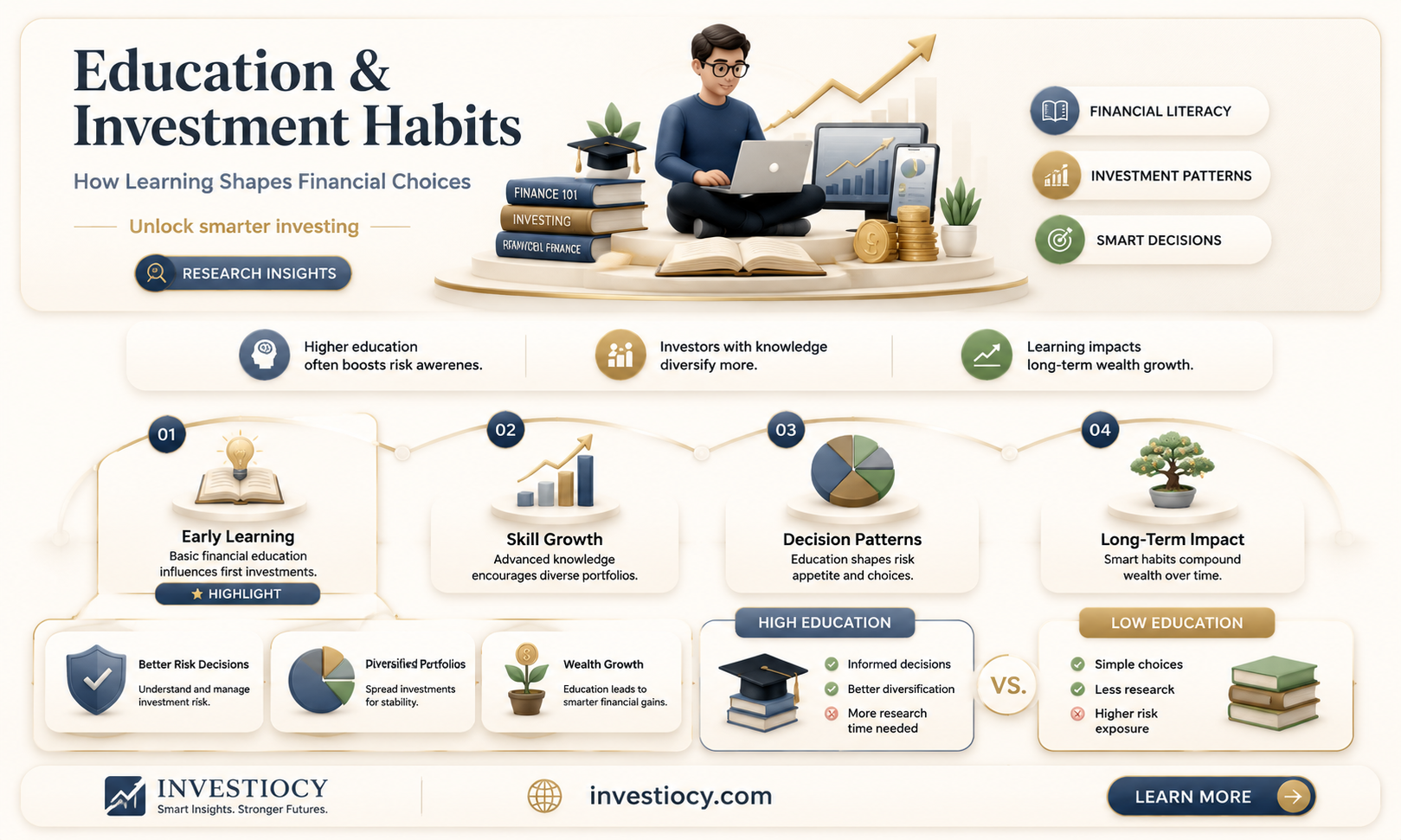
The relationship between education level and investment behavior is a topic of significant interest in both academic and practical contexts. Research suggests that individuals with higher levels of education tend to have a greater propensity to invest, likely due to a combination of factors including increased financial literacy, higher income levels, and a longer-term outlook on financial planning. Educated individuals are more likely to understand the benefits of compounding returns and the importance of diversifying their portfolios, which can lead to more informed and confident investment decisions. Furthermore, studies have shown that education can mitigate cognitive biases that often hinder investment performance, such as overconfidence and the disposition effect. As a result, financial advisors and policymakers often emphasize the importance of financial education in promoting responsible investment behaviors and improving overall financial well-being.
Explore related products

$25.32 $55





What You'll Learn
- Correlation Between Education and Investment Behavior: Exploring whether higher education levels lead to increased investment activity
- Financial Literacy and Education: Investigating how financial education impacts investment decisions and risk tolerance
- Income Levels and Investment Propensity: Analyzing if higher-educated individuals, often with higher incomes, are more likely to invest
- Psychological Factors in Investment: Examining how educational attainment influences psychological aspects of investing, such as confidence and risk perception
- Access to Investment Opportunities: Discussing whether more educated people have better access to investment products and services

Correlation Between Education and Investment Behavior: Exploring whether higher education levels lead to increased investment activity
Individuals with higher education levels are often found to exhibit distinct investment behaviors compared to those with lower educational attainment. This correlation can be attributed to several factors, including increased financial literacy, higher earning potential, and a greater propensity for long-term planning. Studies have consistently shown that individuals who have completed higher education are more likely to participate in investment activities such as stock market investments, retirement savings, and real estate purchases.
One possible explanation for this correlation is that higher education provides individuals with the necessary knowledge and skills to make informed investment decisions. Courses in finance, economics, and business management can equip students with a solid understanding of investment principles, risk management, and market analysis. This, in turn, can lead to greater confidence in their ability to invest wisely and manage their financial resources effectively.
Furthermore, individuals with higher education levels tend to have higher earning potential, which can provide them with more disposable income to invest. This increased financial capacity can enable them to take advantage of investment opportunities that may not be available to those with lower incomes. Additionally, higher education is often associated with a greater emphasis on long-term planning and goal setting, which can translate into a more disciplined approach to investing and saving for the future.
However, it is important to note that the correlation between education and investment behavior is not absolute. There are many other factors that can influence an individual's investment decisions, such as their risk tolerance, personal values, and life circumstances. Moreover, access to investment opportunities and financial resources can vary significantly depending on socioeconomic factors, which may not be directly related to educational attainment.
In conclusion, while there is a strong correlation between higher education levels and increased investment activity, it is essential to consider the complex interplay of factors that contribute to this relationship. By understanding these dynamics, policymakers and financial advisors can develop more effective strategies to promote financial literacy and encourage responsible investment behaviors among individuals from diverse educational backgrounds.
Are Homes People's Biggest Investment? Exploring the Financial Landscape
You may want to see also
Explore related products


Financial Literacy and Education: Investigating how financial education impacts investment decisions and risk tolerance
Individuals with higher levels of financial literacy are more likely to engage in investment activities and exhibit greater risk tolerance. This correlation stems from a deeper understanding of financial concepts, investment strategies, and the ability to assess and manage risks effectively. Financial education empowers individuals to make informed decisions, recognize opportunities, and navigate the complexities of the financial markets with confidence.
Research indicates that financial literacy programs can significantly impact investment behavior. Studies have shown that participants in financial education workshops are more likely to invest in stocks, mutual funds, and other securities compared to those without such education. Moreover, financially literate individuals tend to diversify their portfolios more effectively, reducing risk and increasing potential returns.
The impact of financial education on risk tolerance is also noteworthy. Individuals with a solid understanding of financial principles are better equipped to evaluate risk and make calculated investment decisions. This increased risk tolerance allows them to pursue higher-return investments that may be shunned by those with limited financial knowledge.
Financial literacy programs can be particularly beneficial for younger individuals, as they provide a foundation for lifelong financial decision-making. By instilling good financial habits early on, these programs can help individuals build wealth, manage debt, and achieve long-term financial goals.
In conclusion, financial literacy and education play a crucial role in shaping investment decisions and risk tolerance. By enhancing individuals' understanding of financial concepts and investment strategies, these programs can encourage more informed and confident investment behavior, ultimately leading to greater financial well-being.
Unlocking Financial Freedom: The Power of Smart Investments
You may want to see also
Explore related products


Income Levels and Investment Propensity: Analyzing if higher-educated individuals, often with higher incomes, are more likely to invest
Higher education often correlates with higher income levels, and this financial advantage can significantly influence investment propensity. Individuals with advanced degrees tend to have better-paying jobs, providing them with more disposable income to allocate towards investments. Moreover, the financial literacy gained through higher education can empower these individuals to make informed investment decisions, further increasing their likelihood of investing.
Analyzing the relationship between income levels and investment propensity reveals that as income increases, so does the tendency to invest. This is partly due to the fact that higher earners have more funds available to invest, but it also reflects a greater understanding of financial markets and investment strategies among this demographic. Additionally, higher-educated individuals are more likely to have access to employer-sponsored retirement plans, such as 401(k)s, which can serve as an entry point into the world of investing.
However, it is essential to consider other factors that may influence investment behavior, such as risk tolerance, financial goals, and personal circumstances. While higher education and income can increase the likelihood of investing, they do not guarantee it. Some individuals may prioritize other financial objectives, such as paying off debt or saving for a down payment on a home, over investing. Furthermore, the type of investment chosen can vary widely among higher-educated individuals, ranging from conservative options like bonds to more aggressive choices like stocks or real estate.
In conclusion, the correlation between higher education, income levels, and investment propensity is complex and multifaceted. While higher-educated individuals with higher incomes are generally more likely to invest, various factors can influence their investment decisions. Understanding these nuances can provide valuable insights for financial advisors and policymakers seeking to promote investment and financial literacy among different demographic groups.
Securing the Future: Are Middle-Aged Investors On Track?
You may want to see also
Explore related products


Psychological Factors in Investment: Examining how educational attainment influences psychological aspects of investing, such as confidence and risk perception
Educational attainment significantly impacts an individual's psychological approach to investment. Research indicates that higher levels of education are associated with increased confidence in investment decisions. This confidence stems from a better understanding of financial concepts and a greater ability to analyze market trends and data. Educated investors are more likely to engage in thorough research and due diligence, leading to more informed and calculated investment choices.
Moreover, education influences risk perception. Educated individuals tend to have a more nuanced understanding of risk and return, enabling them to make more balanced investment decisions. They are less likely to be swayed by emotional biases and more likely to adopt a long-term perspective on their investments. This rational approach to risk can result in more stable and profitable investment portfolios.
In addition to confidence and risk perception, educational attainment also affects an individual's willingness to seek out and utilize financial advice. Educated investors are more likely to consult with financial advisors and incorporate expert guidance into their investment strategies. This openness to professional advice can further enhance their investment outcomes by providing access to specialized knowledge and resources.
Furthermore, education can impact an individual's financial literacy, which is crucial for making sound investment decisions. Financially literate individuals are better equipped to understand complex financial products and services, assess their suitability, and make informed choices. This literacy is closely tied to educational attainment, as higher levels of education generally correlate with greater financial knowledge and skills.
In conclusion, the psychological factors influenced by educational attainment play a critical role in investment behavior. Educated individuals exhibit higher confidence, a more rational approach to risk, a greater willingness to seek professional advice, and enhanced financial literacy. These factors collectively contribute to more informed and successful investment decisions, underscoring the importance of education in the realm of personal finance and investment.
The Moral Compass of Investment Bankers: A Closer Look
You may want to see also
Explore related products


Access to Investment Opportunities: Discussing whether more educated people have better access to investment products and services
Educational attainment often correlates with better access to investment opportunities. This is primarily because higher education can lead to higher income levels, which in turn provide individuals with more disposable income to invest. Furthermore, educational institutions often offer courses in finance and economics, equipping students with the knowledge necessary to make informed investment decisions. As a result, more educated individuals are likely to be aware of various investment products and services, such as stocks, bonds, mutual funds, and retirement accounts, and have the financial means to utilize them.
In addition to formal education, access to investment opportunities can also be influenced by an individual's financial literacy. Those with a strong understanding of financial concepts and investment strategies are more likely to engage in investment activities, regardless of their formal educational background. Financial literacy programs and resources, such as online courses, workshops, and financial advisors, can help bridge the gap for individuals who may not have had access to formal education in finance but are still interested in investing.
However, it is important to note that access to investment opportunities is not solely determined by education. Other factors, such as socioeconomic status, geographic location, and employment benefits, can also play a significant role. For example, individuals from lower socioeconomic backgrounds may face barriers to investing, such as limited access to financial institutions or a lack of disposable income, regardless of their educational attainment. Similarly, those living in rural areas may have fewer investment options available to them compared to those in urban centers.
Employers can also impact access to investment opportunities through the provision of retirement plans and other investment benefits. Companies that offer 401(k) plans, for instance, can help employees save for retirement and invest in a variety of financial products. This can be particularly beneficial for individuals who may not have the knowledge or resources to invest on their own.
In conclusion, while education can certainly enhance access to investment opportunities, it is not the sole determining factor. A combination of financial literacy, socioeconomic status, geographic location, and employment benefits all contribute to an individual's ability to invest. By addressing these various factors, policymakers and financial institutions can work to increase access to investment opportunities for a broader range of individuals, promoting financial inclusion and economic growth.
Exploring the Psychology Behind Investment Decisions
You may want to see also
