Laila Keith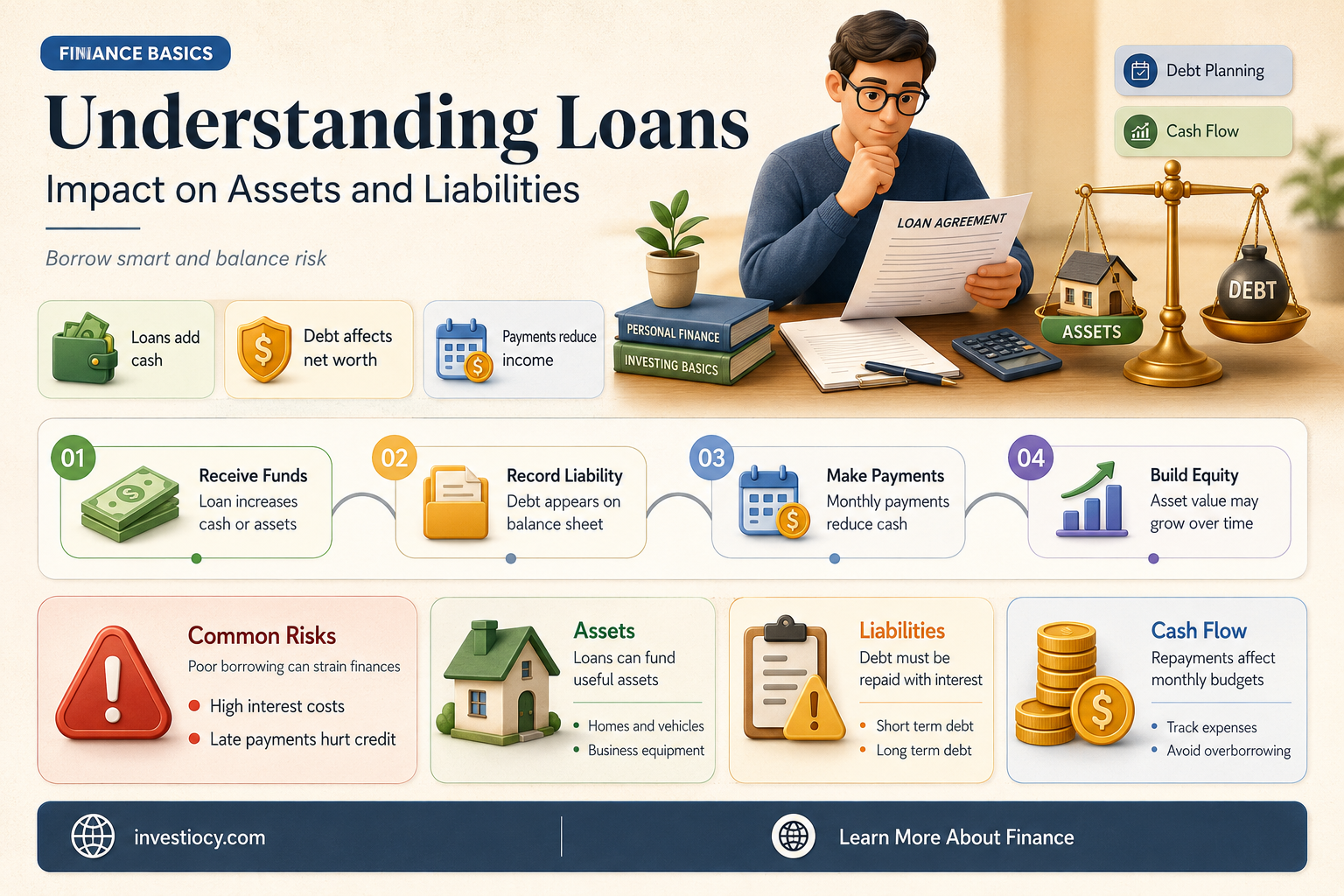
Taking out a loan can have a significant impact on an individual's or business's financial situation, affecting both assets and liabilities. When you take out a loan, you receive a sum of money that increases your assets, typically categorized as cash or a similar liquid asset. However, this increase in assets is offset by a corresponding increase in liabilities, as you are now obligated to repay the loan amount plus interest over time. This means that your total liabilities will increase by the same amount as your assets, maintaining the balance of your financial statement. It's important to consider the implications of this balance when making financial decisions, as taking on additional debt can affect your credit score, interest rates, and overall financial health.
Explore related products



What You'll Learn
- Assets vs. Liabilities: Understanding the fundamental difference between assets and liabilities in financial accounting
- Loan Impact on Assets: Exploring how taking a loan can increase assets, such as cash or property
- Loan Impact on Liabilities: Discussing how loans increase liabilities, including debt obligations and interest
- Net Worth Analysis: Examining how loans affect an individual's or business's net worth over time
- Financial Strategy: Considering the strategic implications of using loans to increase assets and manage liabilities

Assets vs. Liabilities: Understanding the fundamental difference between assets and liabilities in financial accounting
In financial accounting, assets and liabilities are two fundamental concepts that represent the economic resources and obligations of a business, respectively. Assets are tangible or intangible items that a company owns and can use to generate future economic benefits, such as cash, inventory, property, and intellectual property. On the other hand, liabilities are debts or obligations that a company owes to other parties, such as loans, accounts payable, and accrued expenses. Understanding the difference between assets and liabilities is crucial for businesses to maintain accurate financial records and make informed decisions.
When a company takes out a loan, it increases both its assets and liabilities. The loan amount received is recorded as an asset, typically under the category of cash or bank accounts, as it represents an influx of funds that the company can use for its operations. Simultaneously, the loan amount is also recorded as a liability, under the category of loans payable or debt, as it represents an obligation that the company must repay in the future. This dual effect of a loan on both assets and liabilities is a key principle in financial accounting, known as the accounting equation, which states that assets must always equal liabilities plus equity.
The accounting equation is a fundamental concept in financial accounting that ensures the accuracy and reliability of financial statements. It represents the relationship between a company's assets, liabilities, and equity, and serves as a basis for recording and reporting financial transactions. When a company takes out a loan, the accounting equation is maintained by increasing both assets and liabilities by the same amount, thereby keeping the equation in balance. This balance is crucial for stakeholders, such as investors and creditors, who rely on financial statements to assess a company's financial health and performance.
In conclusion, taking out a loan increases both assets and liabilities, which is a key principle in financial accounting. This dual effect is necessary to maintain the accounting equation and ensure the accuracy of financial statements. By understanding the fundamental difference between assets and liabilities, businesses can make informed decisions and maintain accurate financial records, which is essential for their long-term success and sustainability.
Understanding 401(k) Loans: Do They Count as Withdrawals?
You may want to see also
Explore related products



Loan Impact on Assets: Exploring how taking a loan can increase assets, such as cash or property
Taking a loan can indeed have a direct impact on an individual's or business's assets. When a loan is taken out, the borrower receives a lump sum of cash, which immediately increases their liquid assets. This influx of cash can be used to purchase additional assets, such as property, equipment, or investments, further diversifying and potentially growing the borrower's asset portfolio.
However, it's crucial to consider the type of loan and its terms. For instance, a secured loan, such as a mortgage, ties the borrowed funds to a specific asset, which can limit the borrower's flexibility in using the cash for other purposes. On the other hand, an unsecured loan, like a personal loan, provides more freedom in how the funds are utilized, allowing for a broader range of asset acquisition.
The interest rate and repayment terms of the loan also play a significant role in determining its impact on assets. A loan with a low interest rate and favorable repayment terms can be more beneficial, as it allows the borrower to invest the funds in assets that potentially yield higher returns. Conversely, a loan with high interest rates and stringent repayment terms may lead to financial strain, reducing the borrower's ability to effectively utilize the loan for asset growth.
Moreover, the borrower's creditworthiness and financial history can influence the loan's impact on assets. A borrower with a strong credit score and a history of responsible financial management is more likely to secure favorable loan terms, enabling them to make the most of the borrowed funds. In contrast, a borrower with poor credit may face higher interest rates and less favorable terms, limiting the potential benefits of the loan.
In conclusion, while taking a loan can increase assets, it's essential to carefully consider the loan's terms, the borrower's financial situation, and the intended use of the funds to maximize the positive impact on assets.
The Impact of Loans on Your Net Worth: A Comprehensive Guide
You may want to see also
Explore related products


Loan Impact on Liabilities: Discussing how loans increase liabilities, including debt obligations and interest
Loans inherently increase a borrower's liabilities, which is a fundamental aspect of taking on debt. When an individual or business secures a loan, they are essentially entering into a financial contract that obligates them to repay the borrowed amount, typically with interest, over a specified period. This repayment obligation constitutes a liability, as it represents a future financial commitment that must be fulfilled.
The impact of loans on liabilities is multifaceted. Firstly, the principal amount borrowed directly contributes to the borrower's total liabilities. For instance, if a person takes out a $10,000 loan, their liabilities increase by $10,000. Secondly, loans often come with interest charges, which further augment the liability burden. The interest accrued over the life of the loan adds to the total amount that must be repaid, thereby increasing the borrower's financial obligations.
Moreover, loans can have various types of interest rates, such as fixed or variable, which can affect the predictability and manageability of the associated liabilities. Fixed-rate loans provide a consistent interest rate throughout the loan term, making it easier for borrowers to anticipate their repayment amounts. In contrast, variable-rate loans have interest rates that can fluctuate based on market conditions, potentially leading to unpredictable changes in the borrower's liability burden.
In addition to the direct financial impact, loans can also have indirect effects on liabilities. For example, taking on additional debt can influence a borrower's credit score, which may impact their ability to secure future loans or credit at favorable terms. Furthermore, loans can lead to a cycle of debt if not managed properly, where the borrower may need to take on more debt to service existing obligations, thereby exacerbating their overall liability situation.
To mitigate the impact of loans on liabilities, borrowers should carefully consider the terms and conditions of the loan, including the interest rate, repayment schedule, and any associated fees. It is also crucial to have a clear understanding of one's financial situation and capacity to repay the loan. By doing so, borrowers can make informed decisions that minimize the negative effects of loans on their liabilities and overall financial health.
Understanding the Impact of Loans on Life Insurance Premiums
You may want to see also
Explore related products


Net Worth Analysis: Examining how loans affect an individual's or business's net worth over time
Loans can have a profound impact on an individual's or business's net worth over time. When a loan is taken out, it increases the borrower's liabilities, as they now owe the lender a certain amount of money. However, the loan can also increase the borrower's assets, as they can use the loan proceeds to purchase items or invest in opportunities that have the potential to appreciate in value.
For example, consider an individual who takes out a mortgage to purchase a home. The mortgage increases their liabilities, but the home itself becomes an asset that can appreciate in value over time. If the individual makes wise investments and the housing market is favorable, the value of their home may increase significantly, offsetting the increase in liabilities and ultimately boosting their net worth.
On the other hand, loans can also have a negative impact on net worth if they are not managed properly. High-interest loans, such as credit card debt, can quickly become a financial burden if not paid off in a timely manner. The interest payments on these loans can eat into the borrower's income and savings, reducing their overall net worth.
Businesses can also be affected by loans in a similar way. A business that takes out a loan to purchase new equipment or expand its operations can increase its assets and potentially its revenue. However, if the business is unable to generate enough revenue to cover the loan payments, it may find itself in financial trouble, which can negatively impact its net worth.
In conclusion, loans can have both positive and negative effects on an individual's or business's net worth over time. It is important for borrowers to carefully consider the terms of any loan they take out and to have a plan in place for how they will use the loan proceeds and repay the debt. By doing so, they can maximize the potential benefits of loans while minimizing the risks.
Boosting Your Credit Score: The Strategic Use of Loans
You may want to see also
Explore related products


Financial Strategy: Considering the strategic implications of using loans to increase assets and manage liabilities
In the realm of financial strategy, leveraging loans to increase assets and manage liabilities is a common practice. However, it's crucial to understand the strategic implications of this approach. When a business or individual takes on a loan, it not only increases their liabilities but also provides an opportunity to invest in assets that can generate future revenue or appreciate in value. This dual effect can be a powerful tool for financial growth, but it requires careful planning and consideration.
One key aspect to consider is the type of asset being acquired with the loan. For instance, investing in a revenue-generating asset like a rental property or a business can provide a steady stream of income to offset the loan payments. On the other hand, purchasing a depreciating asset like a car or a piece of equipment may not offer the same long-term financial benefits. Additionally, the interest rate and terms of the loan play a significant role in determining the overall financial impact. A loan with a low interest rate and favorable terms can be more beneficial than one with high interest and restrictive conditions.
Another important factor is the management of liabilities. Taking on a loan increases the total liabilities on the balance sheet, which can affect the debt-to-equity ratio and the overall financial health of the entity. It's essential to have a strategy in place to manage and eventually pay off the loan. This might involve prioritizing high-interest debt, consolidating loans, or refinancing at a lower rate. Effective liability management can help mitigate the risks associated with increased debt and ensure that the loan serves as a tool for growth rather than a burden.
In conclusion, using loans to increase assets and manage liabilities can be a strategic financial move, but it requires careful consideration of the type of asset, loan terms, and liability management. By understanding these implications and implementing a well-thought-out strategy, businesses and individuals can harness the power of loans to achieve their financial goals.
Frequently asked questions
Yes, taking a loan increases both assets and liabilities. When you receive a loan, your assets increase because you now have more cash or funds available. Simultaneously, your liabilities increase because you owe the lender the amount of the loan plus interest.
A loan affects the balance sheet by increasing both the asset and liability sides. On the asset side, the cash or bank account balance increases. On the liability side, a new loan liability is added, representing the amount borrowed plus accrued interest.
No, it is not possible for a loan to increase assets without increasing liabilities. The fundamental principle of double-entry bookkeeping ensures that for every asset increase, there must be a corresponding liability increase, maintaining the balance of the balance sheet.