Josephine Norton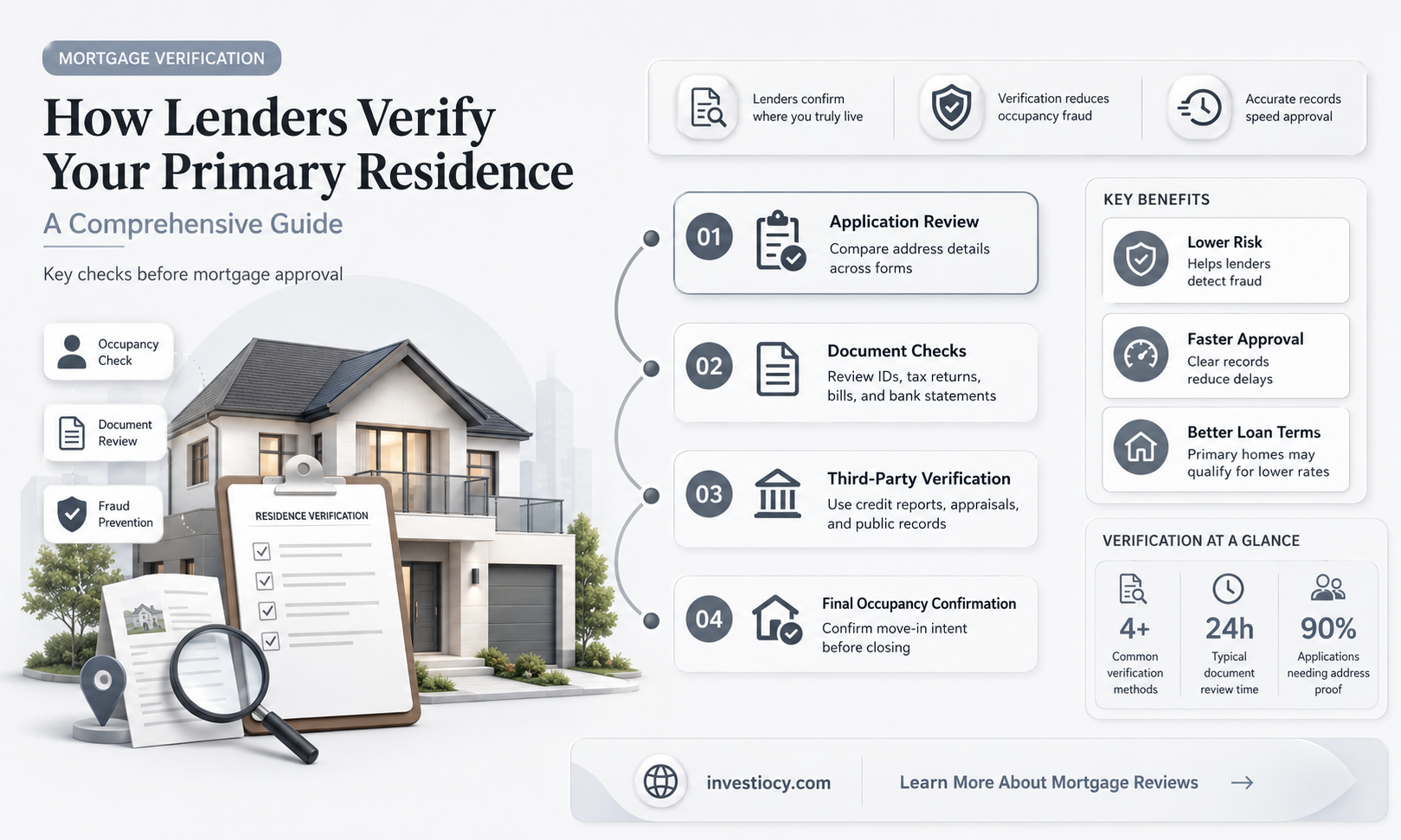
When applying for a mortgage, one of the key factors lenders consider is the borrower's primary residence. This is because the primary residence is typically where the borrower intends to live for the majority of the time, and it can impact the loan terms, interest rates, and even the approval process. To verify the primary residence, mortgage lenders often require various forms of documentation and conduct thorough checks. These may include reviewing tax returns, pay stubs, bank statements, and credit reports to ensure the borrower's income and financial stability. Additionally, lenders may request letters from employers, landlords, or other third parties to confirm the borrower's residential history and current living arrangements. In some cases, lenders may also conduct home visits or use third-party verification services to ensure the borrower is indeed residing at the property in question. By verifying the primary residence, lenders can better assess the borrower's creditworthiness and make informed decisions about the mortgage application.
Explore related products


What You'll Learn
- Reviewing Credit Reports: Lenders check credit reports to see if the borrower's primary residence matches the loan application
- Analyzing Bank Statements: Bank statements can provide evidence of regular payments and financial activity consistent with a primary residence
- Examining Property Records: Public property records are reviewed to confirm ownership and occupancy of the claimed primary residence
- Verifying Employment and Income: Lenders may contact employers to verify income and employment status, which can indicate the borrower's primary residence
- Conducting Home Visits: In some cases, lenders may conduct home visits to physically verify that the borrower resides at the claimed primary residence

Reviewing Credit Reports: Lenders check credit reports to see if the borrower's primary residence matches the loan application
Lenders scrutinize credit reports to verify that a borrower's primary residence aligns with the information provided in the loan application. This process is crucial for assessing the borrower's creditworthiness and ensuring the accuracy of the loan details. By examining the credit report, lenders can identify any discrepancies in the borrower's residential history, which may indicate potential risks or fraud.
One key aspect of reviewing credit reports is analyzing the borrower's credit history in relation to their primary residence. Lenders look for consistency in the borrower's credit behavior, such as timely payments and responsible credit usage, which can be indicative of their ability to manage mortgage payments. Additionally, lenders may consider the borrower's credit score, which is influenced by their overall credit history, including any previous mortgages or credit accounts associated with their primary residence.
During the review process, lenders may also cross-reference the borrower's primary residence with other sources, such as property records or utility bills, to ensure the accuracy of the information provided. This additional verification step helps to mitigate the risk of fraud and ensures that the borrower is indeed residing at the property they claim as their primary residence.
In cases where discrepancies are found, lenders may request further documentation or clarification from the borrower to resolve the issue. This could include providing proof of residency, such as a driver's license or a recent utility bill, or explaining any inconsistencies in the credit report. By thoroughly reviewing credit reports and verifying primary residence information, lenders can make more informed decisions about loan approvals and mitigate potential risks associated with mortgage lending.
Navigating Inflation: How Mortgages Adapt and Impact Homeownership
You may want to see also
Explore related products


Analyzing Bank Statements: Bank statements can provide evidence of regular payments and financial activity consistent with a primary residence
Analyzing bank statements is a crucial step in verifying a primary residence for mortgage purposes. Lenders scrutinize these statements to ensure that the financial activity aligns with the borrower's claim of primary residency. This involves examining regular payments, such as rent or utilities, which should be consistent with the location and type of property being claimed as the primary residence.
One key aspect lenders look for is the regularity and consistency of these payments. If a borrower claims a property as their primary residence, their bank statements should reflect regular, timely payments for associated expenses. This could include monthly rent checks, utility bills, or even payments for property taxes and insurance. Inconsistencies or gaps in these payments can raise red flags and may require further explanation or documentation.
Additionally, lenders may analyze the amounts of these payments in relation to the borrower's income and other financial obligations. If the payments are disproportionately high compared to the borrower's income, it may suggest that the property is not being used as a primary residence, or that the borrower is overextending themselves financially. Conversely, if the payments are unusually low, it could indicate that the property is not being maintained as a primary residence, or that there are other financial arrangements in place that are not being disclosed.
Bank statements can also provide evidence of other financial activities that are consistent with primary residency. For example, lenders may look for regular deposits that could indicate a steady income, or withdrawals that suggest the borrower is using the account for everyday expenses. They may also examine the geographic location of transactions to ensure they are consistent with the claimed primary residence.
In conclusion, analyzing bank statements is a detailed and nuanced process that helps lenders verify a borrower's primary residence. By examining the regularity, consistency, and amounts of payments, as well as other financial activities, lenders can gain a comprehensive understanding of a borrower's financial situation and ensure that the claimed primary residence is accurate and legitimate.
From Main Street to Wall Street: The Mortgage Journey Explained
You may want to see also
Explore related products


Examining Property Records: Public property records are reviewed to confirm ownership and occupancy of the claimed primary residence
Public property records play a crucial role in the mortgage verification process. Lenders meticulously review these records to confirm both the ownership and occupancy of the claimed primary residence. This step is essential to ensure that the borrower indeed resides at the property and has the legal right to use it as collateral for the mortgage.
The process typically begins with the lender obtaining the property's address and other relevant details from the borrower. They then access public records, which may include deeds, property tax records, and zoning information. Deeds are particularly important as they provide a clear chain of title, showing the history of ownership and any liens or encumbrances on the property. Property tax records can also offer valuable information, such as the assessed value of the property and whether the taxes are current.
In addition to confirming ownership, lenders must also verify occupancy. This is often done through a combination of methods, including reviewing utility bills, mail delivery records, and conducting physical inspections. Utility bills can provide evidence that the borrower is actively using the property, while mail delivery records can confirm that the borrower receives mail at the address. Physical inspections, although less common, can offer a direct observation of the property and its condition.
It's important to note that discrepancies in public records can raise red flags for lenders. For instance, if the borrower claims to own the property outright, but the deed shows a lien or mortgage, this could indicate fraud or misrepresentation. Similarly, if the borrower's name does not appear on the property tax records, it may suggest that they do not actually reside at the property.
To avoid such issues, borrowers should ensure that all public records are accurate and up-to-date before applying for a mortgage. This may involve obtaining a copy of their deed, reviewing their property tax records, and addressing any discrepancies or errors. By doing so, they can help streamline the mortgage verification process and reduce the likelihood of delays or complications.
In conclusion, examining public property records is a critical step in the mortgage verification process. It allows lenders to confirm both the ownership and occupancy of the claimed primary residence, ensuring that the borrower has the legal right to use the property as collateral. By understanding this process and taking steps to ensure the accuracy of public records, borrowers can help facilitate a smoother and more efficient mortgage application experience.
Decoding Primary Residence: How Mortgages Influence Your Main Home
You may want to see also
Explore related products


Verifying Employment and Income: Lenders may contact employers to verify income and employment status, which can indicate the borrower's primary residence
Lenders often contact employers to verify a borrower's income and employment status as part of the mortgage application process. This verification can provide valuable insights into the borrower's financial stability and ability to repay the loan. Additionally, it can help lenders determine the borrower's primary residence, which is a crucial factor in assessing the risk associated with the mortgage.
The process of verifying employment and income typically involves the lender requesting documentation from the borrower's employer, such as pay stubs, W-2 forms, or a letter of employment. The lender may also contact the employer directly to confirm the borrower's employment status and income. This verification process can help lenders identify any discrepancies between the borrower's reported income and their actual earnings, which can be a red flag for potential fraud or misrepresentation.
In some cases, lenders may also use third-party verification services to streamline the process and ensure accuracy. These services can provide lenders with access to a database of employment and income information, which can be used to quickly and easily verify a borrower's financial status. However, it's important for lenders to carefully evaluate the reliability and accuracy of these third-party services to ensure that they are making informed decisions about the borrower's creditworthiness.
Verifying employment and income is just one aspect of the mortgage application process, but it plays a critical role in ensuring that lenders are making responsible lending decisions. By taking the time to thoroughly verify a borrower's financial status, lenders can help to mitigate the risk of default and ensure that borrowers are able to afford their mortgage payments. This not only benefits the lender but also helps to protect the borrower from taking on a loan that they cannot afford to repay.
Explore related products


Conducting Home Visits: In some cases, lenders may conduct home visits to physically verify that the borrower resides at the claimed primary residence
Lenders may conduct home visits to verify a borrower's primary residence as part of the mortgage application process. This practice is more common in cases where there is a higher risk of fraud or misrepresentation. During these visits, a representative from the lender or a third-party verification service will physically inspect the property to ensure that it is indeed the borrower's primary place of residence.
The verification process typically involves a visual inspection of the property from the outside. The representative will look for signs that the property is occupied, such as personal items, vehicles, or landscaping. They may also take photographs of the property for documentation purposes. In some cases, the representative may attempt to make contact with the borrower or other occupants of the property to confirm their residency status.
Home visits are usually conducted without prior notice to the borrower. This is done to ensure that the inspection is conducted at a time when the borrower is likely to be present at the property. However, lenders may also conduct announced visits in cases where the borrower has requested a specific date and time for the inspection.
The results of the home visit will be documented in a report that is submitted to the lender. This report will include details about the property, the borrower's occupancy status, and any other relevant information that was observed during the inspection. The lender will then use this information to make a decision about the borrower's mortgage application.
It is important for borrowers to be aware of the possibility of home visits and to ensure that their property is in a condition that will support their claim of primary residency. This includes maintaining a clean and well-kept property, having personal items and vehicles present, and being available to answer questions from the lender's representative. By being prepared for a home visit, borrowers can help to ensure that their mortgage application is processed smoothly and efficiently.
Frequently asked questions
Lenders usually require proof of residency such as utility bills, bank statements, or a driver's license with the borrower's current address.
Lenders look for indicators like the borrower's mailing address, voter registration, and where their personal belongings are kept. They may also conduct a home visit or use third-party verification services.
Yes, but the lender will need assurance that the borrower intends to occupy the property as their primary residence within a reasonable timeframe, typically 60 to 90 days after closing.
Misrepresenting primary residence can lead to loan denial, higher interest rates, or even legal consequences if the lender discovers the misrepresentation after the loan is approved.