 Clark Galvan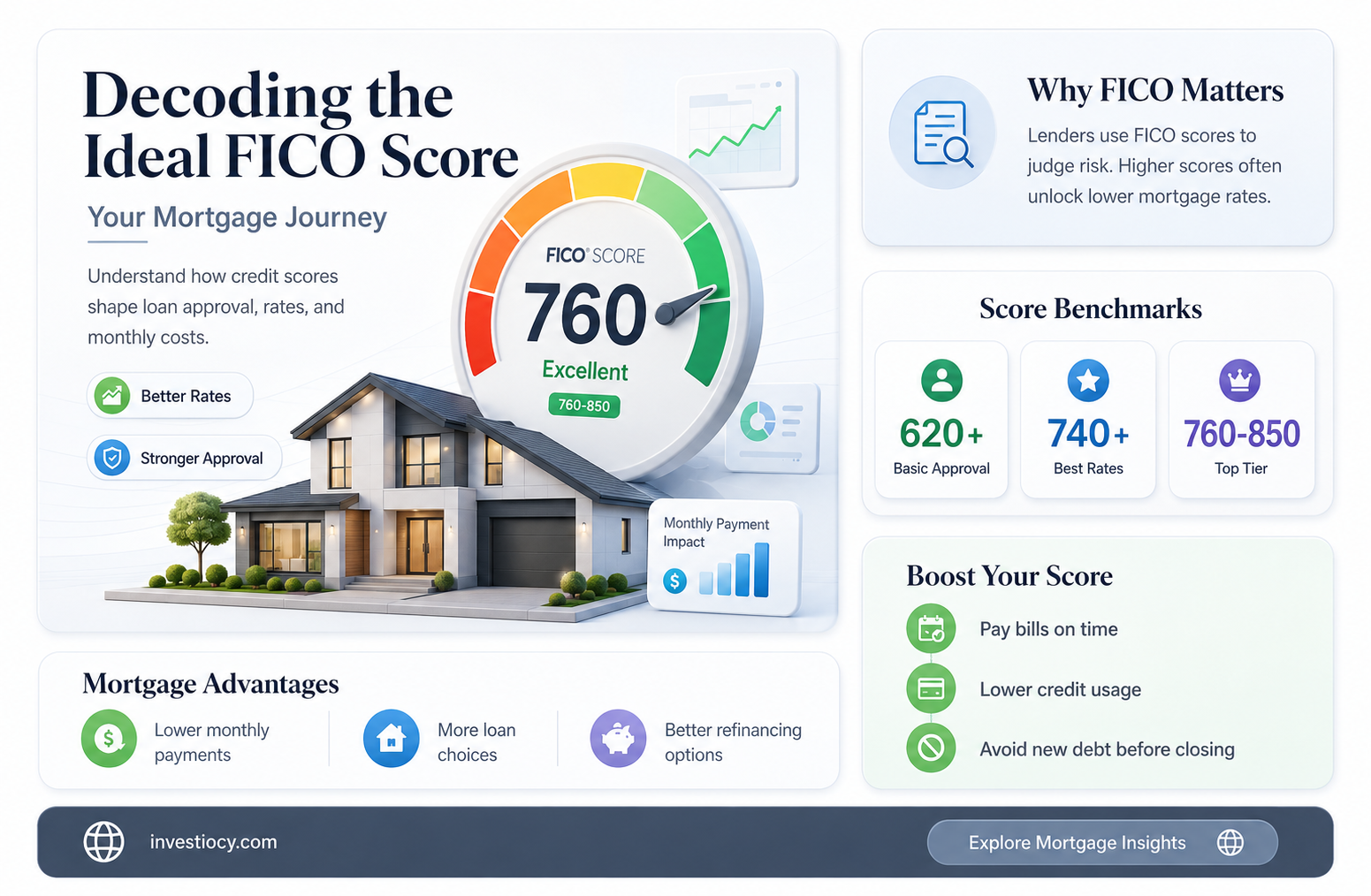
When considering applying for a mortgage, one of the key factors lenders evaluate is your credit score, specifically your FICO score. Your FICO score is a numerical representation of your creditworthiness, ranging from 300 to 850. A higher score indicates a better credit history and a lower risk for lenders. So, how high should your FICO score be for a mortgage? While there's no strict minimum, a score of at least 620 is generally considered the baseline for most conventional mortgage programs. However, aiming for a score of 700 or higher can significantly improve your chances of approval and potentially qualify you for better interest rates and loan terms. It's essential to check your credit report regularly, address any errors, and work on improving your score before applying for a mortgage to ensure you're in the best possible financial position.
Explore related products


What You'll Learn
- Conventional Loans: Typically require a minimum FICO score of 620, but higher scores secure better interest rates
- FHA Loans: More lenient, often approving applicants with FICO scores as low as 580, though higher scores are advantageous
- VA Loans: No specific FICO score requirement, but a higher score can lead to more favorable loan terms
- Jumbo Loans: Generally demand higher FICO scores, usually above 700, due to the larger loan amounts
- Impact of Credit History: A consistent, positive credit history can offset slightly lower FICO scores when applying for a mortgage

Conventional Loans: Typically require a minimum FICO score of 620, but higher scores secure better interest rates
Conventional loans are a popular choice for homebuyers due to their competitive interest rates and flexible terms. However, to qualify for these loans, borrowers typically need a minimum FICO score of 620. This score serves as a benchmark for lenders to assess creditworthiness and determine the likelihood of repayment. Borrowers with scores above 620 may not only qualify for conventional loans but also secure more favorable interest rates, potentially saving thousands of dollars over the life of the loan.
For instance, a borrower with a FICO score of 750 may be offered an interest rate of 3.5%, while a borrower with a score of 620 might receive a rate of 4.5%. Over a 30-year mortgage term, this difference in interest rates could result in significant savings. Therefore, it's crucial for potential homebuyers to understand the importance of their FICO score and take steps to improve it before applying for a conventional loan.
To boost their FICO score, borrowers can focus on several key areas. First, they should ensure timely payment of all debts, as payment history accounts for the largest portion of the FICO score calculation. Second, they should aim to reduce their credit utilization ratio by paying down existing balances and avoiding new debt. Third, they should monitor their credit report for errors and dispute any inaccuracies that may negatively impact their score.
Additionally, borrowers should be aware that different lenders may have varying requirements for FICO scores. While a score of 620 is generally considered the minimum for conventional loans, some lenders may require a higher score or offer more competitive rates for borrowers with excellent credit. Therefore, it's essential to shop around and compare offers from multiple lenders to find the best terms available.
In conclusion, a FICO score of 620 is typically the minimum requirement for conventional loans, but higher scores can lead to better interest rates and significant savings. By understanding the factors that influence their FICO score and taking steps to improve it, potential homebuyers can increase their chances of qualifying for a conventional loan and securing favorable terms.
Decoding the Mortgage: How Much House Can $1,800 a Month Buy?
You may want to see also
Explore related products




FHA Loans: More lenient, often approving applicants with FICO scores as low as 580, though higher scores are advantageous
FHA loans are known for their more lenient credit score requirements compared to conventional mortgages. While many conventional lenders require a minimum FICO score of 620 or higher, FHA loans often approve applicants with scores as low as 580. This makes FHA loans an attractive option for first-time homebuyers or those with less-than-perfect credit.
However, it's important to note that while a 580 credit score may be sufficient for FHA loan approval, higher scores can still be advantageous. Borrowers with higher credit scores may qualify for lower interest rates, which can save them thousands of dollars over the life of the loan. Additionally, some FHA lenders may have stricter credit score requirements than the FHA itself, so it's always a good idea to shop around and compare rates and terms from multiple lenders.
One unique aspect of FHA loans is that they require a minimum down payment of 3.5% of the purchase price, regardless of the borrower's credit score. This means that even borrowers with lower credit scores can still qualify for an FHA loan with a relatively small down payment. However, it's important to consider the long-term costs of a smaller down payment, as it can lead to higher monthly mortgage payments and potentially higher interest rates.
Another important consideration for FHA loan applicants is the impact of other financial factors, such as debt-to-income ratio and employment history. While a lower credit score may not necessarily disqualify an applicant, a high debt-to-income ratio or a history of job instability could make it more difficult to secure an FHA loan. Borrowers should take steps to improve their overall financial health before applying for an FHA loan, such as paying down debt and maintaining a stable employment history.
In conclusion, FHA loans offer a more accessible path to homeownership for borrowers with lower credit scores, but it's important to consider the long-term costs and other financial factors that may impact loan approval and terms. Borrowers should carefully evaluate their financial situation and shop around for the best FHA loan rates and terms before making a decision.
Exploring the Heights: Average Mortgage Costs for Mansions Unveiled
You may want to see also
Explore related products


VA Loans: No specific FICO score requirement, but a higher score can lead to more favorable loan terms
VA loans are a unique mortgage option available to veterans, active-duty military members, and their spouses. Unlike conventional loans, VA loans do not have a specific FICO score requirement. This means that even borrowers with lower credit scores may be eligible for a VA loan. However, it's important to note that while there is no minimum FICO score requirement, a higher score can lead to more favorable loan terms.
Lenders offering VA loans will typically consider a borrower's entire financial profile, including their credit history, income, and debt-to-income ratio. This holistic approach allows lenders to assess a borrower's ability to repay the loan, even if their credit score is less than perfect. However, borrowers with higher credit scores may be able to secure lower interest rates, better loan terms, and potentially even higher loan amounts.
One of the benefits of VA loans is that they offer competitive interest rates and loan terms, even for borrowers with lower credit scores. This is because the VA guarantees a portion of the loan, which reduces the lender's risk and allows them to offer more favorable terms. Additionally, VA loans do not require private mortgage insurance (PMI), which can save borrowers hundreds of dollars per month.
To improve their chances of securing a VA loan with favorable terms, borrowers should focus on maintaining a good credit history, paying their bills on time, and keeping their debt-to-income ratio low. While a higher FICO score is not required, it can certainly be beneficial in securing the best possible loan terms. Borrowers should also shop around and compare rates and terms from multiple lenders to ensure they are getting the best deal possible.
In conclusion, VA loans offer a unique opportunity for veterans and military members to secure a mortgage with favorable terms, even if their credit score is less than perfect. While there is no specific FICO score requirement, a higher score can lead to better loan terms and lower interest rates. Borrowers should focus on maintaining a good credit history and comparing rates and terms from multiple lenders to ensure they are getting the best possible deal.
Is Your Mortgage Too High? A Guide to Sustainable Homeownership
You may want to see also
Explore related products


Jumbo Loans: Generally demand higher FICO scores, usually above 700, due to the larger loan amounts
Jumbo loans, which exceed the conforming loan limits set by Fannie Mae and Freddie Mac, typically require borrowers to have higher FICO scores. This is due to the increased risk associated with larger loan amounts. Lenders often set a minimum FICO score requirement of 700 or higher for jumbo loans, although some may consider scores slightly below this threshold on a case-by-case basis.
The higher FICO score requirement for jumbo loans reflects the need for lenders to ensure that borrowers have a strong credit history and are likely to repay the loan. Borrowers with lower credit scores may be considered higher risk and may face higher interest rates or stricter loan terms. In some cases, lenders may also require additional documentation or a larger down payment for borrowers with lower FICO scores.
It's important for potential borrowers to understand that the FICO score is just one factor that lenders consider when evaluating a loan application. Other factors, such as income, employment history, and debt-to-income ratio, also play a significant role in determining whether a borrower is approved for a jumbo loan. Borrowers should work to improve their overall financial profile to increase their chances of qualifying for a jumbo loan.
Borrowers who are considering applying for a jumbo loan should check their credit reports and scores well in advance of the application process. This will give them time to address any errors or discrepancies on their reports and to work on improving their credit scores if necessary. Borrowers should also be prepared to provide detailed documentation of their income, assets, and debts, as lenders will scrutinize these factors closely when evaluating a jumbo loan application.
In conclusion, jumbo loans generally demand higher FICO scores due to the larger loan amounts and increased risk for lenders. Borrowers should be aware of this requirement and take steps to improve their credit scores and overall financial profile before applying for a jumbo loan. By doing so, they can increase their chances of qualifying for the loan and securing a favorable interest rate and loan terms.
Explore related products



Impact of Credit History: A consistent, positive credit history can offset slightly lower FICO scores when applying for a mortgage
A consistent, positive credit history can significantly influence mortgage lenders' decisions, potentially offsetting slightly lower FICO scores. This is because a strong credit history demonstrates a borrower's reliability and ability to manage debt responsibly over time. Lenders may view a consistent history of on-time payments and responsible credit usage as a more accurate predictor of future behavior than a single snapshot provided by a FICO score.
For instance, a borrower with a FICO score of 680, which is considered fair, might still qualify for a mortgage with favorable terms if they have a history of making payments on time and maintaining low credit card balances. Conversely, a borrower with a higher FICO score but a history of late payments or high credit utilization might face more stringent lending conditions.
It's important for potential homebuyers to understand that while FICO scores are a critical factor in the mortgage application process, they are not the sole determinant of eligibility or interest rates. By focusing on building a positive credit history through responsible financial habits, borrowers can improve their chances of securing a mortgage with competitive terms, even if their FICO score is not in the highest range.
In summary, a consistent, positive credit history can serve as a strong counterbalance to slightly lower FICO scores when applying for a mortgage. By demonstrating responsible financial behavior over time, borrowers can increase their likelihood of securing favorable lending terms and achieving their homeownership goals.



![NMLS Study Guide 2026-2027 - 5 Full-Length Practice Tests, SAFE MLO Exam Prep Secrets Book for the Mortgage Loan Originator Exam: [4th Edition]](https://m.media-amazon.com/images/I/717iHac5CwL._AC_UL320_.jpg)

