Josephine Norton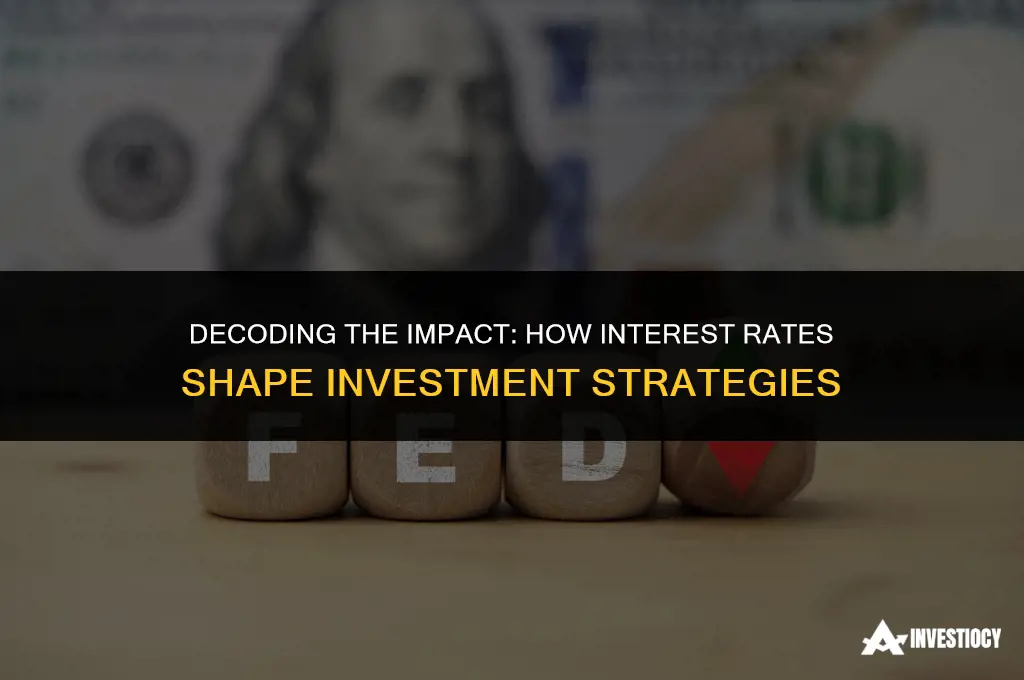
Interest rates play a pivotal role in shaping investment decisions and strategies. When interest rates are low, borrowing costs decrease, making it more attractive for individuals and businesses to take out loans for investments. This can lead to increased spending on capital goods, real estate, and other investment vehicles, stimulating economic growth. Conversely, high interest rates can deter investment as borrowing becomes more expensive, leading to reduced consumer and business spending. Additionally, interest rates influence the valuation of assets, with higher rates typically leading to lower stock prices and higher bond yields. Understanding how interest rates affect investment is crucial for investors, policymakers, and economists alike, as it helps in making informed decisions and predicting market trends.
Explore related products


What You'll Learn
- Impact on Bond Prices: Interest rates inversely affect bond prices; rising rates decrease bond values
- Stock Market Reaction: Higher interest rates can lead to lower stock prices due to increased borrowing costs
- Real Estate Market: Rising interest rates can reduce demand for mortgages, affecting property values
- Savings and Loans: Interest rates influence the return on savings and the cost of loans
- Economic Growth: Changes in interest rates can impact economic growth by affecting consumer spending and business investment

Impact on Bond Prices: Interest rates inversely affect bond prices; rising rates decrease bond values
The relationship between interest rates and bond prices is a fundamental concept in finance, characterized by an inverse correlation. When interest rates rise, bond prices fall, and vice versa. This dynamic is rooted in the mechanics of bond valuation. Bonds are essentially debt securities that pay a fixed rate of interest, known as the coupon rate, over a specified period. When interest rates increase, new bonds are issued with higher coupon rates, making existing bonds with lower rates less attractive to investors. As a result, the demand for these existing bonds decreases, leading to a decline in their market price.
For instance, consider a scenario where a 10-year bond with a 3% coupon rate is trading at par value, meaning its price is equal to its face value of $1,000. If interest rates rise to 4%, new 10-year bonds will offer a 4% coupon rate. Investors will prefer these new bonds over the existing ones, causing the price of the 3% bond to drop below par value. This price adjustment reflects the market's reassessment of the bond's value in light of the changed interest rate environment.
The impact of interest rates on bond prices is not only significant but also immediate. Market participants closely monitor interest rate movements and adjust their bond holdings accordingly. This can lead to substantial price volatility in the bond market, particularly in response to unexpected changes in monetary policy or economic indicators that influence interest rate expectations.
Moreover, the inverse relationship between interest rates and bond prices has important implications for investors. For example, investors who hold bonds with long maturities are more susceptible to price fluctuations caused by changes in interest rates. This risk, known as interest rate risk, can be mitigated through strategies such as diversifying bond holdings across different maturities or investing in floating-rate bonds, which adjust their coupon rates in response to changes in a benchmark interest rate.
In conclusion, understanding the impact of interest rates on bond prices is crucial for investors seeking to navigate the complexities of the bond market. By recognizing the inverse correlation between these two variables, investors can make informed decisions about their bond investments and manage their portfolios more effectively in various interest rate environments.
Unlocking Returns: A Guide to Investing in Argentina's Interest Rates
You may want to see also
Explore related products




Stock Market Reaction: Higher interest rates can lead to lower stock prices due to increased borrowing costs
Higher interest rates can have a profound impact on the stock market, primarily due to the increased cost of borrowing. When central banks raise interest rates, it becomes more expensive for companies to take out loans, which can lead to a decrease in business investment and expansion. This, in turn, can result in lower stock prices as investors become less optimistic about future corporate earnings.
One of the key mechanisms through which higher interest rates affect stock prices is the discount rate. Investors use the discount rate to calculate the present value of future cash flows, and when interest rates rise, the discount rate also increases. This means that future earnings are valued less highly in today's dollars, leading to a decrease in stock prices.
Another factor to consider is the impact of higher interest rates on consumer spending. As borrowing costs increase, consumers may be less likely to take out loans for large purchases, such as homes or cars. This can lead to a decrease in demand for certain industries, which can further contribute to lower stock prices.
However, it's important to note that the relationship between interest rates and stock prices is not always straightforward. In some cases, higher interest rates can actually lead to increased stock prices, particularly if investors believe that the rate hike will help to curb inflation and stabilize the economy.
In conclusion, the stock market's reaction to higher interest rates is complex and multifaceted. While increased borrowing costs can lead to lower stock prices, other factors such as investor sentiment and economic conditions can also play a significant role. As such, it's crucial for investors to carefully consider the broader economic context when making investment decisions.
Unlocking Wealth: The Power of Compound Interest in Investing
You may want to see also
Explore related products


Real Estate Market: Rising interest rates can reduce demand for mortgages, affecting property values
In the real estate market, rising interest rates can have a profound impact on demand for mortgages, subsequently affecting property values. This relationship is rooted in the basic economic principle that higher borrowing costs reduce the affordability of homes, leading to a decrease in demand. As interest rates climb, the monthly payments on mortgages increase, making it more challenging for potential homebuyers to qualify for loans or afford the homes they desire. This can result in a slowdown in the housing market, as fewer buyers are able to participate.
One of the key ways in which rising interest rates affect the real estate market is through the pricing mechanism. When interest rates are low, borrowing is cheaper, and this can drive up demand for homes, leading to higher prices. Conversely, when interest rates rise, borrowing becomes more expensive, and this can lead to a decrease in demand, causing prices to fall or stabilize. This effect can be particularly pronounced in markets where home prices are already high relative to incomes, as even small increases in interest rates can make homes unaffordable for many buyers.
Another important consideration is the impact of rising interest rates on existing homeowners. Those who have adjustable-rate mortgages may see their monthly payments increase significantly as interest rates rise, potentially leading to financial strain. This can result in an increase in foreclosures or short sales, as homeowners struggle to keep up with their mortgage payments. Additionally, rising interest rates can make it more difficult for homeowners to refinance their mortgages, which can limit their ability to tap into home equity or lower their monthly payments.
The effect of rising interest rates on the real estate market can also have broader economic implications. A slowdown in the housing market can lead to a decrease in construction activity, as builders respond to reduced demand by scaling back their operations. This can have a ripple effect throughout the economy, impacting industries such as lumber, appliances, and furniture. Furthermore, a decline in home prices can lead to a decrease in consumer wealth, which can reduce spending and economic growth.
In conclusion, rising interest rates can have a significant impact on the real estate market by reducing demand for mortgages and affecting property values. This can lead to a slowdown in the housing market, with potential consequences for both individual homeowners and the broader economy. Understanding this relationship is crucial for investors, policymakers, and anyone involved in the real estate market.
Unlocking Financial Growth: The Power of Compound Interest in Investment
You may want to see also
Explore related products


Savings and Loans: Interest rates influence the return on savings and the cost of loans
Interest rates play a pivotal role in the financial ecosystem, particularly in the context of savings and loans. When interest rates rise, the return on savings increases, making it more attractive for individuals to save money in interest-bearing accounts. Conversely, higher interest rates also lead to an increase in the cost of borrowing, as lenders charge more to compensate for the higher risk and opportunity cost associated with lending.
For savers, this means that their money can grow more quickly over time, providing a greater return on their savings. This can be particularly beneficial for long-term savers, such as those saving for retirement or a down payment on a house. However, for borrowers, higher interest rates can make loans more expensive, increasing the overall cost of borrowing and potentially making it more difficult to afford repayments.
One of the key ways in which interest rates affect savings and loans is through the concept of compound interest. Compound interest is the interest earned on both the principal amount and any accumulated interest, and it can significantly impact the growth of savings over time. For example, if an individual saves $1,000 in an account with a 5% annual interest rate, they will earn $50 in interest in the first year. In the second year, they will earn interest not only on the original $1,000, but also on the $50 in interest earned in the first year, resulting in a total of $52.50 in interest earned in the second year.
On the other hand, compound interest can also work against borrowers, as it can increase the total amount of interest paid over the life of a loan. For instance, if an individual takes out a $10,000 loan with a 6% annual interest rate and a 5-year repayment term, they will end up paying a total of $3,322.56 in interest, in addition to the original principal amount.
In conclusion, interest rates have a significant impact on both savings and loans, influencing the return on savings and the cost of borrowing. Understanding how interest rates work and how they affect financial decisions is crucial for individuals looking to make informed choices about their money.
Explore related products



$8.73 $19.99


Economic Growth: Changes in interest rates can impact economic growth by affecting consumer spending and business investment
Changes in interest rates can have a profound impact on economic growth, primarily through their influence on consumer spending and business investment. When interest rates are lowered, borrowing becomes cheaper, which can stimulate economic activity. Consumers are more likely to take out loans for purchases such as homes, cars, and other durable goods, thereby increasing demand and driving growth. Similarly, businesses find it more affordable to invest in new projects, expand their operations, and hire additional staff, contributing to overall economic expansion.
Conversely, higher interest rates can dampen economic growth by making borrowing more expensive. Consumers may delay or cancel major purchases, leading to reduced demand and slower growth. Businesses might also postpone investments or scale back their operations to manage higher borrowing costs, resulting in decreased economic activity. This relationship between interest rates and economic growth is crucial for policymakers, who often adjust interest rates to achieve specific economic objectives, such as controlling inflation or stimulating growth during a recession.
The impact of interest rates on economic growth can be further analyzed through the lens of monetary policy. Central banks, like the Federal Reserve in the United States, use interest rates as a key tool to influence the money supply and credit conditions in the economy. By adjusting the federal funds rate, central banks can affect the cost of borrowing for banks, which in turn influences the interest rates offered to consumers and businesses. This monetary policy tool is essential for managing economic cycles and achieving macroeconomic stability.
In addition to their direct effects on borrowing costs, changes in interest rates can also influence economic growth indirectly through their impact on asset prices. Lower interest rates can lead to higher stock prices and increased housing values, as investors seek higher returns in a low-interest-rate environment. This wealth effect can boost consumer confidence and spending, further stimulating economic growth. On the other hand, higher interest rates can depress asset prices, leading to reduced wealth and potentially lower consumer spending, which can slow economic growth.
Understanding the complex interplay between interest rates, consumer spending, business investment, and economic growth is essential for making informed decisions in both personal finance and macroeconomic policy. By recognizing how changes in interest rates can ripple through the economy, individuals and policymakers can better navigate the challenges and opportunities presented by varying economic conditions.
Frequently asked questions
Interest rates can significantly influence the stock market. When interest rates are low, borrowing costs decrease, which can lead to increased consumer spending and business investments. This, in turn, can boost stock prices. Conversely, high interest rates can reduce borrowing and spending, leading to lower stock prices. Additionally, low interest rates can make bonds less attractive, causing investors to shift their funds to stocks in search of higher returns.
The relationship between interest rates and bond prices is inversely proportional. When interest rates rise, bond prices fall, and vice versa. This is because the interest rate is the return an investor receives for holding a bond. If the interest rate increases, new bonds offer higher returns, making existing bonds with lower returns less attractive and thus reducing their price.
Changes in interest rates can have a substantial impact on real estate investments. Low interest rates can make mortgages more affordable, increasing demand for property and driving up prices. This can be beneficial for property owners and investors. However, high interest rates can make mortgages more expensive, reducing demand and potentially leading to lower property values. Additionally, high interest rates can increase the cost of financing for real estate developers, potentially slowing down new construction projects.
Interest rate changes directly affect the returns earned on savings accounts. When interest rates are high, savings accounts offer higher yields, encouraging people to save more. Conversely, low interest rates can reduce the incentive to save, as the returns are minimal. Additionally, high interest rates can lead to higher costs for banks, which may be passed on to customers in the form of fees or lower interest rates on savings accounts.