Josephine Norton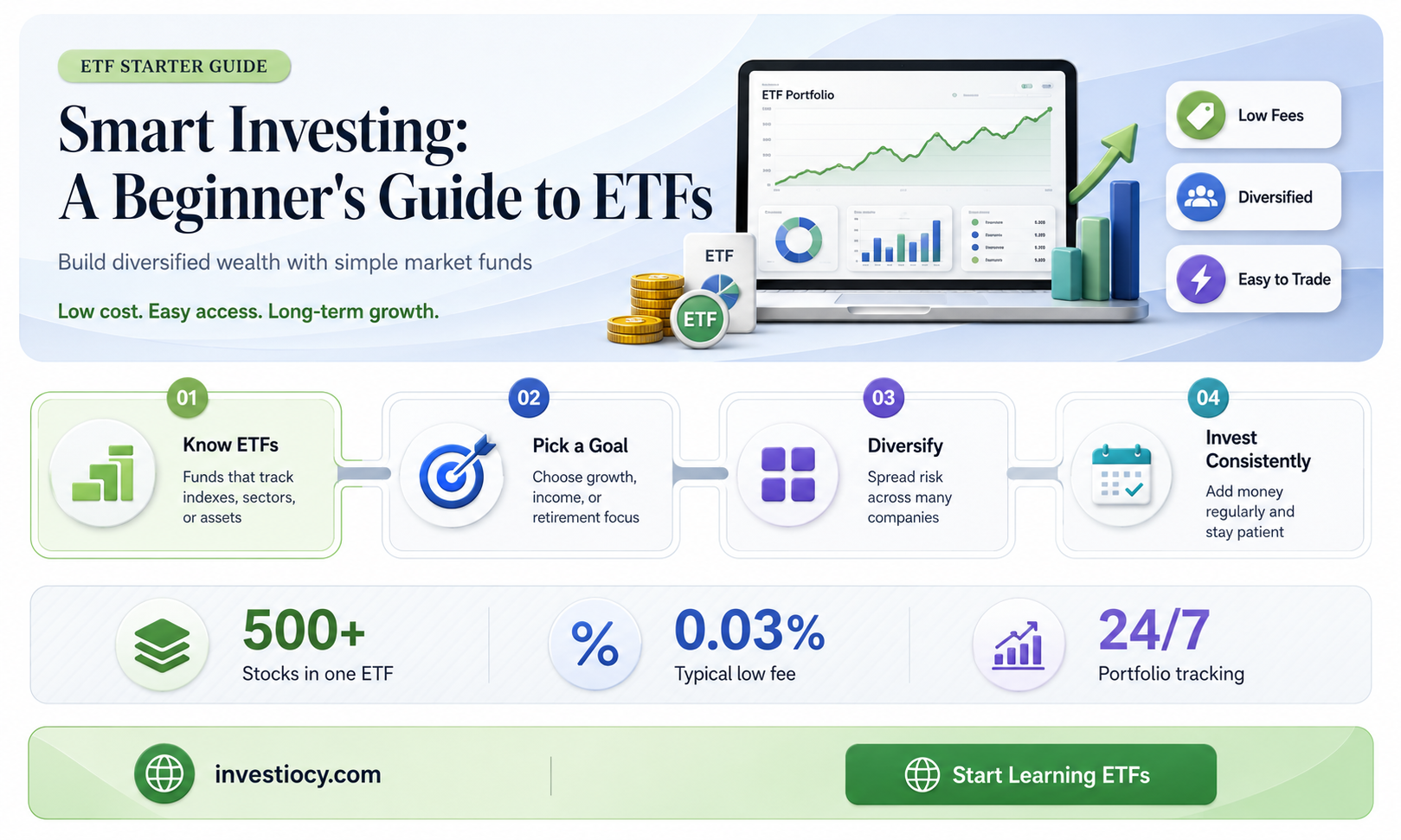
Investing in Exchange-Traded Funds (ETFs) is a popular strategy for diversifying one's portfolio and gaining exposure to various asset classes. ETFs are baskets of securities that trade on stock exchanges, offering investors a way to invest in a broad market index or a specific sector with relative ease. To start investing in ETFs, one should first understand the different types available, such as equity ETFs, bond ETFs, and commodity ETFs. It's also crucial to consider factors like expense ratios, liquidity, and the fund's tracking error. Investors can purchase ETFs through a brokerage account, and it's advisable to have a clear investment strategy and risk tolerance in mind. Regular monitoring and rebalancing of the portfolio can help ensure that the investment aligns with the investor's long-term goals.
Explore related products


What You'll Learn
- Understanding ETFs: Learn about Exchange-Traded Funds, their structure, and how they differ from mutual funds
- Choosing the Right ETF: Consider investment goals, risk tolerance, and diversification when selecting ETFs for your portfolio
- Researching ETF Performance: Analyze historical performance, track records, and expense ratios to make informed investment decisions
- Buying and Selling ETFs: Understand the process of purchasing and selling ETFs through a brokerage account, including trading costs
- Monitoring and Rebalancing: Regularly review your ETF investments, adjust allocations as needed, and stay informed about market changes

Understanding ETFs: Learn about Exchange-Traded Funds, their structure, and how they differ from mutual funds
Exchange-Traded Funds (ETFs) are a type of investment fund that holds a collection of assets, such as stocks, bonds, or commodities, and is traded on stock exchanges. They are designed to track the performance of a specific market index or sector, providing investors with a way to diversify their portfolios and gain exposure to different markets. Unlike mutual funds, which are priced once a day after the market closes, ETFs are priced continuously throughout the trading day, allowing for more flexibility and responsiveness to market changes.
One of the key differences between ETFs and mutual funds lies in their structure. ETFs are typically structured as open-ended investment companies or unit investment trusts, while mutual funds are structured as closed-end investment companies. This difference in structure affects how the funds are traded, managed, and taxed. ETFs are traded on an exchange like individual stocks, with investors buying and selling shares directly through a brokerage account. In contrast, mutual funds are bought and sold directly from the fund company, with investors purchasing units or shares at the fund's net asset value (NAV).
Another important distinction between ETFs and mutual funds is their management style. ETFs are generally passively managed, meaning they aim to replicate the performance of a specific index or benchmark without attempting to outperform it. This passive management approach typically results in lower fees and expenses compared to actively managed mutual funds, which employ fund managers to select individual securities and make investment decisions in an attempt to beat the market.
When considering how to invest in ETFs, it's important to understand the different types of ETFs available and their specific investment objectives. Some common types of ETFs include equity ETFs, which track stock market indexes; bond ETFs, which track fixed-income indexes; commodity ETFs, which track the performance of physical commodities; and currency ETFs, which track the performance of foreign currencies. Additionally, there are specialized ETFs that focus on specific sectors, such as technology or healthcare, or that use alternative investment strategies, such as leverage or inverse ETFs.
To invest in ETFs, you'll need to open a brokerage account and conduct thorough research to identify the ETFs that align with your investment goals and risk tolerance. Consider factors such as the ETF's underlying index, management fees, trading volume, and historical performance. Once you've selected an ETF, you can place a buy order through your brokerage account, specifying the number of shares you wish to purchase. It's important to monitor your ETF investments regularly and make adjustments as needed to ensure they continue to align with your overall investment strategy.
In summary, ETFs offer investors a flexible and cost-effective way to gain exposure to a wide range of markets and asset classes. By understanding the structure, management style, and types of ETFs available, investors can make informed decisions about how to incorporate ETFs into their investment portfolios.
Exploring the Future: A Guide to Investing in AI ETFs
You may want to see also
Explore related products


Choosing the Right ETF: Consider investment goals, risk tolerance, and diversification when selecting ETFs for your portfolio
To choose the right ETF, it's crucial to align your selection with your investment goals. Are you investing for retirement, a down payment on a house, or perhaps funding your child's education? Each goal will have a different time horizon and risk profile. For instance, if you're saving for retirement, you might opt for a mix of equity and bond ETFs to balance growth and stability. Conversely, if you're looking to make a large purchase in the near future, you might prefer more conservative, liquid ETFs that can provide quick access to your funds without significant capital loss.
Risk tolerance is another key factor. How comfortable are you with market fluctuations? If you're risk-averse, you might lean towards ETFs that track stable indices or sectors known for their resilience, such as consumer staples or healthcare. On the other hand, if you're willing to take on more risk for potentially higher returns, you could consider ETFs focused on emerging markets, technology, or small-cap stocks. It's important to honestly assess your risk tolerance, as investing in ETFs that are too volatile for your comfort level can lead to stress and potentially poor decision-making.
Diversification is a critical component of ETF selection. By spreading your investments across different asset classes, sectors, and geographic regions, you can reduce the impact of any single market downturn on your portfolio. For example, you might combine a broad market equity ETF with a bond ETF and a real estate ETF to create a diversified portfolio. Additionally, consider the specific holdings within each ETF to avoid overlap and ensure a well-rounded investment strategy.
When selecting ETFs, it's also important to consider the fund's size, liquidity, and expense ratio. Larger ETFs with higher trading volumes tend to be more liquid and have lower expense ratios, which can be beneficial for long-term investors. However, smaller ETFs might offer more specialized or niche investment opportunities that could be attractive for those looking to target specific sectors or strategies.
Finally, don't overlook the importance of rebalancing your ETF portfolio periodically. As market conditions change and your investments grow, your portfolio's asset allocation may drift from your original strategy. Regular rebalancing can help maintain your desired risk profile and ensure that your investments remain aligned with your goals.
In conclusion, choosing the right ETF involves a careful consideration of your investment goals, risk tolerance, and diversification needs. By taking the time to research and select ETFs that align with your unique financial situation and objectives, you can build a strong foundation for your investment portfolio.
Smart Investing: A Beginner's Guide to BlackRock ETFs
You may want to see also
Explore related products


Researching ETF Performance: Analyze historical performance, track records, and expense ratios to make informed investment decisions
To make informed investment decisions when it comes to ETFs, it's crucial to conduct thorough research on their performance. This involves analyzing historical performance data, examining track records, and scrutinizing expense ratios. By doing so, investors can gain a comprehensive understanding of an ETF's potential and make more informed choices.
Historical performance data provides valuable insights into an ETF's past behavior. Investors should look at the ETF's price changes over time, as well as its returns compared to relevant benchmarks. This information can help identify trends, patterns, and potential risks. For example, an ETF with a history of high volatility may not be suitable for risk-averse investors. On the other hand, an ETF with a consistent track record of outperforming its benchmark may be a more attractive option.
Track records are another important aspect to consider. Investors should research the ETF's management team and their experience in managing similar funds. A strong track record can indicate that the management team has a proven ability to navigate different market conditions and make effective investment decisions. Additionally, investors should look at the ETF's investment strategy and how it aligns with their own investment goals and risk tolerance.
Expense ratios are a critical factor in ETF research. These ratios represent the annual operating expenses of the ETF as a percentage of its assets. Lower expense ratios can lead to higher net returns for investors, as more of the ETF's gains are distributed to shareholders rather than being eaten up by fees. Investors should compare expense ratios across different ETFs to find the most cost-effective options.
In conclusion, researching ETF performance is a multifaceted process that involves analyzing historical data, examining track records, and scrutinizing expense ratios. By taking the time to conduct this research, investors can make more informed decisions and potentially improve their investment outcomes.
Smart Investing: Your Guide to Dow Jones ETFs
You may want to see also
Explore related products


Buying and Selling ETFs: Understand the process of purchasing and selling ETFs through a brokerage account, including trading costs
To buy and sell ETFs through a brokerage account, you'll need to follow a specific process that involves several key steps. First, you'll need to open a brokerage account if you don't already have one. This typically involves providing personal information, such as your name, address, and Social Security number, as well as funding the account with an initial deposit. Once your account is open, you can begin trading ETFs.
When you're ready to buy an ETF, you'll need to place a buy order through your brokerage platform. This involves specifying the ETF you want to purchase, the number of shares you'd like to buy, and the price you're willing to pay. Your brokerage firm will then execute the trade on your behalf, purchasing the ETF shares and adding them to your account.
Selling ETFs is a similar process. You'll need to place a sell order through your brokerage platform, specifying the ETF you want to sell, the number of shares you'd like to sell, and the price you're willing to accept. Your brokerage firm will then execute the trade, selling the ETF shares and crediting your account with the proceeds.
It's important to note that trading ETFs can involve costs, such as commissions and fees. These costs can vary depending on the brokerage firm and the specific ETFs you're trading. Some brokerage firms offer commission-free trading on certain ETFs, while others may charge a flat fee or a percentage of the trade value. Additionally, ETFs may have their own fees, such as management fees and operating expenses, which can impact your overall investment returns.
When trading ETFs, it's also important to consider the tax implications. Buying and selling ETFs can trigger capital gains taxes, which are taxes on the profits you make from selling an investment. The tax rate you pay will depend on your income level and how long you held the ETF before selling it. If you held the ETF for less than a year, you'll pay short-term capital gains taxes, which are typically higher than long-term capital gains taxes.
In conclusion, buying and selling ETFs through a brokerage account involves a specific process that includes opening an account, placing buy and sell orders, and understanding the associated costs and tax implications. By following these steps and considering the potential costs and taxes, you can successfully trade ETFs and manage your investment portfolio.
Smart Investing: A Beginner's Guide to ETFs with Fidelity
You may want to see also
Explore related products




Monitoring and Rebalancing: Regularly review your ETF investments, adjust allocations as needed, and stay informed about market changes
Regularly reviewing your ETF investments is crucial to ensure that your portfolio remains aligned with your financial goals and risk tolerance. Market fluctuations can cause your asset allocation to drift over time, potentially exposing you to higher risk or lower returns than intended. By monitoring your investments, you can identify when rebalancing is necessary to maintain your desired asset mix.
To effectively monitor your ETF investments, consider setting up a regular review schedule, such as quarterly or semi-annually. During these reviews, assess your portfolio's performance relative to your benchmarks and evaluate whether your current allocation still reflects your investment objectives. Additionally, stay informed about market changes, economic indicators, and news that could impact your investments.
Rebalancing involves adjusting your portfolio's asset allocation to bring it back in line with your target mix. This may require buying or selling ETFs to increase or decrease exposure to specific asset classes or sectors. When rebalancing, consider transaction costs, tax implications, and the potential impact on your overall investment strategy.
One common mistake investors make is failing to rebalance their portfolios regularly, leading to overexposure to certain asset classes or sectors. For example, if the stock market has been performing well, your equity allocation may have grown larger than intended, increasing your portfolio's risk profile. By rebalancing, you can lock in gains and reduce risk by shifting some of your holdings to other asset classes.
Another important aspect of monitoring and rebalancing is staying informed about changes in the ETF landscape. This includes keeping track of new ETF launches, changes in fund management, and updates to ETF prospectuses. By staying up-to-date, you can make informed decisions about whether to maintain or adjust your ETF holdings in response to these changes.
In conclusion, monitoring and rebalancing are essential components of successful ETF investing. By regularly reviewing your investments, adjusting your allocations as needed, and staying informed about market changes, you can help ensure that your portfolio remains aligned with your financial goals and risk tolerance.
Diversify Your Portfolio: A Guide to Investing in BRICS ETFs
You may want to see also