 Inaya Mclaughlin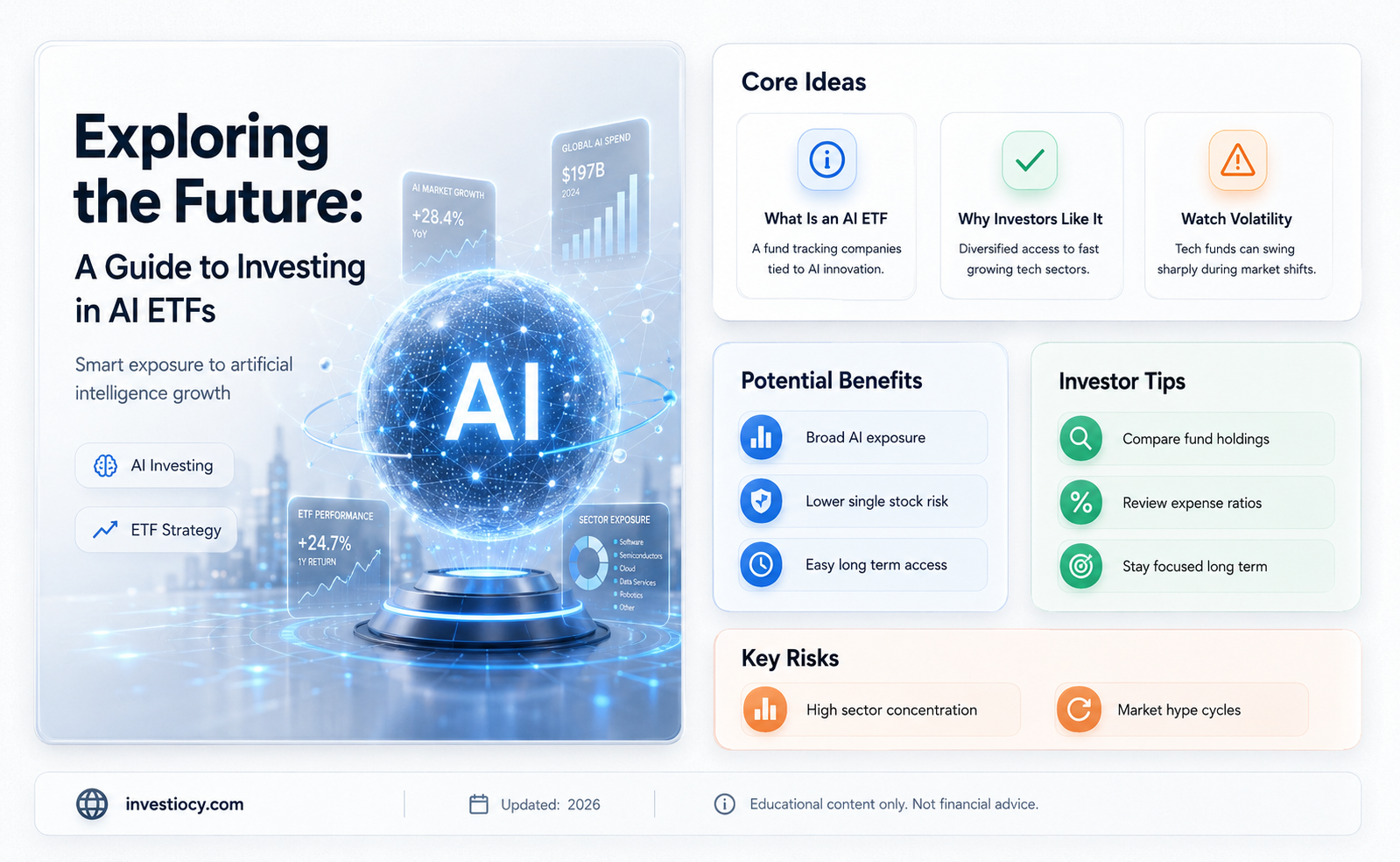
Investing in AI ETFs (Exchange-Traded Funds) has become increasingly popular as artificial intelligence continues to transform various industries. AI ETFs offer investors a diversified portfolio of companies involved in the development and application of AI technologies, ranging from machine learning and robotics to natural language processing and computer vision. These funds provide a convenient way to gain exposure to the AI sector without the need to invest in individual stocks. When considering how to invest in AI ETFs, it's essential to research the fund's holdings, management fees, and performance history to ensure alignment with your investment goals and risk tolerance. Additionally, understanding the broader AI market trends and potential regulatory impacts can help investors make informed decisions and capitalize on the growth potential of this rapidly evolving field.
Explore related products

$14.99 $14.99

$9.99 $14.99


What You'll Learn
- Understanding AI ETFs: Learn about AI ETFs, their structure, and how they track AI-related stocks
- Researching AI ETF Options: Explore different AI ETFs available in the market, their performance, and investment strategies
- Evaluating Risk and Return: Assess the risk profile and potential returns of AI ETFs compared to other investments
- Diversifying Your Portfolio: Consider how AI ETFs can enhance portfolio diversification and mitigate overall investment risk
- Getting Started with Investment: Understand the steps to invest in AI ETFs, including account setup and trading strategies

Understanding AI ETFs: Learn about AI ETFs, their structure, and how they track AI-related stocks
AI ETFs, or Artificial Intelligence Exchange-Traded Funds, are investment vehicles that allow investors to gain exposure to companies involved in the AI sector. These funds are structured as a collection of securities that trade on stock exchanges, providing a diversified portfolio of AI-related stocks.
The structure of AI ETFs typically involves a mix of large-cap, mid-cap, and small-cap companies that are engaged in various aspects of AI, such as machine learning, natural language processing, and robotics. Some AI ETFs may also include companies that are not directly involved in AI but are expected to benefit from the technology's growth, such as cloud computing providers or semiconductor manufacturers.
AI ETFs track AI-related stocks by following a specific index or benchmark that measures the performance of the AI sector. This index is often created by a third-party provider, such as MSCI or S&P, and is designed to represent the broad AI market. The ETF manager then selects securities that closely match the index's composition and weightings, ensuring that the fund's performance is closely aligned with that of the AI sector as a whole.
Investing in AI ETFs can provide several benefits, including diversification, liquidity, and cost efficiency. By holding a basket of AI-related stocks, investors can reduce their exposure to individual company risks and gain access to a broader range of opportunities within the sector. Additionally, AI ETFs trade on stock exchanges, making them easily accessible and allowing investors to buy and sell shares throughout the trading day. Finally, AI ETFs often have lower expense ratios than actively managed funds, making them a cost-effective way to invest in the AI sector.
However, it's important to note that AI ETFs also come with certain risks. The AI sector is rapidly evolving and highly competitive, which can lead to volatility in stock prices. Additionally, AI ETFs may be subject to sector-specific risks, such as regulatory changes or technological disruptions. As with any investment, it's crucial to conduct thorough research and consider your risk tolerance before investing in AI ETFs.
Diversify Your Portfolio: A Beginner's Guide to Investing in Silver ETFs
You may want to see also
Explore related products


Researching AI ETF Options: Explore different AI ETFs available in the market, their performance, and investment strategies
To begin researching AI ETF options, it's essential to understand the landscape of available funds. As of my last update in June 2024, there are several AI-focused ETFs on the market, each with its own unique investment strategy and performance metrics. Some of the notable AI ETFs include the Global X Artificial Intelligence ETF (AIQ), the ARK Innovation ETF (ARKK), and the iShares Robotics & Artificial Intelligence ETF (IRBO). These funds vary in their specific focus areas within AI, such as robotics, machine learning, and innovation.
When evaluating the performance of these ETFs, it's crucial to consider both short-term and long-term trends. For instance, the Global X Artificial Intelligence ETF (AIQ) has shown strong growth over the past five years, with a compound annual growth rate (CAGR) of approximately 25%. However, it's also important to note that past performance is not indicative of future results. Investors should analyze the underlying holdings of each ETF to understand the specific companies and sectors driving their performance.
Investment strategies for AI ETFs can vary significantly. Some funds, like the ARK Innovation ETF (ARKK), are actively managed and focus on disruptive innovation across various sectors, including AI. Others, like the iShares Robotics & Artificial Intelligence ETF (IRBO), are passively managed and track a specific index related to robotics and AI. Understanding these strategies is key to aligning your investment goals with the right ETF.
In addition to performance and strategy, investors should also consider the risks associated with AI ETFs. These can include sector-specific risks, such as regulatory changes impacting the AI industry, as well as broader market risks. Diversification across different AI ETFs and other investment vehicles can help mitigate these risks.
Finally, it's important to keep an eye on emerging trends and developments in the AI space. This includes advancements in technology, changes in market demand, and new entrants into the ETF market. Staying informed about these trends can help investors make more informed decisions about their AI ETF investments.
Smart Investing: A Beginner's Guide to BlackRock ETFs
You may want to see also
Explore related products

$16.75 $15.07


Evaluating Risk and Return: Assess the risk profile and potential returns of AI ETFs compared to other investments
To evaluate the risk and return of AI ETFs compared to other investments, it's crucial to understand the underlying technology and market trends driving these funds. AI ETFs invest in companies that are leaders in artificial intelligence, machine learning, and related technologies. These sectors are known for their high growth potential but also come with significant risks due to rapid technological changes and regulatory uncertainties.
One way to assess the risk profile of AI ETFs is to look at their historical performance and volatility. Since AI is a relatively new field, historical data might be limited, but it can still provide valuable insights. For instance, during market downturns, AI ETFs might experience higher volatility compared to more established sectors like healthcare or financials. However, they might also offer higher returns during bull markets due to their growth potential.
Another factor to consider is the diversification of the ETF's holdings. A well-diversified AI ETF will invest in a range of companies across different sub-sectors of AI, such as robotics, natural language processing, and computer vision. This diversification can help mitigate risks associated with any single company or technology.
When comparing AI ETFs to other investments, it's important to consider the broader market context. For example, if interest rates are rising, bond yields might become more attractive, potentially reducing the appeal of riskier investments like AI ETFs. Conversely, if there's a global push towards technological innovation, AI ETFs might outperform more traditional investments.
Ultimately, the decision to invest in AI ETFs should be based on a thorough understanding of the risks and potential returns, as well as an investor's personal risk tolerance and investment goals. It's always advisable to consult with a financial advisor and conduct extensive research before making any investment decisions.
Smart Investing: A Beginner's Guide to ETFs with Fidelity
You may want to see also
Explore related products


Diversifying Your Portfolio: Consider how AI ETFs can enhance portfolio diversification and mitigate overall investment risk
Diversifying your portfolio is a fundamental strategy in investment management, aimed at reducing risk by spreading investments across various asset classes, sectors, and geographic regions. AI ETFs can play a significant role in enhancing this diversification. These funds invest in companies that are involved in the development and application of artificial intelligence technologies, which span a wide range of industries from healthcare to finance to manufacturing. By including AI ETFs in your portfolio, you gain exposure to a broad spectrum of innovative companies that are driving technological advancements.
One of the key benefits of AI ETFs is their ability to mitigate overall investment risk. Traditional portfolios often rely heavily on a few large-cap stocks or bonds, which can be vulnerable to market fluctuations and economic downturns. AI ETFs, on the other hand, offer a basket of stocks that are carefully selected to represent the AI sector. This diversification helps to spread risk, as the performance of individual stocks is less likely to have a significant impact on the overall portfolio. Moreover, AI is a rapidly growing field with a strong potential for long-term returns, which can help to balance out the risks associated with more volatile investments.
To effectively incorporate AI ETFs into a diversified portfolio, investors should consider several factors. First, it's important to assess the current allocation of assets in your portfolio and identify areas where AI investments could provide additional diversification. This might involve rebalancing your portfolio to make room for AI ETFs without overexposing yourself to any single sector. Second, investors should research different AI ETFs to understand their specific focus areas, investment strategies, and risk profiles. Some AI ETFs may concentrate on specific subsectors, such as machine learning or robotics, while others may take a more broad-based approach.
Once you have selected an AI ETF that aligns with your investment goals and risk tolerance, it's crucial to monitor its performance and adjust your portfolio as needed. This includes keeping track of market trends, regulatory changes, and technological advancements that could impact the AI sector. Additionally, investors should be mindful of the fees associated with AI ETFs, as these can eat into returns over time. By regularly reviewing and rebalancing your portfolio, you can ensure that your investments remain aligned with your objectives and risk appetite.
In conclusion, AI ETFs offer a compelling opportunity for investors to diversify their portfolios and mitigate risk. By providing exposure to a wide range of companies involved in AI development and application, these funds can help to spread risk and potentially deliver strong long-term returns. However, it's important for investors to carefully consider their current portfolio allocation, research different AI ETFs, and monitor their investments to ensure that they remain aligned with their financial goals and risk tolerance.
Diversify Your Portfolio: A Guide to Investing in Farmland ETFs
You may want to see also
Explore related products

Getting Started with Investment: Understand the steps to invest in AI ETFs, including account setup and trading strategies
To begin investing in AI ETFs, the first step is to set up a brokerage account with a reputable financial institution. This process typically involves providing personal information, such as your name, address, and social security number, as well as selecting the type of account you wish to open (e.g., individual, joint, or retirement). Once your account is established, you will need to fund it by transferring money from a bank account or another investment vehicle.
After your brokerage account is funded, you can start researching AI ETFs to determine which ones align with your investment goals and risk tolerance. Consider factors such as the ETF's underlying holdings, expense ratio, and historical performance. You may also want to consult with a financial advisor or conduct your own due diligence by reading the ETF's prospectus and analyzing industry trends.
When you are ready to make a trade, you can place an order through your brokerage account's online platform or mobile app. Most brokers offer commission-free trading for ETFs, but be aware of any potential fees or transaction costs. It's also important to consider the timing of your trades, as market conditions can fluctuate rapidly.
One trading strategy for AI ETFs is to adopt a long-term, buy-and-hold approach. This involves purchasing a fixed number of shares and holding onto them for an extended period, regardless of short-term market volatility. Another strategy is to engage in dollar-cost averaging, where you invest a fixed amount of money at regular intervals, which can help mitigate the impact of market fluctuations.
As with any investment, it's crucial to monitor your AI ETF holdings regularly and adjust your portfolio as needed. Stay informed about market developments and company news that may affect your investments. Additionally, consider diversifying your portfolio by including a mix of AI ETFs, as well as other asset classes, to minimize risk and maximize potential returns.
In conclusion, getting started with investing in AI ETFs involves setting up a brokerage account, researching and selecting ETFs, placing trades, and implementing a trading strategy. By following these steps and staying informed, you can potentially benefit from the growth and innovation in the AI sector.
Diversify Your Portfolio: A Guide to Investing in BRICS ETFs
You may want to see also
Frequently asked questions
An AI ETF, or Artificial Intelligence Exchange-Traded Fund, is a type of investment fund that holds a collection of stocks in companies that are involved in the development and use of artificial intelligence technology. These funds are traded on stock exchanges and offer investors a way to gain exposure to the AI sector without having to invest in individual stocks.
Choosing the right AI ETF involves considering several factors, including the fund's investment strategy, the companies it holds, its performance history, and its fees. It's important to research and compare different AI ETFs to find one that aligns with your investment goals and risk tolerance.
Investing in an AI ETF can provide several benefits, including diversification, as the fund holds multiple stocks across the AI sector. This can help spread risk and potentially increase returns. Additionally, AI ETFs offer a convenient way to invest in a growing and innovative sector without the need for extensive research or knowledge of individual companies.
Like any investment, there are risks associated with investing in an AI ETF. These can include market risk, as the value of the fund can fluctuate based on market conditions. There's also sector risk, as the AI sector is subject to rapid technological changes and regulatory developments. It's important to understand these risks and consider them in the context of your overall investment portfolio.
