Clark Galvan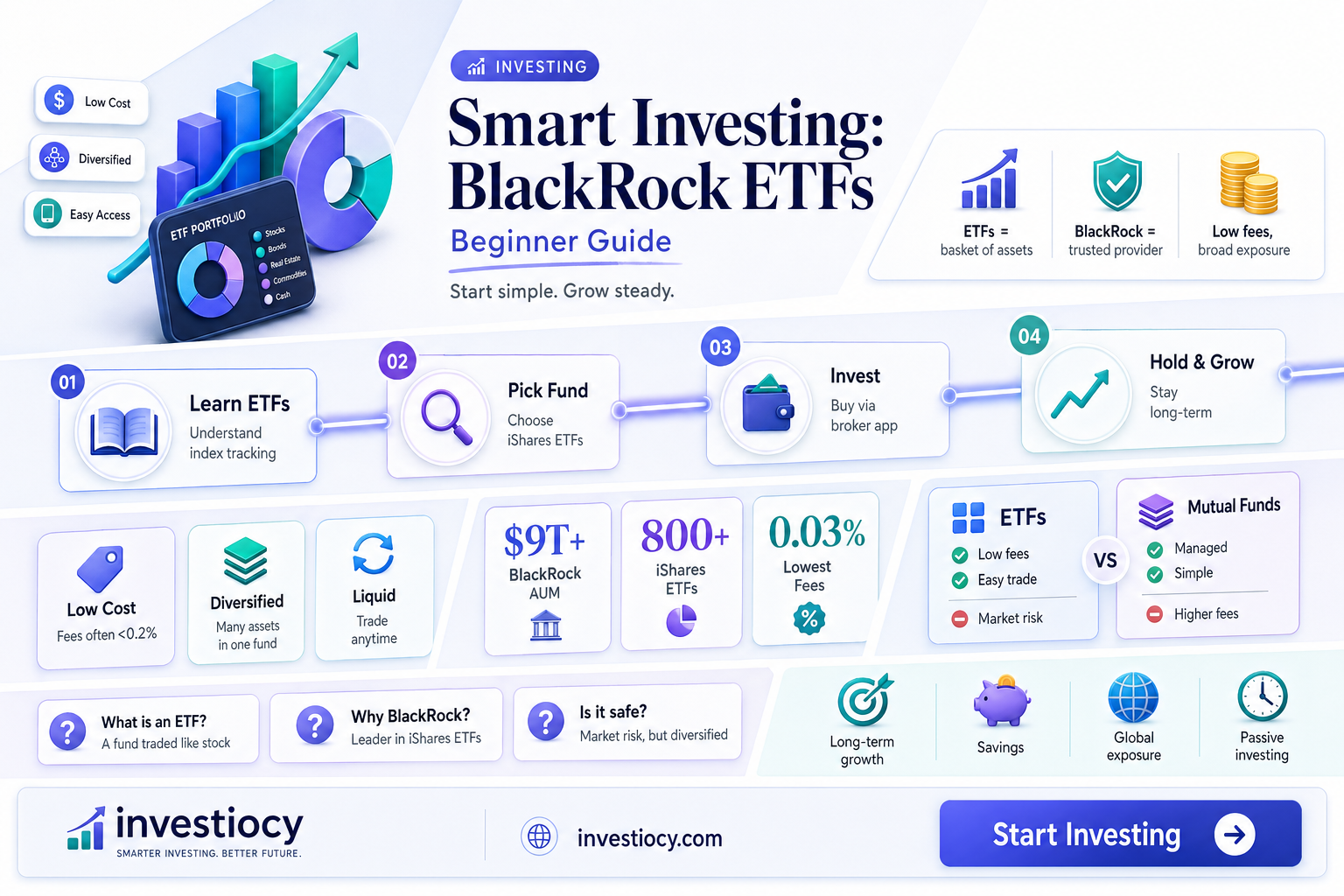
Investing in a BlackRock ETF (Exchange-Traded Fund) can be a strategic move for those looking to diversify their portfolio and tap into the expertise of one of the world's largest asset managers. BlackRock offers a wide range of ETFs covering various asset classes, sectors, and investment strategies, making it accessible for both novice and experienced investors. To start investing in a BlackRock ETF, one typically needs to open a brokerage account, research the specific ETF that aligns with their investment goals, and then execute a trade to purchase shares. It's important to consider factors such as the ETF's expense ratio, performance history, and the underlying assets it holds. Additionally, understanding the broader economic context and having a long-term investment perspective can be beneficial when navigating the complexities of the financial markets.
Explore related products


What You'll Learn
- Understanding BlackRock ETFs: Learn about BlackRock's range of ETFs, their sectors, and investment strategies
- Choosing the Right ETF: Consider your investment goals, risk tolerance, and time horizon to select an appropriate BlackRock ETF
- Opening a Brokerage Account: Find a suitable brokerage platform that offers BlackRock ETFs and open an account
- Investing Strategies: Decide on a lump sum or dollar-cost averaging approach to invest in BlackRock ETFs
- Monitoring and Rebalancing: Regularly review your investment performance and adjust your portfolio as needed to maintain your desired asset allocation

Understanding BlackRock ETFs: Learn about BlackRock's range of ETFs, their sectors, and investment strategies
BlackRock offers a diverse range of Exchange-Traded Funds (ETFs) that cater to various investment sectors and strategies. Understanding these ETFs is crucial for investors looking to diversify their portfolios and align their investments with specific market segments or financial goals.
One key aspect of BlackRock's ETF offerings is their sector-specific funds. These ETFs track the performance of particular industries, such as technology, healthcare, or financials. For instance, the iShares North American Tech ETF (IGM) provides exposure to leading technology companies in North America, while the iShares U.S. Healthcare ETF (IYH) focuses on the healthcare sector. Investors can choose from a wide array of sector ETFs to gain targeted exposure to areas they believe will outperform the broader market.
In addition to sector ETFs, BlackRock also offers funds that follow specific investment strategies. These include ETFs that track indexes with a particular weighting scheme, such as the iShares Core S&P 500 ETF (IVV), which replicates the S&P 500 index, and the iShares Russell 2000 ETF (IWM), which focuses on small-cap stocks. Other strategic ETFs may emphasize factors like value, growth, or dividends, allowing investors to tailor their portfolios to their preferred investment style.
BlackRock's ETFs are known for their liquidity and cost-effectiveness. They trade on major stock exchanges, providing investors with easy access and the ability to buy and sell shares throughout the trading day. Additionally, BlackRock's ETFs typically have lower expense ratios compared to actively managed funds, making them an attractive option for cost-conscious investors.
When investing in BlackRock ETFs, it's essential to consider factors such as risk tolerance, investment horizon, and financial goals. Diversification across different sectors and strategies can help mitigate risk and optimize returns. Investors should also be aware of the specific holdings and performance of each ETF to ensure alignment with their overall investment strategy.
In conclusion, BlackRock's range of ETFs provides investors with a versatile toolkit to construct diversified portfolios tailored to their individual needs and preferences. By understanding the various sectors and investment strategies offered by BlackRock, investors can make informed decisions to achieve their financial objectives.
Diversify Your Portfolio: A Beginner's Guide to Investing in Silver ETFs
You may want to see also
Explore related products


Choosing the Right ETF: Consider your investment goals, risk tolerance, and time horizon to select an appropriate BlackRock ETF
To choose the right BlackRock ETF, it's crucial to align your investment selection with your personal financial objectives. Begin by clearly defining your investment goals. Are you looking for long-term growth, regular income, or a combination of both? Understanding your goals will help you narrow down the type of ETF that suits your needs. For instance, if your goal is to generate regular income, you might consider a bond ETF or a dividend-focused equity ETF. Conversely, if you're aiming for long-term capital appreciation, a growth-oriented equity ETF could be more appropriate.
Next, assess your risk tolerance. This is a critical factor in selecting an ETF, as different funds carry varying levels of risk. If you're risk-averse, you may want to opt for a more conservative ETF, such as one that invests in government bonds or large-cap, stable companies. On the other hand, if you're comfortable with higher risk in pursuit of potentially higher returns, you might consider ETFs that invest in emerging markets, small-cap stocks, or specific sectors like technology or healthcare.
Your investment time horizon is another key consideration. If you're investing for the long term, you may be able to afford more volatility and thus choose a more aggressive ETF. However, if your time horizon is shorter, you'll want to select an ETF that offers more stability and liquidity. For example, a short-term bond ETF could be a good choice for investors who need access to their funds within a few years.
When evaluating BlackRock ETFs, it's also important to consider the fund's size and liquidity. Larger ETFs tend to be more liquid, making it easier to buy and sell shares without significantly impacting the fund's price. Additionally, look at the ETF's expense ratio, which is the annual fee charged by the fund manager. Lower expense ratios can help maximize your returns over time.
Finally, don't overlook the importance of diversification. Even if you're investing in an ETF, which inherently provides some level of diversification, it's wise to spread your investments across different asset classes and sectors to minimize risk. By carefully considering your investment goals, risk tolerance, time horizon, and the specific characteristics of each BlackRock ETF, you can make an informed decision that aligns with your overall financial strategy.
Strategic Investing: Diversifying Your Portfolio with Lithium ETFs
You may want to see also
Explore related products


Opening a Brokerage Account: Find a suitable brokerage platform that offers BlackRock ETFs and open an account
To begin investing in BlackRock ETFs, the first crucial step is to find a suitable brokerage platform that offers these investment products. Not all brokerages carry every ETF, so it's important to do your research to ensure the platform you choose provides access to the specific BlackRock ETFs you're interested in. Start by visiting the BlackRock website to see a list of their ETFs and then cross-reference this with the offerings of various brokerage firms.
Once you've identified a brokerage that meets your needs, the next step is to open an account. This process typically involves filling out an online application form, which will ask for personal information such as your name, address, Social Security number, and employment details. You'll also need to provide information about your investment goals, risk tolerance, and financial situation. Some brokerages may require a minimum initial deposit, so be sure to check the requirements before you begin the application process.
After submitting your application, you'll likely need to wait for the brokerage to review and approve your account. This can take anywhere from a few minutes to a few days, depending on the brokerage and the complexity of your application. Once your account is approved, you'll be able to fund it and start investing in BlackRock ETFs.
When choosing a brokerage, it's also important to consider the fees associated with trading ETFs. Some brokerages offer commission-free trading, while others may charge a fee per trade. Additionally, be aware of any other fees that may apply, such as account maintenance fees or fees for transferring funds. By carefully comparing the fees and services of different brokerages, you can find the most cost-effective option for your investment needs.
Finally, before you start trading, take the time to familiarize yourself with the brokerage's platform and tools. This may include exploring the website, downloading the mobile app, and testing out any analytical or research tools that are available. By getting comfortable with the platform, you'll be better equipped to make informed investment decisions and manage your portfolio effectively.
Diversify Your Portfolio: A Guide to Investing in BRICS ETFs
You may want to see also
Explore related products





Investing Strategies: Decide on a lump sum or dollar-cost averaging approach to invest in BlackRock ETFs
Deciding on an investment strategy is a crucial step when considering BlackRock ETFs. Two popular approaches are lump sum investing and dollar-cost averaging. Lump sum investing involves depositing a large amount of money into the ETF at once, while dollar-cost averaging entails investing a fixed amount of money at regular intervals.
Lump sum investing can be advantageous if you have a significant amount of capital available and are confident in the ETF's performance. This approach allows you to take advantage of potential market dips and can result in lower transaction costs over time. However, it also carries the risk of investing at an inopportune time, which could lead to short-term losses.
Dollar-cost averaging, on the other hand, is a more conservative strategy that can help mitigate the risk of market volatility. By investing a fixed amount regularly, you are essentially buying more shares when the price is low and fewer shares when the price is high. This approach can also help in building a habit of regular investing and can be more manageable for those with limited capital.
When choosing between these two strategies, it's essential to consider your financial goals, risk tolerance, and investment horizon. Lump sum investing may be more suitable for those with a longer investment horizon and a higher risk tolerance, while dollar-cost averaging could be a better fit for those looking to minimize risk and build a consistent investment habit.
Ultimately, the key to successful investing in BlackRock ETFs is to choose a strategy that aligns with your individual financial situation and goals. It's also important to remember that past performance is not indicative of future results, and it's crucial to conduct thorough research and consult with a financial advisor before making any investment decisions.
Diversify Your Portfolio: A Guide to Investing in Farmland ETFs
You may want to see also
Explore related products



Monitoring and Rebalancing: Regularly review your investment performance and adjust your portfolio as needed to maintain your desired asset allocation
Regularly reviewing your investment performance is crucial to ensure that your portfolio remains aligned with your financial goals and risk tolerance. This involves monitoring the value of your investments, assessing their growth, and making adjustments as necessary to maintain your desired asset allocation. For BlackRock ETFs, this process is particularly important due to the dynamic nature of the markets and the potential for significant fluctuations in value.
To effectively monitor your investments, you should establish a regular review schedule, such as quarterly or semi-annually, to assess your portfolio's performance. This review should include analyzing the returns of each investment, comparing them to relevant benchmarks, and evaluating any changes in the underlying market conditions. Additionally, you should consider any life events or changes in your financial situation that may impact your investment strategy.
Rebalancing your portfolio is the process of adjusting the weights of your investments to return them to their original target allocation. This is necessary because over time, the performance of different asset classes can cause your portfolio to drift away from its intended balance. For example, if stocks have performed well and bonds have underperformed, your portfolio may become overweight in stocks and underweight in bonds, increasing your overall risk exposure.
When rebalancing your BlackRock ETF portfolio, it's important to consider the tax implications of selling and buying investments. You may want to rebalance within tax-advantaged accounts, such as IRAs or 401(k)s, to minimize capital gains taxes. Additionally, you should be mindful of any fees associated with trading ETFs, as these can impact your overall investment returns.
To maintain your desired asset allocation, you may need to adjust your investment strategy based on your risk tolerance and financial goals. For example, if you are nearing retirement, you may want to shift towards more conservative investments to protect your principal. Conversely, if you are a younger investor with a longer time horizon, you may be more comfortable taking on additional risk to potentially achieve higher returns.
In conclusion, monitoring and rebalancing your BlackRock ETF portfolio is essential to ensure that your investments remain aligned with your financial objectives and risk tolerance. By regularly reviewing your portfolio's performance and making adjustments as needed, you can help to maintain a balanced and diversified investment strategy that is tailored to your individual needs and goals.
Frequently asked questions
The minimum investment required to start investing in a BlackRock ETF typically depends on the specific ETF and the brokerage platform you use. Many ETFs have a minimum investment of $1,000, but some may have lower or higher requirements. It's important to check the prospectus or the brokerage platform for the exact minimum investment amount.
You can buy BlackRock ETFs through a brokerage account. Open an account with a broker that offers ETFs, fund your account, and then search for the specific BlackRock ETF you want to invest in. Place a buy order for the number of shares you wish to purchase.
Yes, there are fees associated with investing in BlackRock ETFs. These include the expense ratio, which is a percentage of the fund's assets that goes towards management and operational costs. Additionally, you may incur brokerage fees when buying or selling ETFs, and there could be other charges depending on your brokerage account.
Investing in BlackRock ETFs offers several benefits. ETFs are known for their diversification, as they hold a collection of securities, which can help spread risk. BlackRock is a well-established and reputable investment management company, providing investors with access to professionally managed portfolios. ETFs also offer liquidity, as they can be bought and sold throughout the trading day.
Choosing the right BlackRock ETF for your investment goals involves considering several factors. Determine your risk tolerance, investment horizon, and financial objectives. Research different ETFs offered by BlackRock to find one that aligns with your goals, such as a growth ETF for long-term capital appreciation or a bond ETF for income generation. It's also important to review the ETF's prospectus, performance history, and holdings to ensure it fits your investment strategy.





![Black Rock [Blu-ray + Digital]](https://m.media-amazon.com/images/I/41c-dR7+oRL._AC_UL320_.jpg)