Clark Galvan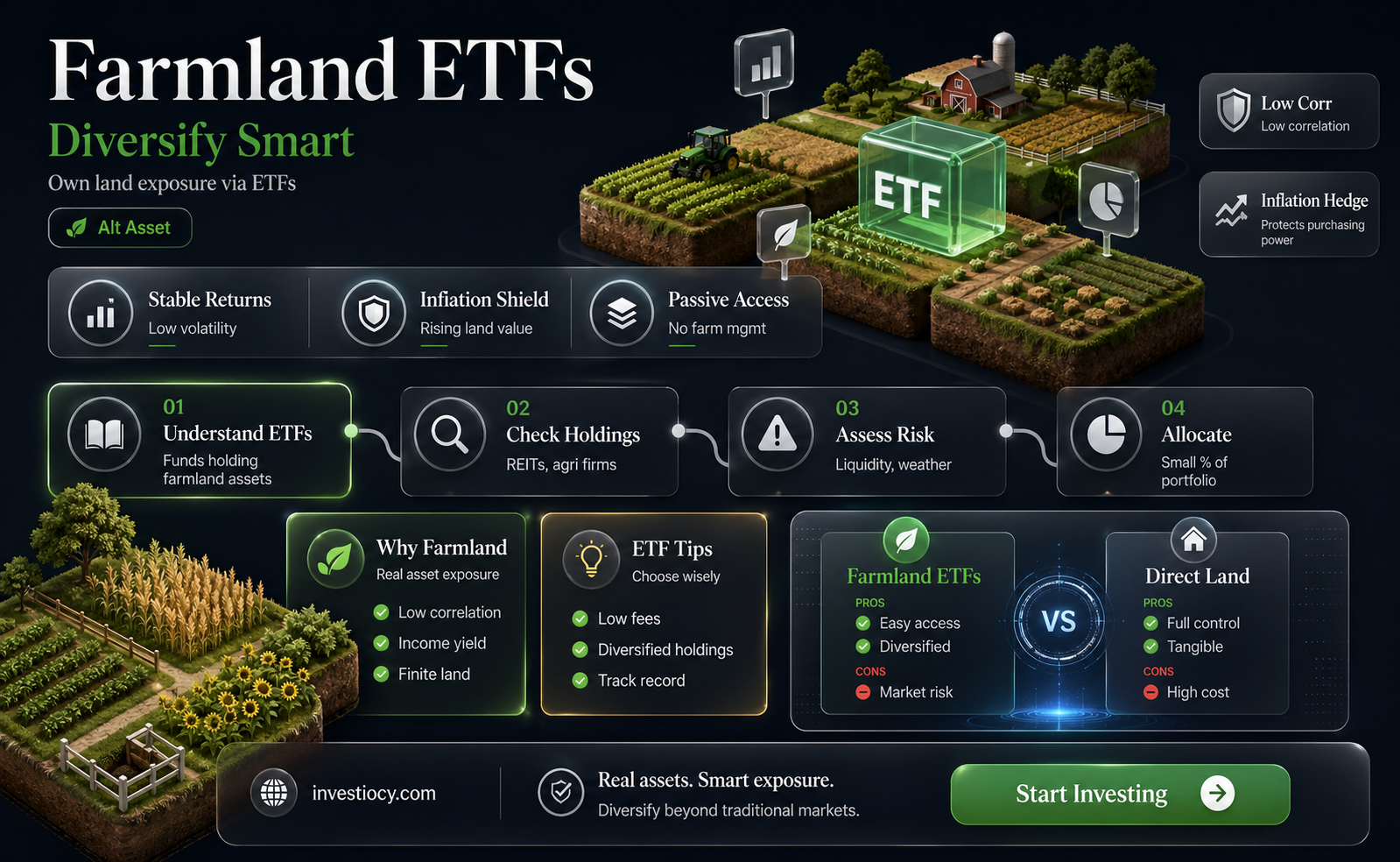
Investing in farmland through Exchange-Traded Funds (ETFs) offers a unique opportunity to gain exposure to the agricultural real estate market. Farmland ETFs allow investors to diversify their portfolios by including an asset class that is often overlooked but can provide stable returns and act as a hedge against inflation. These funds typically invest in companies that own or lease farmland, or in indices that track the performance of the farmland sector. As with any investment, it's crucial to understand the risks and rewards associated with farmland ETFs. Factors such as weather conditions, crop yields, and changes in agricultural policies can impact the performance of these investments. However, for those looking to add a tangible, income-generating asset to their portfolio, farmland ETFs can be an attractive option.
Explore related products


What You'll Learn
- Understanding Farmland ETFs: Learn about exchange-traded funds that invest in agricultural land and their benefits
- Researching Farmland ETF Options: Explore different farmland ETFs available in the market and their performance
- Evaluating Risk and Return: Assess the potential risks and returns associated with investing in farmland ETFs
- Diversifying Your Portfolio: Discover how farmland ETFs can enhance portfolio diversification and reduce overall risk
- Getting Started with Investment: Find out how to begin investing in farmland ETFs through a brokerage account

Understanding Farmland ETFs: Learn about exchange-traded funds that invest in agricultural land and their benefits
Understanding Farmland ETFs involves recognizing their unique position in the investment landscape. Unlike traditional ETFs that track stock market indices or bond markets, Farmland ETFs invest directly in agricultural land, offering investors a stake in physical assets that produce crops or livestock. This tangible investment can provide a hedge against inflation and market volatility, as the value of farmland is often less correlated with other asset classes.
One of the key benefits of Farmland ETFs is their ability to offer diversified exposure to the agricultural sector. By investing in a fund that holds a portfolio of farmland properties, investors can mitigate the risks associated with owning a single piece of land. This diversification helps to spread out potential losses due to factors like crop failure, weather events, or changes in land value. Additionally, Farmland ETFs often employ professional management teams who have expertise in selecting and maintaining agricultural properties, which can be advantageous for investors who may not have the time or knowledge to manage farmland investments themselves.
Another important aspect of Farmland ETFs is their liquidity. Unlike direct investments in physical farmland, which can be illiquid and difficult to sell quickly, ETF shares can be easily traded on stock exchanges. This liquidity allows investors to enter and exit the market with relative ease, providing flexibility in their investment strategies. Furthermore, Farmland ETFs often have lower minimum investment requirements compared to purchasing individual parcels of land, making them more accessible to a wider range of investors.
When considering how to invest in Farmland ETFs, it is crucial to evaluate the fund's underlying assets, management strategy, and expense ratio. Investors should look for funds with a strong track record of performance and a diversified portfolio of high-quality farmland properties. Additionally, understanding the fund's management approach, including how they select and maintain properties, can provide insight into the potential risks and returns associated with the investment. Finally, comparing expense ratios across different Farmland ETFs can help investors identify the most cost-effective options for their investment goals.
In conclusion, Farmland ETFs offer a unique investment opportunity that combines the benefits of diversification, professional management, and liquidity. By understanding the specifics of these funds and carefully evaluating their underlying assets and management strategies, investors can make informed decisions about incorporating Farmland ETFs into their investment portfolios.
Strategic Investing: Diversifying Your Portfolio with Lithium ETFs
You may want to see also
Explore related products


Researching Farmland ETF Options: Explore different farmland ETFs available in the market and their performance
To begin researching farmland ETF options, it's essential to understand the different types of farmland ETFs available in the market. Farmland ETFs can be categorized into several types, including those that invest in physical farmland, those that invest in farmland-related companies, and those that track farmland indices. Each type of ETF has its own unique characteristics and performance metrics.
One of the key factors to consider when researching farmland ETFs is their historical performance. Analyzing the past performance of different farmland ETFs can provide valuable insights into their potential future returns. It's important to look at both short-term and long-term performance, as well as how the ETFs have performed during different market conditions.
Another important aspect to consider is the expense ratio of the farmland ETFs. The expense ratio is the percentage of the ETF's assets that are used to cover operating expenses, such as management fees and administrative costs. A lower expense ratio can lead to higher net returns for investors.
In addition to performance and expense ratio, it's also crucial to evaluate the risk profile of different farmland ETFs. Farmland investments can be subject to various risks, including weather-related risks, regulatory risks, and market risks. Understanding the risk profile of each ETF can help investors make informed decisions about their investments.
Finally, it's important to consider the liquidity of the farmland ETFs. Liquidity refers to the ease with which an investor can buy or sell shares of the ETF. ETFs with higher liquidity tend to have narrower bid-ask spreads and are generally easier to trade.
By carefully considering these factors, investors can make informed decisions about which farmland ETFs to invest in. It's always recommended to consult with a financial advisor before making any investment decisions.
Diversify Your Portfolio: A Beginner's Guide to Investing in Silver ETFs
You may want to see also
Explore related products


Evaluating Risk and Return: Assess the potential risks and returns associated with investing in farmland ETFs
Investing in farmland ETFs involves a careful evaluation of potential risks and returns. One of the primary risks associated with farmland ETFs is the volatility of agricultural commodity prices. Fluctuations in crop yields due to weather conditions, changes in government subsidies, and global demand can significantly impact the value of farmland investments. Additionally, farmland ETFs may be subject to liquidity risks, as the market for these securities can be relatively small and less actively traded compared to other ETFs.
To assess the potential returns, investors should consider the historical performance of farmland ETFs, as well as the underlying fundamentals of the agricultural sector. Factors such as population growth, increasing demand for food, and advancements in agricultural technology can drive long-term growth in farmland values. However, it is essential to note that past performance is not indicative of future results, and investors should conduct thorough research to understand the current market conditions and trends.
Investors should also evaluate the management team and the investment strategy of the farmland ETF. A well-managed ETF with a diversified portfolio of farmland assets can help mitigate risks and maximize returns. It is crucial to review the ETF's prospectus, understand the fees and expenses associated with the investment, and consider the tax implications of investing in farmland ETFs.
In conclusion, evaluating risk and return is a critical step in the process of investing in farmland ETFs. By understanding the potential risks, conducting thorough research, and carefully assessing the investment strategy, investors can make informed decisions that align with their financial goals and risk tolerance.
Diversify Your Portfolio: A Guide to Investing in BRICS ETFs
You may want to see also
Explore related products



Diversifying Your Portfolio: Discover how farmland ETFs can enhance portfolio diversification and reduce overall risk
Farmland ETFs offer a unique opportunity for investors to diversify their portfolios and mitigate risk. By investing in a fund that holds a collection of farmland assets, investors can gain exposure to the agricultural sector without the challenges of owning and managing physical land. This diversification can help reduce overall portfolio risk by providing a hedge against market volatility and inflation.
One of the key benefits of farmland ETFs is their ability to provide a stable income stream. Farmland is a tangible asset that generates revenue through crop production and land leases, which can help offset the impact of economic downturns. Additionally, farmland ETFs often have a low correlation with other asset classes, such as stocks and bonds, making them an attractive option for investors looking to further diversify their holdings.
To invest in a farmland ETF, investors should first research the fund's prospectus to understand its investment strategy, fees, and risks. It's important to consider factors such as the fund's track record, management team, and the specific types of farmland assets it holds. Investors should also be aware of the potential risks associated with farmland ETFs, such as changes in agricultural commodity prices, weather-related events, and regulatory changes.
When constructing a diversified portfolio, it's essential to consider the allocation of assets across different sectors and asset classes. Farmland ETFs can play a valuable role in a balanced portfolio by providing exposure to the agricultural sector and offering a potential source of stable income. By incorporating farmland ETFs into their investment strategy, investors can enhance their portfolio's resilience and potentially improve long-term returns.
Explore related products


Getting Started with Investment: Find out how to begin investing in farmland ETFs through a brokerage account
To begin investing in farmland ETFs through a brokerage account, you'll need to follow a series of steps that ensure you're properly set up and informed. First, it's crucial to select a reputable brokerage firm that offers a range of farmland ETFs. Look for firms with a strong track record in agricultural investments and a user-friendly platform. Once you've chosen a brokerage, you'll need to open an account, which typically involves filling out an application form and providing identification documents.
Before you start investing, it's important to understand the risks and benefits associated with farmland ETFs. These funds invest in companies that own or operate farmland, and their performance can be influenced by factors such as crop yields, land prices, and weather conditions. While they can offer a way to diversify your portfolio and potentially earn higher returns, they also come with unique risks that you should be aware of.
When you're ready to make your first investment, you'll need to decide how much you want to allocate to farmland ETFs. It's generally recommended to start with a small percentage of your overall portfolio and gradually increase your exposure as you become more comfortable with the investment. You can typically buy farmland ETFs through your brokerage account by entering a buy order for the specific fund you're interested in.
One of the key considerations when investing in farmland ETFs is the timing of your investment. The agricultural sector can be cyclical, with certain times of the year being more favorable for investment than others. For example, investing during planting season may offer better opportunities for growth, while investing during harvest season may be more volatile.
Finally, it's important to monitor your investment and make adjustments as needed. Keep track of the fund's performance and any changes in the agricultural sector that could impact your investment. If you're unsure about how to manage your investment, consider consulting with a financial advisor who has experience in agricultural investments.
By following these steps and staying informed, you can successfully begin investing in farmland ETFs through a brokerage account. Remember to always do your research and understand the risks involved before making any investment decisions.