Laila Keith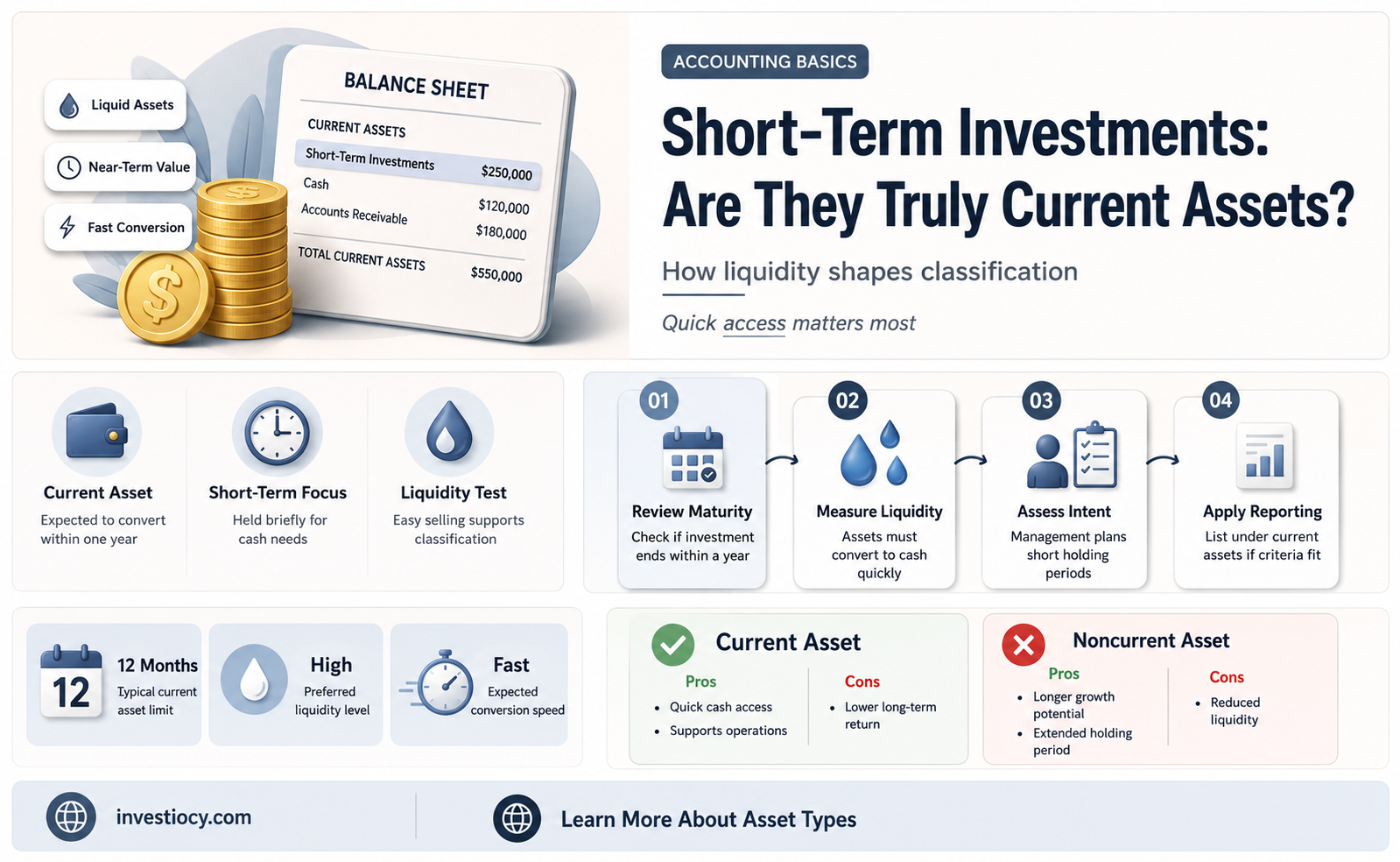
Short-term investments are a type of financial asset that can be easily converted into cash within a year or less. They are often considered a crucial component of a company's current assets, as they provide liquidity and can be used to cover short-term liabilities. Examples of short-term investments include treasury bills, certificates of deposit, and money market funds. These investments typically offer lower returns than long-term investments but are less risky and more accessible. In accounting, short-term investments are listed on the balance sheet under current assets, reflecting their ability to be quickly converted into cash.
Explore related products

$8.73 $19.99



What You'll Learn

Definition of Short-Term Investments
Short-term investments are assets that a company expects to convert into cash or use within one year or within the company's normal operating cycle, whichever is longer. These investments are typically highly liquid, meaning they can be easily and quickly sold or converted into cash without significantly affecting their market price. Common examples of short-term investments include cash equivalents like treasury bills, certificates of deposit, and short-term government bonds.
The primary purpose of short-term investments is to provide a company with liquidity while also earning a return on the invested funds. They are an essential component of a company's cash management strategy, allowing for the efficient use of excess cash that may not be needed for immediate operational expenses. Short-term investments are also considered a low-risk investment option compared to long-term investments, as they are less susceptible to market volatility and fluctuations in interest rates.
In accounting, short-term investments are classified as current assets on a company's balance sheet. Current assets are assets that are expected to be used or converted into cash within one year or within the company's normal operating cycle. This classification is important because it affects the calculation of a company's current ratio, which is a key indicator of its short-term financial health and ability to meet its obligations.
When evaluating short-term investments, it is crucial to consider factors such as the investment's liquidity, risk, and potential return. Companies must also ensure that their short-term investment strategy aligns with their overall financial goals and objectives. By carefully selecting and managing short-term investments, companies can optimize their cash flow, reduce financial risk, and enhance their overall financial performance.
Unlocking Profits: A Guide to Short-Term Rental Investments
You may want to see also
Explore related products


$6.99 $9.33


Characteristics of Current Assets
Current assets are a crucial component of a company's balance sheet, representing resources that are expected to be converted into cash or used within one year. These assets are typically highly liquid, meaning they can be easily and quickly turned into cash without significant loss of value. Common examples of current assets include cash, accounts receivable, inventory, and short-term investments.
One key characteristic of current assets is their short-term nature. This means that they are expected to be utilized or converted into cash within a year or less. This short-term horizon is important for businesses as it allows them to manage their cash flow and meet their short-term obligations, such as paying suppliers or covering operating expenses.
Another important characteristic of current assets is their liquidity. Liquid assets can be easily and quickly converted into cash without significant loss of value. For example, cash is the most liquid asset as it can be used immediately for any transaction. Accounts receivable are also considered liquid as they represent money owed to the company by customers and are typically collected within a short period.
Current assets also include inventory, which consists of goods or materials that a company intends to sell or use in production. Inventory is considered a current asset because it is expected to be sold or used within one year. However, it is important to note that inventory can be less liquid than other current assets, as it may take time to sell or use.
Short-term investments are another type of current asset. These investments are typically made with the intention of generating a return within a short period, usually less than a year. Examples of short-term investments include money market funds, treasury bills, and certificates of deposit.
In summary, current assets are short-term, liquid resources that a company expects to use or convert into cash within one year. They play a vital role in managing cash flow and meeting short-term obligations. Common types of current assets include cash, accounts receivable, inventory, and short-term investments.
Is Inventory a Short-Term Investment? Understanding Its Impact on Financial Health
You may want to see also
Explore related products






Short-Term Investment Examples
Short-term investments are a crucial component of a company's current assets, providing liquidity and potential for quick returns. One example of a short-term investment is a treasury bill, which is a government security with a maturity of less than a year. These bills are considered low-risk investments and are often used by companies to park excess cash temporarily. Another example is a certificate of deposit (CD), which is a time deposit offered by banks with a fixed interest rate and maturity date. CDs typically have higher interest rates than savings accounts, making them an attractive option for short-term investment.
In addition to these traditional options, companies may also invest in short-term corporate bonds or commercial paper. These instruments offer higher returns than treasury bills or CDs but come with a slightly higher risk profile. Short-term corporate bonds are debt securities issued by companies with a maturity of less than five years, while commercial paper is a form of unsecured debt financing with a maturity of up to 270 days. Both of these options provide companies with the flexibility to invest in short-term projects or cover unexpected expenses.
Real estate investment trusts (REITs) and exchange-traded funds (ETFs) are also popular short-term investment options. REITs allow companies to invest in real estate without directly owning property, while ETFs provide diversification across a range of assets. These investments offer the potential for higher returns than traditional short-term options but come with increased risk and volatility.
When considering short-term investment examples, it's essential to evaluate the company's financial goals, risk tolerance, and liquidity needs. A diversified portfolio that includes a mix of low-risk and higher-risk investments can help companies achieve their short-term financial objectives while minimizing potential losses. By carefully selecting and managing short-term investments, companies can optimize their current asset allocation and improve their overall financial performance.
Characteristics of Long-Term Investments: A Comprehensive Guide
You may want to see also
Explore related products




Current Asset Classification
In the realm of accounting and finance, current assets are a crucial component of a company's balance sheet. These assets are typically defined as those that can be converted into cash or used within one year or less. This classification is essential for businesses to manage their liquidity and ensure they have sufficient resources to meet short-term obligations.
One common question that arises in this context is whether short-term investments qualify as current assets. To answer this, it's important to understand the nature of short-term investments and how they fit into the broader category of current assets. Short-term investments are typically those that are held for a period of less than one year and are intended to generate a return while maintaining liquidity. Examples include money market funds, short-term bonds, and treasury bills.
From an accounting perspective, short-term investments are generally classified as current assets because they meet the criteria of being convertible into cash within one year. This classification is supported by the fact that these investments are often used to manage a company's cash flow and provide a buffer against unexpected expenses or revenue shortfalls.
However, it's worth noting that the classification of short-term investments as current assets can have implications for a company's financial ratios and analysis. For instance, a high proportion of short-term investments relative to other current assets may indicate that a company is prioritizing liquidity over other uses of its resources, such as investing in long-term growth opportunities.
In conclusion, short-term investments are indeed considered current assets, as they can be converted into cash within one year and are used to manage a company's liquidity. This classification is important for businesses to accurately represent their financial position and make informed decisions about resource allocation.
Debunking Myths: Not All Long-Term Investments Guarantee Returns
You may want to see also
Explore related products



$14.77 $35

$18.59 $25.99


Financial Statement Impact
Short-term investments can have a significant impact on a company's financial statements. These investments are typically classified as current assets, which means they are expected to be converted into cash or used within one year. This classification is important because it affects the liquidity and solvency ratios that investors and creditors use to evaluate a company's financial health.
One of the key financial statement impacts of short-term investments is on the balance sheet. Short-term investments are listed under current assets, which can increase the total assets of the company. This, in turn, can improve the company's liquidity ratios, such as the current ratio and quick ratio, making it appear more financially stable. However, if the short-term investments are not managed properly, they can also lead to a decrease in liquidity if they are not easily convertible into cash.
Short-term investments can also impact the income statement. If the investments generate returns, such as interest or dividends, these returns are typically recorded as income. This can increase the company's net income and improve its profitability ratios. However, if the investments result in losses, these losses are also recorded on the income statement, which can decrease net income and negatively impact profitability ratios.
In addition to the balance sheet and income statement, short-term investments can also affect the cash flow statement. If the investments are liquid and can be easily converted into cash, they can provide a source of cash for the company. This can be particularly important for companies that need to meet short-term obligations, such as paying bills or repaying debt. However, if the investments are not liquid, they may not provide a reliable source of cash, which can lead to cash flow problems.
Overall, the financial statement impact of short-term investments depends on how they are managed. If they are managed properly, they can provide a valuable source of liquidity and income for the company. However, if they are not managed properly, they can lead to decreased liquidity, losses, and cash flow problems.
Exploring Short-Term Investments: A Guide to Financial Flexibility
You may want to see also
Frequently asked questions
Yes, short-term investments are typically classified as current assets on a company's balance sheet.
Examples of short-term investments include stocks, bonds, mutual funds, and certificates of deposit (CDs) with maturities of one year or less.
Short-term investments are categorized as current assets because they are expected to be converted into cash or used within one year, making them highly liquid.
Short-term investments are classified as current assets, while long-term investments are categorized as non-current assets on the balance sheet.