Clark Galvan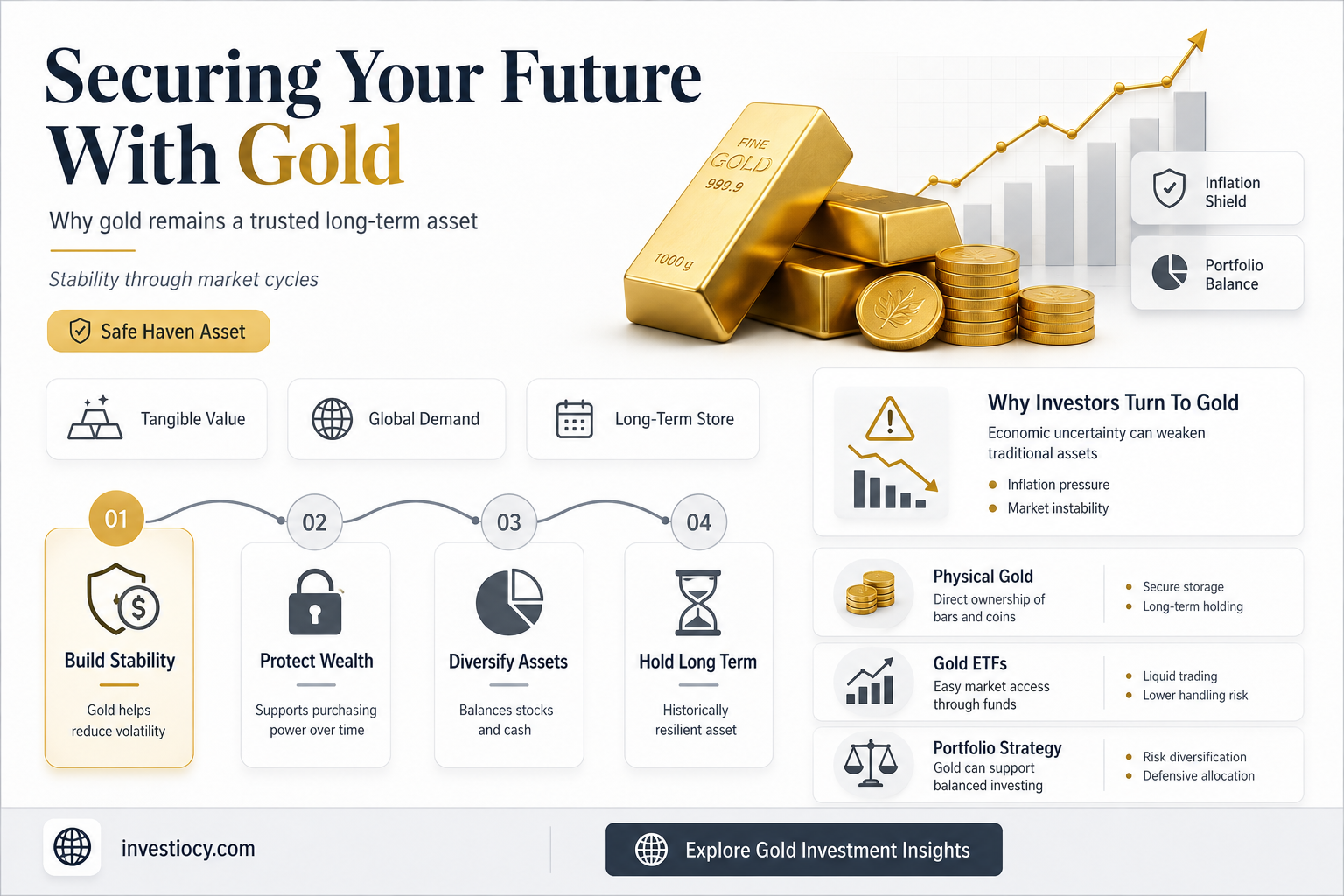
Investing in gold has long been considered a safe-haven strategy, particularly during times of economic uncertainty. Gold is a tangible asset that historically has maintained its value and even appreciated when other investments have faltered. Its ability to act as a hedge against inflation and currency devaluation makes it an attractive option for diversifying one's portfolio. Additionally, gold's liquidity allows investors to easily convert it into cash when needed. With its proven track record and unique properties, gold continues to be a popular choice for those looking to secure their financial future.
Explore related products



What You'll Learn
- Hedge Against Inflation: Gold maintains value during economic downturns, protecting purchasing power
- Diversify Portfolio: Adding gold reduces risk by balancing investments across different asset classes
- Store of Value: Gold is a tangible asset that retains value over time, unlike fiat currencies
- Liquidity: Gold is easily convertible to cash, providing quick access to funds when needed
- Geopolitical Stability: Gold offers a safe haven during political and economic uncertainties, ensuring financial security

Hedge Against Inflation: Gold maintains value during economic downturns, protecting purchasing power
Gold has historically been a reliable hedge against inflation, maintaining its value even during significant economic downturns. This is primarily due to its intrinsic value and limited supply, which ensures that it remains a stable store of wealth. Unlike fiat currencies, which can be devalued by central banks through excessive printing, gold's value is preserved by its physical properties and the trust placed in it by investors worldwide.
During periods of high inflation, the purchasing power of money decreases rapidly, eroding the value of savings and investments held in cash or cash equivalents. In contrast, gold tends to appreciate in value during such times, effectively protecting the purchasing power of those who hold it. For instance, during the 1970s, when the United States experienced double-digit inflation, the price of gold soared, providing a safe haven for investors seeking to preserve their wealth.
Investing in gold can be done through various means, including purchasing physical gold (such as coins or bars), investing in gold ETFs, or buying shares in gold mining companies. Each method has its own advantages and disadvantages, and investors should carefully consider their options based on factors such as liquidity, storage costs, and market volatility.
One of the key benefits of investing in gold is its ability to diversify a portfolio. Gold has a low correlation with other asset classes, such as stocks and bonds, which means that it can help reduce overall portfolio risk. This diversification benefit is particularly important during economic downturns, when traditional investments may perform poorly.
In addition to its role as an inflation hedge, gold also serves as a safe haven asset during times of geopolitical uncertainty. When global tensions rise, investors often flock to gold as a means of protecting their wealth from potential market disruptions. This safe haven status is further supported by gold's historical significance as a store of value and its widespread acceptance across cultures and economies.
In conclusion, gold's ability to maintain its value during economic downturns and periods of high inflation makes it a valuable addition to any investment portfolio. By providing a stable store of wealth and a hedge against inflation, gold can help investors protect their purchasing power and achieve long-term financial security.
Gold vs. Silver: Which Precious Metal is the Smarter Investment?
You may want to see also
Explore related products


Diversify Portfolio: Adding gold reduces risk by balancing investments across different asset classes
Gold has long been considered a safe-haven asset, and its inclusion in a diversified portfolio can significantly reduce overall risk. This is primarily due to gold's low correlation with other asset classes, such as stocks and bonds. When stock markets are volatile or in decline, gold often moves in the opposite direction, providing a buffer against losses. This inverse relationship can help smooth out the performance of a portfolio over time, making it more resilient to market fluctuations.
One of the key benefits of adding gold to a portfolio is its ability to preserve wealth during periods of inflation. Historically, gold has maintained its purchasing power even as the value of fiat currencies has eroded. This makes it an attractive hedge against rising prices and economic uncertainty. By allocating a portion of a portfolio to gold, investors can protect their wealth from the erosive effects of inflation and ensure that their purchasing power remains stable over the long term.
Another advantage of investing in gold is its liquidity. Gold is a highly sought-after commodity that can be easily bought and sold in various forms, such as bullion, coins, and exchange-traded funds (ETFs). This liquidity allows investors to quickly convert their gold holdings into cash if needed, providing a level of flexibility that is not always available with other investments.
When considering how to incorporate gold into a portfolio, it is important to determine the appropriate allocation. Financial advisors often recommend that gold make up between 5% and 10% of a diversified portfolio. This allocation can help balance the risk and return profile of the portfolio without overexposing the investor to the volatility of the gold market.
In conclusion, adding gold to a portfolio can be an effective strategy for reducing risk and preserving wealth. Its low correlation with other asset classes, ability to hedge against inflation, and high liquidity make it a valuable addition to any diversified investment plan. By carefully considering the appropriate allocation and incorporating gold into a broader investment strategy, investors can enhance the stability and resilience of their portfolios.
Unveiling the Truth: Is Noble Gold Investments Legitimate?
You may want to see also
Explore related products



Store of Value: Gold is a tangible asset that retains value over time, unlike fiat currencies
Gold has long been revered as a store of value, a tangible asset that retains its worth over time. This is in stark contrast to fiat currencies, which are subject to the whims of governments and central banks. Fiat currencies can be devalued through inflation, rendering them less valuable over time. Gold, on the other hand, has a finite supply and is not subject to the same inflationary pressures. This makes it a reliable store of value that can protect wealth over the long term.
One of the key reasons gold is considered a store of value is its historical track record. For thousands of years, gold has been used as a medium of exchange and a store of wealth. Its value has been recognized across cultures and civilizations, making it a universally accepted asset. This historical significance gives gold a unique status as a store of value that is not dependent on any single government or economy.
Gold's value is also derived from its scarcity. The total amount of gold that has ever been mined is relatively small, and new discoveries are becoming increasingly rare. This limited supply helps to maintain gold's value over time, as demand for this precious metal continues to grow. In contrast, fiat currencies can be printed in unlimited quantities, which can lead to devaluation through inflation.
Another advantage of gold as a store of value is its liquidity. Gold can be easily bought and sold in various forms, such as coins, bars, and jewelry. This makes it a highly liquid asset that can be quickly converted into cash if needed. Gold's liquidity is particularly important in times of economic uncertainty, when investors may need to access their wealth quickly.
Gold also offers a hedge against currency risk. As a tangible asset, gold is not subject to the same risks as fiat currencies, such as devaluation or default. This makes it an attractive investment for those looking to protect their wealth from currency fluctuations. Gold's value is often inversely correlated with the value of the US dollar, meaning that when the dollar weakens, gold tends to strengthen. This inverse relationship can help to balance out an investment portfolio and reduce overall risk.
In conclusion, gold's status as a store of value is rooted in its historical significance, scarcity, liquidity, and ability to hedge against currency risk. These factors make gold a unique and valuable asset that can play an important role in a diversified investment portfolio.
Shining but Risky: Rethinking Gold as a Safe Investment
You may want to see also
Explore related products


Liquidity: Gold is easily convertible to cash, providing quick access to funds when needed
Gold's liquidity is one of its most attractive features for investors. Unlike other assets, such as real estate or art, gold can be quickly and easily converted into cash. This is particularly important in times of financial crisis or when investors need to access funds rapidly. For instance, during the 2008 financial crisis, gold prices rose significantly as investors sought a safe-haven asset that could also be easily liquidated.
One of the reasons gold is so liquid is due to its widespread recognition and acceptance as a valuable commodity. Gold is traded on major exchanges around the world, and there are numerous buyers and sellers at any given time. This high level of market activity ensures that gold can be bought and sold with minimal impact on its price, making it an ideal asset for those who need to access funds quickly.
Furthermore, gold's liquidity is enhanced by the presence of various investment vehicles, such as gold ETFs (exchange-traded funds) and gold mining stocks. These instruments allow investors to gain exposure to gold without having to physically store the metal, making it even easier to convert gold into cash when needed.
In addition to its liquidity, gold also offers a number of other benefits for investors. For example, gold is a tangible asset that is not subject to the same risks as paper currencies or digital assets. It also has a long history of preserving wealth and acting as a hedge against inflation and currency devaluation.
However, it's important to note that while gold is a liquid asset, it does not generate income in the same way as stocks or bonds. Investors should therefore consider their overall investment goals and risk tolerance before deciding whether to allocate a portion of their portfolio to gold.
In conclusion, gold's liquidity is a key advantage for investors who need to access funds quickly. Its widespread recognition, active market, and variety of investment vehicles make it an ideal asset for those seeking both liquidity and a safe-haven investment.
Securing Your Future: The Timeless Value of Gold and Silver Investments
You may want to see also
Explore related products




Geopolitical Stability: Gold offers a safe haven during political and economic uncertainties, ensuring financial security
Amidst the tumultuous landscape of global politics and economics, investors often seek refuge in assets that can weather the storms of uncertainty. Gold, with its storied history as a store of value, emerges as a prime candidate for those looking to safeguard their financial security. The yellow metal's allure lies in its ability to maintain its purchasing power regardless of the vicissitudes of fiat currencies or the machinations of governments.
One need only look at recent history to understand gold's role as a safe haven. During the 2008 financial crisis, as stock markets plummeted and banks teetered on the brink of collapse, gold prices soared. This inverse relationship between gold and risky assets is a testament to the metal's status as a hedge against economic turmoil. Similarly, during periods of political instability, such as the Arab Spring or the Brexit referendum, gold has consistently demonstrated its resilience, often experiencing price increases as investors seek to protect their wealth.
Gold's stability is further underscored by its lack of counterparty risk. Unlike stocks, bonds, or even real estate, gold does not rely on the solvency or integrity of any third party. It is a tangible asset that can be held directly, free from the vagaries of financial institutions or governments. This characteristic makes gold an attractive option for those looking to diversify their portfolios and reduce their exposure to systemic risks.
Moreover, gold's role as a safe haven is not limited to times of crisis. Even in periods of relative calm, the metal can serve as a stabilizing force in an investment portfolio. Its low correlation with other asset classes means that it can help to smooth out returns and reduce overall volatility. This is particularly important in today's interconnected world, where economic shocks can reverberate across borders and asset classes with unprecedented speed.
In conclusion, gold's reputation as a safe haven during political and economic uncertainties is well-deserved. Its ability to maintain its value in the face of crisis, its lack of counterparty risk, and its low correlation with other assets make it an essential component of any diversified investment portfolio. For those looking to ensure their financial security in an increasingly uncertain world, gold offers a time-tested solution.
Smart Gold Investment Strategies on Robinhood for Beginners
You may want to see also



![Gold Diggers: The Secret of Bear Mountain [DVD]](https://m.media-amazon.com/images/I/81ColQm5fgL._AC_UL320_.jpg)