Lester Freeman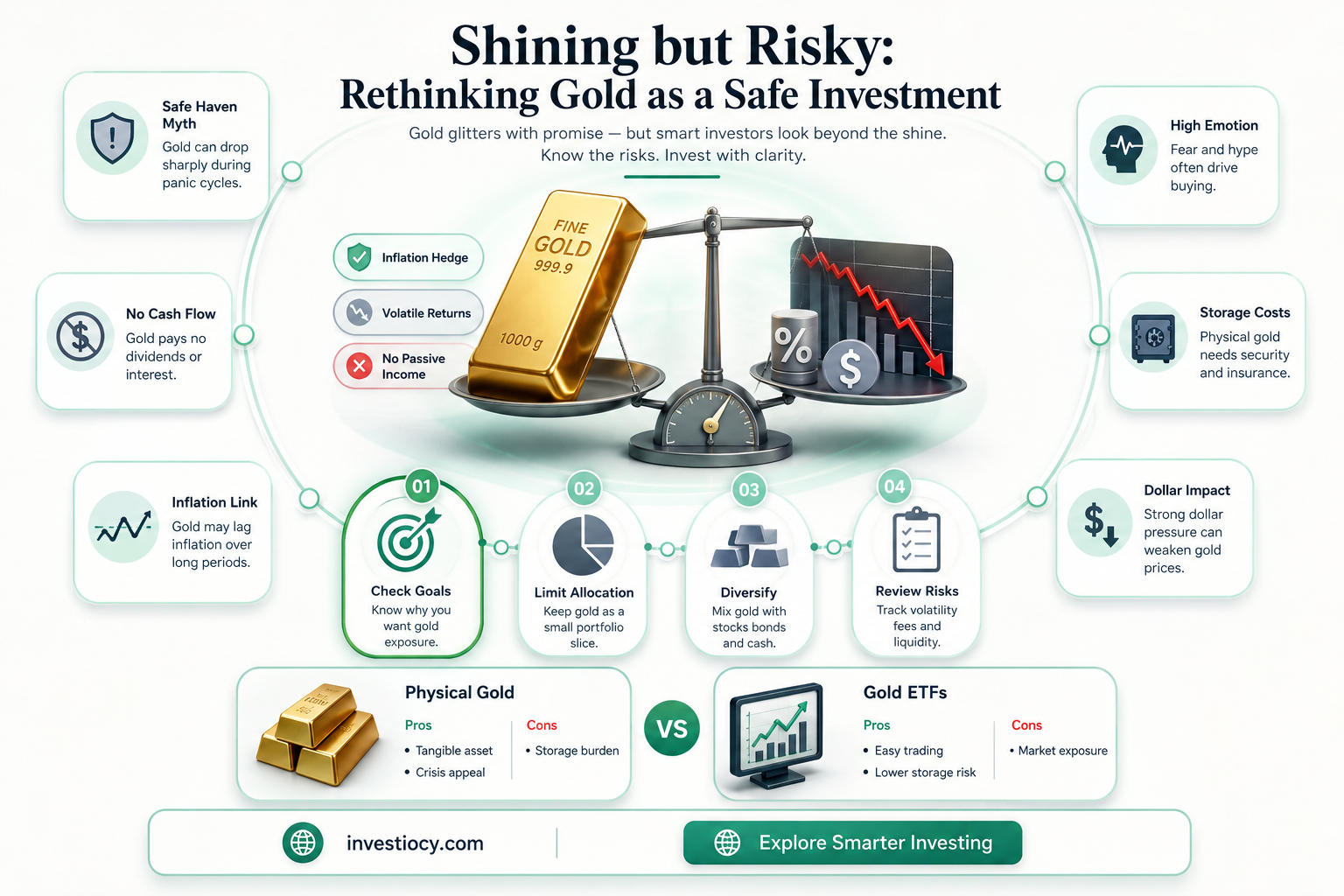
Gold has long been considered a safe-haven asset, but there are several reasons why it may not be the best investment choice. One major drawback is that gold does not generate any income, unlike stocks or bonds which can provide dividends or interest. Additionally, the price of gold can be highly volatile, making it a risky investment for those looking for stable returns. Furthermore, gold is a physical asset that requires storage and security, which can add to the overall cost of ownership. Finally, gold's value is largely based on market sentiment and speculation, rather than any underlying fundamentals, which can make it difficult to predict its long-term performance.
Explore related products




What You'll Learn
- High Volatility: Gold prices fluctuate significantly, making it a risky asset for short-term investors
- Lack of Dividends: Unlike stocks, gold doesn't generate income through dividends, limiting its earning potential
- Storage Costs: Physical gold requires secure storage, which can be expensive and cumbersome
- Market Speculation: Gold is often subject to market hype and speculation, which can lead to inflated prices
- Environmental Impact: Gold mining has significant environmental consequences, which may deter socially conscious investors

High Volatility: Gold prices fluctuate significantly, making it a risky asset for short-term investors
Gold's high volatility is a significant concern for short-term investors. The precious metal's price can swing dramatically in response to various economic and geopolitical factors, making it challenging to predict and manage risk. For instance, in 2020, gold prices surged by over 25% in the first half of the year due to the COVID-19 pandemic, only to experience a sharp correction in the second half. Such price fluctuations can lead to substantial losses for investors who are not prepared for the inherent risks.
One of the primary drivers of gold's volatility is its sensitivity to interest rates and inflation expectations. When interest rates rise, the opportunity cost of holding gold increases, leading to a decrease in demand and, consequently, price. Conversely, when inflation expectations surge, gold is often seen as a safe-haven asset, driving up its price. This tug-of-war between interest rates and inflation expectations can result in significant price swings, making it difficult for short-term investors to time their investments correctly.
Another factor contributing to gold's volatility is its limited industrial and commercial use. Unlike other commodities, such as oil or copper, gold's demand is primarily driven by investment and jewelry consumption. This limited utility means that gold's price is more susceptible to changes in investor sentiment and speculative activity, further exacerbating its volatility.
Furthermore, gold's lack of dividend or interest payments makes it a less attractive option for short-term investors seeking regular income. Unlike stocks or bonds, which provide periodic returns, gold's value is solely based on its market price. This means that short-term investors are entirely reliant on price appreciation to generate returns, which can be a risky proposition given gold's volatile nature.
In conclusion, gold's high volatility, driven by its sensitivity to interest rates, inflation expectations, and limited industrial use, makes it a risky asset for short-term investors. The lack of regular income and the potential for significant price swings can lead to substantial losses for those who are not prepared to manage the inherent risks. As such, short-term investors may be better served by considering alternative assets with more stable returns and lower volatility.
Is Gold a Wise Investment Choice in Today's Market?
You may want to see also
Explore related products




Lack of Dividends: Unlike stocks, gold doesn't generate income through dividends, limiting its earning potential
Gold, often touted as a safe-haven asset, lacks one critical feature that many investors seek: dividend income. Unlike stocks, which can generate regular income through dividends, gold does not provide any such returns. This absence of dividend income significantly limits gold's earning potential, making it a less attractive investment option for those looking to generate passive income.
To understand the impact of this limitation, consider the following scenario: An investor purchases 10 ounces of gold at a price of $1,800 per ounce, totaling $18,000. Over the next year, the price of gold fluctuates but ultimately remains stable at $1,800 per ounce. At the end of the year, the investor's gold holdings are still worth $18,000, but they have not generated any additional income. In contrast, if the investor had purchased dividend-paying stocks with the same $18,000, they would have received regular dividend payments throughout the year, providing a source of income in addition to any potential capital gains.
Furthermore, the lack of dividend income from gold means that investors must rely solely on capital appreciation to generate returns. This can be problematic, as gold prices can be highly volatile and subject to significant fluctuations. Without the cushion of dividend income, investors are more exposed to market risks and may experience greater uncertainty about their returns.
In addition, the absence of dividend income from gold can make it less suitable for certain investment strategies, such as income investing or dividend reinvestment plans (DRIPs). These strategies rely on the regular income generated by dividends to fund further investments or provide a steady stream of cash flow. Gold, therefore, may not fit well within these frameworks and could limit an investor's ability to achieve their financial goals.
Overall, while gold can serve as a valuable component of a diversified investment portfolio, its lack of dividend income is a significant drawback that investors should carefully consider. This limitation can impact an investor's ability to generate passive income, increase their exposure to market risks, and restrict the use of certain investment strategies. As such, it is essential for investors to weigh the potential benefits of gold against its limitations and make informed decisions about its role in their investment portfolios.
Smart Precious Metals Investing: Gold and Silver Strategies
You may want to see also
Explore related products


Storage Costs: Physical gold requires secure storage, which can be expensive and cumbersome
Physical gold, unlike other investments, necessitates secure storage due to its tangible nature and high value. This requirement introduces a layer of complexity and cost that is not present with digital or paper-based assets. Investors must consider the logistics of storing gold securely, which often involves renting a safe deposit box at a bank or purchasing a home safe. Both options incur ongoing costs: rental fees for safe deposit boxes can range from a few dollars to several hundred per year, depending on the size and location, while home safes not only require an initial purchase but also may necessitate additional insurance to cover the contents.
Moreover, the storage of physical gold can be cumbersome. Gold is dense and heavy, making it impractical to store in large quantities at home. Transporting gold to and from storage locations can be risky and may require special handling and security measures. This logistical challenge is further compounded by the need for discretion, as publicly disclosing the storage location of valuable gold could attract unwanted attention and potential theft.
In addition to the direct costs of storage, there are indirect costs associated with the security and maintenance of physical gold. For instance, gold can tarnish or corrode if not stored properly, which may require professional cleaning or restoration services. Furthermore, the security measures needed to protect physical gold, such as surveillance systems, alarms, and insurance, can add significant expenses over time.
Investors should also consider the opportunity cost of tying up capital in physical gold storage. The funds spent on storage could potentially be invested in other assets that may yield higher returns. Additionally, the time and effort required to manage the storage of physical gold could be better spent on other investment activities or personal endeavors.
In conclusion, the storage costs associated with physical gold are a critical factor to consider when evaluating it as an investment. These costs, both direct and indirect, can significantly impact the overall return on investment and may outweigh the benefits of owning physical gold. As such, investors should carefully weigh the storage requirements and associated expenses before deciding to invest in physical gold.
Securing Your Future: The Timeless Value of Gold and Silver Investments
You may want to see also
Explore related products


![Gold Diggers: The Secret of Bear Mountain [DVD]](https://m.media-amazon.com/images/I/81ColQm5fgL._AC_UL320_.jpg)
Market Speculation: Gold is often subject to market hype and speculation, which can lead to inflated prices
Market speculation significantly impacts gold prices, often inflating them beyond their intrinsic value. Speculators, driven by market hype and the fear of missing out, can create a bubble that eventually bursts, leaving investors with substantial losses. This phenomenon is particularly concerning because it can lead to a false sense of security among investors, who may believe that gold is a stable and reliable asset class. However, when the speculative fervor subsides, the price of gold can plummet, revealing its vulnerability to market sentiment.
One of the primary drivers of market speculation in gold is its perceived status as a safe-haven asset. During times of economic uncertainty or geopolitical tension, investors often flock to gold as a means of protecting their wealth. This increased demand can drive up prices, even if the underlying fundamentals of the gold market do not justify such a surge. Additionally, the gold market is relatively small compared to other asset classes, which makes it more susceptible to price manipulation by large investors or groups of speculators.
Another factor contributing to the speculative nature of gold prices is the lack of regulatory oversight in certain segments of the market. For example, the over-the-counter (OTC) gold market is largely unregulated, allowing for a high degree of price volatility and potential manipulation. This lack of oversight can create an environment where speculators can drive prices up or down with relative ease, further exacerbating the problem of inflated gold prices.
Investors should be cautious of market speculation when considering gold as an investment. While gold can be a valuable addition to a diversified portfolio, it is essential to understand the risks associated with market hype and speculation. Investors should conduct thorough research, consider alternative investments, and avoid making decisions based solely on short-term price movements or speculative trends. By taking a long-term view and focusing on the underlying fundamentals of the gold market, investors can make more informed decisions and potentially avoid the pitfalls of market speculation.
Shining Prospects: Why Silver Outperforms Gold as a Smart Investment Choice
You may want to see also
Explore related products






Environmental Impact: Gold mining has significant environmental consequences, which may deter socially conscious investors
Gold mining operations have a profound impact on the environment, often resulting in deforestation, habitat destruction, and pollution. The process of extracting gold from the earth requires large amounts of water and energy, contributing to greenhouse gas emissions and water scarcity in mining regions. Additionally, the use of toxic chemicals such as mercury and cyanide in gold processing can lead to soil and water contamination, posing serious health risks to local communities and wildlife.
The environmental consequences of gold mining are not limited to the immediate vicinity of mining sites. The transportation of gold ore and the disposal of waste materials can also have far-reaching effects on ecosystems and human populations. Furthermore, the demand for gold drives the expansion of mining activities into sensitive areas, such as protected forests and indigenous territories, exacerbating the environmental impact.
For socially conscious investors, the environmental implications of gold mining are a significant concern. Many investors are increasingly prioritizing sustainability and ethical considerations in their investment decisions, and the negative environmental impact of gold mining may deter them from investing in gold. As a result, gold may not be a viable investment option for those who are committed to supporting environmentally responsible practices.
Moreover, the environmental impact of gold mining is not only a moral concern but also a financial risk. As environmental regulations become stricter and public awareness of the issue grows, gold mining companies may face increased scrutiny and potential legal liabilities. This could lead to higher operating costs and reduced profitability, ultimately affecting the value of gold as an investment.
In conclusion, the environmental impact of gold mining is a critical factor to consider when evaluating gold as an investment. The significant consequences of gold mining on ecosystems and human communities may deter socially conscious investors, and the financial risks associated with environmental concerns could further undermine the viability of gold as an investment option.
Diversify Your Portfolio: A Beginner's Guide to Gold and Silver ETFs
You may want to see also
Frequently asked questions
Gold is often viewed as a bad investment because it does not generate any income or dividends, unlike stocks or bonds. Additionally, its value can be highly volatile, making it a risky asset to hold over the long term.
Some alternative investments that could offer better returns than gold include stocks, bonds, real estate, and mutual funds. These investments have historically provided higher returns over the long term, although they also come with their own set of risks.
The lack of income generation from gold means that its value is solely dependent on market demand and speculation. This can make it a less attractive investment option compared to assets that generate regular income, such as dividend-paying stocks or interest-bearing bonds.
Some of the risks associated with investing in gold include price volatility, storage costs, and the potential for theft or loss. Additionally, gold is not a diversified investment, meaning that its value is highly correlated with the performance of the gold market as a whole.