Laila Keith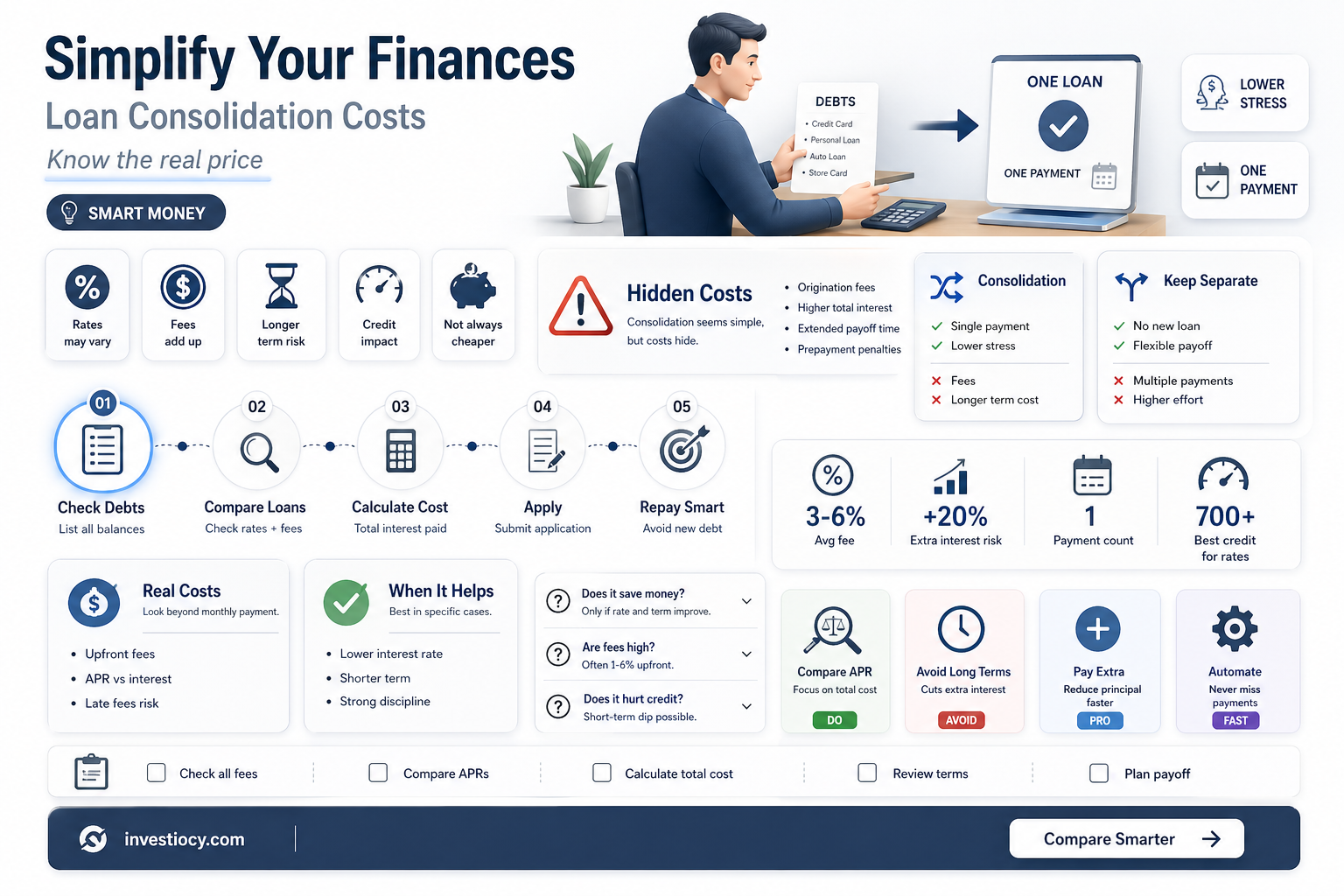
Consolidating all your loans can potentially make managing your debt cheaper and more convenient. By combining multiple loans into a single loan with one monthly payment, you may be able to secure a lower interest rate, reduce your overall monthly payments, and simplify your financial obligations. This can be especially beneficial if you have high-interest loans, such as credit card debt, or if you're struggling to keep track of multiple payments each month. However, it's important to carefully consider the terms and conditions of any consolidation loan to ensure that it aligns with your financial goals and doesn't result in additional costs or longer repayment periods.
Explore related products


What You'll Learn
- Interest Rate Comparison: Evaluate if the consolidated loan offers a lower interest rate than the individual loans
- Loan Term Analysis: Assess whether the new loan term is shorter or longer, impacting total interest paid
- Monthly Payment Calculation: Determine if the consolidated loan results in a lower monthly payment
- Fees and Charges Review: Check for any additional fees or charges associated with the consolidation process
- Credit Score Impact: Consider how consolidating loans might affect your credit score in the short and long term

Interest Rate Comparison: Evaluate if the consolidated loan offers a lower interest rate than the individual loans
To evaluate if consolidating your loans makes financial sense, a critical step is comparing the interest rates of your existing loans to the rate offered by the consolidated loan. This comparison will help you determine if consolidation leads to cost savings over time. Start by gathering detailed information on each of your current loans, including the principal balance, interest rate, and repayment term. Then, obtain quotes from potential lenders for a consolidated loan, ensuring you compare loans with similar repayment terms for an accurate assessment.
When comparing interest rates, consider both the nominal rate and the effective rate. The nominal rate is the stated interest rate, while the effective rate takes into account the compounding frequency and any additional fees or charges. This distinction is crucial because a loan with a lower nominal rate may have a higher effective rate due to more frequent compounding or higher fees. Use online calculators or consult with a financial advisor to convert nominal rates to effective rates for a more precise comparison.
Another factor to consider is the type of interest rate offered by the consolidated loan. Fixed-rate loans provide stability with predictable monthly payments, while variable-rate loans can offer lower initial rates but may increase over time. If you're consolidating loans with varying interest rates, a fixed-rate consolidated loan can simplify your finances and protect you from future rate hikes. However, if you expect interest rates to decrease, a variable-rate loan might be more advantageous.
In addition to interest rates, evaluate the total cost of each loan option by considering the repayment term and any prepayment penalties. A longer repayment term can reduce your monthly payments but may result in higher overall interest costs. Conversely, a shorter term can save on interest but requires higher monthly payments. Prepayment penalties can also impact your decision, as they may offset any savings from paying off the loan early.
Finally, use a loan comparison tool or spreadsheet to visualize the differences in interest rates, monthly payments, and total costs between your current loans and the consolidated loan options. This visual representation will help you make an informed decision based on your unique financial situation and goals. Remember, the key to successful loan consolidation is finding a balance between lower interest rates, manageable monthly payments, and minimal additional costs.
Understanding Conforming Loan Limits: LTV Ratio Insights
You may want to see also
Explore related products


Loan Term Analysis: Assess whether the new loan term is shorter or longer, impacting total interest paid
When evaluating the impact of consolidating loans on overall costs, a critical aspect to consider is the loan term. The term of a loan refers to the length of time you have to repay the borrowed amount. A shorter loan term typically results in higher monthly payments but less total interest paid over the life of the loan. Conversely, a longer loan term usually means lower monthly payments but more total interest paid.
To assess whether the new loan term is shorter or longer, you need to compare it to the terms of your existing loans. Gather all your loan documents and note the repayment terms for each. Calculate the total interest paid for each loan over its term using the formula: Total Interest = Principal × Annual Interest Rate × Loan Term (in years).
Next, determine the new loan term offered by the consolidation lender. Be cautious, as some lenders may offer a longer term to reduce your monthly payments, which could result in paying more interest overall. Use the same formula to calculate the total interest for the new consolidated loan.
Compare the total interest figures for your existing loans and the new consolidated loan. If the total interest paid on the new loan is less than the combined total interest of your existing loans, then consolidating may be a cost-effective option. However, if the new loan term is significantly longer and results in higher total interest, it may not be the best financial move.
In conclusion, loan term analysis is a crucial step in determining whether loan consolidation will save you money. By carefully comparing the terms and total interest paid, you can make an informed decision that aligns with your financial goals.
Explore related products


Monthly Payment Calculation: Determine if the consolidated loan results in a lower monthly payment
To determine if consolidating all your loans makes your monthly payments cheaper, you need to calculate the monthly payment for both your current loans and the consolidated loan. Start by listing all your current loans, including their principal balances, interest rates, and monthly payments. Then, use a loan consolidation calculator or a spreadsheet to determine the monthly payment for a consolidated loan with the same total principal balance and a weighted average interest rate.
The weighted average interest rate is calculated by multiplying each loan's interest rate by its principal balance, summing these products, and then dividing by the total principal balance. For example, if you have two loans with principal balances of $10,000 and $20,000, and interest rates of 5% and 7%, respectively, the weighted average interest rate would be (5% * $10,000 + 7% * $20,000) / ($10,000 + $20,000) = 6.33%.
Once you have the monthly payment for the consolidated loan, compare it to the sum of your current monthly payments. If the consolidated loan's monthly payment is lower, then consolidating your loans could save you money on your monthly payments. However, it's important to consider other factors, such as the total interest paid over the life of the loans and any potential fees associated with consolidating your loans.
In addition to calculating the monthly payments, it's also important to consider the loan terms and repayment periods. If you consolidate your loans into a longer repayment period, you may end up paying more interest over the life of the loan, even if your monthly payments are lower. On the other hand, if you consolidate your loans into a shorter repayment period, you may be able to save money on interest, but your monthly payments will be higher.
To make an informed decision about consolidating your loans, it's important to carefully consider all of these factors and weigh the pros and cons of each option. You may also want to consult with a financial advisor or loan officer to get personalized advice based on your specific financial situation.
Explore related products


Fees and Charges Review: Check for any additional fees or charges associated with the consolidation process
Before consolidating your loans, it's crucial to conduct a thorough review of any additional fees or charges that may be associated with the process. This step is often overlooked, but it can significantly impact the overall cost of your consolidated loan. Start by obtaining a detailed breakdown of fees from your lender, which may include origination fees, application fees, or prepayment penalties.
Origination fees are typically a percentage of the loan amount and can vary widely between lenders. Application fees are usually a flat rate and cover the cost of processing your loan application. Prepayment penalties may apply if you decide to pay off your loan early, and these can also vary depending on the lender and the terms of your loan.
In addition to these common fees, be on the lookout for any hidden charges that may not be immediately apparent. For example, some lenders may charge a fee for sending you a physical copy of your loan documents or for setting up automatic payments. It's also important to consider any potential costs associated with refinancing, such as appraisal fees or title insurance.
To avoid unexpected fees, carefully read the terms and conditions of your loan agreement and ask your lender to clarify any charges that you don't understand. You may also want to compare fees between different lenders to ensure you're getting the best deal possible.
Remember, the goal of consolidating your loans is to save money, so it's essential to factor in all potential fees and charges when making your decision. By doing your due diligence and carefully reviewing the terms of your loan, you can avoid costly surprises and ensure that consolidating your loans is truly the most cost-effective option for you.
Explore related products


Credit Score Impact: Consider how consolidating loans might affect your credit score in the short and long term
Consolidating loans can have a significant impact on your credit score, both in the short and long term. In the short term, applying for a new loan to consolidate your existing debts can result in a hard inquiry on your credit report, which may temporarily lower your credit score. Additionally, if you close the accounts you're consolidating, this can also negatively affect your credit utilization ratio, which is a key factor in determining your credit score.
However, in the long term, consolidating loans can potentially improve your credit score. By combining multiple debts into a single loan with a lower interest rate, you may be able to pay off your debt more quickly and efficiently. This can lead to a lower credit utilization ratio and a better payment history, both of which can positively impact your credit score. Furthermore, having fewer accounts to manage can reduce the likelihood of missed payments or late fees, which can also help to improve your credit score over time.
It's important to note that the impact of loan consolidation on your credit score will depend on a variety of factors, including your current credit score, the amount of debt you're consolidating, and the terms of the new loan. It's always a good idea to carefully consider the potential impact on your credit score before making any major financial decisions, such as consolidating loans.
In conclusion, while consolidating loans can have a temporary negative impact on your credit score, it can also lead to long-term improvements if managed responsibly. By understanding the potential effects on your credit score and taking steps to mitigate any negative impacts, you can use loan consolidation as a tool to improve your financial health and creditworthiness.
Frequently asked questions
Consolidating loans can potentially make it cheaper by combining multiple high-interest debts into a single loan with a lower interest rate. This can reduce the total amount of interest paid over time.
The benefits of consolidating loans include simplifying your finances by having one monthly payment, potentially lowering your interest rate, and possibly reducing your overall debt burden if you can secure a loan with better terms.
Yes, there are some drawbacks to consolidating loans. You may face upfront costs such as application fees or balance transfer fees. Additionally, if you extend the repayment term of your consolidated loan, you may end up paying more in interest over the long run, even if the monthly payments are lower.
Loan consolidation can have both positive and negative effects on your credit score. On the positive side, making timely payments on a consolidated loan can improve your credit score. On the negative side, applying for a new loan and closing old accounts can temporarily lower your credit score.