 Josephine Norton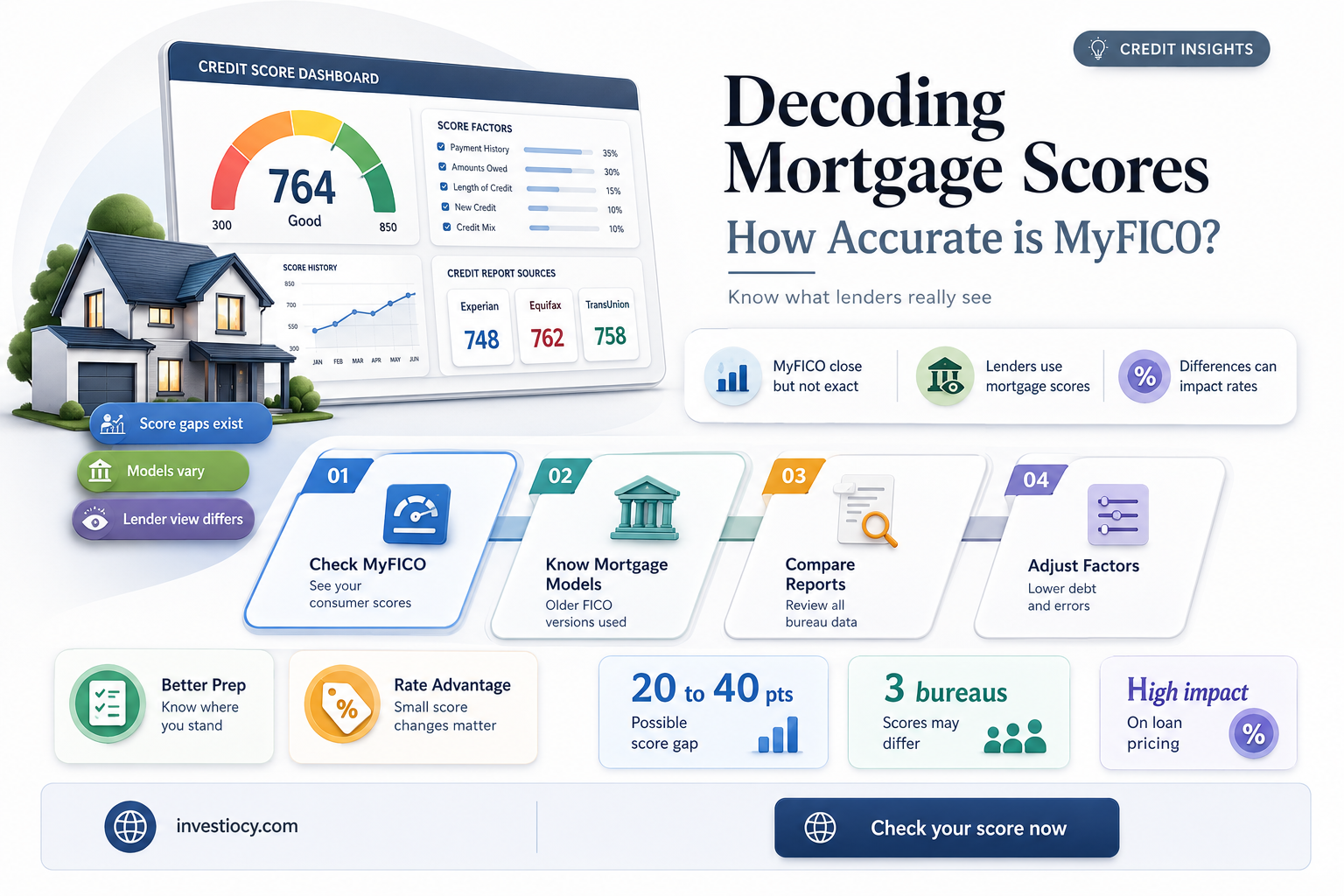
When considering a mortgage, one of the first steps is to check your credit score, and MyFICO is a popular service for obtaining this information. But how accurate is MyFICO for mortgage purposes? The accuracy of MyFICO scores is generally high, as they are based on data from the three major credit bureaus: Equifax, Experian, and TransUnion. However, it's important to note that mortgage lenders may use different scoring models or have their own criteria for evaluating creditworthiness. Therefore, while MyFICO can provide a good estimate of your credit standing, it's not the only factor lenders will consider when making a mortgage decision.
Explore related products


What You'll Learn
- Credit Score Calculation: Understand how MyFICO computes credit scores and their impact on mortgage eligibility
- Data Sources: Explore the credit bureaus and data sources MyFICO uses to gather credit information
- Score Updates: Learn how often MyFICO updates credit scores and the factors influencing these updates
- Mortgage Lender Acceptance: Discover which mortgage lenders accept MyFICO scores and their lending criteria
- Score Disputes: Find out the process for disputing errors on your MyFICO credit report and its effects on mortgage applications

Credit Score Calculation: Understand how MyFICO computes credit scores and their impact on mortgage eligibility
MyFICO computes credit scores using a proprietary algorithm that takes into account various factors from your credit report. These factors include your payment history, the amount of debt you owe, the length of your credit history, the types of credit you use, and new credit inquiries. Each of these factors is weighted differently, with payment history typically having the most significant impact on your score.
Understanding how MyFICO calculates credit scores is crucial for mortgage eligibility because lenders often use these scores to determine your creditworthiness. A higher credit score generally indicates that you are a lower risk borrower, which can lead to better mortgage terms, such as lower interest rates and higher loan amounts. Conversely, a lower credit score may result in higher interest rates or even denial of a mortgage application.
To improve your chances of mortgage approval, it's essential to maintain a good credit score. This can be achieved by making timely payments on all your debts, keeping your credit card balances low, and avoiding new credit inquiries unless necessary. Additionally, regularly monitoring your credit report for errors and disputing any inaccuracies can help ensure that your credit score is as high as possible.
In conclusion, understanding how MyFICO computes credit scores and their impact on mortgage eligibility is vital for anyone looking to purchase a home. By maintaining a good credit score, you can increase your chances of securing a mortgage with favorable terms.
Decoding Trulia's Mortgage Estimates: How Accurate Are They Really?
You may want to see also
Explore related products


Data Sources: Explore the credit bureaus and data sources MyFICO uses to gather credit information
MyFICO, a leading credit scoring company, relies on data from three major credit bureaus to compile credit reports and calculate credit scores. These bureaus are Equifax, Experian, and TransUnion. Each bureau collects information from various sources, including banks, credit card companies, and other financial institutions. This data includes details about your credit accounts, payment history, and any negative marks such as late payments or bankruptcies.
In addition to the credit bureaus, MyFICO may also gather information from public records and other data sources. This can include information about tax liens, court judgments, and even rental history. By aggregating data from multiple sources, MyFICO aims to provide a comprehensive view of an individual's creditworthiness.
The accuracy of MyFICO's credit reports and scores depends largely on the quality and completeness of the data provided by these sources. While the major credit bureaus are generally reliable, errors can still occur. For example, a bank may report an incorrect balance or a late payment that was actually made on time. It's essential for consumers to regularly review their credit reports to identify and dispute any inaccuracies.
MyFICO also uses sophisticated algorithms to analyze the data and calculate credit scores. These algorithms take into account various factors, such as payment history, credit utilization, and the length of your credit history. While the exact formulas used by MyFICO are proprietary, they are designed to provide a fair and accurate assessment of credit risk.
In conclusion, the accuracy of MyFICO's credit reports and scores is dependent on the quality of the data sources and the algorithms used to analyze that data. By understanding where MyFICO gets its information and how it's used, consumers can better manage their credit and ensure they're getting the most accurate scores possible.
Decoding Mortgage Estimates: How Accurate Are They Really?
You may want to see also
Explore related products


Score Updates: Learn how often MyFICO updates credit scores and the factors influencing these updates
MyFICO updates credit scores frequently, typically every 45 days, but this can vary depending on several factors. One of the primary influences on the update frequency is the activity on your credit report. If there's significant activity, such as new accounts being opened, debts being paid off, or inquiries from lenders, your score may be updated more frequently. Conversely, if your credit report remains relatively static with little to no new information, updates may be less frequent.
Another factor that can impact the frequency of score updates is the type of credit scoring model used by MyFICO. Different models may have varying update schedules, and some may be more sensitive to recent changes in your credit behavior than others. For example, the FICO 9 model places less emphasis on medical debt and may update scores more frequently to reflect this reduced impact.
It's also important to note that MyFICO doesn't update scores in real-time. Instead, they rely on data from the three major credit bureaus (Equifax, Experian, and TransUnion), which typically report new information to MyFICO on a monthly basis. This means that changes to your credit report may not be immediately reflected in your MyFICO score.
To ensure that your MyFICO score is as accurate as possible for mortgage purposes, it's crucial to monitor your credit report regularly and dispute any errors or inaccuracies. You should also be mindful of the timing of major financial decisions, such as applying for a mortgage, and try to minimize any negative impacts on your credit score during this period.
In summary, while MyFICO updates credit scores frequently, the exact timing of these updates can be influenced by various factors, including credit report activity, the scoring model used, and the reporting schedules of the credit bureaus. By understanding these factors and taking steps to maintain a healthy credit profile, you can help ensure that your MyFICO score is accurate and up-to-date when it comes time to apply for a mortgage.
Unveiling the Truth: How Accurate Are Mortgage Surveys?
You may want to see also
Mortgage Lender Acceptance: Discover which mortgage lenders accept MyFICO scores and their lending criteria
Navigating the mortgage application process can be complex, especially when it comes to understanding which lenders accept MyFICO scores and what their specific lending criteria entail. MyFICO is a widely recognized credit scoring model that provides lenders with a comprehensive view of an applicant's creditworthiness. However, not all mortgage lenders use MyFICO scores as part of their underwriting process.
To begin, it's essential to identify which mortgage lenders explicitly accept MyFICO scores. Some well-known lenders that use MyFICO scores include Bank of America, Wells Fargo, and Chase. These lenders often have stringent lending criteria, which may include minimum credit score requirements, debt-to-income ratios, and specific documentation needs. For instance, Bank of America typically requires a minimum FICO score of 620 for conventional loans, while Wells Fargo may require a higher score for certain loan programs.
When researching lenders, it's crucial to consider not only their acceptance of MyFICO scores but also their lending criteria. This includes factors such as loan-to-value ratios, income verification requirements, and any additional fees or penalties associated with the loan. By comparing the lending criteria of different lenders, borrowers can make informed decisions about which lender is best suited to their financial situation and credit profile.
Furthermore, it's important to note that even if a lender accepts MyFICO scores, they may also consider other factors when evaluating a mortgage application. These factors could include employment history, assets, and any outstanding debts or obligations. Borrowers should be prepared to provide comprehensive financial information to lenders in order to increase their chances of approval.
In conclusion, understanding which mortgage lenders accept MyFICO scores and their lending criteria is a critical step in the mortgage application process. By researching lenders and comparing their requirements, borrowers can make informed decisions and improve their likelihood of securing a mortgage that meets their financial needs.
Unveiling the Truth: Discover Scorecard Mortgage Accuracy Explained
You may want to see also
Score Disputes: Find out the process for disputing errors on your MyFICO credit report and its effects on mortgage applications
If you've noticed discrepancies on your MyFICO credit report that could impact your mortgage application, it's crucial to address these errors promptly. The process of disputing inaccuracies involves several steps that require careful attention to detail and patience. First, obtain a copy of your credit report from MyFICO and thoroughly review it for any incorrect information, such as late payments, incorrect balances, or accounts that don't belong to you.
Once you've identified the errors, gather supporting documentation to substantiate your claims. This may include payment receipts, letters from creditors, or other relevant financial records. Next, you can initiate the dispute process by contacting MyFICO directly or submitting a dispute online through their website. Be prepared to provide detailed explanations and evidence for each item you're disputing.
After submitting your dispute, MyFICO will investigate the claims and work with the credit bureaus to correct any verified errors. This process typically takes 30 to 45 days, but it can vary depending on the complexity of the issues and the responsiveness of the credit bureaus. During this time, it's essential to monitor your credit report for any changes and follow up with MyFICO if you don't see the corrections reflected.
Disputing errors on your credit report can have a significant impact on your mortgage application. Lenders rely heavily on credit scores to determine eligibility and interest rates, so even minor inaccuracies can result in higher costs or loan denials. By proactively addressing these issues, you can improve your chances of securing a favorable mortgage deal.
In conclusion, disputing errors on your MyFICO credit report is a critical step in ensuring the accuracy of your credit information and maximizing your mortgage application's success. By following the proper procedures and providing thorough documentation, you can effectively advocate for yourself and achieve a more favorable financial outcome.
Frequently asked questions
MyFICO is generally considered to be a reliable source for credit scores, which are a crucial factor in determining mortgage eligibility and interest rates. However, it's important to note that lenders may use different credit scoring models, so the score you see on MyFICO might not be the exact same as what a lender uses.
Yes, you can use your MyFICO credit score to get pre-approved for a mortgage. Many lenders offer pre-approval based on credit scores, and having a good score from MyFICO can give you an idea of what you might qualify for. However, pre-approval is not a guarantee of a loan, and other factors like income and debt will also be considered.
Paying for a MyFICO subscription can be beneficial if you want to closely monitor your credit score and report, especially if you're planning to apply for a mortgage soon. It allows you to see how your financial actions impact your score and to dispute any errors on your report. However, you can also check your credit report for free once a year from each of the three major credit bureaus, so a subscription is not strictly necessary.
